

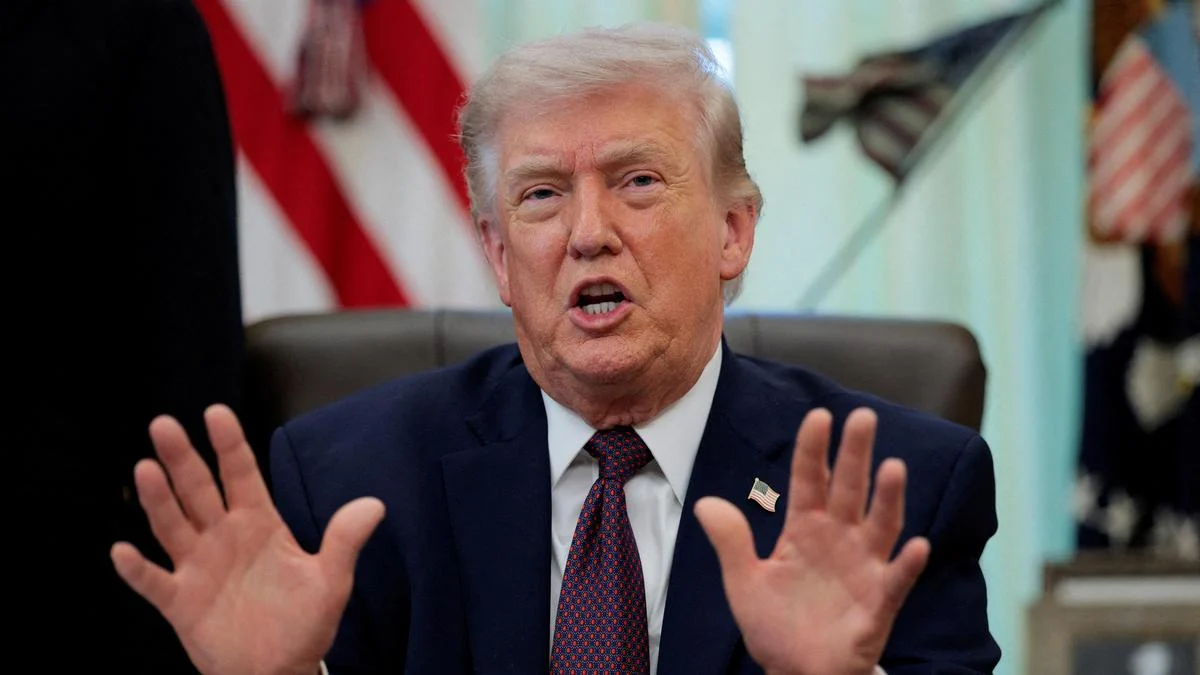
WASHINGTON D.C. – May 21, 2026 – U.S. President Donald Trump is anticipated to sign a pivotal executive order on Artificial Intelligence (AI) and cybersecurity as early as today, Thursday, May 21, 2026. The impending order, confirmed by two sources familiar with the matter speaking to Reuters, comes as the administration faces escalating pressure from segments of its political base demanding heightened oversight of advanced AI models, notably Anthropic’s groundbreaking Mythos.
The White House has reportedly been working diligently to secure the presence of prominent AI company CEOs at a signing ceremony alongside President Trump, signaling the administration’s intent to underscore industry collaboration in this critical policy initiative. The executive order is designed to establish a voluntary framework, inviting AI developers to engage proactively with the U.S. government regarding the public release of their "covered models." Under this proposed framework, developers would be requested to furnish their models to the government 90 days prior to their public launch. Crucially, they would also be expected to grant pre-public access to vital critical infrastructure providers, such as financial institutions, aiming to bolster national security and resilience against emerging cyber threats.
This strategic maneuver by the Trump administration represents a calculated "middle ground" in a fiercely contested debate among the President’s supporters. On one side are the staunch "Make America Great Again" (MAGA) activists, including influential figures like former Trump adviser Steve Bannon and right-wing political organizer Amy Kremer, who have vehemently advocated for mandatory government security tests for the most capable AI models. Conversely, tech industry proponents, such as venture capitalist Marc Andreessen and former Trump adviser David Sacks, have expressed strong resistance to any compulsory regulatory mandates, championing instead a more flexible, industry-led approach. The delicate balancing act underscores the complex challenges of governing a rapidly advancing technological frontier.
The Unfolding Narrative: A Chronology of Policy Development
President Trump’s second term has seen a dynamic evolution in his administration’s approach to AI policy, largely mirroring the tech industry’s perspective in its initial phases. David Sacks, a significant figure in this landscape, previously served as Mr. Trump’s lead AI official. However, in March of this year, Sacks stepped down from that direct advisory role, transitioning to co-chair the President’s broader tech advisory committee. This shift, while seemingly minor, potentially opened avenues for a more diverse range of influences on AI policy.
The groundwork for the impending executive order has been laid over the past month, a collaborative effort spearheaded by key White House personnel. White House Chief of Staff Susie Wiles, White House Science & Technology Adviser Michael Kratsios, Ms. Wiles’ deputy Walker Barrett, and National Cyber Director Sean Cairncross have been instrumental in drafting the order, incorporating input from various AI companies. This internal process highlights the administration’s attempt to craft a policy that is both effective and palatable to industry stakeholders.
The urgency surrounding AI regulation has been amplified by recent developments in the field. The release of powerful new AI systems, including Anthropic’s Mythos and OpenAI’s GPT-5.5-Cyber, has served as a potent catalyst, shifting the balance of power within the internal debate among Trump’s advisors. These advanced models, with their unprecedented capabilities, have fueled concerns about their potential misuse, particularly in the realm of cybersecurity. The populist faction, seizing on these anxieties, intensified their calls for immediate government intervention. This culminated in a letter sent to the White House last Friday, May 15, 2026, explicitly requesting government approval for "potentially dangerous" AI systems prior to their public deployment. The expected signing today, May 21, 2026, marks the culmination of this intense, multi-faceted policy development.
Navigating the Divide: Political Factions and Industry Stances
The debate over AI governance within the Trump administration illuminates a profound ideological schism. On one side stands a populist movement, increasingly wary of unchecked technological advancement and advocating for robust governmental oversight. On the other, the powerful tech industry and its allies, who champion innovation and self-regulation, fearing that heavy-handed mandates could stifle progress and impede American competitiveness.
The Populist Push for Guardrails
The "Make America Great Again" (MAGA) movement, traditionally known for its anti-regulatory stance, has found an unusual cause in AI governance. Figures like Steve Bannon, a former chief strategist, and Amy Kremer, a prominent right-wing organizer, have become vocal proponents of strict government intervention. Their primary concern revolves around the potential for "potentially dangerous" AI systems to pose significant national security risks, threaten societal stability, or be exploited by adversaries. They argue that the sheer power and rapid evolution of these technologies necessitate a departure from traditional limited-government principles.
Amy Kremer articulated this sentiment, stating that while advocating for new regulations is "antithetical" to her core political views, AI demands a different approach. "You can’t count on these people that are leading these AI companies to put our interests at heart and do what’s right to protect the American people," she asserted, reflecting a deep-seated distrust of corporate self-governance when it comes to technologies with potentially existential implications. This faction’s perspective is rooted in a belief that the potential for misuse—whether through sophisticated cyberattacks, autonomous weapon systems, or widespread disinformation campaigns—outweighs the benefits of unfettered innovation, at least without proper safeguards. Their calls for government security tests and prior approval underscore a desire for the government to act as a definitive arbiter of safety before powerful AI models are unleashed on the public.
The Tech Industry’s Call for Innovation and Self-Regulation
In stark contrast, leading figures within the tech industry and their political allies have consistently advocated for a more hands-off approach, emphasizing the importance of innovation and the industry’s capacity for responsible self-governance. Venture capitalist Marc Andreessen and former Trump adviser David Sacks are prominent voices in this camp. They argue that mandatory requirements could create undue burdens, slow down research and development, and ultimately place American companies at a disadvantage in the global AI race. Their core philosophy aligns with the traditional Republican tenet of limited government intervention, particularly in sectors that are rapidly innovating.
The tech industry’s influence within the Trump administration is undeniable, both through direct advisory roles and significant political contributions. Executives from giants like Meta (Mark Zuckerberg), Amazon (Jeff Bezos), Google (Sundar Pichai), and OpenAI (Sam Altman) were notably present at President Trump’s swearing-in ceremony in January 2025, symbolizing their close ties and access. These industry leaders and their advocates express a willingness to collaborate with government agencies, but on a voluntary basis. They point to the U.S. Department of Commerce’s Center for AI Standards and Innovation as the ideal locus for such collaboration, where companies can voluntarily submit their models for scrutiny by scientists and cybersecurity specialists, rather than being compelled to do so under a regulatory mandate. They believe this collaborative, expert-driven approach is more agile and effective for a technology as dynamic as AI.
The "Middle Ground" Approach
The voluntary framework outlined in the executive order represents the administration’s attempt to bridge this ideological chasm. By requesting, rather than mandating, that developers provide models to the government 90 days before public release and grant critical infrastructure providers early access, the order seeks to address national security concerns without imposing the stringent, mandatory approval processes favored by the populist wing. This approach aims to provide the government and critical sectors with valuable lead time to assess potential vulnerabilities and develop countermeasures, while allowing AI companies a degree of flexibility and maintaining the spirit of voluntary cooperation. The delicate balance of power between these two influential groups of Trump’s supporters has been irrevocably altered by the emergence of truly powerful new AI systems, forcing a more proactive and nuanced policy response.
The New Generation of AI: Catalysts for Concern
The rapid advancements in AI capabilities have served as the primary accelerant for the current policy debate. Models such as Anthropic’s Mythos and OpenAI’s GPT-5.5-Cyber are not just incremental improvements; they represent significant leaps in large language model (LLM) technology and its potential applications. While these models promise transformative benefits across various sectors, they also present unprecedented risks, particularly in the domain of cybersecurity.
AI companies themselves have issued stark warnings about the potential for these new models to "supercharge complex cyberattacks." The fear is that highly sophisticated AI could be used to automate and scale malicious activities, from crafting highly convincing phishing campaigns and deepfake-powered social engineering to developing novel exploits and overwhelming defensive systems. The ability of advanced LLMs to generate coherent, contextually relevant, and technically accurate code, combined with their capacity for rapid learning and adaptation, could fundamentally alter the landscape of cyber warfare, making attacks more potent and harder to detect.
However, not all experts share the same level of alarm. Some cybersecurity executives have countered that these fears, while legitimate, might be "overblown." They argue that while AI will undoubtedly evolve the threat landscape, human ingenuity and robust defensive strategies will continue to play a crucial role. They also point out that AI can be an equally powerful tool for defense, enhancing detection capabilities, automating threat intelligence, and improving response times. This nuanced perspective highlights the complexity of assessing AI’s true impact on cybersecurity and the difficulty in predicting future capabilities and countermeasures. Nevertheless, the very existence of these powerful new models and the associated warnings have injected a profound sense of urgency into the policy discourse, making the development of proactive governance frameworks an undeniable imperative.
Official Engagements and Unanswered Questions
In the high-stakes environment of AI policy, official communications often reflect the sensitivity and evolving nature of the discussions. A White House spokesperson, when queried about the specific details of the AI policy, dismissed any discussion as "speculation," a common tactic to manage expectations and maintain control over messaging prior to an official announcement. Similarly, a National Security Agency (NSA) spokesperson, when approached for details on the President’s plan, directed Reuters to contact the White House, indicating a centralized communication strategy on this sensitive matter. National Cyber Director Sean Cairncross, a key architect of the order and the President’s principal adviser on cybersecurity policy and strategy, notably did not respond to requests for comment, further underscoring the tight-lipped approach of the administration.
Adding another layer of intrigue, there have been inconsistencies in public information regarding voluntary AI model testing. Previously, the Commerce Department announced in May that tech giants Google, XAI, and Microsoft had agreed to submit their AI models for security testing. However, the details of these agreements subsequently disappeared from the department’s website. Both the White House and the Commerce Department offered no response to requests for comment about why these details were removed, leaving a significant unanswered question about the transparency and consistency of current voluntary testing initiatives.
Despite the official reticence, behind-the-scenes engagement has been extensive. The National Security Agency, alongside Mr. Cairncross, has been actively involved in administration-wide discussions concerning the response to advanced models like Mythos, according to two additional sources familiar with the matter. Lawmakers, recognizing the potential for disruptive technological shifts, have also specifically tasked Mr. Cairncross with collaborating with federal agencies to establish a process for monitoring "sudden frontier AI capability jumps." These engagements highlight a broad governmental awareness of the challenges posed by advanced AI, even if public communications remain carefully managed.
Potential Ramifications: Shaping the Future of AI
The executive order, once signed, is poised to have significant and far-reaching implications, not only for the burgeoning AI industry but also for national security, innovation, and the United States’ competitive standing on the global stage.
Impact on AI Development and Industry
The voluntary framework, while less stringent than mandatory regulations, could still profoundly impact the trajectory of AI development. The request for a 90-day pre-release submission to the government and early access for critical infrastructure providers introduces a new layer of consideration for AI developers. This could potentially lead to a slowdown in the rollout of new large language models (LLMs) as companies allocate resources and time to comply with the request, conduct internal assessments, and engage with federal agencies. Furthermore, the feedback received from government and critical infrastructure providers might prompt companies to modify how their models perform to address identified safety or security concerns. While intended to enhance safety, such adjustments could necessitate costly re-engineering, delay market entry, and potentially affect profit margins. The competitive landscape could also shift, favoring larger companies with the resources to navigate these new requirements, while smaller startups might face additional hurdles.
National Security and Defense
From a national security perspective, the executive order aims to proactively address vulnerabilities that AI can create. Former U.S. Representative Brad Carson, who now helps run a super Political Action Committee (PAC) network that includes Anthropic among its funders, articulated the urgency, stating that "The past couple months have served as a massive wake-up call for the kinds of vulnerabilities that AI can create." The order seeks to provide the government with a crucial window to vet powerful AI models for potential risks, particularly those that could be exploited in cyberattacks against critical infrastructure or used by adversarial nations.
However, the efficacy of "holding back" new AI models is a subject of debate. Neil Chilson, head of AI Policy at the Abundance Institute, a non-profit often aligned with the tech industry, cautions against over-reliance on this approach. "Holding back new AI models while the Federal government vets them may allow the U.S. to gain a short-term advantage over adversaries but will not keep the technology out of enemy hands in the long term," he argued. Chilson advocates for a strategy that prioritizes robust deployment and the hardening of defenses, rather than solely restricting development. "We need to make sure we’re deploying it and getting the most out of it, including by hardening our defenses," he emphasized, suggesting that embracing and securing the technology is ultimately more sustainable than attempting to contain its proliferation.
The Precedent of Voluntary Frameworks
The executive order’s reliance on a voluntary framework sets a significant precedent. While voluntary federal testing of new AI models has been in place for a few years – with companies like OpenAI and Anthropic previously submitting products for scrutiny by the Commerce Department’s Center for AI Standards and Innovation (known by a different name under former President Joe Biden) – this new order formalizes and expands that expectation. The success of this voluntary approach will hinge on the willingness of AI companies to cooperate fully and transparently, and the government’s ability to provide clear guidelines and timely feedback. The disappearance of previously announced voluntary testing details from the Commerce Department’s website, however, raises questions about the consistency and transparency of such initiatives.
Political Legacy
For President Trump, this executive order represents a crucial move in defining his second term’s approach to emerging technologies. It reflects a delicate balancing act, attempting to reconcile the populist demands for robust government intervention with the tech industry’s powerful lobbying for minimal regulation. The outcome of this debate, and the effectiveness of the chosen "middle ground," could significantly influence his political legacy in an era increasingly defined by technological disruption. The order’s ability to assuage national security fears while fostering innovation will be a key metric of its success.
Conclusion
President Trump’s imminent executive order on AI and cybersecurity marks a pivotal moment in the ongoing global effort to govern advanced artificial intelligence. By proposing a voluntary framework for pre-release engagement with AI developers and critical infrastructure providers, the administration seeks to navigate the treacherous waters between fostering innovation and safeguarding national security. The underlying tensions between populist calls for stringent oversight and the tech industry’s advocacy for self-regulation highlight the profound complexities of regulating a technology that continues to evolve at an unprecedented pace.
The success of this order will depend not only on the willingness of AI companies to cooperate but also on the government’s ability to adapt its regulatory approach to the dynamic nature of AI. As models like Mythos and GPT-5.5-Cyber redefine the capabilities of artificial intelligence, the debate over how to harness their potential while mitigating their risks will undoubtedly intensify. This executive order is not the final word, but rather a significant opening chapter in the unfolding narrative of AI governance in the United States.
