

Coimbatore, India – Growing up in Coimbatore, the concept of womanhood often felt like a meticulously drawn map of restrictions. While academic institutions offered lessons on gender, work, and the economy, the unspoken curriculum was one of containment: do not draw attention, do not step outside defined boundaries, and do not occupy public space. This inherent tension, a subtle yet pervasive undercurrent in the lives of many women across South India, is now finding an unexpected and profound release in the burgeoning world of kink.
This exploration of kink is not merely about sexual experimentation; for many, it represents a radical reclamation of self, a pathway to understanding and expressing suppressed desires, and a powerful assertion of agency in a society that has historically dictated their roles. As Bengaluru-based sex and trauma therapist Neha Bhat observes, "It’s the same cognitive dissonance: you asked me to put myself first, but are you supporting me systemically to do that? There is always a kind of dissonance in the body when that happens." Within this landscape of societal expectations and personal yearning, kink is emerging as a revelation, offering a space where "shadow experiences"—fantasies, curiosities, or aspects of oneself deemed socially unacceptable—can be safely explored.
"Especially for women, shadow experiences are part of desire," Neha Bhat explains. "Women are leading the conversation right now. Power has shifted from a male-driven narrative to a femme-driven one." What might appear taboo, she suggests, often signals a profound movement away from performative societal expectations towards genuine self-possession and agency.
The Genesis of Exploration: From Restraint to Revelation
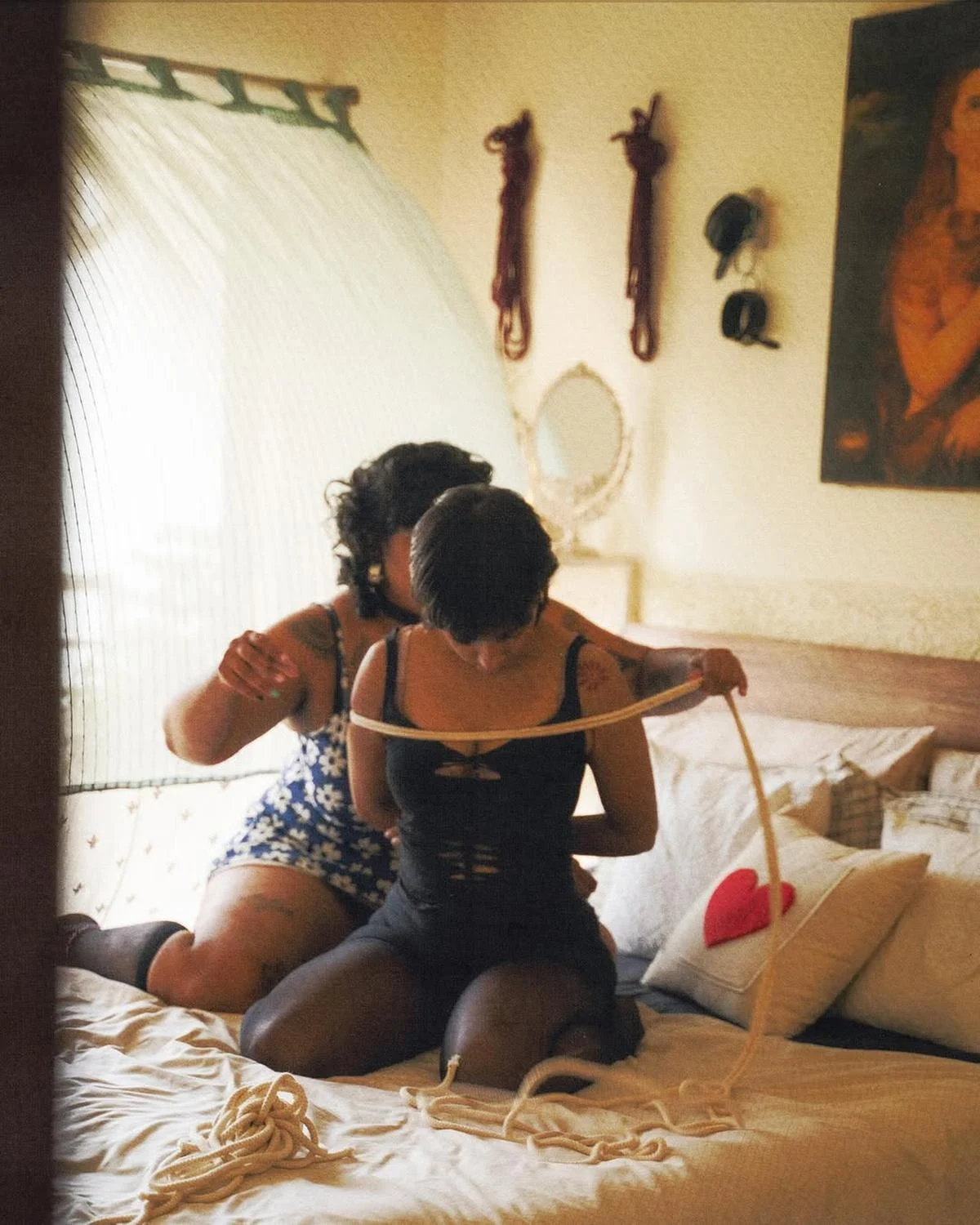
The journey into kink for many South Indian women is not necessarily a deliberate act of transgression but often a gradual unfolding, sparked by experiences that defy easy categorization. For Shimmer, a self-employed woman in her mid-40s from Chennai, her entry into kink was catalyzed by a sensation she couldn’t initially articulate during a rope session. This practice, known as Japanese shibari or kinbaku, involves the intricate use of rope to create patterns of restraint and sensation, underpinned by a profound emphasis on trust and communication between partners.

"The memories of handcuffs and a blindfold came flooding in from decades ago," Shimmer recounts. For her, shibari became a profound dialogue with her own body, a means for it to communicate before the mind could fully process or explain. This embodied experience led to a significant realization: "I realized I may want to explore with women," she states, emphasizing that this was not an identity upheaval but a burgeoning curiosity.
This sentiment is echoed by Bee, an artist-designer in her mid-30s, also based in Chennai. Her first encounter with shibari occurred at a residential retreat in Puducherry, led by Bengaluru-based practitioner Amiya Bhanushali. Bhanushali is the driving force behind Silly Hands Shibari, recognized as India’s only rope-dedicated studio, which hosts intimate, multi-day kink and rope retreats in various locations.
Creating Safe Havens: Femme-Centric Spaces and the Power of the Gaze
A pivotal aspect of this emerging landscape is the deliberate creation of spaces tailored to women and the FLINTA (female, lesbian, intersex, non-binary, trans, and agender) community. One such initiative was "The Great Baddie Pilgrimage," a recent femme-only retreat held in Rishikesh in November of the previous year. Amiya Bhanushali, whose social media presence often attracts a predominantly male audience, envisioned this retreat as a sanctuary where bodies and curiosity could exist free from the pervasive influence of the male gaze.
Bee, who had been particularly keen on learning from a woman in a rope culture often perceived as male-dominated, found immense value in this approach. "I was tired of the male dom/fem sub aesthetic," she confesses. For her, a woman-led space provided an environment where she could explore her sensuality without the pressure of external expectations.

Amiya Bhanushali describes her work as "container-building." "Only when you trust the space and facilitators are you open to vulnerability," she explains. The retreats often begin with foundational trust exercises, such as trust falls, where participants learn to rely on one another, fostering a sense of safety and interconnectedness.
The Practice of Kink: Beyond Physical Restraint
In practice, shibari workshops begin with the fundamentals: participants are taught basic knots and the safe handling of ropes. This progresses to intricate patterns that encircle the body, sometimes forming sleeves or harnesses designed to gently hold the arms or torso in place. As trust solidifies, exercises may incorporate light restraint to limit movement. More advanced techniques, such as partial or full suspension, are typically demonstrated by facilitators rather than practiced by beginners, ensuring safety and gradual progression.
For Bee, the lasting impact of the workshop extended far beyond the technical aspects. "I became comfortable tying others and being tied, simply as a sensual, playful practice," she shares. This embraced the practice as a form of embodied expression and connection, devoid of the societal pressures often associated with sexuality.
The residential retreats, while varying in participant numbers, are meticulously curated. The Rishikesh retreat, for instance, was limited to 12 spots and, at an early-bird rate, cost approximately ₹26,000. This fee encompassed accommodation for four days and three nights, a welcome kit featuring items like a flogger and handcuffs, and a range of activities including massage sessions, sound healing, and a pottery workshop.

Silly Hands Shibari typically caps attendance at around 10 participants for retreats. Beyond these immersive experiences, Bhanushali’s studio also conducts non-residential, single-day rope workshops priced between ₹1,000 and ₹2,000 per person. These are held at their studio in Bengaluru, as well as in Mumbai, Puducherry, and other cities. Additionally, they offer private rope-tying sessions in clients’ homes, with costs ranging from approximately ₹4,000 to ₹5,000 per session. The studio has been consistently hosting about one retreat annually for several years.
"Come Undone": Reclaiming the Body and Redefining Connection
For many women, engaging with kink is not about defying societal norms for the sake of rebellion, but rather about finally attuning to their own inner voices. Simran Sanganeria, a sexuality educator who participated in the Rishikesh retreat, articulates this sentiment as a profound "return to the body."
Participants at the retreat often describe the process of "unlearning" ingrained societal scripts. These scripts frequently dictate that men should initiate romantic or sexual encounters, while women are expected to be receptive. Intimacy is often narrowly defined by traditional gender roles. Within the safe confines of the retreat, participants explored alternative modes of connection, where power dynamics could be fluidly exchanged, paused, or shared, rather than rigidly assumed.
This personal unfolding occurs against a backdrop of a larger societal contradiction. While South Indian states are often recognized for their relative safety for women, lived experiences continue to necessitate a degree of vigilance. It is precisely within this nuanced tension that kink offers a vital space. Here, boundaries are explicitly articulated, power dynamics are consciously negotiated, and the body is treated with profound care and respect.

For Shimmer, the transformative shifts experienced during the retreat did not remain confined to its duration; they permeated her everyday life. "If I have specific wants, I now voice it more clearly," she asserts. "If I don’t want to receive more, I will say it." She now approaches intimacy with a heightened sense of intention, meticulously considering "the entire flow"—what each participant is comfortable with, how the experience will unfold, and what post-encounter care looks like.
For others, like Bee, the translation of the experience is more subtle. While she hasn’t actively sought out a kink community since the retreat, she carries the experience as a cherished memory rather than a daily practice.
As Bee points out, Chennai currently lacks a visibly established and safe kink community. Therefore, the spaces offered by these retreats and workshops serve a dual purpose: they provide an arena for experimentation and, crucially, a platform to practice essential skills in communication, consent, and curiosity. This deliberate cultivation of these skills within a safe and supportive environment allows women to explore their desires and assert their agency in ways that are often constrained by societal expectations in their daily lives. The rise of kink in South India, particularly through women-led initiatives, represents a powerful movement towards self-discovery and empowerment, challenging traditional narratives and forging new pathways for intimate connection.
