

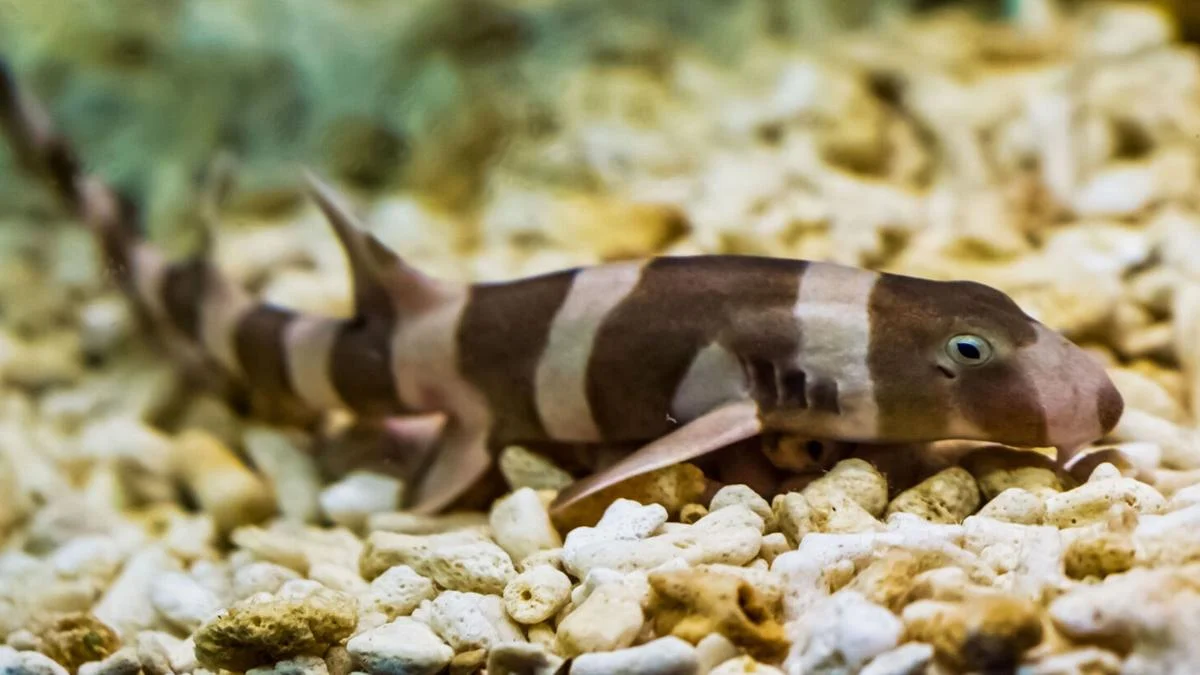
Chennai, India – June 13, 2026 – In a significant stride for marine conservation, the VGP Marine Kingdom, a prominent public aquarium located in Injambakkam, Chennai, has successfully reintroduced a cohort of captive-bred banded bamboo sharks ( Chiloscyllium punctatum) into their natural ocean habitat. This pioneering initiative, which saw 25 young sharks released on June 6th, marks a crucial step in the aquarium’s broader commitment to safeguarding native marine biodiversity. The event, graced by the presence of A. Srinath, Minister for Fisheries, Government of Tamil Nadu, underscores the growing recognition of the vital role aquariums play in ecological restoration and public awareness.
From Rescue to Reproduction: A Remarkable Journey
The story of these banded bamboo sharks at VGP Marine Kingdom began with an act of compassion. Approximately two years prior to the recent release, the aquarium received four semi-adult banded bamboo sharks – two males and two females – that had been inadvertently caught by a local fisherman. These sharks, native to the vast Indo-West Pacific region, a zone encompassing the waters off Indonesia, Malaysia, Thailand, India, Australia, and the Philippines, were integrated into the aquarium’s public display exhibits.
What followed was an unexpected and remarkable success: breeding. The serene environment and dedicated care provided by the VGP Marine Kingdom staff fostered an environment conducive to reproduction. "We ended up with 64-65 eggs and over 50 pups," revealed S. Arockia Cinnakan, affectionately known as Kannan, the institution’s head curator. This significant breeding success provided the foundation for the subsequent reintroduction program.
The sharks released on June 6th were between nine months and one year old, an age deemed optimal by the aquarium’s experts for successful integration into the wild. "The sharks we released were around nine months to one year old," Kannan stated. The aquarium continues to nurture and house some of the younger sharks, indicating a long-term commitment to the species’ propagation.
Bridging the Gap: Training for the Wild
A critical component of the VGP Marine Kingdom’s reintroduction strategy involves preparing the young sharks for the challenges of survival in the open ocean. In their natural environment, banded bamboo sharks are demersal, meaning they inhabit the seabed, and their diet typically consists of crustaceans and small fish. In captivity, however, their diet was primarily composed of frozen food.
To bridge this gap and equip the sharks with essential survival skills, the VGP Marine Kingdom implemented a specialized training regimen. "We used to feed them frozen food. But before releasing them, we introduced them to live food. Thus they learnt hunting behaviour," Kannan explained. This deliberate introduction to live prey allowed the sharks to hone their natural predatory instincts, increasing their chances of foraging successfully and adapting to the dynamic food web of the ocean.
A Deeper Purpose: Conservation at the Forefront
The banded bamboo shark reintroduction is not an isolated event but a cornerstone of VGP Marine Kingdom’s overarching conservation philosophy. Kannan emphasized that this initiative is merely the beginning of a comprehensive plan for marine life preservation. "We have planned a lot of conservation stuff, and this is just the beginning," he declared.

The strategic timing of the release – at a relatively young age – is a deliberate choice aimed at maximizing the sharks’ adaptability. "If we keep them too long, they will get used to the captive environment, and it will be tricky to release it back," Kannan elaborated. By releasing them at an age where they can still readily acclimate to the ocean’s complexities, the aquarium significantly enhances their long-term survival prospects. This approach reflects a nuanced understanding of animal behavior and the intricacies of ecological integration.
The Looming Threats: Bycatch and Habitat Destruction
The plight of the banded bamboo shark, like that of many other shark species, is intricately linked to human activities, primarily overfishing. These gentle, oviparous sharks frequently fall victim to unintentional bycatch, becoming entangled in fishing gear intended for other species.
"Like most other sharks, the greatest threats these banded bamboo sharks face are from overfishing, as they often end up becoming unintentional bycatch," Kannan stated. The destructive nature of certain fishing practices, such as the use of large trawling nets, poses a significant threat to their habitats and reproductive cycles. "Fishing trawlers destroy their nests, homes and take their lives," he lamented.
The VGP Marine Kingdom’s commitment extends beyond this single reintroduction. Kannan revealed plans to utilize the remaining pups to continue breeding and expand the reintroduction program. "We hope to get the numbers higher," he expressed, underscoring the ambitious scale of their conservation endeavors.
A Blueprint for Future Conservation: Native Species Focus
While this reintroduction marks a significant milestone, it is also envisioned as a scalable model for future conservation efforts. The VGP Marine Kingdom harbors aspirations to extend its conservation programs to encompass other native marine species. However, this expansion will be guided by a strict principle: a steadfast focus on indigenous species.
"While this is the first experiment of its kind, the aquarium hopes to expand to other marine species over time, with one caveat," Kannan affirmed. "We will not be planning for any non-native species breeding programme. Our focus is only on native species." This commitment to native species conservation ensures that the aquarium’s efforts are directed towards bolstering the health and resilience of the local marine ecosystems, rather than potentially introducing invasive species or disrupting existing ecological balances.
The successful breeding and reintroduction of banded bamboo sharks by the VGP Marine Kingdom serve as a beacon of hope for marine conservation in the region. It highlights the indispensable role of aquariums not only as educational institutions but also as active participants in the crucial work of species recovery and habitat restoration. As the VGP Marine Kingdom continues to champion native species, its initiatives promise to foster a healthier and more vibrant marine future for generations to come.
