

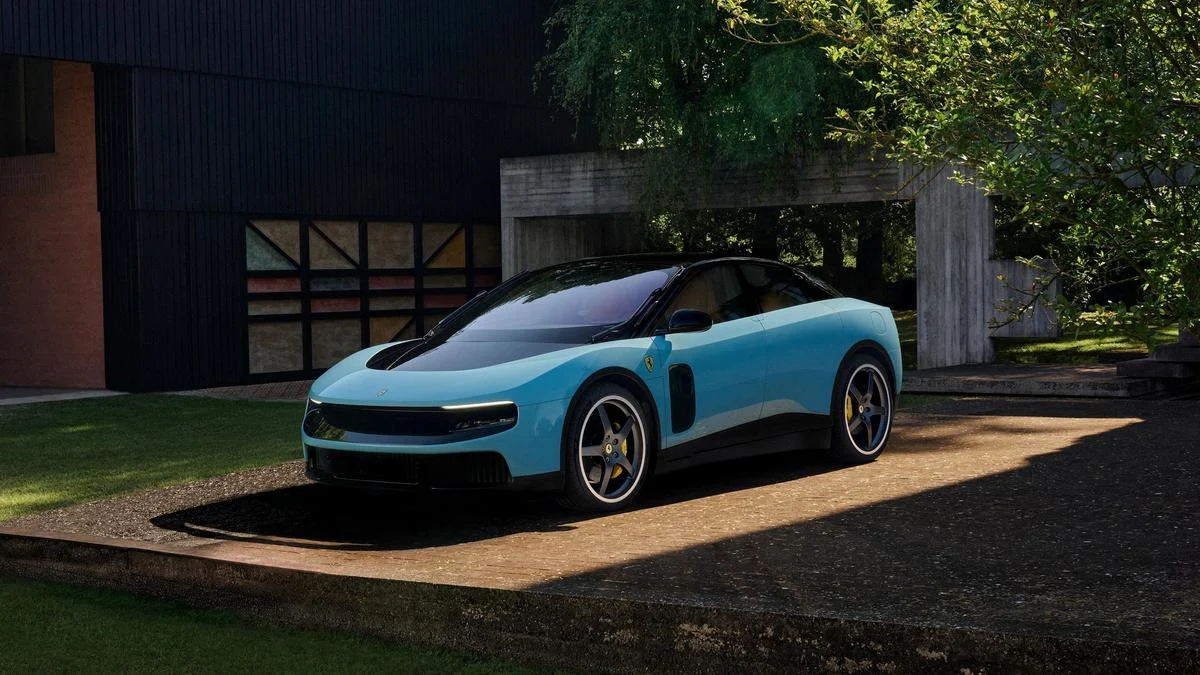
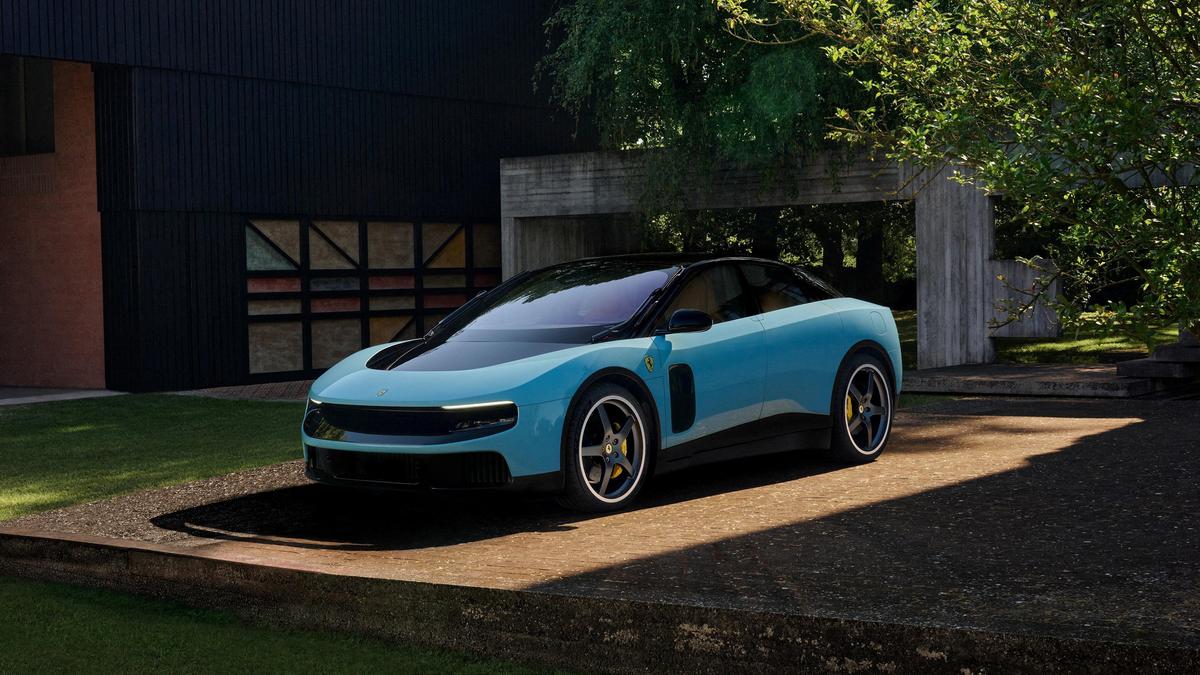
MARANELLO, ITALY — In a move that marks the most significant architectural shift in its 79-year history, Ferrari has officially pulled the silk off the "Luce." As the first fully electric vehicle (EV) to bear the Prancing Horse emblem, the Luce—Italian for "Light"—represents a daring gamble by the Maranello-based automaker to reconcile its high-octane heritage with a zero-emission future.
The unveiling, which took place late Monday, signals Ferrari’s formal entry into a segment already inhabited by rivals like Porsche and Lamborghini. However, the Luce is not merely a battery-powered version of a classic grand tourer; it is a fundamental reimagining of what a Ferrari can be, breaking traditional design codes by offering four doors and five seats while delivering the blistering performance expected of the brand.
Main Facts: Performance Meets Pragmatism
The Ferrari Luce arrives with a technical specification sheet that aims to silence critics who believe electric propulsion lacks the "soul" of a traditional internal combustion engine (ICE). According to official statements from the company, the Luce is built on a bespoke EV platform that integrates the battery pack as a stressed member of the chassis to maximize rigidity.
Key Technical Specifications:
- Top Speed: In excess of 310 kilometres per hour (190 mph).
- Acceleration: 0 to 100 kph in a staggering 2.5 seconds.
- Range: Over 530 kilometres (WLTP cycle) on a single charge.
- Battery Capacity: A massive 122 kWh lithium-ion pack.
- Weight: 2.26 tonnes (4,982 lbs), making it the heaviest Ferrari ever produced.
- Configuration: Four doors and five seats, a first for a Ferrari sports car.
While the weight of 2.26 tonnes is a departure from the lightweight philosophy of legendary models like the F40 or the 488 Pista, Ferrari engineers claim that the low center of gravity—afforded by the floor-mounted 122 kWh battery—provides handling dynamics that defy the vehicle’s mass. The Luce is also the second four-door model in Ferrari’s history, following the Purosangue "thoroughbred" SUV, but it goes a step further by offering a true five-seat configuration, positioning it as a hyper-luxury daily driver.
Chronology: The Road to Maranello’s Electrification
The path to the Luce has been a decade-long journey of incremental hybridization and strategic factory overhauls. Unlike some competitors who rushed early EV prototypes to market, Ferrari took a methodical approach, utilizing Formula 1 technology to bridge the gap.
- 2013: The LaFerrari Era: Ferrari introduced its first hybrid, the LaFerrari, using a KERS (Kinetic Energy Recovery System) inspired by its F1 program. This proved that electric assistance could enhance, rather than dilute, performance.
- 2019: The SF90 Stradale: The launch of the SF90 Stradale marked Ferrari’s first Plug-in Hybrid Electric Vehicle (PHEV). It allowed for short bursts of silent, electric-only driving, socializing the Ferrari customer base with the concept of a "quiet" Prancing Horse.
- 2022: The Purosangue and the "E-Building": While the Purosangue launched with a V12, its four-door architecture set the stage for the Luce. Simultaneously, Ferrari broke ground on its "e-building"—a dedicated facility in Maranello designed specifically for the production of electric motors, battery packs, and power inverters.
- 2024–2025: Strategic Pivot: As the global automotive industry began to cool on EVs due to infrastructure concerns, Ferrari recalibrated its internal targets but remained committed to the Luce’s development.
- May 2026: The Launch: The Luce is officially unveiled, marking the end of the "pure ICE" era for Ferrari’s flagship innovations.
Supporting Data: Balancing Weight and Range
The Luce’s 122 kWh battery is one of the largest in the passenger car market, significantly larger than those found in the Porsche Taycan (105 kWh) or the Tesla Model S Plaid (100 kWh). This high capacity was necessary to achieve the 530-kilometre range while powering the high-output motors required to push a 2.26-tonne vehicle to 310 kph.
However, the weight remains the most discussed metric among enthusiasts. At 2.26 tonnes, the Luce is nearly 700 kilograms heavier than the Ferrari 296 GTB. To compensate, Ferrari has introduced an advanced "Side Slip Control" (SSC) system version 9.0, which uses four-wheel independent torque vectoring to mask the car’s inertia during high-speed cornering.
Industry analysts note that Ferrari’s decision to go with a larger battery reflects a shift in consumer expectations for the "ultra-luxury" EV segment. Buyers in this bracket are less concerned with the minutiae of weight-saving and more focused on "grand touring" capabilities—the ability to drive from Milan to Monaco on a single charge without "range anxiety."
Official Responses: A Vision of the Future
The leadership at Ferrari has been careful to frame the Luce not as a departure from tradition, but as a modernization of it.
"We are inaugurating a chapter that turns our vision into reality, strengthening Ferrari’s tradition of anticipating and shaping the future," said John Elkann, President of Ferrari, during the reveal. Elkann’s statement underscores a corporate philosophy that views electrification as an opportunity for "performance enhancement" rather than a regulatory burden.
Benedetto Vigna, Ferrari’s CEO, has previously emphasized that the company’s EVs would have a "unique sound signature." While the Luce lacks the mechanical crescendo of a V12, the company has reportedly spent thousands of hours in acoustic laboratories to develop a proprietary sound that amplifies the natural frequencies of the electric motors, providing the driver with the necessary sensory feedback.
Despite the pomp of the launch, Ferrari remains pragmatic about the market. In a recent investor briefing, the company acknowledged the shifting tides of the global EV market. Last year, Ferrari revised its 2030 sales mix forecast: it now expects electric models to account for 20% of its total offering by 2030, a significant reduction from its previous, more aggressive target of 40%.
Implications: Navigating a Shifting Landscape
The launch of the Luce comes at a paradoxical time for the automotive industry. While the luxury sector was initially thought to be "recession-proof" and "regulation-ready," the reality of EV adoption has proven more complex.
1. The Challenge of "Brand Soul"
For Ferrari, the greatest risk is the potential dilution of brand equity. A Ferrari is defined by its engine note and its mechanical "viscerality." By moving to a silent, heavy platform, Ferrari must convince its "Tifosi" (loyal fans) and high-net-worth collectors that the Luce offers an experience that cannot be replicated by a high-performance Tesla or Lucid. The inclusion of five seats suggests Ferrari is looking to capture a new demographic—younger, tech-focused buyers who value sustainability as much as status.
2. Strategic Hedging
By lowering its 2030 EV targets to 20%, Ferrari is signaling a "multi-energy" strategy. The company will likely continue to produce internal combustion engines—potentially powered by carbon-neutral e-fuels—alongside hybrids and the Luce. This flexibility allows Maranello to pivot based on global infrastructure development and regional regulations, such as the EU’s evolving stance on synthetic fuels.
3. Competitive Positioning
The Luce enters a thinning field of ultra-luxury EVs. While Porsche’s Taycan has been a commercial success, other brands like Aston Martin and Lamborghini have delayed their full-EV debuts. By launching now, Ferrari secures a "first-mover" advantage in the true hyper-EV space, setting the benchmark for performance and luxury that others must now chase.
4. Infrastructure and the Customer Experience
A 122 kWh battery requires significant charging infrastructure. Ferrari is expected to roll out a "Ferrari Premium Charging" network at key dealerships and luxury destinations across Europe, North America, and China. For a Luce owner, the charging process must be as seamless and "premium" as the driving experience itself.
Conclusion: The Dawn of the Electric Horse
The Ferrari Luce is more than just a car; it is a statement of intent. It proves that even the most storied and traditionalist brands must eventually bow to the winds of technological change. By delivering a vehicle that is heavier, quieter, and more spacious than anything that has come before it, Ferrari is betting that the "Luce" (Light) will lead the way into a new era where "luxury" is defined by seamless power and environmental consciousness rather than the roar of a piston engine.
As the Luce begins its production run in the newly minted e-building, the world watches to see if the Prancing Horse can truly maintain its gallop in a world without gasoline. For now, the Luce stands as a 310 kph testament to Maranello’s ability to reinvent itself, one electron at a time.
