

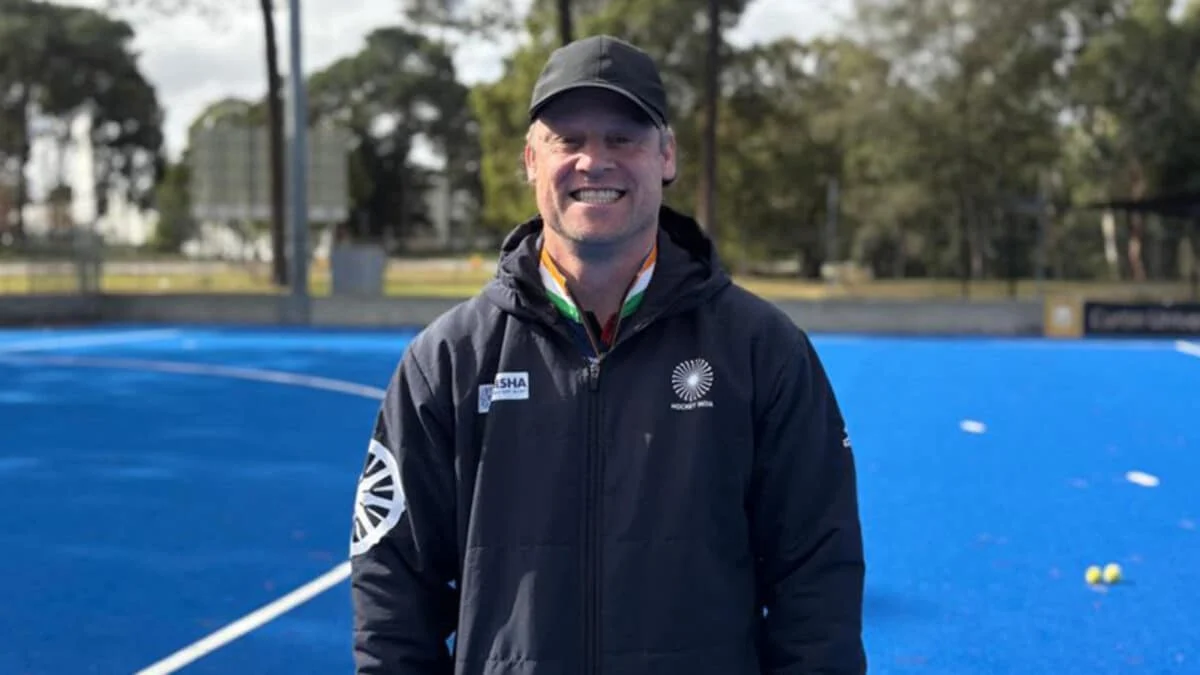
New Delhi, India – June 2, 2026 – In a significant strategic move aimed at bolstering their attacking prowess and penalty-corner conversion rate, the Indian senior women’s hockey team has secured the services of legendary Dutch dragflicker Taeke Taekema. The former Netherlands international has joined the squad for a specialised training camp focused on dragflicking and penalty-corner execution, currently underway during the team’s vital tour of Australia and New Zealand. This high-profile collaboration underscores India’s unwavering commitment to excelling on the global stage, particularly as the team gears up for the impending FIH Nations Cup.
Taekema, renowned globally for his formidable penalty-corner conversions and an illustrious career spanning over 200 international caps and 221 goals for the Dutch national team, is widely regarded as one of the finest dragflickers in the history of the sport. His presence is expected to impart invaluable technical and tactical knowledge to India’s emerging dragflicking talent, marking a pivotal moment in their preparations for a demanding international season.
Main Facts: A Strategic Masterstroke for Indian Hockey
The integration of Taeke Taekema into the Indian women’s hockey setup represents a clear statement of intent from Hockey India and chief coach Sjoerd Marijne. Recognising the critical role of penalty corners in modern hockey, this initiative is designed to provide the Indian squad with a decisive edge in high-stakes matches. Taekema’s direct involvement during the ongoing tour of Australia and New Zealand places him immediately in the heart of the team’s intensive preparations, allowing for real-time application and refinement of skills.
The immediate objective of this specialised camp is to significantly enhance the team’s penalty-corner conversion rate, a metric often considered a barometer of a team’s offensive efficiency. With the FIH Nations Cup looming from June 15 to 21 in New Zealand, the timing of Taekema’s arrival is impeccably strategic. This tournament is not merely another competition; it offers a crucial pathway to potential promotion to the FIH Hockey Pro League, making optimal performance imperative. Beyond the immediate tournament, the longer-term vision is to embed a culture of dragflicking excellence within the Indian team, ensuring a sustainable improvement in this vital aspect of the game and elevating India’s overall standing in international hockey.
The camp targets specific Indian dragflickers, including Deepika, Lalthantluangi, and Annu, who will receive personalised coaching from Taekema. This focused approach aims not only to refine their technique but also to instill the mental fortitude and tactical understanding required to execute under pressure. The collaboration extends beyond mere dragflicking, with Coach Marijne highlighting Taekema’s broader role in improving defensive structures, showcasing a holistic approach to utilising his vast hockey acumen.
Chronology of a Crucial Partnership
The journey leading to Taekema’s involvement is rooted in a meticulously planned schedule designed to maximise the Indian team’s readiness for upcoming challenges.
Pre-Camp Preparations and Recent Form
The Indian women’s hockey team embarked on a critical tour Down Under, commencing with a four-match friendly series against formidable opponents, Australia. Held at the Perth Hockey Stadium from May 26 to 30, this series served as an essential calibration point for the squad. The series concluded with an evenly contested 2-2 draw, with both sides clinching two victories each. This outcome provided valuable match practice, exposing areas of strength and identifying specific aspects requiring immediate attention, particularly in set-piece execution. The competitive nature of these matches offered a realistic simulation of the intensity expected in major tournaments.
Following the Australian leg, the team is set to transition to New Zealand, with their arrival scheduled for June 3. This geographical shift marks the commencement of the final phase of their preparations for the FIH Nations Cup. It is against this backdrop of rigorous international exposure and targeted readiness that Taeke Taekema’s expertise is being integrated. The timing is designed to ensure that his specialised training can be immediately applied and refined during subsequent practice matches, providing a seamless transition from theoretical learning to practical implementation.
The Camp’s Commencement and Focus
The specialised training sessions with Taeke Taekema have commenced as an integral part of the team’s ongoing tour. These sessions are highly focused, delving deep into the nuances of dragflicking and penalty-corner execution. The core objective is to dissect and improve every component of a penalty corner, from the initial push-out to the stopper’s placement and the dragflicker’s technique, power, and accuracy.
The identified dragflickers—Deepika, Lalthantluangi, and Annu—are undergoing intensive training. This includes detailed video analysis, repetition drills, strength and conditioning specific to dragflicking, and tactical discussions on reading opposition defences. The goal extends beyond mere conversion rates; it encompasses enhancing the team’s overall attacking efficiency by creating more penalty-corner opportunities and maximising their potential. Taekema’s vast experience means he can offer insights into variations, disguises, and the psychological aspects of executing under pressure, which are invaluable for these young athletes.
Looking Ahead: The FIH Nations Cup
The culmination of these intense preparations will be tested at the FIH Nations Cup, scheduled to take place in Auckland, New Zealand, from June 15 to 21. This tournament holds significant importance for the Indian women’s team. It is not merely a platform to demonstrate improved penalty-corner skills but also a crucial stepping stone in their broader international ambitions. A strong performance at the Nations Cup could lead to promotion to the FIH Hockey Pro League, a top-tier international competition that provides consistent exposure against the world’s best teams. Participation in the Pro League is vital for maintaining high competitive standards and accumulating crucial experience ahead of major quadrennial events like the Olympic Games and FIH Hockey World Cups. The strategic investment in Taekema’s expertise is a direct reflection of the high stakes associated with the Nations Cup and the team’s aspirations for upward mobility in global hockey rankings.
Supporting Data: The Art and Science of Dragflicking
The decision to bring in a specialist like Taeke Taekema is rooted in a deep understanding of modern hockey’s tactical evolution and the undeniable impact of set-piece play.
The Impact of Penalty Corners in Modern Hockey
In contemporary field hockey, penalty corners have transcended their status as mere set pieces to become pivotal moments that frequently dictate the outcome of matches. Statistical analyses consistently show that a significant proportion of goals, often ranging from 30% to 50% in elite-level play, originate from penalty corners. A team with a highly effective penalty-corner unit possesses a formidable weapon, capable of breaking deadlocks, extending leads, or mounting dramatic comebacks. The ability to convert a high percentage of penalty corners not only directly contributes to goal-scoring but also exerts immense psychological pressure on the opposition. Conversely, a low conversion rate can be a source of immense frustration, undermining offensive efforts despite sustained pressure.
The sequence of a penalty corner—from the precise push-out, the clean stop, to the powerful flick—requires impeccable timing, coordination, and individual skill. Defences are increasingly sophisticated in their rush and blocking strategies, making the art of dragflicking more challenging and, consequently, more valuable. Teams that can consistently convert even one in three or four penalty corners are often the ones that succeed in major tournaments. For India, a nation known for its flair and individual skill, enhancing this structured, high-percentage scoring opportunity is an imperative step towards consistent international success.
Taeke Taekema: A Legacy of Precision and Power
Taeke Taekema’s career provides a compelling blueprint for dragflicking excellence. Born in Leiderdorp, Netherlands, Taekema emerged as a prodigious talent, quickly establishing himself as a defensive stalwart with an unparalleled ability to convert penalty corners. Over his distinguished career with the Netherlands national team, he earned more than 200 international caps, an impressive feat in itself. However, it was his staggering tally of 221 goals that truly solidified his legend, with the vast majority coming from his signature dragflicks.
Taekema’s dragflick was characterised by a unique blend of explosive power, unerring accuracy, and deceptive variations. He possessed the rare ability to place the ball with pinpoint precision into the top corners of the net, often leaving goalkeepers with little chance. His repertoire included flicks to both sides, high and low, keeping defenders and goalkeepers constantly guessing. Beyond the raw power, his tactical intelligence was profound; he understood when to vary his flick, when to aim for a deflection, and how to read the rush. He represented the Dutch national team at numerous major tournaments, including multiple Olympic Games and FIH Hockey World Cups, where his penalty-corner heroics were often instrumental in his team’s success. His extensive experience at the highest echelons of the sport, coupled with his technical mastery, makes him an ideal mentor for India’s aspiring dragflickers. His insight into pressure situations, mental preparation, and game management will be as valuable as his technical guidance.
India’s Current Dragflicking Talent Pool
The Indian women’s team currently boasts a promising, albeit developing, contingent of dragflickers. Deepika, Lalthantluangi, and Annu represent the core of this unit. Each player brings individual strengths to the table, possessing raw power, decent technique, and the potential for significant improvement. However, consistency, precision under pressure, and the development of a broader range of flicking options are areas where Taekema’s intervention can prove transformative.
Deepika, for instance, has shown glimpses of a powerful flick, while Lalthantluangi and Annu are steadily growing in confidence and skill. What they require is the refined touch and tactical wisdom that only a master like Taekema can provide. His guidance can help them understand the optimal body positioning, stick angle, follow-through, and mental approach needed to convert consistently against top international goalkeepers. Furthermore, the article mentions Navneet Kaur as a "strong striking option." This is a crucial complementary asset. A potent dragflick threat not only leads to direct goals but also opens up opportunities for variations, such as deflections or direct strikes from the top of the D, which a player like Navneet can capitalise on. Taekema’s role will also involve integrating these elements, ensuring that the penalty-corner unit functions as a cohesive, multi-faceted offensive weapon.
Official Responses: Vision from the Helm
The strategic decision to onboard Taeke Taekema has been championed by Chief Coach Sjoerd Marijne, whose insights provide a clear understanding of the rationale and anticipated impact of this collaboration.
Chief Coach Sjoerd Marijne’s Strategic Insight
Chief Coach Sjoerd Marijne, a seasoned tactician with a deep understanding of modern hockey’s demands, articulated the profound importance of this partnership. "We know that penalty corners are crucial in modern hockey and having a coach with Taeke Taekema’s experience will be extremely valuable for us," Marijne stated, underscoring the undeniable influence of set-piece proficiency on match outcomes. His emphasis on "extremely valuable" highlights not just Taekema’s technical expertise but also his vast knowledge of high-pressure international competition.
Marijne further revealed a broader scope for Taekema’s role beyond merely refining dragflicking. "Besides dragflicking, his role will also be much broader in helping improve our defensive structures. He has developed himself wider and we are looking to utilise his full potential with the team." This suggests a holistic approach, where Taekema’s understanding of attacking strategies from a dragflicker’s perspective can be inverted to fortify defensive tactics against penalty corners. His insights into how top dragflickers think and operate will provide the Indian defence with a unique perspective on how to anticipate and thwart opposition set pieces. This versatility, born from his own evolution as a coach, makes him an even more potent asset.
The personal connection between Marijne and Taekema also plays a significant role in the synergy of this collaboration. "I have coached him, so I know him very well and we are on the same page in terms of our approach," Marijne affirmed. This pre-existing rapport ensures seamless communication, mutual trust, and a shared philosophy, allowing for efficient implementation of training strategies. The coach’s confidence in Taekema’s ability to relate to the players as a "former top-level player" further highlights the psychological advantage of having a legend guide them. Marijne concluded by reiterating the core objective: "It is crucial for us to get more out of our penalty-corner opportunities, and this camp will definitely help us improve in that area." His words convey a strong belief in the camp’s potential to translate into tangible improvements on the field, especially given the existing talent base.
Hockey India’s Commitment to Excellence
While specific quotes from Hockey India officials were not provided in the original article, the very act of securing a world-renowned specialist like Taeke Taekema speaks volumes about the federation’s unwavering commitment to fostering excellence within the national team. This strategic investment is indicative of Hockey India’s progressive vision and its dedication to providing the best possible resources for player development.
The decision reflects a broader policy to equip the national teams with every possible advantage, whether it be through advanced coaching methodologies, international exposure, or specialist expertise. It signals an ambition to not just compete but to consistently contend for top honours at major tournaments. By bringing in a figure of Taekema’s stature, Hockey India demonstrates its proactive approach to addressing key performance areas and its readiness to embrace global best practices. This commitment extends to ensuring that Indian athletes receive world-class training, enabling them to reach their full potential and uphold the nation’s rich hockey legacy on the international stage. Such initiatives are crucial for building a robust and competitive hockey ecosystem from the grassroots to the elite level.
Implications: A Game-Changer for Indian Women’s Hockey
The integration of Taeke Taekema into the Indian women’s hockey team is poised to have far-reaching implications, impacting not only immediate tournament performance but also shaping the long-term trajectory of the sport in the country.
Immediate Impact on Nations Cup Performance
The most immediate and tangible implication of Taekema’s involvement will be observed at the upcoming FIH Nations Cup in New Zealand. A noticeable improvement in penalty-corner conversion rates can directly translate into crucial victories. In tightly contested matches, where goals are often at a premium, the ability to convert even one or two additional penalty corners can be the difference between a win, a draw, or a loss. This enhanced scoring efficiency will not only bolster the team’s offensive output but also instill a significant psychological boost. Players will enter matches with greater confidence, knowing they possess a potent weapon in their arsenal. The opposition, aware of India’s improved dragflicking prowess, will be forced to be more disciplined in their defence, potentially opening up other avenues for attack. This immediate impact could be crucial for India’s aspirations of gaining promotion to the FIH Hockey Pro League, a critical step for continuous elite-level competition.
Long-Term Development and Global Aspirations
Beyond the Nations Cup, Taekema’s influence is expected to have a profound long-term impact on the development of Indian women’s hockey. The knowledge and techniques imparted by a player of his calibre will not merely benefit the current crop of dragflickers but will likely cascade through the national system. The coaching staff will gain deeper insights into the intricacies of dragflicking, which can then be integrated into national coaching programmes and junior development pathways. This could lead to the emergence of a more consistent and technically sound generation of dragflickers in the years to come.
Ultimately, this strategic move aligns with India’s broader global aspirations in hockey. By addressing a critical area of modern play, India positions itself more strongly to compete against the world’s elite at future Olympic Games, World Cups, and other major tournaments. A consistently strong penalty-corner unit makes India a more formidable opponent, earning respect and fear from competitors. Taekema’s "legacy" effect could inspire countless young Indian athletes to take up dragflicking, further strengthening the talent pipeline and ensuring India remains a competitive force on the international hockey landscape for decades to come.
The Evolution of Modern Hockey Coaching
The decision to bring in a specialised consultant like Taeke Taekema also highlights a significant trend in the evolution of modern hockey coaching. Increasingly, national teams are moving beyond generalist coaching models to adopt a more focused, modular approach, where specific areas of the game are addressed by experts in that particular field. This reflects a broader trend across elite sports, emphasising "marginal gains" – the aggregation of small improvements across various aspects to achieve significant overall performance enhancement.
By focusing on a niche yet high-impact skill like dragflicking, India is embracing this sophisticated coaching philosophy. It underscores the understanding that at the elite level, every advantage counts, and investing in specialised knowledge can yield disproportionate returns. This global exchange of expertise, where a Dutch legend guides Indian talent, exemplifies the interconnectedness of modern sports and the universal pursuit of excellence. It sets a precedent for future collaborations and reinforces India’s commitment to staying at the forefront of coaching innovation in field hockey. The lessons learned and the methodologies adopted during this camp could well serve as a blueprint for similar initiatives in other specialised skill sets within Indian hockey.
