

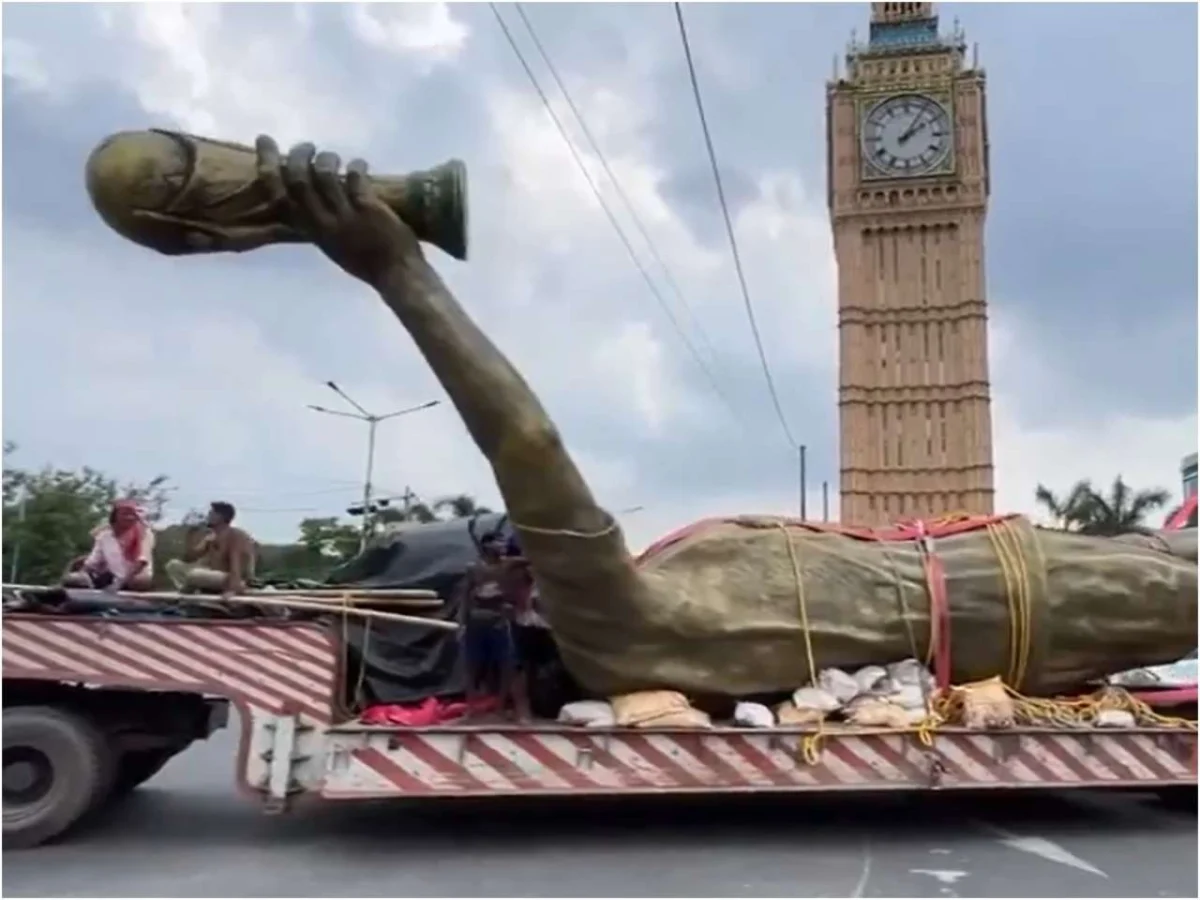
Kolkata, West Bengal – A towering 70-foot statue of football icon Lionel Messi, which had become a prominent landmark in Kolkata’s Lake Town area, has been systematically dismantled following widespread safety concerns raised by local residents. The colossal tribute, depicting the Argentine maestro triumphantly hoisting the 2022 FIFA World Cup trophy, was removed after authorities determined its structural integrity was compromised, posing a significant risk to public safety.
Erected with much fanfare just last year ahead of Messi’s anticipated ‘GOAT Tour’ to India, the statue was a testament to West Bengal’s fervent and unwavering devotion to football, and particularly to the legendary player. However, the initial awe surrounding the monumental structure soon gave way to apprehension as locals reported the statue swaying alarmingly in strong winds, prompting an official inspection and ultimately sealing its fate.
Main Facts: A Fallen Icon of Fandom
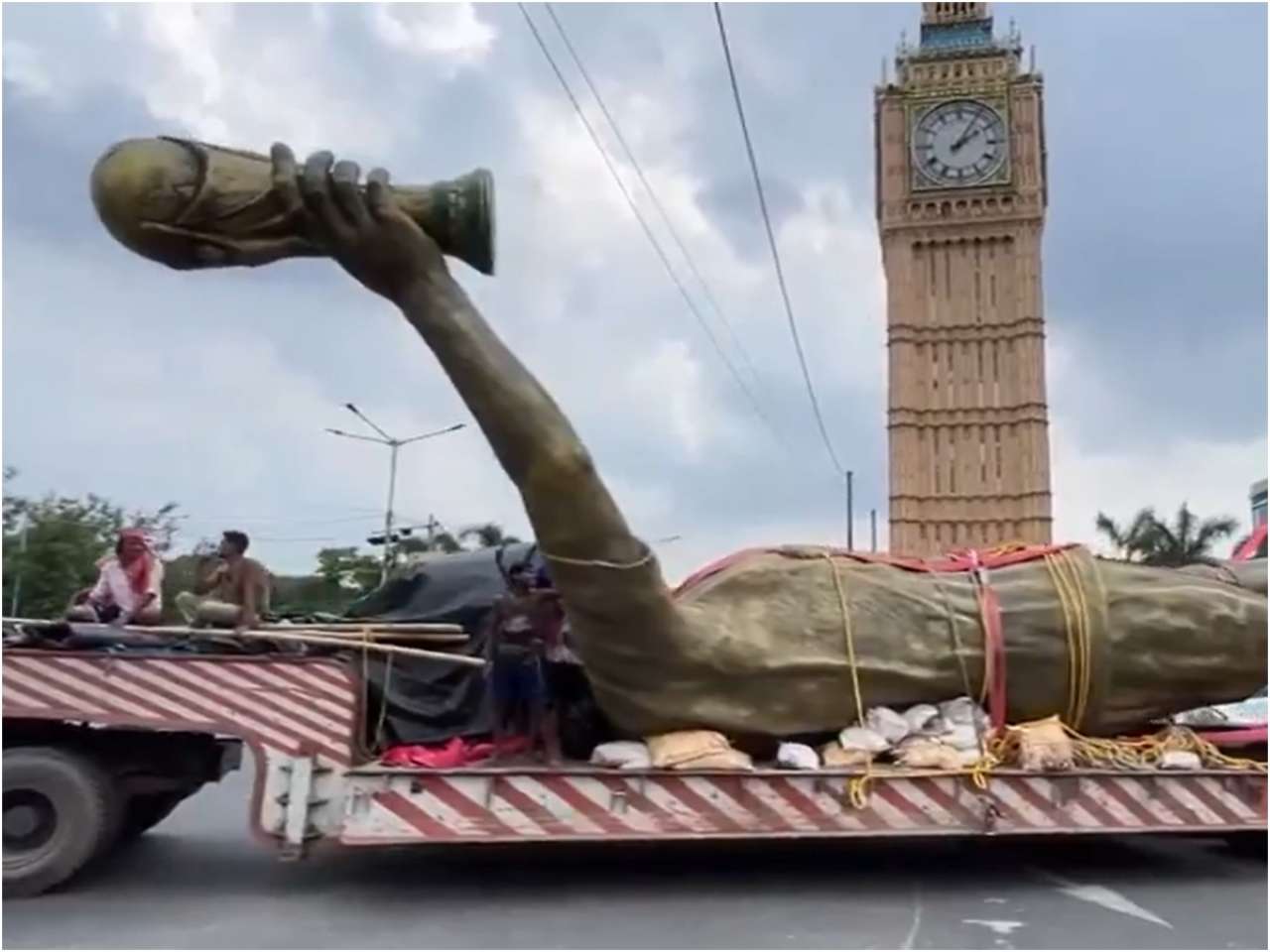
The recent dismantling of the 70-foot Lionel Messi statue has sent ripples through West Bengal’s impassioned football community. For months, the colossal figure had dominated the skyline of Lake Town, a testament to the unparalleled adoration Messi commands among his Indian fanbase, particularly in a state known for its intense allegiance to Argentina and Brazil in international football. The statue, capturing Messi in his moment of ultimate triumph—clutching the coveted 2022 FIFA World Cup trophy—was a powerful symbol of collective joy and sporting reverence.
Its sheer scale, standing at an impressive 70 feet, made it an unavoidable focal point, drawing curious onlookers and devout fans alike. Images of the statue quickly went viral, cementing its status as a unique cultural landmark. However, the grandeur was overshadowed by growing fears. Residents living in close proximity to the installation began to express serious concerns about its stability, especially during periods of inclement weather. Eyewitness accounts consistently reported the massive structure exhibiting a disconcerting sway whenever strong winds swept through the area.
)
These mounting concerns, initially informal discussions among neighbours, quickly escalated into formal complaints lodged with the Public Works Department (PWD). The PWD, acting swiftly on the public outcry, initiated a comprehensive inspection of the statue. Their findings were definitive: the structure’s integrity was indeed compromised, deeming it a potential hazard to public safety. The decision to dismantle the statue, while a blow to many fans, was deemed a necessary measure to prevent a potential catastrophe.
Chronology of a Colossus: From Grand Vision to Dismantling
Conception and Rapid Construction (December Last Year)
The genesis of the 70-foot Messi statue can be traced back to December of the previous year, a period charged with excitement following Argentina’s historic 2022 FIFA World Cup victory and the anticipation surrounding Messi’s proposed ‘GOAT Tour’ to India. This tour, a highly anticipated event for Indian football enthusiasts, was intended to celebrate Messi’s unparalleled career and his monumental achievement. The statue was conceived as a grand, visible gesture of this collective jubilation, a physical manifestation of the deep-seated adoration felt by millions of fans in West Bengal. The ambition was not merely to erect a statue, but to create a temporary landmark that would capture the imagination and serve as a powerful rallying point for the legion of Messi devotees.

The construction of such a monumental structure, reportedly completed within an astonishing 27 days, showcased an immense dedication to the project. This expedited timeline, while a testament to the builders’ commitment, also retrospectively invites questions regarding the long-term structural considerations. Given its temporary nature and rapid assembly, the statue was likely constructed using a lightweight internal framework, possibly steel or bamboo, clad with composite materials or fibreglass to achieve its detailed likeness. Upon its completion, it quickly became a local sensation, drawing crowds eager to witness the larger-than-life representation of their idol and capture photographs with the impressive backdrop.
Initial Fanfare and Growing Apprehension
Upon its installation, the Messi statue was met with widespread enthusiasm. Social media platforms buzzed with images and videos, amplifying its presence and drawing attention from across the nation and beyond. For many, it was a source of immense pride, a bold declaration of Kolkata’s unique and profound connection to global football. The area around the statue became a minor pilgrimage site for fans, particularly during weekends and evenings, creating a vibrant atmosphere.
)
However, as the initial euphoria began to subside and the statue stood exposed to the unpredictable elements of West Bengal, subtle yet significant signs of instability began to emerge. Residents living in the immediate vicinity of the Lake Town installation started noticing an unsettling movement. What might have initially been dismissed as minor vibrations or optical illusions soon became a pronounced and visible sway, particularly during seasonal gusts of wind and pre-monsoon squalls that are characteristic of the region. This observation ignited a growing undercurrent of apprehension among the local populace.
Escalation of Concerns and Official Intervention
The anecdotal observations of the swaying statue gradually transformed into serious public concern. Families residing in apartment buildings nearby, shopkeepers whose livelihoods depended on the bustling streets, and daily commuters who passed the colossal figure began to express genuine fear about the potential for the massive structure to collapse. The sheer height and implied weight of the statue meant that any structural failure could have catastrophic consequences, endangering numerous lives and causing extensive property damage. These escalating anxieties prompted local residents to formally lodge complaints with the Public Works Department (PWD), the governmental agency entrusted with the maintenance and safety of public infrastructure.
)
The PWD, recognizing the gravity of the allegations, promptly initiated a comprehensive inspection. A team of experienced engineers and structural safety experts was dispatched to assess the statue’s integrity. Their preliminary observations corroborated the residents’ claims, noting visible instability and pronounced movement. Further, more detailed assessments, which likely involved examining the statue’s foundation, its internal support structure, the materials used, and its anchoring mechanisms, confirmed that the rapid construction and perhaps the temporary nature of its design had indeed compromised its long-term stability and resilience against environmental forces.
The Decision and the Dismantling Process
Faced with unequivocal engineering evidence of a significant safety hazard, the PWD, in consultation with local administrative bodies, made the difficult but necessary decision to dismantle the statue. Sharadwat Mukherjee, a Member of the Legislative Assembly (MLA) representing the area in West Bengal, publicly affirmed this decision, stating, "The statue of the Argentine football legend was found to be unsafe. We have noticed that the statue is swaying in the wind, which poses a clear danger to the public."
)
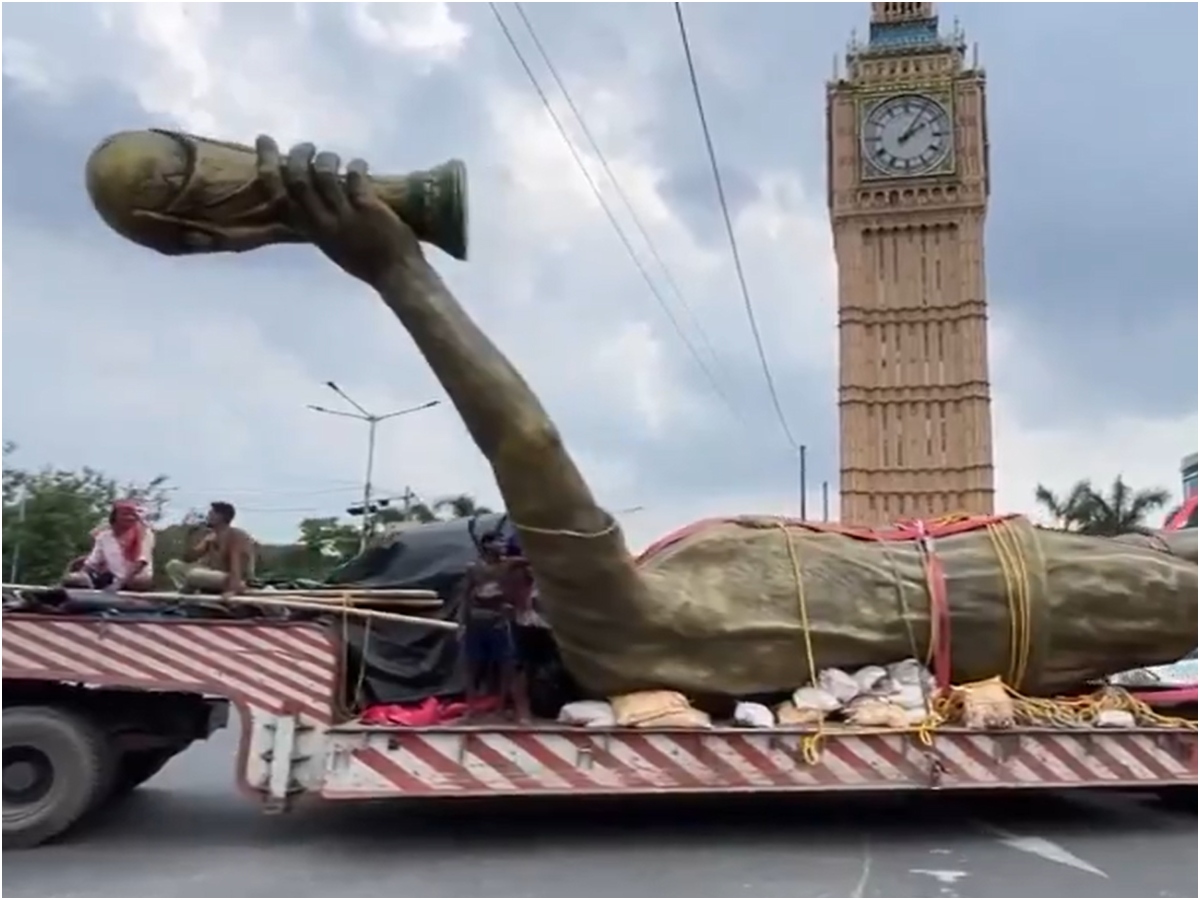
The dismantling process itself was a complex and meticulous operation, demanding specialized equipment such as cranes and a skilled workforce. The priority was to ensure the safe removal of such a large structure without causing further incident or damage. The once towering symbol of adoration was systematically taken down, piece by piece, over several days, marking a poignant end to its brief yet impactful presence in Kolkata’s urban landscape. The careful execution of the dismantling underscored the seriousness with which the safety concerns were addressed.
Supporting Data: The Anatomy of a Public Tribute and its Challenges
West Bengal’s Enduring Football Fervour
To fully comprehend the significance of a 70-foot Messi statue in Kolkata, one must delve into West Bengal’s unique and profound relationship with football. Unlike many other parts of India where cricket reigns supreme, football holds an almost sacred place in the hearts of Bengalis. Kolkata, often affectionately dubbed the ‘Mecca of Indian Football,’ boasts a rich and storied history of legendary clubs like Mohun Bagan and East Bengal, whose intense rivalries fill stadiums and fuel passionate debates across generations. Beyond local club allegiances, there exists an intense, almost familial, devotion to international teams, particularly Brazil and Argentina. This deep-seated passion transcends mere sport; it is intricately woven into the cultural fabric, serving as a powerful source of identity, collective emotion, and community bonding.
)
During major tournaments like the FIFA World Cup, the entire state transforms into a vibrant tapestry of blue-and-white (Argentina) or yellow-and-green (Brazil) flags, jerseys, and spirited celebrations. Homes are decorated, giant screens are set up in public spaces, and every match becomes a communal event. Erecting a colossal statue of Lionel Messi, who is unequivocally considered the ‘GOAT’ (Greatest Of All Time) by countless fans in the region, was thus a natural, albeit ambitious, expression of this fervent devotion. It wasn’t just a tribute; it was a declaration of West Bengal’s enduring love affair with the beautiful game and its most luminous star.
The Lure of Grand Gestures: Public Art and Fan Tributes
The Messi statue in Lake Town is not an isolated phenomenon but rather fits into a broader global trend of larger-than-life fan tributes and public art installations. From the iconic Christ the Redeemer statue overlooking Rio de Janeiro, a symbol of national identity, to numerous smaller, often temporary, effigies, murals, and street art celebrating sports heroes and cultural icons worldwide, these structures aim to inspire, commemorate, and capture the public imagination. In India itself, while colossal statues are frequently erected for political or religious figures, the scale of the Messi tribute speaks volumes about the iconic status that global football stars have attained, transcending traditional forms of veneration.
)
These grand gestures often reflect a deep-seated desire to publicly acknowledge and celebrate figures who have profoundly impacted collective consciousness. However, the enthusiasm and artistic vision behind such ambitious projects, particularly when executed rapidly and potentially with limited long-term planning, frequently clash with stringent safety and engineering standards. The challenge lies in balancing the desire for monumental tributes with the practical realities of structural stability, material science, and public safety regulations, especially in dynamic urban environments.
Engineering Realities of Temporary Large-Scale Installations
The Public Works Department’s finding of "compromised structural integrity" highlights critical engineering considerations inherent in large, outdoor installations. A 70-foot structure, even if intended as temporary, is subjected to significant environmental forces, predominantly wind loads. Wind pressure increases exponentially with height, meaning a tall, relatively slender structure like a human figure is exceptionally susceptible to swaying, torsional forces, and potential fatigue failure if not adequately designed, anchored, and braced.
)
Critical factors include the depth and stability of the foundation, the inherent strength and rigidity of the internal support materials, the integrity of all joints and connections, and the overall aerodynamic profile of the statue. Any oversight in these areas can lead to instability. The rapid 27-day construction period, while a testament to efficiency, might have necessitated compromises in these critical engineering phases, particularly for a structure of this unprecedented scale in a public urban setting. The incident serves as a stark reminder that even the most heartfelt and visually impressive expressions of pure fandom must rigorously adhere to fundamental principles of structural engineering and public safety to avoid becoming hazardous liabilities.
Official Responses and Community Reactions
Voices from the Community
For the residents of Lake Town, the initial excitement surrounding the Messi statue gradually gave way to palpable fear and apprehension. "Every time there was a strong gust of wind, you could visibly see it moving, swaying quite significantly," recounted Mrs. Rina Das, a local shopkeeper whose establishment offered an unobstructed view of the colossal figure. "It felt like it could topple at any moment, especially during a storm. My grandchildren often play in the street; we simply couldn’t take that risk any longer." Similar sentiments of anxiety and relief were echoed by Mr. Alok Sen, a retired government employee residing in an apartment building directly adjacent to the installation. "We understand and appreciate the sentiment behind it, the immense love for Messi, but public safety must unequivocally come first. When it started looking genuinely unstable, it wasn’t a matter of ‘if’ but ‘when’ it would fall." These firsthand accounts from the community underscore the urgency, validity, and widespread nature of the complaints that ultimately prompted official intervention.
)
The Public Works Department’s Stance
The Public Works Department (PWD) maintained a consistent and unwavering safety-first approach throughout the ordeal. A senior PWD official, who requested anonymity due to the ongoing nature of internal reviews, stated, "Our primary mandate and overriding responsibility is the safety and well-being of the public. Upon receiving a substantial volume of complaints from concerned citizens, our engineering teams immediately initiated a thorough and meticulous inspection. We found significant structural instability, particularly in how the statue was anchored to its base and its overall ability to withstand lateral forces such as strong winds. Continuing to allow such a structure, proven to be a hazard, to stand in a densely populated area would have been an irresponsible and egregious dereliction of our duty." The official further emphasized that while the PWD respects and understands public enthusiasm for sports and cultural expressions, these must always be balanced against non-negotiable and rigorous safety standards. The decision to dismantle, while acknowledged as regrettable to some segments of the fanbase, was deemed an absolutely necessary measure to prevent a potential tragedy.
Local Political Leadership’s Endorsement
Sharadwat Mukherjee, the local Member of the Legislative Assembly (MLA), played a crucial role in amplifying the residents’ concerns and publicly endorsing the PWD’s decisive action. His public statement, "The statue of the Argentine football legend was found to be unsafe. We have noticed that the statue is swaying in the wind," was a clear and unequivocal affirmation of the safety rationale. Mukherjee further elaborated on the broader implications of the decision: "While we profoundly understand the deep passion for football and for a player of Messi’s stature in West Bengal, the fundamental well-being and safety of our citizens can never be compromised. It is our responsibility to ensure that any public installation, whether temporary or permanent, adheres to the most stringent safety standards. This decision, though undeniably difficult for the legions of fans, prioritizes human life and public safety above all else." This unified and resolute front from both the local administration and public safety bodies underscored the critical gravity of the situation and the absolute necessity of the statue’s removal.
)
Organizers’ Silence and Fan Disappointment
The original organizers or the specific group responsible for commissioning and installing the 70-foot Messi statue have largely remained silent in the immediate aftermath of its dismantling. This notable absence of immediate public comment leaves several questions unanswered, particularly regarding their initial safety assessments, the specific materials and construction methodologies employed, and any future plans they might have had for the structure. For many ardent fans, the removal of the statue is undoubtedly a bittersweet moment. While a significant portion understands and accepts the paramount imperatives of safety, there is an undeniable sense of loss and profound disappointment at seeing such a magnificent tribute disappear. "It was truly magnificent, a powerful symbol of our collective love for Messi and for Argentina," lamented Rohan Ghosh, a young and passionate football fan from the area. "It’s incredibly sad to see it go, but I suppose if it was genuinely dangerous, then there really was no other choice. It’s just a shame it couldn’t be built to last safely." The incident thus serves as a stark reminder of the inherent complexities and challenges involved in translating immense public passion into tangible, large-scale public tributes that must also withstand the rigors of engineering and safety regulations.
Implications: Lessons for Future Tributes and Public Safety
A Sobering Lesson for Public Tributes
The dismantling of the 70-foot Lionel Messi statue serves as a potent and sobering reminder of the critical importance of rigorous planning, meticulous execution, and unwavering adherence to
