

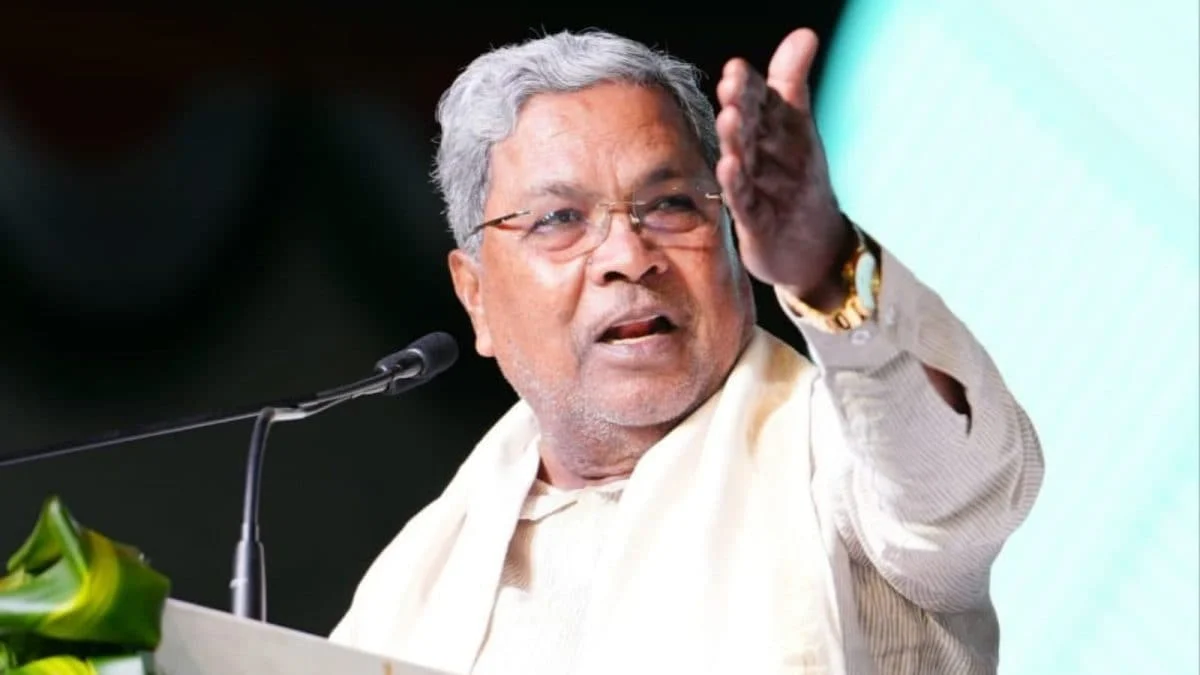
NEW DELHI, India – June 2, 2026 – In a significant strategic move by the Indian National Congress, veteran leader Siddaramaiah has been inducted into the party’s highest decision-making body, the Congress Working Committee (CWC). This pivotal appointment comes mere days after his resignation as the Chief Minister of Karnataka, signaling a decisive shift towards a national role for the seasoned politician who had previously expressed a reluctance to leave state politics. The announcement, made amidst intense deliberations in the national capital to finalize the new Karnataka cabinet, underscores the Congress high command’s intent to leverage Siddaramaiah’s extensive experience and mass appeal on a broader canvas, particularly with an eye on the upcoming 2029 Lok Sabha elections.
The elevation of Siddaramaiah, a towering figure in Karnataka politics and a former Chief Minister, to the CWC is not merely a ceremonial gesture but a strategic placement. It positions him at the core of the party’s national political strategy, campaign planning, and organizational oversight. The move is widely interpreted as the Congress’s concerted effort to strengthen its national leadership by integrating influential regional satraps into its central framework, ensuring a blend of state-level insights and national political acumen.
Strategic Elevation to the Congress Working Committee
The induction of Siddaramaiah into the Congress Working Committee is a testament to his enduring influence and strategic importance within the party. Having successfully led the Congress to a decisive victory in the recent Karnataka assembly elections and subsequently navigating the complexities of leadership transition, his national elevation was anticipated by many political observers. The timing, immediately following his relinquishing of the Chief Minister’s office, underscores the party’s swift action to harness his capabilities for national objectives.
Sources close to the party high command reveal that discussions regarding a national role for Siddaramaiah had been ongoing for some time, even prior to the Karnataka elections. News18 had previously reported that the Congress had floated the idea of a national assignment, including a potential Rajya Sabha seat, to Siddaramaiah with a long-term vision for the 2029 general elections. However, the seasoned leader had reportedly declined the Rajya Sabha proposal, indicating a preference for a more active, executive role within the party structure, which the CWC appointment now fulfills.
The CWC, often referred to as the ‘power center’ of the Congress, is instrumental in shaping the party’s ideological direction, formulating policies, and guiding its electoral campaigns across the nation. Siddaramaiah’s presence in this elite group is expected to bring a fresh perspective, particularly from the crucial southern states, and bolster the party’s outreach efforts. His administrative experience as Chief Minister and his deep understanding of ground-level politics are invaluable assets that the party aims to utilize in its broader national strategy.
The Journey to the National Stage: A Detailed Chronology
Siddaramaiah’s political career spans several decades, marked by significant milestones and a consistent presence at the forefront of Karnataka politics. His journey to the national stage is a culmination of years of dedicated public service and strategic political maneuvering.
A Legacy in Karnataka: From Janata Dal to Congress Stalwart
Born in Siddaramanahundi, Mysuru district, Siddaramaiah began his political career as a lawyer, eventually entering the Karnataka Legislative Assembly in 1983. Initially associated with the Janata Dal (and its various permutations), he served in multiple ministerial capacities, holding crucial portfolios such as Finance. His fiscal prudence and commitment to social justice, particularly for the backward classes, earned him a strong reputation. He was a key figure in the Janata Dal (Secular) before a fallout with party supremo H.D. Deve Gowda led to his dramatic exit in 2005.
His entry into the Congress in 2006 was a watershed moment, reshaping Karnataka’s political landscape. Within a few years, he ascended the ranks, becoming the Leader of the Opposition and eventually leading the party to a resounding victory in the 2013 assembly elections. As Chief Minister from 2013 to 2018, Siddaramaiah implemented several populist schemes, notably the "Anna Bhagya" (free rice) program, which significantly benefited the state’s poor and consolidated his image as a pro-poor leader. Despite the Congress losing power in 2018, Siddaramaiah remained a formidable force, widely recognized for his administrative acumen and strong electoral base.
The Recent Political Transition: Navigating Leadership in Karnataka
The run-up to the 2026 Karnataka assembly elections saw Siddaramaiah once again as a central figure, leading the Congress campaign alongside D.K. Shivakumar. The party secured a comfortable majority, paving the way for its return to power. However, the victory was followed by intense speculation and negotiations over the Chief Minister’s post, with both Siddaramaiah and Shivakumar emerging as strong contenders. The leadership tussle, which played out over several days in Delhi, captured national attention, highlighting the internal dynamics of the Congress.
Ultimately, the Congress high command decided on a power-sharing arrangement, with D.K. Shivakumar taking the oath as Chief Minister on June 3 in Bengaluru, and Siddaramaiah stepping down from his prior position as the CM-designate. This resolution, while ensuring party unity in Karnataka, simultaneously cleared the path for Siddaramaiah’s transition to a national role, allowing the party to utilize his talents without creating dual power centers within the state government.
Delhi Deliberations: Shaping the Future Cabinet and Beyond
Siddaramaiah’s presence in New Delhi on Tuesday, prior to his CWC appointment, was primarily for crucial deliberations with the Congress top brass. These discussions were focused on giving the final shape to the new cabinet in Karnataka, ensuring a balanced representation of regions, castes, and experience. His involvement in these high-level talks, even after stepping down as Chief Minister, underscored his continued influence and the respect he commands within the party. It was during these very discussions that the decision to formally induct him into the CWC was announced, signaling a broader mandate for the veteran leader beyond state-specific responsibilities. His active participation in the cabinet formation process demonstrated that while his role might be changing, his counsel and strategic input remain invaluable to the party.
The Significance of the Congress Working Committee (CWC)
The Congress Working Committee (CWC) stands as the executive committee and the paramount decision-making body of the Indian National Congress (INC). Its importance cannot be overstated, as it serves as the central hub of power, responsible for steering the party’s political strategy, guiding national election campaigns, and ensuring adherence to the party’s constitution.
The Apex Decision-Making Body: Structure and Influence
The CWC’s composition reflects the hierarchical structure and centralized authority within the Congress party. It typically comprises both permanent members and special invitees. As per the information provided, the central decision-making core consists of 39 permanent members, including key figures like party chief Mallikarjun Kharge, Rahul Gandhi, and Sonia Gandhi. These members are central to formulating the party’s stance on national issues, responding to political developments, and making critical organizational decisions.
In addition to the permanent members, there are usually 15 Special Invitees. These individuals often represent the party’s various frontal organizations (such as the Youth Congress, Mahila Congress), communication departments, and regional coordinators. Their inclusion ensures a wider range of perspectives and better coordination across different party wings and geographical areas. An appointment to the CWC, whether as a permanent member or a special invitee, signifies immense trust from the party leadership and places the individual at the heart of the Congress’s operational and strategic planning. For a leader like Siddaramaiah, who has been a Chief Minister, his induction as a permanent member is a clear acknowledgment of his stature and indispensable role.
Historical Precedents and Strategic Appointments
Historically, appointments to the CWC have often been strategic, aimed at balancing regional representation, caste dynamics, and ideological streams within the party. Over the decades, the CWC has seen various stalwarts, former Chief Ministers, and senior parliamentarians being inducted, often at crucial junctures in the party’s history. These appointments serve multiple purposes: recognizing seniority, empowering emerging leaders, and consolidating diverse factions under the central leadership.
For instance, after significant state election victories, it is common for the party to bring successful state leaders into the national fold, both to reward their efforts and to integrate their winning strategies into the national blueprint. Siddaramaiah’s induction fits this pattern, as it comes on the heels of a triumphant campaign in Karnataka. Such appointments also help in projecting a united front and showcasing the depth of leadership within the Congress, crucial for building national momentum.
Supporting Data and Political Rationale
The decision to elevate Siddaramaiah is not merely a political gesture but is underpinned by strong strategic rationale, supported by his proven track record and the party’s national ambitions.
Siddaramaiah’s Electoral Prowess and Mass Appeal
Siddaramaiah’s political career is distinguished by his remarkable electoral prowess and his ability to connect with diverse sections of the electorate, particularly the backward classes (Ahinda – Alpasankhyataru, Hindulidavaru, Dalitaru – minorities, backward classes, Dalits). His leadership in the recent Karnataka elections, where he campaigned extensively and articulate the Congress’s welfare agenda, was instrumental in securing the party’s victory. His personal charisma, strong oratorical skills, and deep understanding of grassroots issues have consistently translated into votes.
His administrative experience as a five-time Finance Minister and a full-term Chief Minister has provided him with an unparalleled understanding of governance and policy implementation. This blend of administrative capability and mass appeal makes him a valuable asset for the CWC, which is tasked with crafting the party’s national policy positions and electoral narratives. His ability to rally support and articulate the party’s vision across different linguistic and cultural contexts will be crucial as the Congress prepares for the 2029 Lok Sabha elections.
Congress’s Southern Strategy and the 2029 Vision
The induction of a prominent leader from the south into the CWC aligns perfectly with the Congress party’s renewed focus on strengthening its base in the southern states. Historically, the south has been a stronghold for the Congress, and recent electoral successes, particularly in Karnataka, have reaffirmed its potential. With the 2029 Lok Sabha elections on the horizon, the Congress is keen to build on this momentum.
Siddaramaiah’s deep roots and influence in Karnataka, coupled with his understanding of southern political dynamics, will be invaluable in crafting a regional strategy that can resonate across states like Kerala, Tamil Nadu, Andhra Pradesh, and Telangana. His presence in the CWC can help the party bridge the north-south divide in its national discourse and project a more inclusive and representative image. This strategic move is a clear indication that the Congress views southern India as a critical battleground for its national revival.
Declining Rajya Sabha: A Focus on Active Politics
The revelation that Siddaramaiah had previously rejected a Rajya Sabha proposal further illuminates his commitment to active, on-the-ground politics rather than a more ceremonial parliamentary role. A Rajya Sabha seat would have offered him a national platform, but perhaps without the direct executive influence and strategic involvement that a CWC membership entails. His preference underscores a desire to be directly involved in shaping the party’s future and contributing to its organizational strength. This decision reflects a leader who is keen on direct engagement and decision-making, rather than a passive advisory role, making his CWC appointment a natural progression.
Official Responses and Party Stances
While specific sound bites from Siddaramaiah or the top brass regarding this appointment were not immediately available at the time of publication, the implications of the move resonate clearly within party circles.
Party Leadership’s Vision for Siddaramaiah
Party insiders suggest that the Congress leadership views Siddaramaiah as a vital cog in its machinery for the upcoming electoral battles. His administrative experience, particularly his tenure as Chief Minister, is seen as a significant asset for the CWC, which often has to deliberate on governance models and policy alternatives. The appointment is a clear message that the party values his leadership qualities and intends to utilize them strategically at the national level. It also serves to acknowledge his contributions to the recent Karnataka victory and to ensure his continued active participation in shaping the party’s future.
Implicit Endorsement of Experience and Leadership
The CWC induction is an implicit, yet powerful, endorsement of Siddaramaiah’s seasoned leadership and his ability to navigate complex political landscapes. It communicates to the party cadre and the wider public that Siddaramaiah, despite stepping down from a chief ministerial role, remains a central and indispensable figure within the Congress. This move helps to consolidate leadership, ensuring that valuable experience gained at the state level is effectively integrated into the national decision-making process, thereby enriching the party’s overall strategic depth.
Implications: A Reshaped Political Landscape
Siddaramaiah’s induction into the CWC carries significant implications, not only for his personal political trajectory but also for the power dynamics within Karnataka and the broader national strategy of the Congress party.
Karnataka’s Power Dynamics Post-Transition
The transition of Siddaramaiah to a national role, while D.K. Shivakumar assumes the Chief Minister’s office in Karnataka, creates a new equilibrium in the state. While Shivakumar will lead the government, Siddaramaiah’s presence in the CWC means he retains a powerful voice and influence over party affairs, both at the state and national levels. This arrangement could potentially lead to a dynamic where both leaders, despite holding different positions, wield considerable authority. It will be crucial to observe how this power-sharing model evolves, especially in terms of state-level decision-making and party organization. The CWC platform offers Siddaramaiah an opportunity to continue influencing Karnataka politics from a national vantage point, ensuring his legacy and vision remain relevant.
National Aspirations and the Road to 2029
For the Congress, Siddaramaiah’s CWC appointment is a critical component of its strategy for the 2029 Lok Sabha elections. His proven ability to mobilize support, particularly among backward classes, and his strong regional identity make him an invaluable asset in the national campaign. He can play a crucial role in shaping the party’s narrative, especially concerning social justice and welfare policies, which have been his hallmarks. The Congress will likely deploy him to campaign in other southern states and potentially even beyond, leveraging his experience and appeal to broaden the party’s national footprint. This move indicates a clear intent by the Congress to bring all its heavyweights to the national forefront as it prepares to challenge the ruling dispensation.
The Future of a Veteran Leader
For Siddaramaiah himself, this elevation marks a new chapter in his illustrious political career. It provides him with a national platform to articulate his vision and contribute to the party’s overarching goals, moving beyond the confines of state politics. While he may no longer hold the executive reins in Karnataka, his role in the CWC offers a different kind of influence – one that shapes the very direction and destiny of the Indian National Congress. It solidifies his position as a national leader and ensures his continued relevance in Indian politics for years to come. The challenge and opportunity now lie in effectively translating his state-level success and administrative acumen into a compelling national narrative for the Congress.
This strategic move by the Congress underscores its commitment to revitalizing its national presence by integrating experienced and electorally successful leaders like Siddaramaiah into its core decision-making apparatus. As the political landscape evolves towards the 2029 general elections, Siddaramaiah’s journey from the helm of Karnataka to the heart of the Congress Working Committee will undoubtedly be a focal point of political observation and analysis.
