

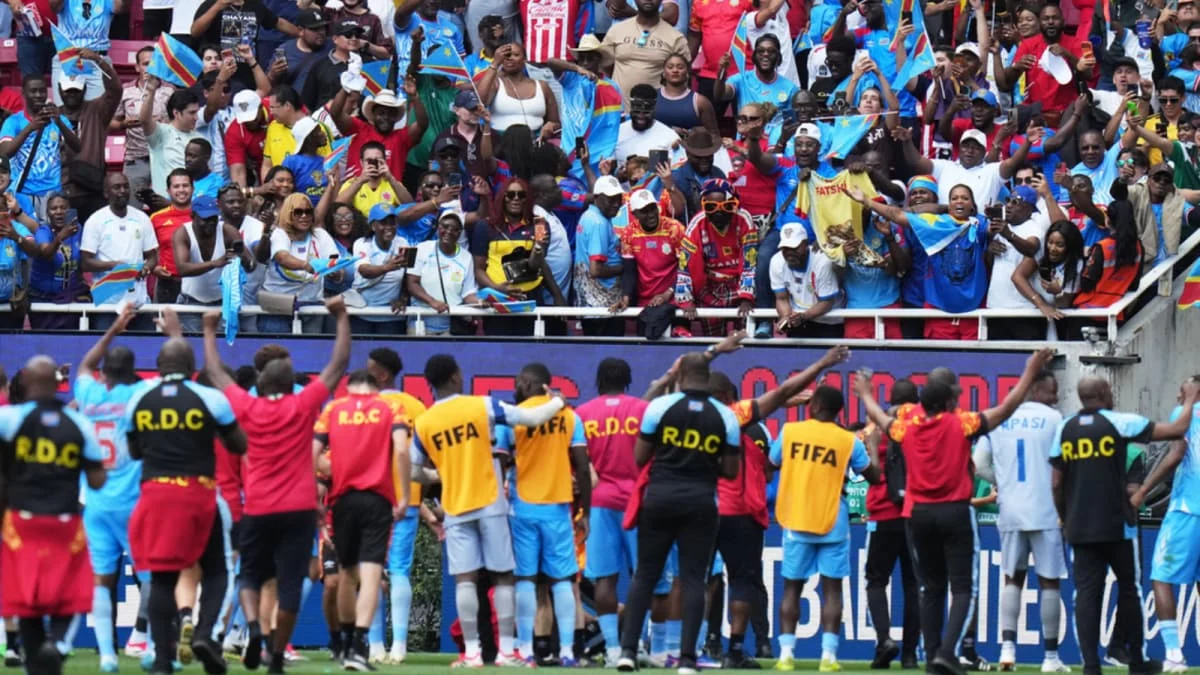
La Linea de la Concepcion, Spain – June 2, 2026 – The Democratic Republic of Congo’s meticulously planned preparations for their historic return to the FIFA World Cup have been dealt a significant blow. A crucial pre-tournament friendly against Chile, scheduled to take place in La Linea de la Concepcion, Spain, on June 9, has been unequivocally cancelled by the local mayor, Juan Franco. The decision stems from grave public health concerns surrounding a recent Ebola outbreak in the African nation, highlighting the complex intersection of global health crises and international sporting events.
The cancellation underscores the heightened vigilance of public health authorities in Europe and beyond, as nations grapple with the delicate balance of hosting international fixtures while safeguarding their populations from infectious diseases. For the Leopards of DR Congo, who are poised to make their first World Cup appearance since 1974, this setback represents not only a missed opportunity for vital match practice but also a stark reminder of the global challenges impacting their journey to the pinnacle of world football.
Main Facts: A Precautionary Halt to World Cup Warm-Up
The core of the story revolves around the immediate and decisive action taken by the mayor of La Linea de la Concepcion, Juan Franco. Citing advice from the Andalusia regional government’s health service and the municipality’s own medical experts, Mayor Franco signed a decree on June 2, 2026, officially banning the friendly match between the Democratic Republic of Congo and Chile. This measure, described by Franco as a "precautionary measure," was deemed essential to mitigate any potential health risks associated with the recent Ebola outbreak declared in eastern DR Congo in mid-May.
The Democratic Republic of Congo national team, affectionately known as the Leopards, had initially planned an extensive pre-World Cup training camp within their home country. However, the emergence of the highly contagious haemorrhagic fever forced a drastic change of plans. The team swiftly relocated their base of operations to Belgium, a decision made to ensure the safety of their squad and staff, and to facilitate international travel without undue restrictions. This relocation, while prudent, has not entirely shielded them from the far-reaching consequences of the outbreak.
The cancelled fixture against Chile was intended to be a vital part of DR Congo’s final tune-up before heading to North America for the World Cup. The tournament, co-hosted by the United States, Canada, and Mexico, is set to kick off on June 11 and conclude on July 19. The Leopards are scheduled to play their opening Group K match against Portugal in Houston, USA, on June 17, followed by games against Colombia in Guadalajara, Mexico, on June 24, and Uzbekistan in Atlanta, USA, on June 28. The cancellation in Spain, therefore, directly impacts their strategic preparations, potentially disrupting tactical fine-tuning and player cohesion just days before the global spectacle begins.
Adding another layer of complexity, US authorities had previously announced on May 22 that the entire DR Congo squad would be required to undergo a 21-day isolation period before being permitted entry into the United States for the World Cup. This stringent protocol, aimed at preventing the potential spread of the virus, further illustrates the global apprehension surrounding the outbreak and its implications for international travel and events. The cumulative effect of these health-related restrictions and cancellations presents an unprecedented challenge for a team making a historic return to the World Cup stage.
Chronology: A Timeline of Disrupted Preparations
The sequence of events leading to the cancellation paints a clear picture of how rapidly health crises can impact international sporting schedules and national aspirations.
Mid-May 2026: The first reports emerge of a new Ebola outbreak in eastern Democratic Republic of Congo. Health authorities swiftly declare an epidemic, triggering immediate concern within the country and across international borders. The highly virulent nature of the virus prompts rapid response efforts from both local and international health organizations.
Late May 2026 (exact date not specified, but following outbreak declaration): In response to the escalating health crisis at home, the DR Congo Football Federation (FECOFA) makes the difficult but necessary decision to cancel the national team’s planned pre-World Cup training camp within the country. This crucial phase of preparation, typically conducted on home soil to acclimatize players and build team spirit, is relocated to Belgium. This move is intended to safeguard the squad from exposure to the virus and to preempt potential travel restrictions.
May 22, 2026: US authorities issue a significant decree impacting DR Congo’s World Cup participation. They announce that the entire squad and accompanying staff must observe a mandatory 21-day isolation period before being granted entry into the United States for the tournament. This stringent health protocol reflects the US government’s commitment to public health security and underscores the serious nature of the Ebola threat. The 21-day incubation period of the virus necessitates such a measure to ensure no active cases or exposures are brought into the host nation.
June 2, 2026, 23:24 (First Published & Last Updated): Mayor Juan Franco of La Linea de la Concepcion, Spain, formally signs the decree banning the friendly match between DR Congo and Chile. This decision is made public, sending ripples through the footballing world and particularly affecting the two national teams involved. The timing of the cancellation, just seven days before the scheduled fixture, leaves both federations scrambling to adjust their plans.
June 5, 2026 (Implied by "Wednesday" in original article, following June 2 publication): Despite the Spanish cancellation, the DR Congo national team proceeds with another scheduled friendly. They are set to play Denmark in Liege, Belgium. This match becomes even more critical as it is now one of the last remaining opportunities for the Leopards to gain international match practice before the World Cup.
June 9, 2026 (Original Planned Date): The friendly match between DR Congo and Chile, intended to be held in La Linea de la Concepcion, would have taken place on this date, had it not been cancelled. This date now marks a gap in DR Congo’s final preparatory schedule.
June 11, 2026: The FIFA World Cup officially kicks off across the United States, Canada, and Mexico. Teams from around the globe converge, marking the culmination of years of preparation and qualification campaigns.
June 17, 2026: DR Congo is scheduled to play its inaugural Group K match against Portugal in Houston, USA. This fixture holds immense significance as their first competitive outing on the global stage in over five decades.
June 24, 2026: The Leopards travel to Guadalajara, Mexico, for their second group stage encounter against Colombia. This cross-border travel adds another layer of logistical complexity amidst health protocols.
June 28, 2026: DR Congo returns to the United States to face Uzbekistan in Atlanta for their final Group K match, concluding their initial phase of the tournament.
July 19, 2026: The FIFA World Cup concludes with the final match, determining the world champions.
This detailed chronology highlights the swift, interconnected nature of global events and how a local health crisis can cascade into international sporting disruptions, demanding adaptability and resilience from all parties involved.
Supporting Data: Understanding the Context
The decision by Mayor Franco was not made in a vacuum; it is rooted in significant public health concerns and supported by a robust understanding of both the Ebola virus and the specific challenges faced by the Democratic Republic of Congo.
The Ebola Outbreak in DR Congo
Ebola virus disease (EVD) is a severe, often fatal illness in humans. It is caused by the Ebola virus, a member of the filovirus family. The virus is transmitted to people from wild animals and spreads in the human population through direct contact with the blood, secretions, organs or other bodily fluids of infected people, and with surfaces and materials (e.g., bedding, clothing) contaminated with these fluids. The average EVD case fatality rate is around 50%, though it can range from 25% to 90% in past outbreaks.
The current outbreak, declared in eastern DR Congo in mid-May 2026, is not an isolated incident. The country has a history of battling Ebola, having experienced numerous outbreaks since the virus was first identified near the Ebola River in 1976. This recurring challenge has made the DR Congo a focal point for global health organizations like the World Health Organization (WHO), which works tirelessly with local health authorities to implement containment strategies, conduct surveillance, and provide medical care. The geographical location of the current outbreak, often in remote and conflict-affected regions, further complicates response efforts, making swift and decisive action paramount to prevent wider spread. The fear in Spain, therefore, is not an overreaction but a cautious response to a known, formidable public health threat.
DR Congo’s Historic World Cup Journey
For the Democratic Republic of Congo, qualification for the FIFA World Cup 2026 is an achievement of monumental historical significance. Their last, and only, appearance on the global stage was in 1974, as Zaire. That team, while remembered for some unique moments, faced immense challenges. Fifty-two years later, the Leopards have earned their spot, overcoming considerable hurdles, including a crucial 1-0 victory over Jamaica in the qualifiers. This return to the World Cup symbolizes national pride and a testament to the growth of football in a nation often overshadowed by political instability and humanitarian crises.
The team’s journey has been one of perseverance, and the World Cup was meant to be a moment of national unity and celebration. The current health crisis, however, casts a long shadow over this achievement, forcing the team to navigate unprecedented logistical and psychological obstacles. Their initial plan to prepare at home was a logical choice, allowing players to acclimatize and connect with their fanbase. The forced relocation to Belgium and the subsequent cancellations disrupt this rhythm, placing an additional burden on the coaching staff to maintain focus and morale amidst uncertainty.
Spain’s Public Health Vigilance
The decision taken by Mayor Juan Franco reflects Spain’s robust public health infrastructure and its commitment to safeguarding its citizens. The mayor explicitly stated he was "following recommendations from the Andalusia regional government’s health service." This body is responsible for monitoring public health risks and issuing guidance to local authorities. Furthermore, "A report by the head of La Linea’s mayoralty health service categorically advised against hosting the match, given the health risks that might arise." This indicates a thorough assessment by local medical professionals, who would have considered factors such as:
- Incubation Period: The 21-day incubation period of Ebola means individuals can be infected and contagious without showing symptoms.
- Transmission Risk: While direct contact is the primary mode, the potential for an asymptomatic carrier or a symptomatic individual to transmit the virus in a crowded environment (like a football match or associated travel) cannot be entirely ruled out without stringent checks.
- Healthcare Capacity: Even a small risk of an outbreak could strain local healthcare facilities, which might not be equipped to handle a highly infectious disease like Ebola effectively.
- Public Perception: The decision also considers public anxiety and the need to reassure residents that their health is paramount.
Spain, like other European nations, has well-established protocols for managing infectious disease threats, often collaborating with the European Centre for Disease Prevention and Control (ECDC) and the WHO. The precautionary principle, where actions are taken to prevent potential harm even if scientific certainty is not fully established, is often applied in such scenarios.
FIFA and Host Nation Protocols
FIFA, as the governing body of international football, has a responsibility to ensure the safety and well-being of all participants and spectators during its tournaments. While FIFA itself doesn’t directly manage national health policies, it works closely with host nations to implement necessary health and safety protocols. The 2026 World Cup, being co-hosted by three nations, adds layers of complexity, requiring coordination across different legal and health frameworks.
The US authorities’ requirement for a 21-day isolation period for the DR Congo squad is a prime example of a host nation exercising its sovereign right to protect its borders and public health. Such measures, while disruptive, are deemed essential when dealing with diseases of high transmissibility and mortality. This pre-emptive isolation period is designed to observe individuals for the maximum incubation period of the virus, ensuring that anyone entering the country is free from symptoms and potential infection. Similar, albeit perhaps less stringent, protocols would likely be in place or considered by Canada and Mexico for cross-border travel within the tournament. This global coordination of health measures becomes critical for the successful and safe staging of mega-events like the World Cup.
Official Responses: Navigating a Health-First Approach
The cancellation of the friendly match has elicited various responses from the involved parties, all underscoring the dominance of public health concerns over sporting aspirations.
Juan Franco, Mayor of La Linea de la Concepcion: Mayor Franco’s statements have been clear and unwavering. "I have signed the decree banning the June 9 match between the Democratic Republic of Congo and Chile," he declared, emphasizing the finality of the decision. He further elaborated, stating it was a "precautionary measure" taken directly in response to recommendations from the Andalusia regional government’s health service. His reiteration of the categorical advice from "the head of La Linea’s mayoralty health service" against hosting the match, "given the health risks that might arise," highlights the scientific and medical basis for his administrative action. The mayor’s stance reflects a commitment to prioritizing community health, even at the cost of a high-profile international sporting event. This decision, while regrettable for football fans and the teams, aligns with the principle of public officials acting decisively in the face of potential public health threats.
Andalusia Regional Government Health Service: While not quoted directly in the initial report, the influence of this regional health authority is central to the mayor’s decision. Their "recommendations" would have been based on an assessment of the current Ebola outbreak in DR Congo, the potential for international transmission, and the logistical challenges of monitoring a large group of individuals arriving from an affected region. These recommendations would have been informed by epidemiological data, risk assessments, and established public health guidelines, providing the scientific backing for the mayor’s decree.
DR Congo Football Federation (FECOFA): The FECOFA faces an unenviable task. While there has been no immediate direct quote from the federation in the provided article, their actions speak volumes. The swift decision to cancel their home training camp and relocate the team to Belgium demonstrates their proactive approach to player safety and their understanding of global health concerns. One can infer a sense of disappointment and frustration from the federation, as every cancelled match disrupts crucial preparation. However, their primary public message would undoubtedly revolve around the health and well-being of their players and staff, affirming their cooperation with international health protocols while expressing their continued determination to represent their nation at the World Cup. They would be actively working to secure alternative training arrangements and match opportunities to compensate for the lost friendly, focusing on adaptability in these challenging circumstances.
Chile Football Federation: For the Chilean team, the cancellation also presents a disruption. While their preparation might not be as directly impacted by Ebola concerns, the loss of a scheduled friendly means a gap in their own World Cup warm-up schedule. They would likely express understanding for the health-related decision while working to find an alternative opponent or training focus for that specific date. Their response would likely be diplomatic, acknowledging the gravity of the situation.
FIFA: FIFA typically issues general statements in such situations, emphasizing the health and safety of players, officials, and fans as paramount. They would likely reiterate their commitment to working closely with host countries and national federations to ensure all necessary health protocols are adhered to. While not directly involved in the La Linea decision, FIFA’s broader stance on health security during global tournaments would support the precautionary measures taken by local authorities. They would also be monitoring the situation with the DR Congo team’s travel to the US, ensuring that all necessary isolation periods and health clearances are met before the tournament begins.
US Authorities (CDC/Homeland Security): The May 22 announcement regarding the 21-day isolation period for the DR Congo squad is a clear official response from the host nation. This requirement, likely orchestrated by agencies such as the Centers for Disease Control and Prevention (CDC) and Homeland Security, demonstrates a rigorous approach to public health at border control. Their justification would be rooted in epidemiological science, aiming to eliminate the risk of importing Ebola cases into the United States, thereby protecting its population and the integrity of the World Cup.
The chorus of official responses, while varied in their direct impact, collectively reinforces a unified message: in the face of a severe public health threat like Ebola, health and safety considerations will unequivocally take precedence over sporting schedules and aspirations.
Implications: A Broader Impact on Sport and Society
The cancellation of the DR Congo vs. Chile friendly, driven by Ebola concerns, carries far-reaching implications that extend beyond the immediate disruption of a football match. These consequences touch upon the DR Congo team’s historic World Cup campaign, the broader landscape of international sports, and the ongoing global challenge of managing infectious diseases.
Impact on DR Congo’s World Cup Preparation
For the Leopards, the implications are profound and multi-faceted:
- Disrupted Preparation: The loss of a critical friendly match just days before the World Cup deprives the team of valuable match practice, an opportunity to fine-tune tactics, build team cohesion, and test player fitness against international opposition. This is particularly crucial for a team making a return to the global stage after such a long hiatus.
- Logistical Strain and Financial Burden: The initial cancellation of the home training camp and the subsequent relocation to Belgium incurred significant logistical and financial costs for the FECOFA. The cancellation of the Spanish friendly further complicates their schedule, potentially forcing them to seek last-minute alternatives or adjust their training regimen without a competitive fixture.
- Psychological Impact: Being viewed as a potential health risk, coupled with the stringent isolation requirements, can take a heavy psychological toll on the players and staff. It can create a sense of isolation, add stress, and detract from the celebratory atmosphere that should accompany a World Cup debut. Maintaining morale and focus amidst such external pressures will be a significant challenge for the coaching staff.
- Perception and Stigma: The repeated imposition of health-related restrictions, while medically justified, can inadvertently contribute to a perception of stigma surrounding the team and, by extension, their nation. This can be challenging for a country striving to present a positive image on the world stage.
Implications for International Sports and Public Health
This incident sets a significant precedent for how international sporting events will navigate future global health crises:
- Prioritization of Public Health: The decision by Mayor Franco firmly establishes that public health and safety will take precedence over sporting schedules, even for events as prestigious as World Cup warm-ups. This reinforces a global commitment to public health.
- Increased Vigilance and Protocols: The incident will likely lead to even stricter health screening protocols and travel advisories for athletes and teams traveling from regions affected by infectious disease outbreaks. Event organizers, including FIFA, will need to integrate more robust health risk assessments into their planning.
- Challenges for Developing Nations: Teams from developing countries, which are often disproportionately affected by health crises or lack the resources for immediate relocation and extensive health compliance, may face greater hurdles in participating in international events. This highlights the need for global solidarity and support mechanisms to ensure equitable participation.
- Role of Local Authorities: The power of local authorities to make critical decisions impacting international events is underscored. This decentralization of decision-making, while ensuring local safety, can add layers of complexity to event planning.
Broader Societal and Geopolitical Implications
Beyond the immediate sporting context, the situation reflects deeper societal and geopolitical realities:
- Global Interconnectedness: The ease of international travel means that local health crises can rapidly become global concerns, demonstrating the interconnectedness of human societies and the shared responsibility for public health.
- Stigma and Discrimination: While the decisions are rooted in scientific precaution, there is always a risk of fostering stigma against individuals or groups from affected regions. It underscores the importance of clear communication and empathy to avoid discriminatory practices.
- Investment in Health Infrastructure: The recurring nature of outbreaks like Ebola in DR Congo highlights the critical need for sustained international investment in public health infrastructure, surveillance, and rapid response mechanisms in vulnerable regions.
- Resilience and Adaptability: The incident serves as a stark reminder of the need for resilience and adaptability in a world facing increasingly frequent and diverse global challenges, whether they be health crises, climate events, or geopolitical tensions. Sporting organizations, national federations, and individual athletes must be prepared to adjust and overcome unforeseen obstacles.
In conclusion, the cancellation of DR Congo’s friendly in Spain is more than just a missed football match. It is a powerful illustration of the profound impact of global health crises on international sport, highlighting the delicate balance between athletic ambition, public safety, and national pride. For the Leopards, it is a testament to their unwavering spirit as they navigate these unprecedented challenges on their path to a historic World Cup appearance, reminding the world that their journey is about more than just football.
