

Main Facts
Motorola, a brand traditionally recognized for its clean Android experience and reliable camera performance, is embarking on a significant strategic pivot with the launch of its latest flagship, the Motorola Edge 70 Max. This device marks a decisive entry into the highly competitive premium performance-focused smartphone segment, directly challenging established players like the iQOO 15R and the OnePlus 15R. Priced from ₹54,999, the Edge 70 Max is engineered with a singular, uncompromised objective: raw performance.
At its core, the smartphone boasts Qualcomm’s cutting-edge Snapdragon 8 Gen 5 chipset, a processor designed to handle the most demanding tasks with effortless grace. Complementing this powerhouse is an exceptionally large 7,100 mAh battery, addressing one of the primary concerns for power users and gamers. Innovative features such as bypass charging, a premium flat-frame design, and an array of gaming-centric enhancements further underscore its commitment to a high-octane user experience. Beyond raw power, Motorola has also integrated its new Qira AI platform, aiming to deliver a smarter, more intuitive interaction, alongside robust durability certifications including IP68/IP69 and MIL-STD-810H. The central question for discerning buyers, and indeed the focus of this comprehensive review, is whether this ambitious combination of hardware and software translates into a complete and compelling experience worthy of its premium price tag.
Chronology and Strategic Shift
Motorola’s journey in the smartphone market has seen various transformations, from its pioneering days to its more recent resurgence under Lenovo. Historically, the brand has carved a niche for itself by offering near-stock Android experiences, robust build quality, and a focus on user-friendly software devoid of excessive bloatware. The "Edge" series, in particular, has often showcased Motorola’s design prowess, frequently featuring distinctive curved displays and a focus on photographic capabilities. However, recent statements from Motorola’s India MD, hinting at significant improvements in market share, suggest a readiness to push boundaries and explore new territories.
The introduction of the Edge 70 Max signifies a calculated and timely strategic shift. The Indian smartphone market, especially in the premium and sub-flagship categories, has witnessed an increasing demand for devices that excel in sustained performance, particularly for mobile gaming and heavy multitasking. While Motorola has offered capable devices in the past, a dedicated, performance-first flagship at this price point is a novel approach for the brand. This move can be seen as a direct response to evolving consumer preferences and the intensifying competition from brands that have traditionally dominated the performance narrative.
Unlike its predecessors which often balanced performance with camera innovation or unique software features, the Edge 70 Max places performance at the forefront of its design philosophy. This doesn’t mean other aspects are neglected, but rather that every engineering decision, from the choice of chipset to the cooling system and battery capacity, converges on delivering an uncompromised speed and responsiveness. The shift from curved displays, a hallmark of earlier Edge devices, to a flat-frame design also reflects a pragmatic understanding of the target audience, particularly gamers who prioritize grip and accuracy over aesthetic curves that might interfere with touch input. This deliberate evolution suggests Motorola is not merely entering a new segment but is doing so with a well-researched and user-centric strategy, leveraging its engineering capabilities to meet specific market demands.
Supporting Data and In-Depth Analysis
Design: Subtlety Meets Premium Durability
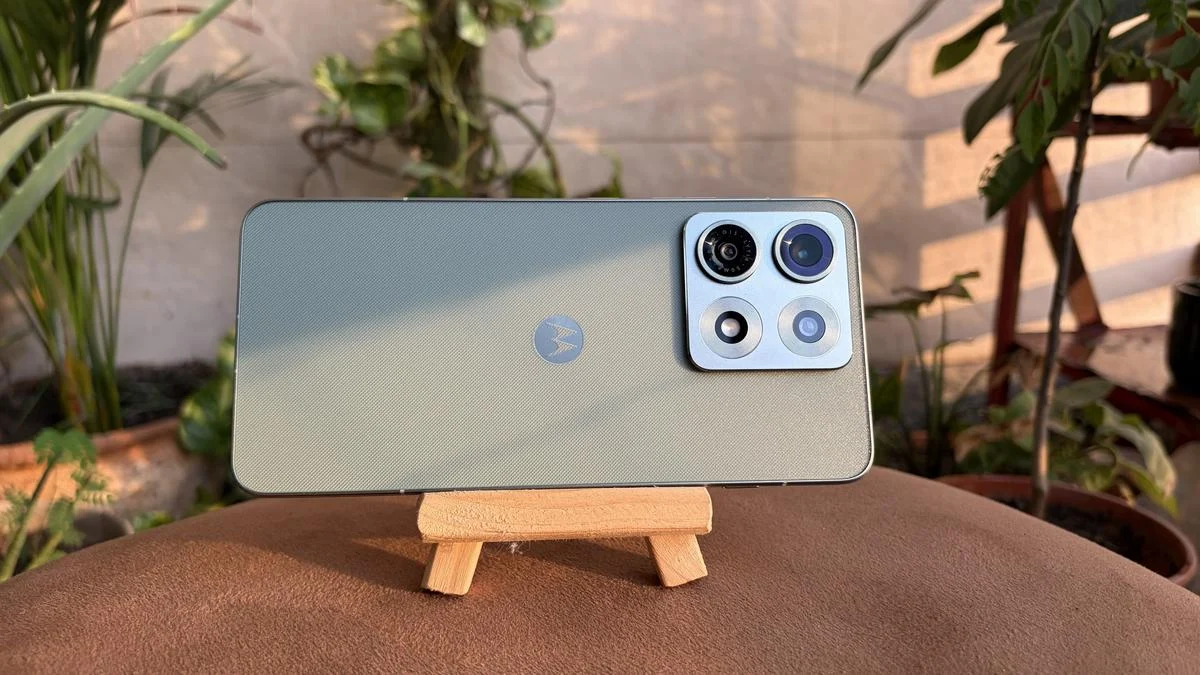
The Motorola Edge 70 Max deftly sidesteps the common pitfalls of "gaming phone" aesthetics. Rather than resorting to aggressive lines, RGB lighting, or ostentatious branding, Motorola has opted for a sophisticated and understated design. Our Aqua Grey review unit, for instance, exuded an elegance that felt far more premium than many flashy alternatives. This refined appearance is a significant strength, allowing the device to seamlessly transition from an intense gaming session to a formal business meeting without drawing undue attention.

However, the phone’s commitment to a substantial feature set means it’s a physically imposing device. Its large 6.8-inch display contributes to dimensions that make single-handed use challenging for many. Measuring 8.29mm in thickness and weighing 221g, it is noticeably heavier than its direct competitors, the OnePlus 15R and the iQOO 15R. This added heft, however, is a deliberate trade-off, accommodating the massive battery and advanced cooling system within. The flat aluminium frame, meticulously crafted, paired with the robust Gorilla Glass 7i on both the front and rear panels, instills a reassuring sense of premium quality and resilience in hand. Furthermore, the textured glass back panel effectively repels fingerprints, maintaining its pristine appearance even with prolonged use.
A notable design evolution from previous Edge smartphones is the complete abandonment of the curved display in favor of a flat panel. This design choice is not merely aesthetic; it offers tangible functional benefits, particularly for gamers. Flat edges significantly reduce accidental touches during intense gaming sessions, where precise input is crucial, and provide a more secure and comfortable grip when held in landscape mode. The front of the device presents a thoroughly modern aesthetic, characterized by slim bezels surrounding the expansive display and a centrally positioned punch-hole selfie camera that remains unobtrusive during content consumption. On the rear, the camera module is tastefully integrated, blending harmoniously with the overall design rather than dominating it as an unnecessary focal point.
Durability is another area where the Edge 70 Max truly excels. It boasts impressive IP68 and IP69 ratings, signifying comprehensive resistance to dust and water ingress, making it suitable for use in challenging environments. Adding another layer of protection, the phone carries MIL-STD-810H military-grade certification, providing enhanced resilience against accidental drops and impacts—a feature that inspires considerable user confidence. The thoughtful placement of the USB Type-C port, SIM tray, and primary speaker at the bottom, while the power button and volume rocker reside on the right edge, optimizes usability. A distinctive addition is the dedicated AI Key on the left side, a highly customizable shortcut that can be programmed to launch specific applications or activate AI functions. This innovative feature offers a level of personalized convenience not typically found in its rivals, such as the iQOO 15R or the OnePlus 15R, setting the Edge 70 Max apart in terms of intelligent functionality.
Display: A Visual Feast with Minor Outdoor Limitations
The display of the Motorola Edge 70 Max stands out as one of its most compelling attributes. It features a generous 6.8-inch 10-bit LTPO AMOLED panel, delivering a stunning QHD+ (1440×3168 pixels) resolution. This 2K resolution is a key differentiator in its segment, offering unparalleled sharpness and detail. The adaptive 144 Hz refresh rate ensures silky-smooth scrolling and animations while intelligently optimizing power consumption based on content. Further enhancing the visual experience are HDR10+ and Dolby Vision support, which bring content to life with exceptional dynamic range and vibrant colors. With 100% DCI-P3 color coverage, the display is capable of reproducing a vast spectrum of colors with remarkable accuracy, making it ideal for both media consumption and creative tasks. Motorola claims an impressive peak brightness of 7,000 nits, though it’s important to note that such extreme brightness is typically achieved in small areas for specific HDR content.
In day-to-day usage, the display truly impresses, rendering rich colors, deep blacks, and excellent contrast that make images and videos pop. The fluid animations, facilitated by the adaptive refresh rate, contribute to an incredibly responsive and immersive user interface. Viewing angles remain impeccable, ensuring color accuracy and clarity from virtually any perspective. HDR content, in particular, benefits from the panel’s capabilities, appearing vibrant and well-balanced tonally. However, despite the formidable brightness claims, outdoor visibility is one area where the display, while still good, falls slightly short of absolute flagship standards. In direct sunlight, some competitors might offer better sustained brightness or superior anti-reflective coatings, making the Edge 70 Max’s display a top performer but with a subtle caveat in extreme conditions.
OS and AI: Clean Interface, Ambitious AI, and Software Update Concerns
The Motorola Edge 70 Max ships with the Android 16-based Hello UI, offering an experience that largely adheres to the principles of stock Android. This approach translates into a clean, intuitive, and highly responsive interface. Animations are fluid, multitasking is seamless, and the overall user experience is refreshingly uncluttered, avoiding the overwhelming nature of some heavily customized Android skins. While there are a few more pre-installed applications than what seasoned Motorola users might expect, the good news is that most of these can be easily uninstalled during the initial setup process, allowing users to tailor their software environment to their preferences.
A major focus for Motorola this year is the integration of Artificial Intelligence, showcased through its innovative Qira platform. This comprehensive AI suite consolidates several intelligent features under a unified interface, including Chat Mode for enhanced conversational interactions, Creator Zone for AI-assisted content generation, Next Move for proactive task suggestions, Pay Attention for smart display management, and Catch Me Up for summarized notifications. These features are designed to significantly improve productivity and streamline daily workflows. Furthermore, the Qira platform boasts robust cross-device integration capabilities with Lenovo laptops and tablets, fostering a cohesive ecosystem that enhances overall productivity. The dedicated AI Key on the left side of the device provides quick, convenient access to these powerful AI tools, highlighting Motorola’s commitment to making AI readily available.
However, there is a notable limitation regarding the AI experience: the full suite of Qira features is currently restricted to the 12 GB RAM variant of the device. The 8 GB RAM review unit is expected to receive these complete AI functionalities through a future software update, which might cause some initial disappointment for users opting for the base model.
Another significant point of contention, particularly in the premium segment, is Motorola’s software support policy. The company promises three Android OS upgrades and five years of security updates. While this is respectable, it trails behind the offerings of its direct rivals. Both the iQOO 15R and the OnePlus 15R commit to four years of OS updates and an even more extensive six years of security patches. This disparity in software longevity could be a crucial factor for buyers who prioritize long-term device relevance, resale value, and access to the latest Android features and security enhancements. In an era where devices are kept for longer, Motorola’s shorter update cycle might be perceived as a drawback against an otherwise compelling package.

Performance: Unadulterated Power for the Demanding User
At the very core of the Motorola Edge 70 Max lies Qualcomm’s latest and most powerful mobile processor, the Snapdragon 8 Gen 5. This flagship chipset is paired with high-speed LPDDR5X RAM and UFS 4.1 storage, ensuring that every operation, from launching applications to loading complex games, is executed with blistering speed and efficiency. Our review unit, equipped with 8 GB of RAM and 256 GB of storage, consistently demonstrated unwavering performance throughout the testing period. Whether juggling a multitude of applications, engaging in demanding video editing tasks, streaming high-resolution content, or seamlessly transitioning between graphically intensive games, the phone maintained a consistently smooth and responsive user experience.
Recognizing the needs of its performance-focused audience, particularly gamers, Motorola has engineered the device with an advanced thermal management system. A substantial 5,500mm² vapour chamber cooling system is integrated to efficiently dissipate heat, ensuring sustained peak performance even during extended periods of heavy load. Complementing this is the innovative bypass charging feature, which allows power to be delivered directly to the system while gaming, bypassing the battery. This not only reduces heat generation but also prolongs the overall lifespan of the battery—a thoughtful addition for serious mobile gamers.
The benchmark results further solidify the Edge 70 Max’s performance credentials. In Geekbench’s single-core test, it scored 2,777, and an impressive 9,058 in the multi-core test. The GPU benchmark registered 17,114, while its AnTuTu score reached a staggering 3,059,596. For context, the iQOO 15R posted scores of 2,543 (single-core), 8,477 (multi-core), 17,336 (GPU), and 3,101,178 on AnTuTu. The OnePlus 15R achieved 2,866, 9,506, 17,913, and 3,035,832 respectively. While each phone exhibits slight variations in specific benchmark categories, these differences are virtually imperceptible in day-to-day usage. All three devices deliver flagship-grade responsiveness, and the Motorola Edge 70 Max comfortably keeps pace with its rivals, even with the slightly lower RAM configuration of our review unit.
Gaming is undeniably where Motorola’s inaugural dedicated performance phone truly distinguishes itself. Titles such as BGMI, Call of Duty: Mobile, Asphalt Legends, and Shadow Fight ran flawlessly, consistently delivering high frame rates. The phone supports up to 120fps in compatible games, ensuring an incredibly smooth and immersive gameplay experience. Crucially, the expansive cooling system effectively manages thermals, preventing significant performance throttling even during prolonged gaming sessions. Overall, Motorola has struck an excellent balance between delivering raw processing power and maintaining thermal efficiency, resulting in a superb gaming platform.
Camera: A Pleasant Surprise in Image Processing
The camera system of the Motorola Edge 70 Max doesn’t immediately dazzle with instantaneous results upon pressing the shutter button. There’s a noticeable delay of a second or two for image processing, and the initial preview often appears somewhat flat. However, this is where Motorola’s sophisticated AI processing comes into play. Once the computational photography algorithms complete their work, the final image undergoes a remarkable transformation, exhibiting noticeably improved colors, enhanced contrast, and superior detail. While it demands a modicum of patience, the consistently refined end result typically justifies the brief wait.
The phone features a capable hardware setup: a 50 MP Sony LYT-710 primary camera with Optical Image Stabilisation (OIS), an 8 MP ultrawide sensor that ingeniously doubles as a macro camera, and a 32 MP front-facing camera. While this configuration might not appear as overtly ambitious as some competitors boasting elaborate triple-camera arrays or high megapixel counts, Motorola’s reliance on advanced image processing effectively maximizes the potential of its primary sensor. Daylight photographs are consistently sharp, characterized by pleasing color reproduction, well-balanced dynamic range, and commendable contrast. The AI Photo Enhancement feature further refines textures and clarity, enhancing the overall image quality without introducing an artificial or over-processed look.
Night photography on the Edge 70 Max proves to be another pleasant revelation. With a steady hand and a degree of patience, the device is capable of capturing remarkably detailed low-light shots. Highlights are well-controlled, and image noise is kept to a minimum. Challenging elements like street lights and reflective surfaces are handled adeptly, while shadow areas retain a respectable amount of detail, avoiding crushing. Similar to daylight shots, the phone occasionally requires an extra moment to process night exposures, but the resulting cleaner output and improved exposure make the wait genuinely worthwhile.
Selfies captured by the 32 MP front camera are equally impressive, delivering sharp facial details, accurate and balanced skin tones, and a wide dynamic range that handles varied lighting conditions well. Video recording capabilities support 4K resolution with stabilization across multiple cameras, ensuring smooth and professional-looking footage suitable for everyday content creators. In summary, while the Motorola Edge 70 Max isn’t explicitly marketed as a camera-centric smartphone, its photographic performance is commendably strong, easily holding its own within the premium segment.
Battery: Endurance Redefined with Advanced Charging
The Motorola Edge 70 Max houses a truly colossal 7,100 mAh battery, a capacity that is significantly larger than most of its competitors in the premium segment. This massive power reservoir translates directly into exceptional battery life, allowing the phone to comfortably last an entire day even under heavy usage scenarios involving intensive gaming, prolonged video streaming, and extensive photography. For moderate users, stretching the battery life to a second day without needing a recharge is entirely feasible. Motorola’s software optimization plays a crucial role here, ensuring that the substantial battery capacity translates into real-world endurance without excessive background drain during everyday tasks. Standby battery drain is minimal, making the Edge 70 Max an incredibly dependable daily companion for users who demand maximum uptime.

Charging the device is equally impressive, thanks to the bundled 90W TurboPower charger. This fast-charging solution is capable of replenishing the massive battery from empty to full in approximately one hour, minimizing downtime and ensuring users can quickly get back to their activities. Furthermore, Motorola has positioned itself as a pioneer in this segment by offering 25W Qi2.2 magnetic wireless charging, complete with compatibility for MagSafe accessories. This advanced wireless charging standard not only provides the convenience of cable-free power delivery but also ensures efficient and secure alignment, offering a truly premium charging experience that is still a rarity in this price bracket.
Official Responses and Market Positioning
While specific "official responses" beyond the general statements about market share improvement were not part of the provided text, we can infer Motorola’s strategic intent. The Edge 70 Max represents Motorola’s confident assertion into a higher-value segment, signaling a departure from being solely a mid-range contender. The emphasis on raw performance, robust cooling, and gaming-centric features like bypass charging and a flat display indicates a clear understanding of the premium user base’s evolving demands.
Motorola, under Lenovo, appears to be leveraging its parent company’s broader technological ecosystem, evident in the cross-device integration with Lenovo laptops and tablets facilitated by the Qira AI platform. This move positions Motorola not just as a smartphone manufacturer but as a key component of a larger, interconnected productivity and entertainment ecosystem. By introducing a device that doesn’t overtly "scream gaming phone" but delivers top-tier gaming performance, Motorola is aiming to capture a broader audience—those who desire uncompromised power without sacrificing design elegance or professional utility. The inclusion of an AI Key and the Qira platform also showcases Motorola’s commitment to staying at the forefront of technological trends, particularly in artificial intelligence, which is rapidly becoming a battleground for smartphone innovation.
Implications
The launch of the Motorola Edge 70 Max carries significant implications for both the brand and the broader premium smartphone market.
Market Impact: Motorola’s aggressive entry into the premium performance segment with a well-rounded and competitively priced device will undoubtedly intensify competition. It directly challenges the established dominance of players like iQOO and OnePlus, potentially forcing them to innovate further or adjust their pricing strategies. The Edge 70 Max’s subtle aesthetic, combined with its gaming prowess, could also influence a trend where "gaming phones" move away from overt, aggressive designs towards more sophisticated and versatile aesthetics, appealing to a wider demographic of power users. This could redefine what a "performance phone" looks like in the market.
User Experience: For consumers, the Edge 70 Max offers a compelling proposition. It caters exceptionally well to users who prioritize raw processing power, immersive gaming, and long-lasting battery life, all wrapped in a premium, understated design. The stunning 2K display, dependable cameras, and innovative features like magnetic wireless charging and the customizable AI Key contribute to a genuinely premium user experience. The Qira AI platform, once fully available across all variants, promises a smarter, more integrated daily workflow, especially for users within the Lenovo ecosystem. However, the slightly weaker outdoor display visibility and, more critically, the comparatively shorter software update policy, might be considerations for some. Users who hold onto their phones for longer durations or demand the absolute latest Android versions might find these aspects a compromise.
Future Outlook: The Edge 70 Max signifies a pivotal moment for Motorola’s product strategy. It suggests a strong commitment to expanding its footprint in higher-margin segments, moving beyond its traditional strongholds. If this performance-first approach proves successful, we can expect Motorola to continue refining and expanding its premium offerings, potentially becoming a more formidable challenger across various flagship categories. Addressing the software update policy in future iterations will be crucial for Motorola to truly cement its position as a top-tier brand, as long-term software support is a non-negotiable expectation in the premium market. The continued development and integration of AI, as seen with Qira, will also be a key differentiator, potentially shaping how users interact with their Motorola devices in the years to come. The Edge 70 Max is not just a new phone; it’s a statement of intent, signaling a more ambitious and performance-driven future for Motorola.
