

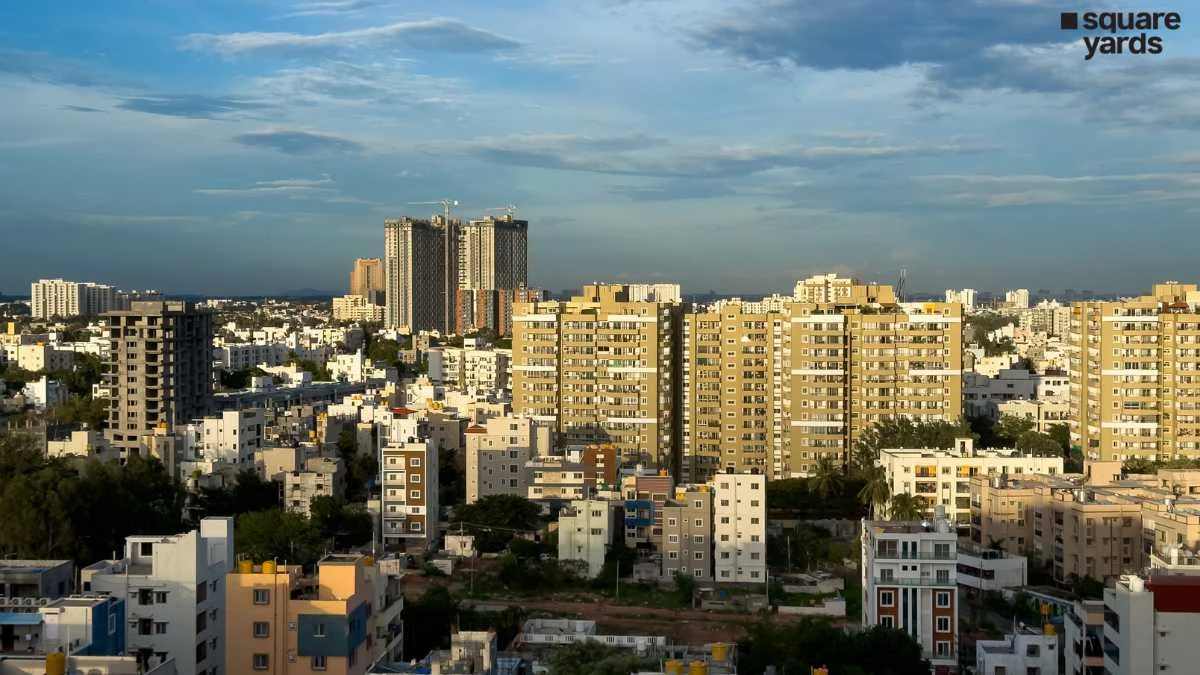
BENGALURU – For decades, the narrative of East Bengaluru’s real estate dominance was written in the boardrooms of Whitefield and the tech corridors of Sarjapur Road. However, as these established hubs approach a state of urban saturation, the spotlight is shifting. A new protagonist has emerged in the city’s residential evolution: Panathur.
Once considered a peripheral transition zone, Panathur is rapidly transforming into a self-sustaining, premium urban micro-market. Driven by a rare combination of strategic connectivity, robust infrastructure pipelines, and an environmental footprint that is increasingly scarce in the "Silicon Valley of India," Panathur is no longer just a "spillover" destination. It is becoming the preferred choice for a new generation of discerning homebuyers.
In this comprehensive analysis, we explore the multi-dimensional growth of Panathur, supported by insights from industry veteran Mr. Srinivas Moramchetty, Director of Sales & Marketing at Sumadhura Group, and a deep dive into the socio-economic factors propelling this micro-market toward the top of Bengaluru’s investment hierarchy.
1. Main Facts: The Strategic Convergence of Work and Life
The rise of Panathur is predicated on its unique geography. Unlike many emerging suburbs that rely on a single economic driver, Panathur sits at the epicenter of a "Golden Quadrant," bordered by Whitefield, Bellandur, Marathahalli, and Sarjapur Road.
The ORR Economic Powerhouse
The defining characteristic of Panathur’s value proposition is its proximity to the Outer Ring Road (ORR) technology corridor. This stretch is arguably the most productive economic zone in the country, housing nearly 500 multinational corporations and domestic tech giants. With an estimated workforce of close to one million professionals, the demand for high-quality housing within a short commuting radius is not just high—it is relentless.
A Self-Sustaining Ecosystem
Panathur has successfully transitioned from a residential enclave into a holistic urban ecosystem. The locality is now serviced by a dense network of social infrastructure, including:
- Education: Proximity to top-tier international schools such as New Horizon Gurukul and Orchids International.
- Healthcare: Access to multi-specialty hospitals including Sakra World Hospital and Manipal Hospital.
- Retail and Leisure: Close proximity to major malls like Nexus Shantiniketan and Phoenix Marketcity, alongside a growing number of high-street retail developments within the micro-market itself.
2. Chronology: From Transit Point to Premium Destination
To understand Panathur’s current trajectory, one must look at the phases of its development over the last decade.
- Phase I: The Connectivity Bridge (2010–2015): During this period, Panathur served primarily as a transit corridor for professionals working in Whitefield but living in the more established parts of the city. Development was sporadic, consisting mostly of standalone apartments and local commercial establishments.
- Phase II: The Infrastructure Catalyst (2016–2020): As the ORR became congested, the need for residential pockets that offered "walk-to-work" or "short-commute" lifestyles intensified. This period saw the initial entry of organized developers and the announcement of major infrastructure projects like the Metro Blue Line.
- Phase III: The Premium Transformation (2021–Present): Post-pandemic, buyer preferences shifted toward larger homes, green spaces, and integrated townships. Panathur, with its available land parcels and natural assets, became the canvas for Grade A developers to launch premium projects. The result has been a sharp uptick in capital values and a shift in the demographic profile of the residents.
3. Supporting Data: The Economics of Appreciation
The most compelling argument for Panathur’s growth lies in the hard data. Market performance over the last five years indicates that the micro-market is outperforming many of its more famous neighbors.
Capital Appreciation
According to recent market reports, capital values in Panathur have appreciated by approximately 83% over the last five years. This growth is a reflection of both the improving infrastructure and the increasing scarcity of quality residential land in East Bengaluru. For early investors, this has represented a significant wealth-creation event, while for new buyers, it signals a market with strong underlying momentum.
Rental Yields and Demand
Bengaluru has traditionally offered some of the best rental yields in India, and Panathur is at the forefront of this trend.
- Average Rental Yields: 3% to 5% annually.
- Occupancy Rates: High demand from the tech workforce ensures that vacancy rates remain among the lowest in the city.
- Investor Profile: A significant portion of the buying activity is driven by "end-user investors"—professionals who buy for self-occupation but recognize the high resale and rental potential of the asset.
Infrastructure Pipeline
The future valuation of Panathur is intrinsically linked to four major upcoming projects:
- The Blue Line Metro: Connecting Central Silk Board to the International Airport via the ORR, with stations conveniently located near Panathur.
- Bengaluru Business Corridor (PRR): A 73-km peripheral ring road that will drastically reduce transit times to North and South Bengaluru.
- Gunjur–Varthur–ORR CDP Road: A critical arterial project designed to de-congest local traffic and provide seamless internal connectivity.
- Suburban Rail Network: Enhancing regional connectivity for the wider metropolitan area.
4. Official Responses: The Expert Perspective
The industry’s confidence in Panathur is best summarized by those shaping its skyline. Mr. Srinivas Moramchetty, Director – Sales & Marketing at Sumadhura Group, emphasizes that the "Panathur story" is one of balanced urbanism.
"Panathur’s residential story has long been shaped by established destinations such as Whitefield and Sarjapur Road," notes Moramchetty. "Yet as these micro-markets continue to mature, a quieter transformation is unfolding. Panathur is increasingly becoming the preferred choice for discerning homebuyers seeking the ideal balance of connectivity, lifestyle, and long-term value."
He further highlights the shift in developer philosophy: "As more Grade A developers expand their presence in Panathur, they are raising benchmarks in design, construction quality, sustainability, and community planning. This not only enhances buyer confidence but also contributes to the long-term appreciation and overall evolution of the locality."
Market analysts also point out that the entry of institutional developers has brought a level of transparency and project execution that was previously lacking in emerging markets, further de-risking the area for conservative buyers.
5. The Environmental Edge: Where Urban Living Meets Nature
In a city often criticized for its "concrete jungle" expansion, Panathur offers a rare environmental reprieve. This "green-blue" infrastructure is perhaps the micro-market’s most unique selling point.
The Lake and Forest Ecosystem
Panathur is anchored by the Panathur Lake, which serves as a natural lung for the community. Furthermore, the area is flanked by nearly 160 acres of forest cover. In the post-COVID era, where health and wellness have become non-negotiable for homebuyers, this access to nature is a premium asset.
The Wellness-Centric Development
Developers are no longer treating green spaces as an afterthought. Modern projects in Panathur are being designed around:
- Biophilic Design: Integrating natural light and ventilation.
- Active Lifestyles: Extensive jogging tracks, cycling paths, and outdoor wellness zones that leverage the local climate and greenery.
- Water Management: Advanced rainwater harvesting and lake rejuvenation efforts that ensure long-term ecological sustainability.
6. Implications: What This Means for the Future of Bengaluru
The evolution of Panathur has broader implications for Bengaluru’s urban development strategy.
The Decentralization of the "Premium" Tag
Historically, "premium" was a label reserved for Central Business District (CBD) areas or specific pockets of Indiranagar and Koramangala. Panathur’s rise proves that premium living is now defined by the quality of the project and the efficiency of the commute, rather than just a prestigious pin code.
Solving the "Last Mile" Challenge
The success of Panathur will likely serve as a blueprint for other micro-markets. By integrating residential hubs directly into the tech corridors, the city reduces the strain on its central infrastructure and promotes a more sustainable "hub-and-spoke" model of development.
The Verdict for Homebuyers
For the modern homebuyer, Panathur represents a "sweet spot" in the market. It offers the infrastructure of a mature market with the growth potential of an emerging one. While the "value gap" between Panathur and its neighbors like Whitefield is currently narrowing, the window for high-growth entry remains open as the Metro and PRR projects approach completion.
Conclusion: A Defining Residential Address
As Bengaluru continues to expand, the distinction between "living near work" and "living well" is disappearing. Panathur’s growth story is built on durable fundamentals: a strategic location along the ORR, a massive infrastructure pipeline, and a commitment to preserving natural surroundings.
For those looking to invest in the next decade of Bengaluru’s growth, Panathur offers more than just real estate; it offers a glimpse into the future of premium urban living—a future where convenience, nature, and value coexist in a rare, harmonious balance.
Disclaimer: The insights regarding market trends and developer confidence are based on current industry data and the professional observations of Mr. Srinivas Moramchetty, Sumadhura Group. Prospective buyers are encouraged to conduct independent due diligence.
