

By [Your Publication Name] News Desk
The Jaipur Literature Festival (JLF) has long served as a crucible for global intellectual exchange, but few sessions in its 2022 edition resonated with as much historical gravitas as the discussion surrounding the deep-rooted presence of the Ramayana in the Indonesian archipelago. On the fourth day of the festival, a panel comprising distinguished historians and authors—William Dalrymple, Malini Saran, and Vinod C. Khanna—convened to dismantle the modern Indian misconception that the Rama saga is a purely subcontinental phenomenon.
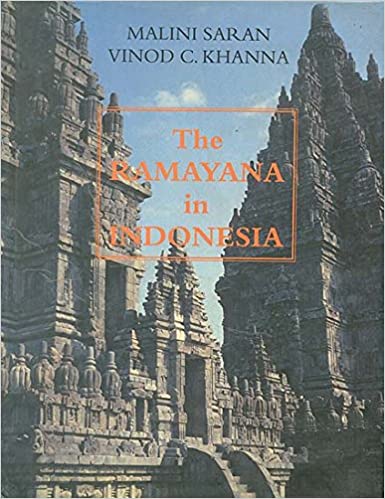
Centering on the seminal work The Ramayana in Indonesia, co-authored by Saran and Khanna, the discussion illuminated a thousand-year-old cultural bridge. The scholars argued that the Indonesian interpretation of the Ramayana is not merely a translation but a sophisticated "transcreation" that has, in many ways, preserved nuances of the epic that have evolved differently in its land of origin.
Main Facts: A Cultural Mirror Across the Indian Ocean
The core premise of the discussion was the paradoxical nature of Indian cultural memory. As William Dalrymple noted, a significant portion of the Indian populace remains unaware that some of the most magnificent and sophisticated monuments of Hinduism and Buddhism are located thousands of miles away from the Ganges, nestled in the volcanic landscapes of Java and the lush terrains of Cambodia.
The Ramayana arrived in Southeast Asia not through conquest or colonization, but through the fluid exchange of trade, religion, and art. By the 9th century, the epic had become so deeply embedded in the Javanese psyche that it inspired two simultaneous masterpieces: a monumental series of stone reliefs and a groundbreaking literary work known as the Kakawin Ramayana.
Key takeaways from the session included:
- The Source Divergence: Unlike many Indian versions, the Old Javanese Ramayana (Kakawin) draws its primary inspiration from the Bhattikavya, a 6th-century Sanskrit poem, rather than Valmiki’s original text.
- The Happy Ending: The Javanese tradition famously omits the Uttara Kanda, the final book of the Valmiki Ramayana, which contains the tragic exile of Sita. In the Javanese version, the story concludes with the triumphant and joyous return of Rama and Sita to Ayodhya.
- Linguistic Synthesis: While the Kakawin is written in Old Javanese, it is saturated with Sanskrit vocabulary, representing a high-water mark of linguistic fusion.
Chronology: The Journey of the Epic (4th – 9th Century CE)
The timeline of the Ramayana’s journey to Indonesia is a testament to the "Sanskrit Cosmopolis"—a period where Indian ideas traveled along maritime silk routes.
- 4th – 5th Century CE: Early contact begins as Indian merchants and priests travel to the Indonesian islands (Sumatra and Java). Sanskrit inscriptions begin to appear, signaling the adoption of Indian courtly culture by local chieftains.
- 8th Century CE: The rise of the Sailendra and Sanjaya dynasties in Central Java leads to a massive boom in temple construction. This era sees the blending of indigenous ancestor worship with Vedic and Buddhist traditions.
- Late 9th Century (c. 850–900 CE): This is the "Golden Age" of the Ramayana in Java. Two major events occur:
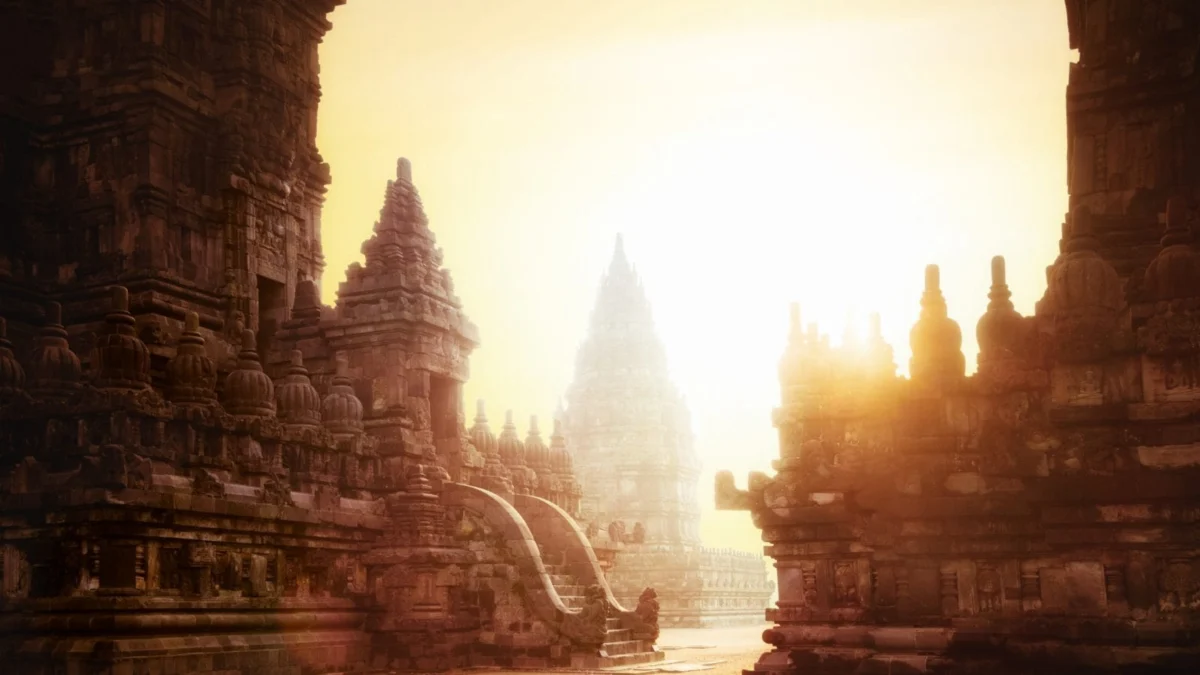
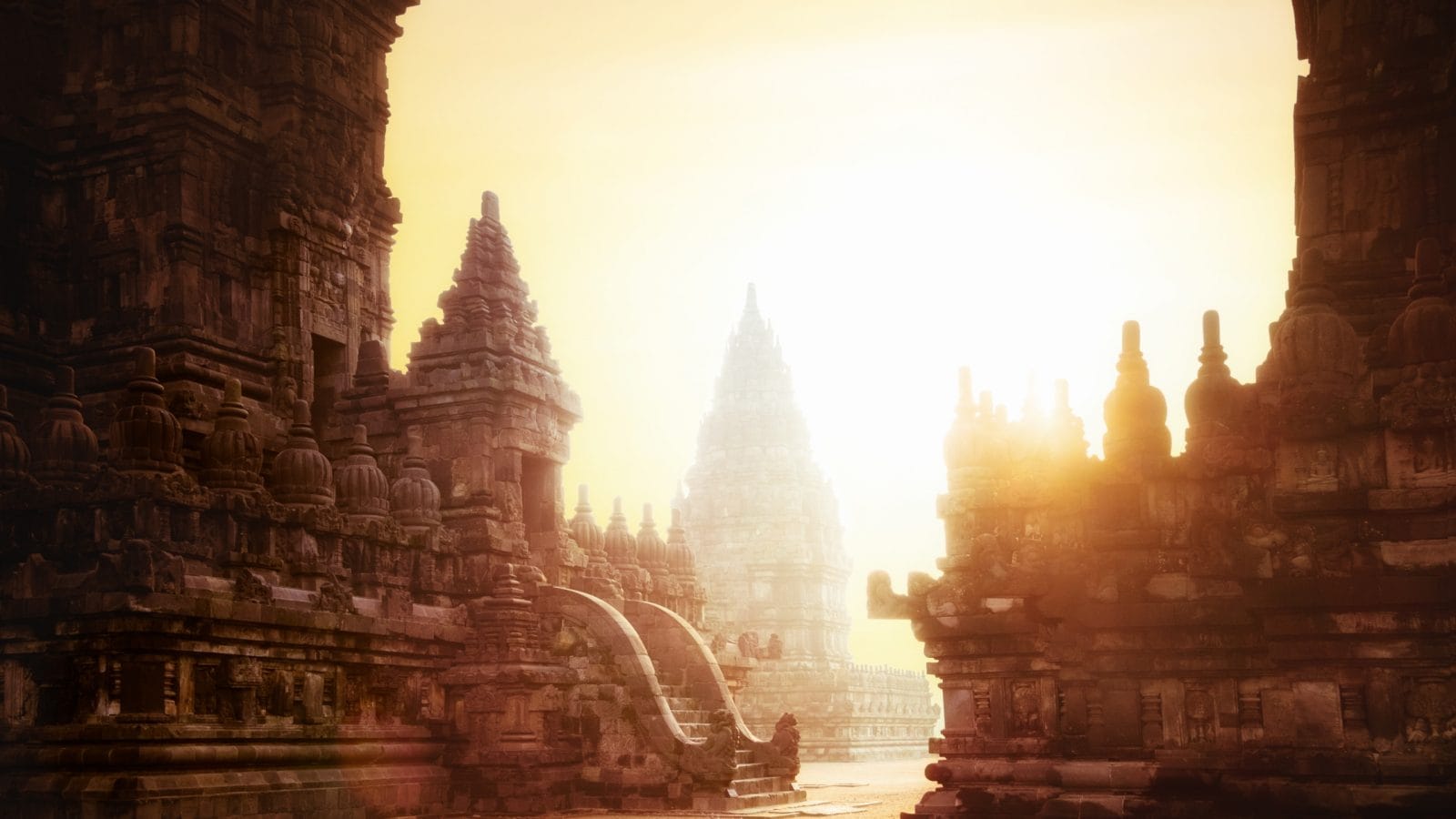
- The Construction of Prambanan: The massive Hindu temple complex at Prambanan is built, featuring a stunning "sculpted narration" of the Ramayana carved into its inner balustrades.
- The Composition of the Kakawin: The literary masterpiece Kakawin Ramayana is written. While the author is traditionally identified in Bali as Yogeshwara, the historical figure remains anonymous.
- 10th Century – Present: Following a shift in power from Central to East Java, and the eventual arrival of Islam, the Ramayana does not disappear. Instead, it adapts. It becomes the bedrock of the Wayang Kulit (shadow puppetry) and traditional dance-dramas that persist in Indonesia today.
Supporting Data: The Literary and Architectural Evidence
Vinod C. Khanna, a former diplomat and scholar, provided a deep dive into the literary mechanics of the Kakawin Ramayana. He explained that the text is a work of "most impressive transcreation."
The Bhattikavya Connection
Most Indian readers are familiar with the Valmiki Ramayana or Tulsidas’s Ramcharitmanas. However, the Javanese poet chose the Bhattikavya (also known as Ravanavadha) as a template. The Bhattikavya was originally designed to illustrate the rules of Sanskrit grammar while telling the Rama story. The Javanese version took this complex structure and infused it with local Javanese sensibilities, drama, and landscape descriptions.
The Omission of the Uttara Kanda
One of the most striking differences highlighted by Khanna is the structural choice to end the story at the Yuddha Kanda (the Book of War). By dropping the Uttara Kanda, the Javanese version avoids the controversial second trial and exile of Sita. "It concludes with Rama and Sita happily back in Ayodhya," Khanna noted. This version emphasizes the restoration of cosmic order (Dharma) without the lingering melancholy of the Valmiki ending.
The Prambanan Reliefs
Malini Saran emphasized that the story wasn’t just read; it was seen. The Prambanan temple complex, a UNESCO World Heritage site, serves as a "stone library." The reliefs there are not mere decorations; they are dynamic storytelling devices. They show Hanuman’s exploits, Sita’s resilience, and Ravana’s hubris with a "robust and visual" energy that matches the intensity of the performing arts.
Official Responses and Expert Perspectives
The session at JLF 2022 functioned as a high-level academic briefing, with the speakers offering insights into why this history matters today.
William Dalrymple on Cultural Blind Spots:
Dalrymple, who has written extensively on the "Golden Road" of Indian influence, expressed a sense of wonder at the scale of these monuments. "It is a remarkable thing that most Indians are unaware of," he remarked. He argued that understanding the Indonesian Ramayana is essential to understanding the full scope of Indian civilization, which once stretched its intellectual and aesthetic wings across the entirety of Southeast Asia.
Malini Saran on the "Malleability" of the Epic:
Saran focused on the "inherent qualities" of the Ramayana that allowed it to survive in a foreign land. She noted that the epic’s ability to "entertain, instruct, and edify" gave it a special status in royal courts and humble village courtyards alike. "The malleability of Ramayana gave the local artists freedom to shape and interpret this material within the bounds of their artistic forms to make it their own," she explained.
Vinod C. Khanna on the Role of Bali:
Khanna paid tribute to the Balinese people for their role as the custodians of this heritage. For centuries, Balinese scribes laboriously copied the Kakawin onto palm-leaf manuscripts (lontar). "Generations after generations of Balinese are responsible for the accurate transmission of the Kakawin down the centuries," he said, highlighting that while the tradition faded in Central Java due to religious shifts, it remained a living, breathing scripture in Bali.
Implications: Soft Power and Living Traditions
The enduring presence of the Ramayana in Indonesia—the world’s most populous Muslim-majority nation—carries profound implications for modern cultural diplomacy and the study of religion.
1. A Model for Syncretism
Indonesia’s ability to embrace the Ramayana as a national cultural treasure, rather than a narrow religious text, offers a powerful model for pluralism. In Java, the Ramayana is viewed as an "Indonesian" story, part of their ancestral "Adat" (customary law and tradition), proving that cultural identity can be distinct from religious affiliation.
2. The Concept of "Greater India"
The discussion revives interest in the concept of the "Sanskrit Cosmopolis." It challenges the Eurocentric view of history by showing that Asia had its own sophisticated networks of cultural and literary exchange long before the age of European exploration. The Indonesian Ramayana is a primary artifact of this "Golden Road."
3. Artistic Evolution
The session highlighted that the Ramayana is not a static relic. In Indonesia, it continues to evolve through Wayang Kulit and modern dance. The introduction of local characters—such as the Punakawan (clown-servants like Semar)—into the Rama story shows how a foreign epic can be "localized" to the point where it becomes indistinguishable from indigenous folklore.
4. Educational Imperative
The consensus among the JLF panelists was a call for a broader educational curriculum in India that recognizes these overseas traditions. By studying the Javanese Kakawin or the Khmer Reamker, Indian students can gain a more nuanced understanding of the "malleability" and universal appeal of their own heritage.
Conclusion
The JLF 2022 session on The Ramayana in Indonesia was more than a book launch; it was a reclamation of a forgotten chapter of history. Through the meticulous research of Malini Saran and Vinod C. Khanna, and the evocative moderation of William Dalrymple, the audience was reminded that the tale of Rama is not a monologue from the past, but a vibrant, ongoing dialogue between nations. As the palm-leaf manuscripts of Bali and the stone walls of Prambanan suggest, the Ramayana’s greatest strength lies not in its rigidity, but in its ability to find a home in every heart that values the triumph of light over darkness.
