

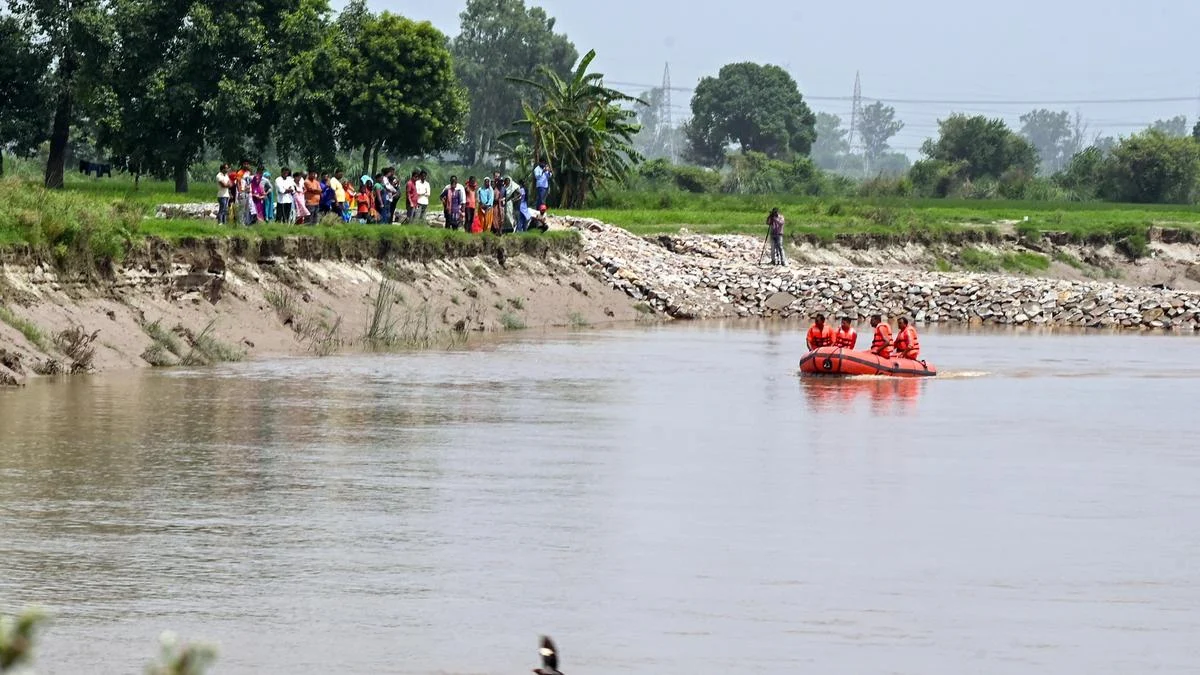
In recent months, the digital landscape has been haunted by a harrowing sequence of images: a speedboat capsizing in the turbulent waters off Phu Quoc, Vietnam. The footage, captured in a few terrifying minutes of chaos, has been looped endlessly across news feeds, turning a singular tragedy into a repetitive digital ghost. Yet, this is merely one ripple in a vast, rising tide of fatalities. Across the globe, the stories of the submerged are proliferating: children lost on rural paths to school, vehicles swept into the abyss by rivers in spate, and coastal laborers swallowed by the very seas that sustain them.
According to data from the World Health Organization (WHO), approximately 300,000 people perish due to unintentional drowning every year. It is a staggering figure that translates to nearly 822 deaths per day. Despite these numbers, drowning remained a "neglected" crisis until the publication of the WHO’s first global report on the subject in 2014. Since then, the international community has only just begun to grapple with the complexities of this public health emergency.
However, while the medical and policy worlds have been slow to react, the world of letters has been obsessed with the act of drowning since the dawn of the written word. From the ancient currents of the Epic of Gilgamesh to the modern, dystopic floods of contemporary climate fiction, literature has used drowning as its most potent metaphor. This raises a critical question for public health advocates and literary scholars alike: Has literature been guilty of aestheticizing a violent death, or has it been providing us with diagnostic clues that we have systematically ignored?
Main Facts: The Duality of the Deep
Drowning occupies a unique space in the human psyche. It is simultaneously a biological catastrophe and a profound cultural symbol. The primary tension lies between the "literary drowning"—often portrayed as a peaceful, almost transcendent transition—and the "clinical drowning," which is a violent, desperate struggle for oxygen.
Public health experts define drowning as respiratory impairment resulting from submersion or immersion in liquid. It is a death characterized by the collapse of airways and the flooding of lungs, a process that is almost entirely silent. Because the body prioritizes the gasping for air over the vocalization of distress, drowning victims rarely scream for help. This physiological silence has, over centuries, been misinterpreted by artists and writers as a form of serenity.
Furthermore, the "face" of drowning in the collective imagination has been heavily influenced by the "Ophelia complex"—the idea that drowning is a passive, feminine, and beautiful end. This romanticization often masks the socio-economic realities of the crisis. Drowning is not an equal-opportunity killer; it disproportionately affects the poor, the marginalized, and those living in regions with inadequate infrastructure or high climate vulnerability.
Chronology: A History of the Submerged Narrative
The history of drowning in literature serves as a mirror to humanity’s changing relationship with nature, gender, and science.

The Mythic and the Ancient
In the earliest recorded narratives, drowning was an act of divine intervention or cosmic cleansing. In the Epic of Gilgamesh, the Great Flood is a tool of the gods to reset a noisy humanity. In the Mahabharata, the goddess Ganga drowns seven of her sons born to King Shantanu—a divine act that transcends mortal morality. Here, water is the ultimate arbiter of life and death, a force beyond human diagnosis.
The Renaissance and the "Ophelia" Archetype
The most enduring image of drowning in Western culture remains Shakespeare’s Ophelia in Hamlet. Described by Queen Gertrude as a "beautiful tableau," Ophelia’s death—decked in garlands as she sinks "mermaid-like" into the brook—established the archetype of the "feminine" drowning. As feminist critic Elaine Showalter noted in her 1985 essay Representing Ophelia, this depiction linked drowning to "female madness" or erotomania. While male melancholy was viewed as a sign of intellectual genius, female distress was rendered biological and passive, culminating in a "beautiful" immersion.
The Victorian Erasure
In the 19th century, novelists like George Eliot used drowning as a narrative "eraser." In The Mill on the Floss, Maggie Tulliver dies in a flood while attempting to save her brother. For Eliot, drowning was a way to resolve the "problem" of a woman whose sexuality and social standing could not be reconciled with the Victorian moral code. The water did not just kill; it removed a social inconvenience.
The Modern and the Medical
In the 20th and 21st centuries, the narrative shifted toward the psychological and the clinical. Sylvia Plath’s The Bell Jar uses the threat of the "white, lightless, unconsciousness" of water to mirror the suffocating nature of depression. More recently, Abraham Verghese’s The Covenant of Water (2023) marks a pivot toward the "health humanities." Set in Kerala, the novel treats drowning not just as a family curse, but as a "condition" that can eventually be diagnosed and treated by modern medicine.
Supporting Data: The Statistics of Silence
The gap between literary depiction and reality is most evident in the data—or the lack thereof. The WHO’s 2014 Global Report on Drowning highlighted that the 300,000 annual deaths are likely a significant underestimate.
- Underreporting: In many countries, drowning deaths are not recorded if they occur during floods, boating accidents, or suicides. Weak death registration systems and the reliance on "verbal autopsies" (interviews with family members rather than clinical exams) mean that thousands of drownings go unclassified.
- The "Silent" Killer: Physiologically, the "instinctive drowning response" means that a person cannot wave for help or shout. This lack of visible or audible distress is why many drownings occur within sight of others who do not realize a tragedy is unfolding.
- Demographics: Children under the age of five are at the highest risk globally. In many low- and middle-income countries, drowning is one of the leading causes of childhood mortality, often occurring in domestic water containers, irrigation ditches, or shallow ponds.
- The Climate Factor: Emerging "climate fiction" (Cli-Fi), such as Megha Majumdar’s A Guardian and a Thief, reflects new data suggesting that drowning is becoming "collateral damage" in a world of climate precarity. As sea levels rise and extreme weather events become frequent, the "dystopic" drownings of fiction are becoming the daily realities of the Global South.
Official Responses: From Myth to Policy
The shift from viewing drowning as an "act of God" or a "literary trope" to a "preventable tragedy" has been slow.
- The WHO Mandate: Since 2014, the WHO has advocated for ten evidence-based interventions, including installing barriers to control access to water, providing safe places for children (such as creches), and teaching basic swimming and water safety skills.
- The UN Resolution: In 2021, the United Nations General Assembly adopted its first-ever resolution on global drowning prevention, designating July 25th as World Drowning Prevention Day. This marked a formal recognition that drowning is a social justice issue linked to poverty and lack of infrastructure.
- Health Humanities: Academic circles are increasingly using "health humanities"—as seen in the analysis of Verghese’s work—to bridge the gap. By studying how families like the one in The Covenant of Water perceive drowning (as a "curse" or "The Condition"), health workers can better tailor their interventions to overcome cultural fears and promote medical solutions.
Implications: From Spectacle to Social Justice
In the 21st century, the way we witness drowning has undergone a radical transformation. We have moved from the "beautiful drowned woman" of the Pre-Raphaelite paintings to the "viral drowning body" of the digital age.

The voyeuristic nature of modern technology—CCTV footage of people falling into construction pits or mobile phone recordings of ferry disasters—has turned drowning into a spectacle. As Lopa Ghosh notes, the "algo-feeding images" of a man sinking while bystanders record the event represent a new, darker form of aestheticization. The silence of the drowning person is no longer a literary tool; it is a feature of a viral video.
However, the implications for the future are clear. To combat this crisis, society must move beyond the spectacle.
1. Restoring Agency: Literature’s new role must be to restore the humanity of the victim. Rather than using drowning as a convenient plot device to "erase" a character, modern narratives are beginning to focus on the accountability of the state and the failure of infrastructure.
2. Data as a Narrative: The "fragile family parchment" in The Covenant of Water, which meticulously records generations of drownings, serves as a metaphor for what the world needs: accurate, localized death registers that treat every drowning as a data point for prevention.
3. Social Justice and Accountability: Drowning must be framed as a matter of social justice. When a hundred people drown because a ferry overturns in a world of "climate precarity," it is not a tragedy of fate—it is a failure of policy.
In conclusion, while literature has historically been guilty of softening the edges of this "horribly violent death," it also possesses the power to decode the crisis. By moving away from the "sensuous, floral" imagery of the past and toward a gritty, realistic portrayal of drowning as a preventable social failure, literature can assist public health in its most vital mission: pulling the silent epidemic out of the shadows and into the light of accountability.
(Lopa Ghosh’s insights serve as the foundation for this analysis, highlighting the intersection of global policy, literature, and the urgent need for a new cultural understanding of drowning.)
