

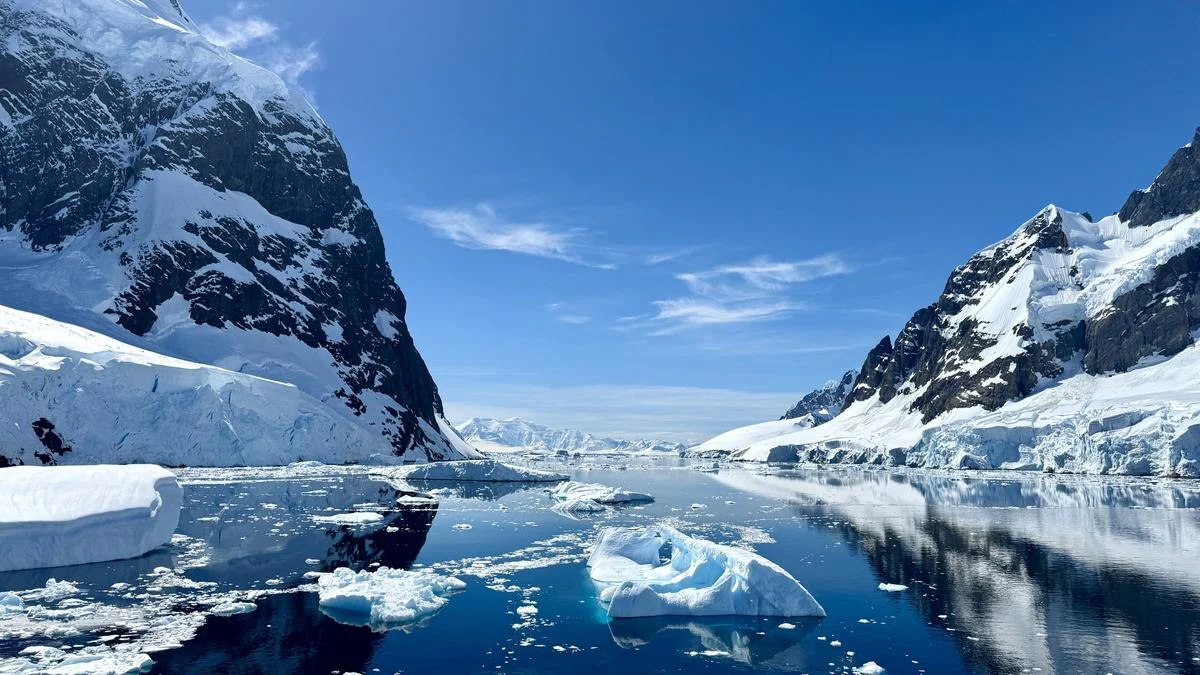
When the British mountaineer George Mallory was famously asked why he felt compelled to scale the treacherous heights of Mount Everest, his response was as pithy as it was profound: “Because it’s there.” For over a century, this sentiment has served as the ultimate justification for human exploration of the world’s most formidable environments. Today, that same restless curiosity is driving a record-breaking influx of travelers to Antarctica—the high-latitude wilderness that was, until very recently, the exclusive domain of hardened explorers and government-funded scientists.
Antarctica is no longer the "inaccessible continent." It is more reachable than ever before, with high-tech icebreakers, boutique cruise ships, and even fly-in programs that bypass the notorious Drake Passage. However, like Everest, the White Continent is increasingly facing the paradox of being "loved to death." As visitor numbers skyrocket, the global community is forced to grapple with a difficult question: Can the world’s last great wilderness survive its own popularity?

Main Facts: The High Cost of the Bucket List
The transformation of Antarctica from a scientific sanctuary to a premier travel destination is a phenomenon of the 21st century. While the landscape remains a breathtaking expanse of glaciers and silence, the human footprint upon it is growing heavier.
In the 2023-24 season, Antarctica received approximately 125,000 tourists. While this figure might seem modest compared to the millions who visit Paris or New York, it represents a staggering increase for an ecosystem that possesses no permanent human residents, no infrastructure, and a hyper-fragile biological balance. To put this in perspective, at the turn of the millennium, fewer than 8,000 people visited annually. Projections from industry analysts suggest that if current trends continue unchecked, tourist numbers could swell to half a million by 2033.

The drivers behind this surge are multifaceted. In the wake of the COVID-19 pandemic, there has been a global "revenge travel" boom, with wealthy travelers seeking remote, "socially distanced" destinations. This has been amplified by the rise of social media influencers who curate "bucket lists" that prize exclusivity and visual spectacle.
Perhaps most concerning is the rise of "last-chance tourism." This is the grim realization among travelers that, due to climate change, the Antarctica they see today may not exist in a few decades. Ironically, the carbon emissions generated by long-haul flights and maritime fuel to reach the continent only accelerate the melting of the very ice these travelers have come to witness.

Chronology: From the Heroic Age to the Influencer Era
To understand the current crisis, one must look at the timeline of human engagement with the southern continent. For centuries, Antarctica was a myth—Terra Australis Incognita.
- The Heroic Age (Late 19th Century – 1922): This era was defined by the legendary expeditions of Roald Amundsen, Robert Falcon Scott, and Ernest Shackleton. Exploration was a matter of national pride and scientific discovery, often resulting in tragedy.
- The Antarctic Treaty (1959): In the midst of the Cold War, 12 nations signed a landmark agreement declaring Antarctica a demilitarized zone dedicated to peace and science. It remains one of the most successful international agreements in history, effectively suspending all territorial claims.
- The Birth of Commercial Tourism (1966): American entrepreneur Lars-Eric Lindblad pioneered the first commercial cruise to Antarctica, taking 57 travelers. He believed that by seeing the continent, visitors would become advocates for its protection—a philosophy known as "Lindbladism."
- The Rise of IAATO (1991): As tourism began to scale, seven tour operators formed the International Association of Antarctica Tour Operators (IAATO) to advocate for and practice safe, environmentally responsible private-sector travel.
- The Post-2020 Explosion: Following the global lockdowns, Antarctica emerged as the ultimate "frontier" destination. The introduction of "fly-cruise" options—where travelers fly from South America to the South Shetland Islands to board a ship—has made the continent accessible to those who previously feared the sea-sickness of the Drake Passage.
Supporting Data: A Fragile Giant
The scientific importance of Antarctica cannot be overstated. It is not merely a backdrop for photography; it is the world’s primary climate regulator.

The Ice Reservoir
The Antarctic ice sheet is the largest single body of fresh water on Earth, containing roughly 90% of the planet’s ice and 70% of its fresh water. Glaciologists warn that if this ice sheet were to melt entirely, global sea levels would rise by approximately 230 feet (70 meters). Such a scenario would result in the total submersion of nearly every major coastal city on the planet.
Biological Vulnerability
Antarctica’s wildlife—including its three primary mainland penguin species (Adélie, Chinstrap, and Gentoo)—operates on a knife-edge. The introduction of invasive species is a constant threat. A single seed stuck to a tourist’s Velcro strap or a trace of avian flu on a boot can devastate entire colonies that have no natural immunity.

The Carbon Footprint of Luxury
A study published in Nature Communications highlighted that the "black carbon" (soot) emitted by cruise ship chimneys settles on the pristine snow. This darkens the surface, reducing the "albedo effect" (the snow’s ability to reflect sunlight), which causes the snow to absorb more heat and melt faster. Research suggests that a single Antarctic tourist may be responsible for the melting of approximately 75 square feet of snow due to the emissions of their journey.
Official Responses: Governance in a No-Man’s Land
Regulating Antarctica is uniquely difficult because no single country owns it. It is a "global commons" governed by consensus through the Antarctic Treaty System.

The Role of IAATO
Because the Treaty focuses largely on state-sponsored scientific activity, the tourism industry is largely self-regulated through IAATO. Most major cruise lines are members and adhere to strict protocols:
- Ship Size Limits: Ships carrying more than 500 passengers are prohibited from making landings.
- Landing Constraints: Only 100 people are allowed on shore at any given site at one time.
- Biosecurity: Travelers must undergo rigorous "decontamination" procedures, including vacuuming pockets for seeds and scrubbing boots in disinfectant solutions before and after every landing.
Industry Perspectives
Juan Cristóbal Del Pedregal Bravo, Senior Commercial Director at Chile-based Antarctica21, argues that small-scale, boutique tourism is essential for the continent’s survival. "Antarctica is one of the last truly untouched wildernesses, and it is also one of the most scientifically important," he notes. Bravo believes that by allowing a controlled number of people to witness the fragility of the ice, the industry creates "ambassadors" who will return home to lobby for climate action.

Similarly, Bhawna Rao, founder of Encompass Experiences, emphasizes that travel to the region must be framed as an "expedition" rather than a "vacation." Having visited the historic Deception Island—a former whaling station—Rao notes the haunting sight of rusted boilers and whale bones. "It is a stark reminder that even the most remote corners of our planet have felt the impact of human activity," she says.
Implications: The Future of the White Continent
The question facing the travel industry is no longer whether people should go to Antarctica, but how they should go. The "ship has sailed" on total isolation; the challenge now is mitigation.

The Shift Toward "Citizen Science"
To justify the presence of tourists, many high-end operators are integrating "Citizen Science" into their itineraries. Passengers are no longer just passive observers; they assist in counting penguin populations, collecting phytoplankton samples, and tracking whale migrations. This data is then fed back to research institutions that lack the funding for year-round field studies.
Choosing the Right Path
For the responsible traveler, the choice of operator is the most significant lever of influence. Experts recommend:

- Boutique over Big: Choosing vessels like the Magellan Explorer, which carries fewer than 100 passengers, ensures a lower physical impact and a more educational atmosphere.
- Expert-Led Expeditions: Prioritizing trips that feature geologists, biologists, and historians who provide context to the environment.
- Strict Compliance: Ensuring the operator is a full member of IAATO and goes beyond the minimum requirements for carbon offsetting and waste management.
The Final Verdict
As we look toward 2033 and the possibility of 500,000 annual visitors, the international community may need to move beyond voluntary guidelines. There are growing calls for a formal "tourism cap" or a heavy "environmental tax" on Antarctic berths to fund large-scale conservation projects.
Antarctica remains a place of "transformational" beauty—a silent, surreal world that makes the human visitor feel profoundly small. If managed with reverence and rigorous science, tourism can indeed create the ambassadors the continent needs. If managed with the short-term logic of the "bucket list," we risk destroying the very thing we traveled so far to admire. As Bhawna Rao reflects, the goal is for visitors to return not just with photos, but with a "deeper understanding of why protecting Antarctica is vital for the future of our planet."
