

Hyderabad, India – The air crackled with a unique blend of anticipation and focused energy as I stepped onto the municipal grounds in Uppal, Hyderabad, for my inaugural Karra Samu session. The term itself, a fusion of the Telugu words "karra" (stick) and "samu" (fight or combat), signifies a martial art form steeped in history, boasting a lineage of over 3,000 years. Once a deeply ingrained cultural practice, particularly within the Mala community and across the two Telugu-speaking states of Andhra Pradesh and Telangana, Karra Samu is now experiencing a resurgence, slowly but surely carving its niche in the bustling metropolis of Hyderabad. At the forefront of this revival are martial artists Swarna Yadav and Khawshiq, the visionary co-founders of Swarna Arts Academy. Their dedication has fostered the growth of the academy, which now boasts nine branches across Hyderabad, guided by a team of ten skilled trainers.
The Ancient Roots and Modern Resonance of Karra Samu
"Karra Samu, or stick fighting, is an ancient martial art that utilizes sticks as an instrument for self-defense," explains Swarna Yadav, a dynamic 30-year-old martial artist. She elaborates on its broader cultural context, drawing parallels with other revered Indian martial arts: "It is equivalent to Silambam in Tamil Nadu, Gatka in Punjab, and Kalaripayattu in Kerala. While their styles and movements may differ, they all share a common ancestry and focus on developing profound core strength." This emphasis on foundational physical development is a cornerstone of Karra Samu, connecting it to a rich tapestry of traditional Indian combat disciplines.
Historically, Karra Samu holds significant cultural ties to the Mala community, a testament to its deep roots within the social fabric of Andhra Pradesh and Telangana. While its origins are ancient, its modern iteration is being carefully cultivated to promote holistic well-being. In its contemporary form, Karra Samu is evolving into a sophisticated combat sport that champions a balanced mind-body discipline. It facilitates functional movement, sharpens concentration, and most importantly, equips practitioners with invaluable self-defense skills. "The training also significantly enhances both physical and mental agility in children," Swarna adds, highlighting its benefits for younger generations. This duality of preserving tradition while adapting to contemporary needs is a driving force behind the academy’s success.
A Glimpse into the Training Ground: From Sticks to Strength
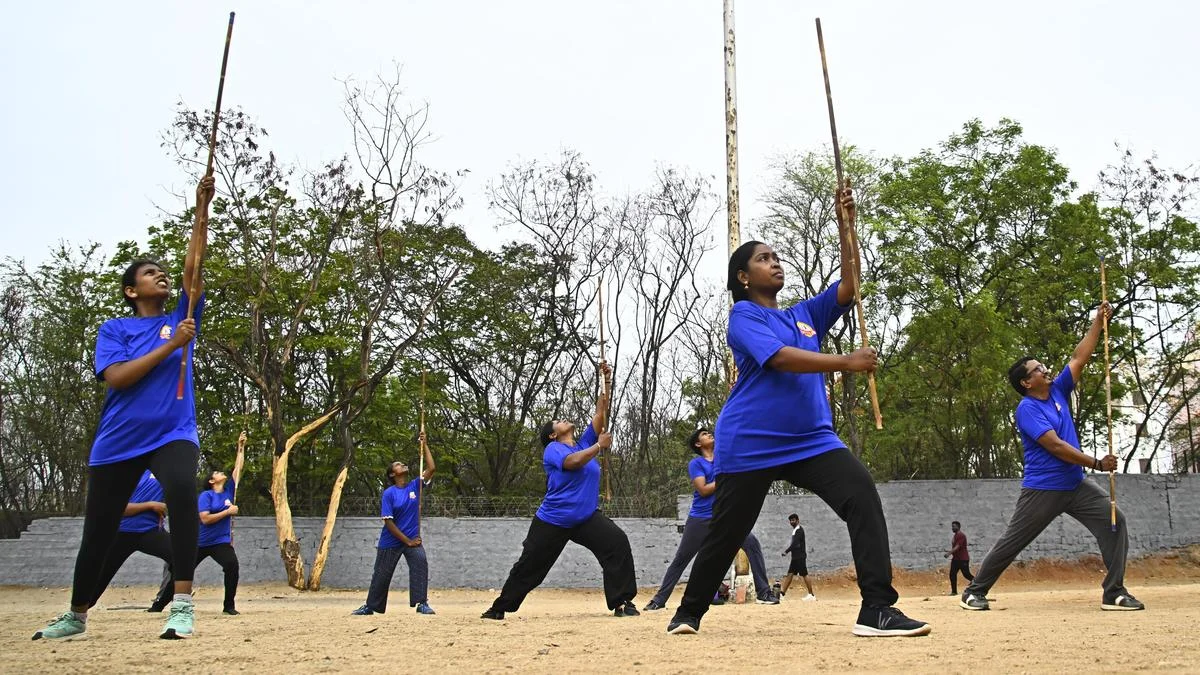
The training session I experienced was a microcosm of the growing interest in Karra Samu. Approximately 50 participants, a diverse group spanning from eager children to seasoned adults, stood in meticulously organized rows, maintaining a respectful distance of six to eight feet between each individual. The tools of their trade, the rattan sticks, are themselves a point of interest. Crafted from the sturdy stems of the rattan palm and sourced from Tamil Nadu, these sticks vary in height, typically ranging from a practitioner’s chin to their forehead. Swarna, with a keen eye for detail, handed me a 4-foot-8-inch karra, a length deemed suitable for my stature.
The inherent advantages of this lightweight yet robust implement are immediately apparent. It allows practitioners to maneuver with remarkable ease, maintain an upright and balanced posture, and execute movements at their own deliberate pace. This gradual approach to technique development is crucial, enabling individuals to build proficiency without placing undue strain on their bodies. This pedagogical approach underscores the academy’s commitment to safe and effective training.
Mastering the Fundamentals: The Heart of the Practice
The initial phase of the class, as per the instructor’s cue, focused intently on the fundamentals. My grip was adjusted by Swarna, my left hand positioned atop the stick. This seemingly simple adjustment, she explained, is pivotal for achieving fluid movement, crucial for both delivering strikes and effectively blocking an opponent’s advances. With sticks firmly in hand and a shared sense of purpose in their eyes, the group settled into the rhythm of the hour-long session.

The curriculum emphasized the core tenets of Karra Samu. This included the proper technique for holding the stick, the execution of various "namaskarams" (traditional salutations through movement), and a profound understanding of the importance of preserving this ancient tradition for future generations. A particularly poignant moment was the prayer ritual, during which participants took a solemn vow. This pledge binds them to uphold the sport’s original purpose: self-defense, physical conditioning, and mental discipline. Crucially, it also commits them to refraining from employing these acquired skills for violence or personal disputes, reinforcing the ethical underpinnings of the martial art.
The movements themselves are elegantly derived from everyday actions, lending an intuitive quality to the training. A forward movement, for instance, involves guiding the stick with a motion akin to a boat paddle slicing through water, emphasizing control and precision. Conversely, a reverse movement teaches participants to anticipate and counter an opponent’s attack by striking from an unexpected angle, a deceptive maneuver reminiscent of a well-executed cricket stroke. This clever integration of practical life movements into martial art techniques makes Karra Samu both accessible and effective.
Diverse Paths, Shared Passion: The Karra Samu Community
The appeal of Karra Samu extends across a broad spectrum of individuals, each drawn to its unique benefits. Hanumanth Yadav, a folk singer hailing from the Komaram Bheem Asifabad district, finds fulfillment in Karra Samu, realizing a long-held childhood aspiration. His journey exemplifies the art’s ability to connect with personal dreams and cultural heritage.
Equally compelling is the story of Jyothi Narla, a government employee who seamlessly integrates her passion for Karra Samu with her dedication to Kuchipudi, a classical Indian dance form. "I absolutely love the art form," Jyothi shares enthusiastically. "It’s a comprehensive routine that engages every muscle and keeps me remarkably flexible. I feel noticeably more energized after every class." Her sentiment echoes the holistic benefits that Karra Samu offers, contributing to both physical vitality and mental well-being.
Swarna Yadav’s Journey: From Folk Performance to Martial Arts Leadership
Swarna Yadav’s own foray into the world of Karra Samu is a testament to her deep-seated passion and intellectual curiosity. Her initial engagement with the martial art was through folk performance, a natural entry point given its historical ties to cultural expressions. Her academic pursuit further solidified her commitment, as she delved into Karra Samu as part of her master’s degree in performing arts at the prestigious Potti Sreeramulu Telugu University.
Her dedication did not stop at academic exploration. In 2015, with the invaluable support of a friend, Swarna embarked on a journey to Chennai to immerse herself in the study of Silambam, the renowned Tamil stick-fighting martial art. This cross-cultural learning experience proved instrumental in shaping her approach. Upon her return to Hyderabad, she channeled her knowledge and passion into establishing her own institute in 2019, thus planting the seeds for Swarna Arts Academy.

The Academy’s Growth and the Challenges of Mastery
Over the past seven years, Swarna Arts Academy has become a significant hub for martial arts training in Hyderabad. Beyond Karra Samu, the academy also offers specialized gymnastics classes for children, catering to a broader spectrum of physical development needs. The impact of the academy is substantial, having trained an impressive estimated 10,000 individuals to date.
The eligibility for Karra Samu training is remarkably inclusive, welcoming individuals between the ages of five and fifty. However, the path to mastery is not without its challenges. "People often experience initial wrist and hand pain, and many develop blisters in the beginning," Swarna candidly admits. This initial discomfort is a common hurdle in many martial arts disciplines. "But," she reassures, "once they become comfortable with the foundational movements, everything starts to feel much more natural and rewarding." This gradual acclimatization process is a testament to the academy’s patient and effective teaching methodology.
The academy’s commitment to accessibility is further demonstrated by its class structure. Classes are held three times a week, and the fee for this comprehensive training is ₹3,000, making it a relatively affordable option for those seeking to engage with this ancient art form.
The Future of Karra Samu: A Tradition Reimagined
The resurgence of Karra Samu in Hyderabad is more than just a trend; it represents a conscious effort to reconnect with ancestral heritage and embrace the profound physical and mental benefits of traditional martial arts. Led by dedicated individuals like Swarna Yadav and Khawshiq, Swarna Arts Academy is not merely teaching a form of combat; it is fostering discipline, resilience, and a sense of cultural pride.
As more individuals in Hyderabad discover the intricate movements, the historical significance, and the holistic advantages of Karra Samu, its presence is likely to grow, further cementing its place as a vital and vibrant part of the city’s cultural landscape. The echoes of ancient stick fights are being revitalized, resonating with a new generation eager to learn, grow, and defend. The journey of Karra Samu in Hyderabad is a compelling narrative of tradition meeting modernity, a testament to the enduring power of martial arts to shape individuals and communities.
