

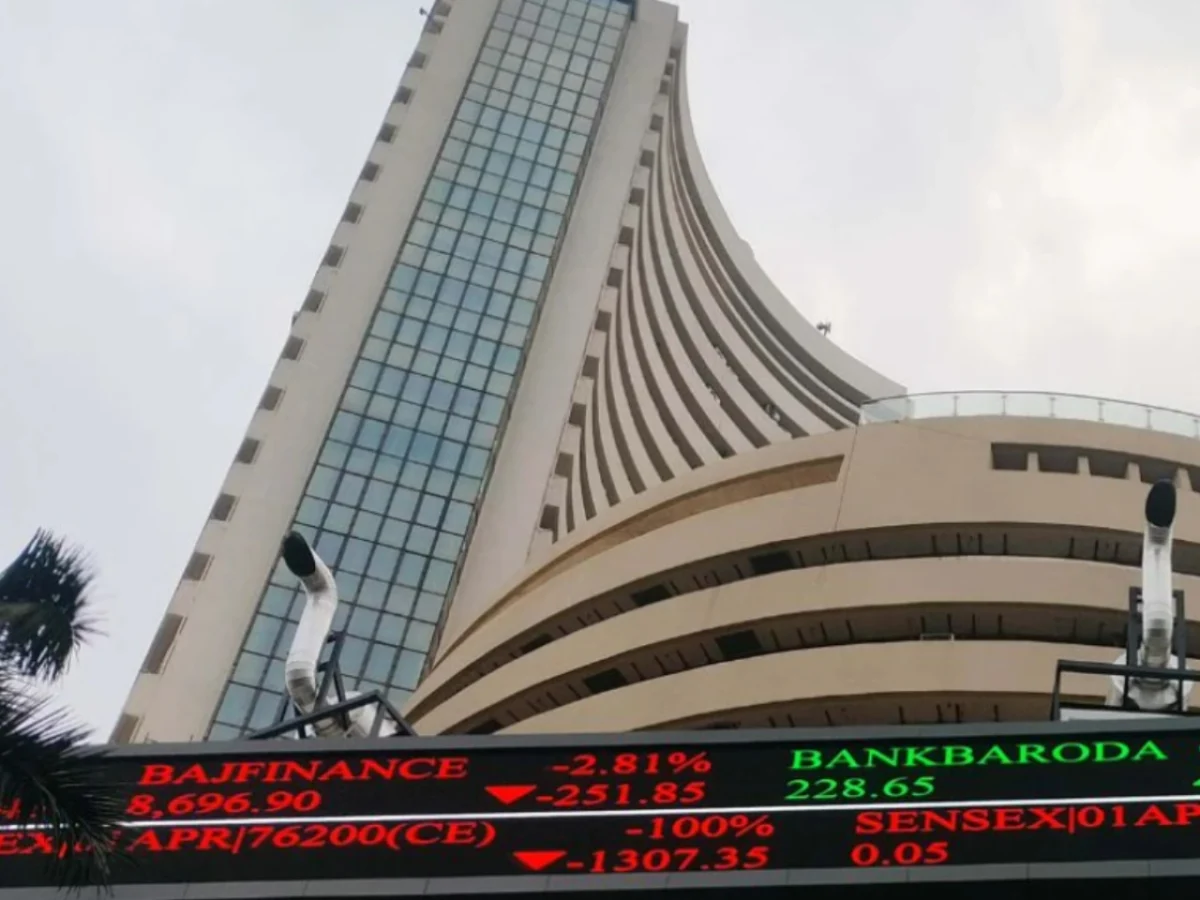
Mumbai, India – June 12, 2026 – Indian benchmark indices witnessed a robust surge on Friday, June 12, 2026, as optimism surrounding a potential US-Iran peace deal ignited global markets and sent crude oil prices tumbling. The Sensex climbed by over 900 points, while the Nifty 50 comfortably reclaimed the 23,400 mark, driven by a significant easing of geopolitical tensions and the promise of stable energy costs. The dramatic shift in sentiment followed an announcement by former US President Donald Trump, hinting at a breakthrough in US-Iran relations over the weekend, a development that could crucially lead to the reopening of the strategically vital Strait of Hormuz.
The prospect of increased oil supply from the Middle East immediately impacted global commodity markets, pushing Brent crude down to $89 per barrel – its lowest level in two months. This reduction in energy costs is a significant boon for India, a major net importer of crude oil, offering much-needed relief to its current account deficit and inflationary pressures. Investors reacted swiftly, pouring capital into a broad spectrum of sectors, signaling renewed confidence in the economic outlook.
A Day of Bullish Momentum: Market’s Initial Reaction
The trading day commenced with palpable excitement, as both the Sensex and Nifty opened firmly in the green. The BSE Sensex, India’s barometer index, began the session at 74,709.27, quickly accelerating to an intraday high of 74,859.16. By 9:35 am, it was trading at 74,722.96, registering an impressive gain of 890.41 points, or 1.21%, from its previous close of 73,832.55. This immediate uptick underscored the market’s positive interpretation of the geopolitical news.
Similarly, the NSE Nifty 50, which represents the weighted average of 50 of the largest Indian companies listed on the National Stock Exchange, opened at 23,412.55. It surged to 23,423.35 by 9:24 am, marking a gain of 261.75 points, or 1.13%, from Thursday’s close of 23,161.60. The index touched an intraday high of 23,455.95, with the 23,400 level proving to be a strong immediate support point, consolidating the early gains.
)
The rally was notably broad-based, indicating widespread investor participation and a general improvement in market sentiment. Twenty-seven out of the thirty Sensex constituents traded in positive territory. Leading the charge were stocks like IndiGo, which soared by 3.42%, followed by Eternal with a gain of 2.76%, and engineering giant L&T, up 2.40%. Heavyweight banking stocks also contributed significantly to the index’s ascent, with HDFC Bank, State Bank of India (SBI), and Axis Bank all posting gains exceeding 1%.
However, the rally was not entirely uniform. The information technology (IT) sector proved to be a notable laggard. Tech Mahindra dipped by 0.8%, HCLTech by 0.28%, and Infosys by 0.04%. This subdued performance in IT stocks could be attributed to ongoing concerns about global economic slowdowns potentially impacting outsourcing demand, or perhaps a temporary capital rotation into more cyclical sectors perceived to benefit directly from reduced energy costs and improved domestic sentiment.

The Geopolitical Pivot: US-Iran Deal and the Strait of Hormuz
At the heart of Friday’s market exuberance was the unexpected announcement from former US President Donald Trump, alluding to a potential US-Iran peace deal over the upcoming weekend. While details remained scarce, the mere prospect of such a diplomatic breakthrough sent ripples across global financial markets.
The significance of a US-Iran rapprochement cannot be overstated, particularly concerning energy markets. The Strait of Hormuz, a narrow waterway connecting the Persian Gulf with the Arabian Sea, is arguably the world’s most critical oil chokepoint. Approximately one-fifth of the world’s total oil consumption and a substantial portion of global liquefied natural gas (LNG) transits through this strait. For years, heightened tensions between the US and Iran have cast a shadow over this vital shipping lane, leading to concerns about supply disruptions, increased shipping costs, and elevated insurance premiums.
)
A peace deal, even a preliminary one, would imply a de-escalation of military posturing in the region and, crucially, the "reopening" or at least a guaranteed unfettered passage through the Strait of Hormuz. This assurance of stable supply routes immediately alleviates a major risk premium embedded in crude oil prices. For India, a nation heavily dependent on imported oil to fuel its economy, the prospect of secure and cheaper energy supplies is a fundamental driver of economic stability and growth. The previous high oil prices had put immense pressure on India’s balance of payments and had threatened to stoke domestic inflation, making this development a welcome relief.
Expert Analysis and Investor Takeaways
Market analysts quickly weighed in on the implications of the evolving geopolitical landscape and the domestic market’s reaction. Hitesh Tailor, Technical Research Analyst at Choice Broking, underscored the positive global sentiment. "Global sentiment remains supportive amid easing concerns over major geopolitical developments and improving risk appetite across international markets," Tailor stated. "Positive global cues, coupled with stability in key commodity prices, may help support bullish sentiment during the early part of the session." His assessment highlights the interconnectedness of global events and their immediate impact on investor psychology.
)
Tailor further advised investors to monitor the market’s ability to sustain these gains. "The near-term setup appears favourable as strong Gift Nifty indications and supportive global cues are likely to boost investor sentiment at the opening," he added. "Continued domestic institutional buying and resilience in key sectors may provide additional support to the market. However, traders should watch whether the indices can sustain gains above immediate resistance levels, as confirmation of strength at higher levels will be important for extending the ongoing recovery momentum." This suggests a cautious optimism, emphasizing the need for sustained momentum to confirm a longer-term uptrend.
Piyush Jhunjhunwala, Founder & CEO of Stockify, offered a more nuanced perspective, stressing the importance of technical levels for traders. "The Indian stock market is likely to see a cautious but still somewhat range-bound session on June 12, more or less," Jhunjhunwala predicted. "The Nifty 50 and Sensex seem a bit unsure, and traders are keeping a close eye on the key resistance as well as support." He identified critical thresholds: "For the Sensex, 74,200 is being treated as an immediate resistance zone; if it manages to go out of that level, then a move toward 74,500–74,700 could start to look doable. However, if the index slips below 73,500, that may invite heavier selling momentum, and the next levels could be 73,200–73,000."
)
Jhunjhunwala’s advice to investors was clear: "Investors are advised to stay selective and also track global cues along with institutional activity, because that will probably decide the next move." This highlights the importance of fundamental stock selection even in a bullish market, alongside a vigilant eye on international developments and the flow of institutional money.
For investors, the key takeaways from Friday’s session are multi-faceted. The immediate benefit of lower oil prices translates into reduced input costs for many industries, particularly manufacturing, logistics, and aviation. This could boost corporate earnings in the coming quarters. Furthermore, a stable global geopolitical environment tends to encourage foreign institutional investment (FII) into emerging markets like India, providing additional liquidity and upward pressure on equities. However, given the speculative nature of the peace deal announcement, prudent investors should remain alert to any counter-developments or delays that could temper current enthusiasm.
)
Global Market Performance and Commodity Reactions
The positive sentiment originating from the potential US-Iran deal was not confined to India. Global markets displayed a mixed but generally optimistic tone. Asian equities rallied sharply, reflecting their high dependency on energy imports and direct benefits from reduced geopolitical risk. Japan’s Nikkei 225 surged an impressive 3.72% to 66,607, while South Korea’s KOSPI jumped by a substantial 8.47% to 8,421. Taiwan Weighted Index was up 2.50%, and China’s Shanghai Composite gained 1.56%. This strong performance across Asia underscored the region’s relief over lower crude prices and a more stable geopolitical outlook.
In contrast, US futures showed more cautious, albeit mild, gains. The Dow Jones futures were up 0.08% at 50,891, the S&P 500 futures rose 1.75% to 7,394, and the Nasdaq futures climbed 2.54% to 25,809 from their previous sessions. The relatively tempered reaction in US futures compared to Asian markets might reflect different domestic economic drivers or a ‘wait-and-see’ approach as details of the potential peace deal remained unconfirmed. India’s GIFT Nifty, a key indicator for Indian markets before official opening, was flat at 23,373.50, down 0.12%, suggesting some consolidation after its initial strong reaction.
)
The commodity markets were the most direct beneficiaries of the de-escalation hopes. Brent crude, the international benchmark, slipped further by 1.81% to $88.74 per barrel, solidifying its position at a two-month low. West Texas Intermediate (WTI) crude, the US benchmark, also fell by 1.66% to $86.25. The decline in oil prices was accompanied by a drop in safe-haven assets, with gold falling 0.51% to $4,191 per ounce, indicating a shift from risk aversion to risk appetite among global investors.
Currency markets also reacted to the news. The dollar index, measuring the US dollar against a basket of major currencies, held steady at 99.75. However, the USD/INR pair weakened by 0.50% to 95.29. A weaker rupee against the dollar typically makes imports more expensive, but in the context of falling crude oil prices, it gives the Reserve Bank of India (RBI) more "room to breathe" on inflation. This provides the central bank greater flexibility in its monetary policy decisions, potentially reducing the pressure to raise interest rates to combat imported inflation.
)
Bitcoin’s Resilience Amidst Shifting Capital
Interestingly, despite the broader geopolitical and macroeconomic concerns that often weigh on risk assets, Bitcoin demonstrated strong resilience. Akshat Siddhant, Lead Quant Analyst at Mudrex, observed this trend. "The market is also seeing an active capital rotation from digital assets toward high-momentum growth opportunities, specifically AI equities and today’s anticipated SpaceX IPO," Siddhant noted. This suggests that while traditional markets are reacting to geopolitical shifts, a separate dynamic of capital reallocation is occurring within the broader investment landscape, driven by specific technological and entrepreneurial advancements.
Currently trading above $63,000, Bitcoin’s immediate support level has shifted upwards to $61,600, according to Siddhant. This technical indicator suggests a potential uptrend from current levels, indicating underlying strength in the cryptocurrency despite the external market movements. The resilience of Bitcoin, even as capital flows into other high-growth sectors, highlights its evolving role as a distinct asset class, potentially less correlated with traditional geopolitical risks than previously thought, or simply reflecting a unique demand profile.
)
Implications and Future Outlook
The market’s enthusiastic response to the potential US-Iran peace deal signals a significant shift in investor sentiment, driven by hopes for global stability and more predictable energy markets. For India, the immediate implications are overwhelmingly positive: lower oil prices ease inflationary pressures, improve the current account balance, and provide a fiscal cushion. This could translate into stronger corporate earnings, increased consumer spending, and potentially a more dovish stance from the RBI.
However, the future outlook remains contingent on the concrete realization of the peace deal. Diplomatic negotiations, particularly those involving such complex and long-standing adversaries, are often fraught with challenges and subject to reversals. Investors will be closely watching for official confirmations and the specifics of any agreement. The market’s current gains are largely built on anticipation, and any failure to deliver on these expectations could lead to a swift correction.
)
In the near term, the focus will remain on global cues, particularly from the Middle East, and the trajectory of crude oil prices. Domestically, institutional buying and sector-specific performance will be key indicators. While the day’s rally has injected fresh optimism, analysts caution against complacency, urging investors to remain selective and agile in their strategies, prepared for both sustained momentum and potential volatility as the geopolitical narrative unfolds. The weekend promises to be a critical period for global markets, with the hopes of a genuine diplomatic breakthrough hanging in the balance.
