

Dharamsala, Himachal Pradesh – June 14, 2026 – A new chapter is visibly unfolding in Indian cricket under the nascent captaincy of Shubman Gill, characterized by a discernible shift towards strategic, trust-based selections aimed squarely at future challenges, most notably the 2027 ODI World Cup. While coincidental in timing, a pattern of bringing in players known to Gill, often from his formative cricketing years or shared professional stints, has begun to emerge. This approach, while sparking whispers, is increasingly being validated by impressive debut performances, signalling a clear long-term vision from the Indian camp.
The recent series against Afghanistan has served as a pivotal stage for these carefully considered introductions. From a one-off Test in New Chandigarh to the rain-affected first One Day International (ODI) in Dharamsala, Gill’s leadership has seen three fresh faces don the coveted India cap, each with a backstory intertwined with the young captain’s cricketing journey. The message is clear: India’s ODI build-up has commenced, and the focus is firmly on identifying and nurturing specific profiles for defined roles on the challenging road ahead.
From New Chandigarh to Dharamsala: A Sequence of Pivotal Debuts
The journey of these selections began just last week in New Chandigarh, where India squared off against Afghanistan in a standalone Test match. It was here that the first debutant under Gill’s Test captaincy, left-arm spinner Manav Suthar, made an immediate and indelible impact. Suthar, whose range and talent were intimately familiar to Gill from their shared time in the Indian Premier League (IPL) circuit, responded to the call with a sensational performance. He confounded the Afghan batsmen, claiming an impressive seven wickets in the match, including a remarkable six-for on his debut – a testament to the faith placed in him. His performance not only justified Gill’s backing but also highlighted the strategic advantage of bringing in players with whom the captain shares a history and understanding.
Fast forward to Saturday, June 14, 2026, at the picturesque HPCA Stadium in Dharamsala, where Gill was leading India for his seventh match in charge. The stage was set for two more ODI debutants, further solidifying the emerging selection philosophy. The first was left-arm orthodox spinner Harsh Dubey, a name that had been consistently setting the domestic red-ball charts ablaze. Dubey’s consistent wicket-taking prowess in First-Class cricket, coupled with glimpses of promise in the IPL, had firmly put him on the selectors’ radar. His inclusion in the ODI setup, following Suthar’s Test debut, underscored a clear intent to broaden India’s left-arm spin options, a critical department for any world-class limited-overs side.
The second debutant, unveiled by Gill at the toss, was a figure that stirred more considerable discussion: Gurnoor Brar. A fast bowler, Brar was not a straightforward choice based on overwhelming public merit or a long queue of stellar domestic statistics that typically precede an international call-up. Indeed, there were discernible murmurs of selection bias, given Brar’s long-standing association with Gill as a Punjab and Gujarat Titans teammate. However, the subsequent events on the field would swiftly move to vindicate the captain’s staunch backing.
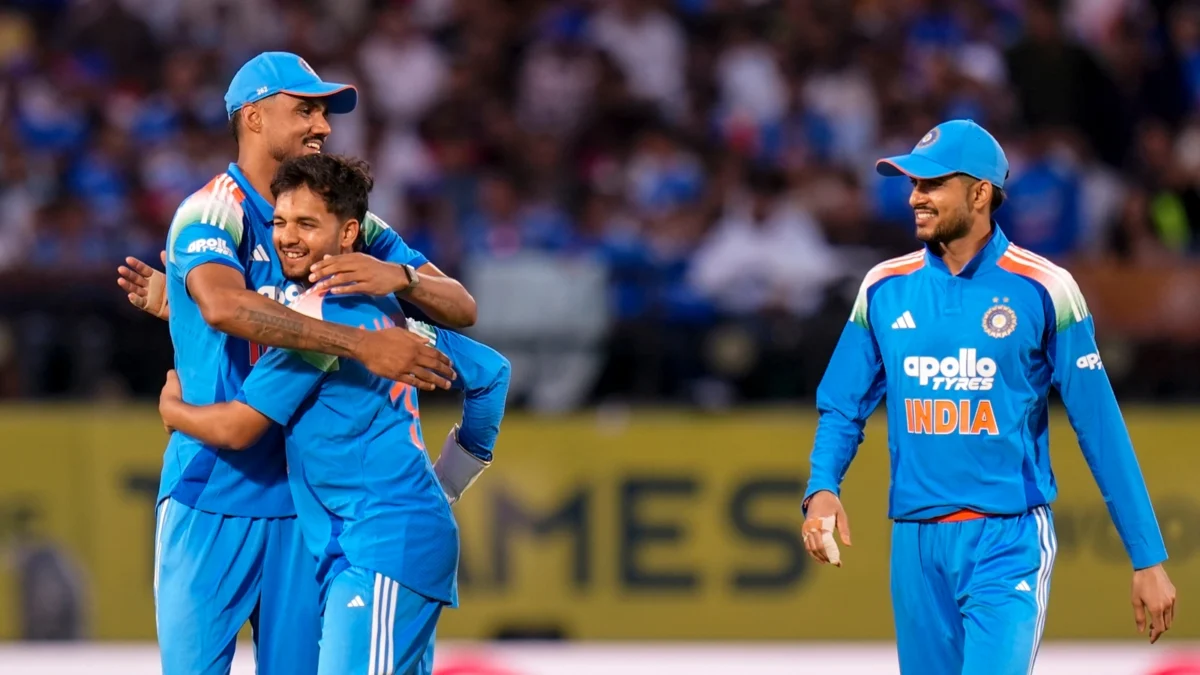
Brar’s debut performance in the rain-affected 25-over ODI showcased the very attributes that Gill and the selectors had evidently identified. He exuded the rhythm and confidence of an expert hand, not rushed by the grandeur of the occasion. In India’s second over, after Gill had won the toss and elected to bowl, Brar’s deliveries moved perceptibly off the seam and through the air. Within just five deliveries, his lanky frame and natural accuracy found their reward, undoing Afghanistan opener Ibrahim Zadran. The ball, fittingly, lobbed up to his most understanding teammate and captain, Shubman Gill, at mid-off. This early breakthrough was a potent validation of the collective punt. Brar further cemented his impressive start by returning to bowl the final over of the curtailed innings, where he claimed two more wickets, concluding with the best figures of the match: 3 for 23. His speeds, touching an impressive 146 km/h without visible strain, underscored a high ceiling for future refinement and suggested a significant new contender for India’s pace arsenal.
Harsh Dubey, too, demonstrated his value, particularly his unflappable temperament. Despite being targeted by the Afghan batsmen and conceding 38 runs in boundaries – including five sixes and two fours – he returned with three crucial wickets. Among these was the prized scalp of Afghanistan captain Hashmatullah Shahidi, dismissed by an extra bounce that Dubey generated from the slot. This ability to bounce back and continue to seek wickets despite pressure is a hallmark of a promising limited-overs bowler, particularly one auditioning for a spot that demands both control and wicket-taking impact.
Supporting Data: The Numbers and Narratives Behind the Picks
The selections of Manav Suthar, Harsh Dubey, and Gurnoor Brar, while seemingly swift, are rooted in a combination of raw talent, specific tactical requirements, and the unique insights of the captain.
Gurnoor Brar: Beyond the Statistics
Brar’s inclusion, in particular, ignited debate. His domestic bowling statistics, on paper, did not scream "international ready." With 52 First-Class wickets at an average of 27.30 and 22 wickets across 17 white-ball matches since 2021, his numbers reflected those of a "fairly average domestic pacer," as noted in early assessments. However, what consistently stood out, and what Gill clearly valued, was his physical presence and inherent skill set. Towering at six-foot-five, Brar possesses an unmissable height that allows him to extract disconcerting bounce, a crucial asset, especially in overseas conditions. Complementing this is his unmistakable accuracy in pounding the deck hard and his natural ability to generate pace through the air. Gill’s conviction in Brar dates back to their U-19 days during the Katoch Shield tournament in Mohali, where a young Gill advocated for Brar’s inclusion in the Mohali district team and subsequently in the Punjab U-23s. This long-standing belief in Brar’s innate skills, despite his modest statistical journey, underscores a captain’s prerogative to back a gifted bowler whom he believes is primed for a swift one-day initiation. His debut performance, where he touched 146 km/h and claimed three wickets, validated this perspective, suggesting that the "apparent quickness through the air" and control could make him a worthy contender in the coming months.
Harsh Dubey: The Red-Ball Specialist’s White-Ball Ambition
Harsh Dubey’s pathway has been more conventional in terms of statistical merit. His domestic career, particularly with the red ball, has been nothing short of phenomenal. He made headlines with a record-breaking 69-wicket haul in the Ranji Trophy last year, demonstrating an exceptional ability to sustain pressure and pick up wickets over long spells. While Manav Suthar pipped him to the Test cap, the selectors have strategically banked on Dubey’s "unflappable temperament" and proven wicket-taking ability to translate into success in limited-overs cricket. This move positions him as a strong candidate to audition for the crucial left-arm spin spot, which may soon see Ravindra Jadeja transitioning or facing increased competition. With Axar Patel notably omitted from recent ODI squads, Dubey’s ability to provide wicket-taking impact, rather than just economy, will be keenly observed as he competes for a long-term role. His recovery after an expensive first over in his debut, and still managing three wickets, speaks volumes about his mental fortitude.
The 2027 World Cup Blueprint: A Tight Window
These selections are not isolated incidents but part of a broader, urgent strategic framework. India’s ODI build-up has quietly yet definitively begun, necessitated by a condensed Future Tours Program (FTP) calendar. Wedged between a marathon spell of T20Is and critical World Test Championship assignments, India has a finite window of just 19 ODIs left until January 2027. This narrow timeframe precedes the 2027 World Cup, which is a mere 16 months away, slated to take place predominantly in South Africa in October-November 2027. The probability of extensive SENA (South Africa, England, New Zealand, Australia) tours in the lead-up to this quadrennial event remains slim. Therefore, the strategic imperative is to integrate and test all targeted hopefuls directly into competitive environments. While an Afghan skirmish might not have presented the stiffest challenge, it offered invaluable match exposure, allowing players like Brar and Dubey to demonstrate their potential under international scrutiny. This accelerated trial-by-fire approach is designed to fast-track player development and identify core strengths and weaknesses within a limited window.
Official Responses: Endorsements and Expectations from the Helm
The immediate reactions from seasoned observers and the captain himself have underscored the perceived success of these early selection gambles.
R. Ashwin’s Acclaim:
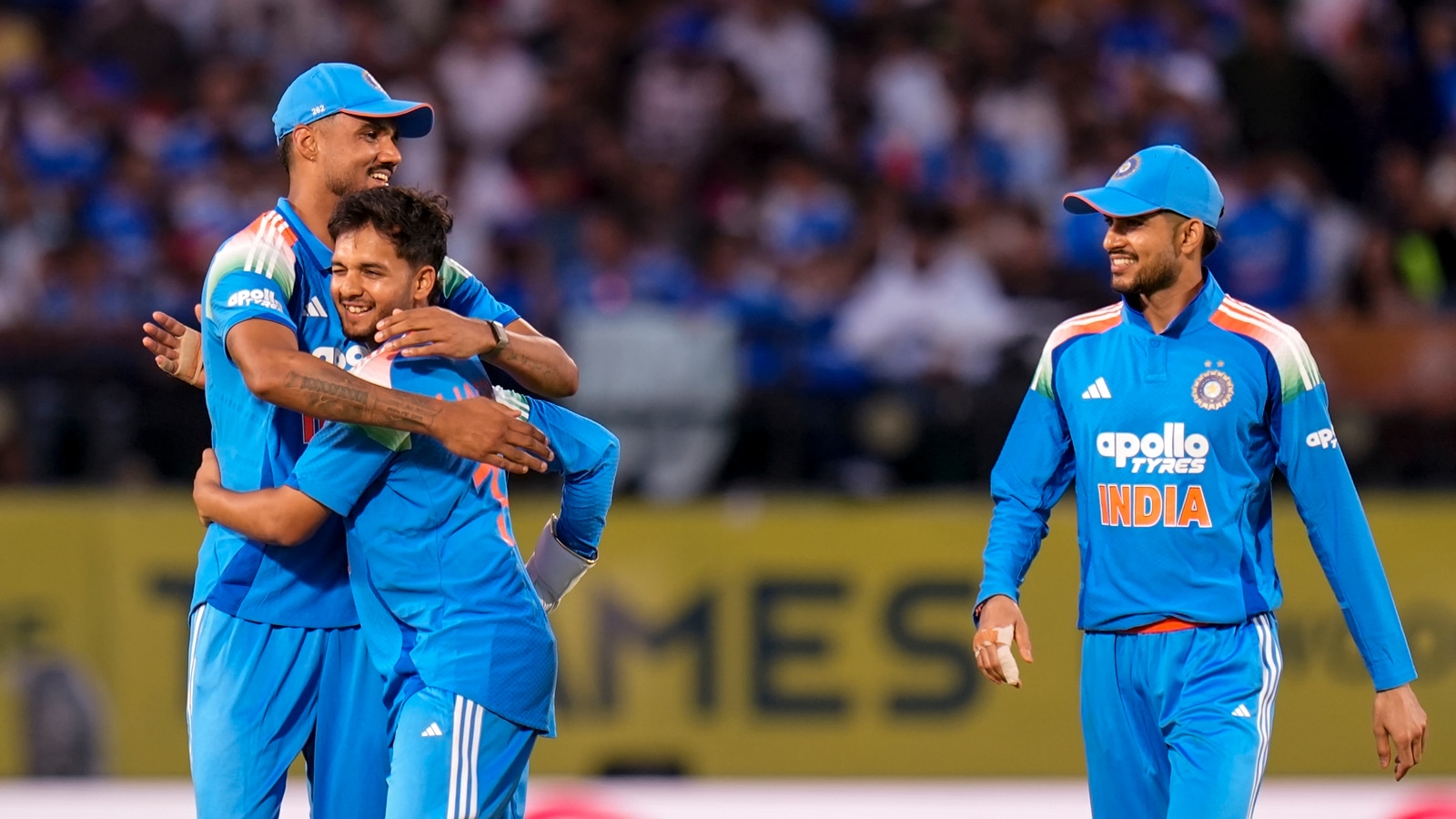
India’s veteran bowling legend, R. Ashwin, was quick to commend Gurnoor Brar’s debut. Taking to X (formerly Twitter), Ashwin posted, "Damn impressive this from Gurnoor Brar, clearly what the selectors saw in him is on full display." This endorsement from one of cricket’s most astute minds is significant. Ashwin, known for his deep understanding of bowling nuances and player potential, had previously noted Harsh Dubey’s skills during club cricket in Chennai. His immediate recognition of Brar’s impact, particularly his pace and control, adds considerable weight to the argument that the selectors’ faith, perhaps influenced by Gill, was well-placed. It suggests that Brar exhibited qualities beyond mere statistics – a raw talent and an inherent knack for international cricket that became evident from his very first spell.
Captain Gill’s Assessment:
Shubman Gill, post-match, articulated his satisfaction with both debutants, providing insights into the qualities that caught his eye and justified their inclusion. "Very impressive upfront – how Gurnoor bowled, brilliant pace and the way he was swinging the ball, the kind of lengths he bowled consistently," Gill remarked. His words highlighted Brar’s immediate impact with the new ball, leveraging his height and pace to generate swing and maintain consistent lines, a crucial attribute for an opening fast bowler.
Gill was equally laudatory of Harsh Dubey’s resilience: "And even Harsh as well. After the first over, he went for 16 runs… The way he pulled the game back, trusted himself and kept tossing the ball up. It was very impressive." This comment speaks volumes about Dubey’s mental strength and ability to adapt under pressure. Conceding 16 runs in an opening over, especially on debut, can be destabilizing for any bowler. However, Dubey’s capacity to regroup, trust his skills, and continue to flight the ball – a characteristic of an attacking spinner – deeply impressed his captain. This unflappable temperament is a non-negotiable trait for success in limited-overs cricket, where momentum shifts rapidly.
The Selectors’ Mandate:
Implicit in these selections and the subsequent validation is the trust the national selection committee has placed in Gill’s leadership and his recommendations. While selection is a collective process, the captain’s input, particularly when it comes to players he has intimately known and mentored, holds significant sway. The decision to bring in players like Brar, whose statistics might not have been overwhelming, indicates a willingness from the backroom staff to invest in specific profiles and Gill’s vision for the team’s future. This collaborative approach suggests a unified strategy, where the captain and the management are aligned in identifying talent for defined slots, with an eye on the broader international landscape and the ultimate goal of the 2027 World Cup.
Implications: Charting India’s ODI Future
The unfolding narrative under Shubman Gill’s captaincy carries profound implications for the trajectory of Indian cricket, particularly in the ODI format. The strategic selection process, coupled with the impressive initial performances of the debutants, signals a calculated, forward-looking approach.
The ‘Trust Line’ Philosophy:
The most striking implication is the emergence of a "trust line" philosophy in selection. Gill’s preference for players he has known, played with, and perhaps even mentored (like Brar since their U-19 days), reflects a desire for a cohesive unit built on mutual understanding and confidence. This approach, while sometimes leading to "selection bias murmurs," can also foster a strong team environment where players feel genuinely backed by their captain. It’s a departure from purely statistical selections, adding a layer of personal conviction and strategic foresight. Historically, captains like MS Dhoni have also shown a similar tendency to back certain players extensively, often leading to long-term success. The challenge for Gill will be to ensure this trust-based system remains meritocratic and continues to deliver results, avoiding any perception of favouritism that could destabilize team dynamics.
Bolstering the Pace Attack:
Gurnoor Brar’s emergence could prove pivotal in bolstering India’s fast bowling resources, especially with an eye on the 2027 World Cup in South Africa. His height (6’5") and ability to generate genuine pace and bounce are assets invaluable on pitches with pace and carry, which are characteristic of South African conditions. India has historically sought fast bowlers who can exploit such conditions, and Brar’s early demonstration of speed and accuracy offers a promising dimension. If he can refine his movements and sustain his pace over longer spells, he could become a crucial component of India’s multi-faceted pace attack, providing a different threat compared to the existing crop of fast bowlers.
Reinforcing the Spin Contingent:
The successive debuts of left-arm spinners Manav Suthar and Harsh Dubey highlight a clear focus on succession planning for India’s spin department. With Ravindra Jadeja a veteran and Axar Patel facing stiff competition, the search for a long-term, impactful left-arm spin option is critical. Dubey, with his proven red-ball wicket-taking ability and unflappable temperament, offers a compelling case for the white-ball format. His ability to pick up wickets despite being targeted is a significant advantage in modern ODIs. The competition between Suthar, Dubey, and Axar Patel will likely intensify, pushing each player to enhance their game and secure a consistent spot, ultimately strengthening India’s spin arsenal.
The Road to South Africa 2027:
The limited window of 19 ODIs before January 2027 makes every match and every debut a critical data point. The current series, even against Afghanistan, serves as a crucial testing ground for these hopefuls. The focus on specific profiles – a tall, quick bowler like Brar, and wicket-taking left-arm spinners like Suthar and Dubey – indicates a strategic alignment with the demands of the upcoming World Cup. South African pitches, known for their pace and bounce, will necessitate a well-rounded attack. These early selections allow the management to assess how these players adapt to international pressure, develop their skills, and fit into the team’s tactical plans, giving them sufficient time to mature before the quadrennial event.
A Calculated Gamble or a Clear Vision?
Ultimately, Gill’s captaincy is marked by a blend of calculated gambles and a clear, long-term vision. The decision to back players based on a combination of raw potential, specific skill sets, and personal conviction, rather than solely on overwhelming current statistics, is a bold one. It speaks to a modern approach to team building, where talent identification and nurturing are paramount. The early returns from Suthar, Dubey, and Brar are encouraging, providing initial validation for this strategy. The efficacy of these selection punts will, however, be continuously evaluated in the coming months as India navigates its packed international schedule. For now, the captain and the backroom staff are demonstrably committed to building a formidable squad for 2027, with Shubman Gill at the helm, charting a new course for Indian cricket. The journey has just begun, and it promises to be a fascinating one to track.
© The Indian Express Pvt Ltd
