

Introduction: The Pulse of Hyderabad’s Real Estate Market
Since the formation of Telangana in 2014, Hyderabad has emerged as one of India’s most resilient and rapidly growing metropolitan hubs. Driven by a massive influx of investment in Information Technology (IT), pharmaceutical manufacturing, and large-scale infrastructure projects, the city has witnessed an unprecedented appreciation in property values. At the heart of this economic transformation lies a critical regulatory mechanism: the Circle Rate.
Also known as the "Guidance Value" or "Ready Reckoner Rate," the circle rate is the minimum valuation set by the state government for property transactions in specific localities. It serves as the baseline for calculating stamp duty and registration charges, ensuring that the state exchequer receives its fair share of revenue while curbing the circulation of unaccounted "black money" in real estate deals. In Hyderabad, these rates are meticulously categorized for agricultural and non-agricultural land, reflecting the diverse landscape of the "City of Pearls."
Main Facts: Understanding the Regulatory Framework
The primary purpose of circle rates is to provide a floor price for property sales. In Hyderabad, these rates are determined by the Telangana Registration and Stamps Department. While the market rate—the price agreed upon between a buyer and a seller—often exceeds the circle rate, the latter remains the mandatory minimum for legal documentation.
Key facts regarding the current status of circle rates in Hyderabad include:

- Last Revision: The most significant recent overhaul occurred on February 1, 2022, when the Telangana government increased rates to align more closely with soaring market values.
- Applicability: Circle rates apply to all types of properties, including residential apartments, independent houses, commercial complexes, and vacant plots.
- Tax Linkage: If a property is sold below the circle rate, the difference is taxed as "Income from Other Sources" for the buyer and "Capital Gains" for the seller, unless the variance is within a 10% margin.
Chronology: From Statehood to Modern Regulation
The journey of Hyderabad’s property valuation has been marked by several pivotal milestones:
- 2014-2016: Post-Formation Stability: Following the creation of Telangana, the government focused on stabilizing the real estate market. Initial policies were geared toward attracting global tech giants like Google, Amazon, and Microsoft to establish their largest campuses outside the US in Hyderabad.
- 2017-2021: The Infrastructure Boom: With the completion of the Outer Ring Road (ORR) and the expansion of the Hyderabad Metro Rail, peripheral areas began to see a spike in demand. Despite the COVID-19 pandemic, the Hyderabad market remained surprisingly buoyant compared to other Indian metros.
- February 1, 2022: The Strategic Revision: After several years of stagnant guidance values, the state government implemented a revised rate structure. This move was aimed at bolstering state revenue to fund welfare schemes and further infrastructure development. The revision saw hikes ranging from 25% to 50% in high-growth corridors.
- 2023-Present: Digital Integration: The Telangana government has increasingly digitized the process of checking market values and paying duties through the Integrated Land Records Management System (Dharani) and the Registration and Stamps Department portal.
Supporting Data: Locality-Wise Valuation Insights
The circle rates in Hyderabad vary significantly based on the locality’s development status and commercial viability. Below is a detailed breakdown of the land values (per square yard) for prominent areas as of the 2022 revision:
| S. No | Locality | Property Type | Land Value (Rs. Per Sq. Yard) |
|---|---|---|---|
| 1 | Panjagutta Crossroads to Rajiv Gandhi Statue | Commercial | 93,000 |
| 2 | Ameerpet Crossroads to Swarna Jayanthi Complex | Commercial | 93,000 |
| 3 | Panjagutta to Srinagar Colony | Commercial | 85,800 |
| 4 | Ameerpet to Erragadda Rythu Bazar | Commercial | 85,800 |
| 5 | Abids to Koti Road / Basheerbagh | Commercial | 74,600 |
| 6 | Banjara Hills Rd No 1 | Commercial | 64,400 |
| 7 | Jubilee Hills-1 | Residential | 64,400 |
| 8 | Hill Fort Lane-1 | Residential | 60,300 |
| 9 | Panjagutta-1 | Residential | 60,300 |
| 10 | Abids-1 | Residential | 60,300 |
| 11 | Begumpet-1 | Residential | 48,700 |
| 12 | Somajiguda-1 | Residential | 48,700 |
| 13 | Balapura Basthi | Residential | 48,700 |
| 14 | Ameerpet-1 | Residential | 47,300 |
| 15 | Amberpet-1 | Residential | 32,200 |
| 16 | Sai Nagar | Residential | 27,600 |
Factors Influencing These Rates
The government does not set these rates arbitrarily. Several variables are weighed to determine the "fair value" of a locality:
- Infrastructure Availability: Proximity to the Metro, ORR, and IT hubs (HITEC City, Gachibowli) drastically inflates circle rates.
- Usage Category: Commercial properties consistently command higher circle rates than residential ones due to their revenue-generating potential.
- Property Age and Amenities: For built-up structures, the age of the building and the presence of luxury amenities (elevators, clubhouses, security systems) are factored into the "composite rate."
- Market Trends: The government monitors actual transaction prices in an area. If the gap between the market rate and the circle rate becomes too wide, a revision is typically triggered.
Official Responses: The Government’s Rationale
Officials from the Telangana Registration and Stamps Department have frequently emphasized that circle rate revisions are a balancing act. The 2022 hike was defended as a necessary measure to align "on-paper" values with the "ground reality" of the market.

"The objective is twofold," noted a senior department official during the last revision cycle. "First, we must ensure that property registration is transparent and that the state receives appropriate revenue to reinvest in urban development. Second, a realistic circle rate protects buyers by ensuring they can secure higher bank loans, which are usually capped based on the registered value of the property."
Critics within the real estate industry initially expressed concerns that higher circle rates would dampen demand by increasing the total cost of acquisition (due to higher stamp duty). However, the government’s stance has been that the surging demand in the Hyderabad market is driven by genuine end-user needs and institutional investments, making it resilient to moderate increases in transaction costs.
Implications: What This Means for Stakeholders
For Buyers and Investors
The circle rate serves as a double-edged sword for buyers. While a higher circle rate means paying more in stamp duty (currently totaling around 7.5% in Telangana, including registration and transfer fees), it also increases the "loanable value." Banks typically offer home loans based on the registered value or the market value, whichever is lower. A higher circle rate allows buyers to bridge the gap between their savings and the property price more effectively.
For Sellers and Developers
Sellers must ensure that their asking price is not lower than the circle rate to avoid scrutiny from the Income Tax Department. For developers, the circle rate impacts the "Total Cost of Project." High circle rates in areas like Banjara Hills or Jubilee Hills signify the prestige and high entry barriers of these micro-markets, often leading to luxury-tier pricing for the end consumer.
Impact on Property Tax
Circle rates are often the foundation for calculating annual property taxes. When the circle rate of a locality rises, it frequently triggers a proportional increase in the property tax levied by the Greater Hyderabad Municipal Corporation (GHMC). This ensures that the municipal body has the funds required for local maintenance and civic amenities.
How to Check Circle Rates: A Step-by-Step Digital Guide
The Telangana government has streamlined the process for citizens to verify property values online. This transparency helps prevent fraud and ensures buyers are well-informed.
- Access the Portal: Visit the official Telangana Registration and Stamps Department website.
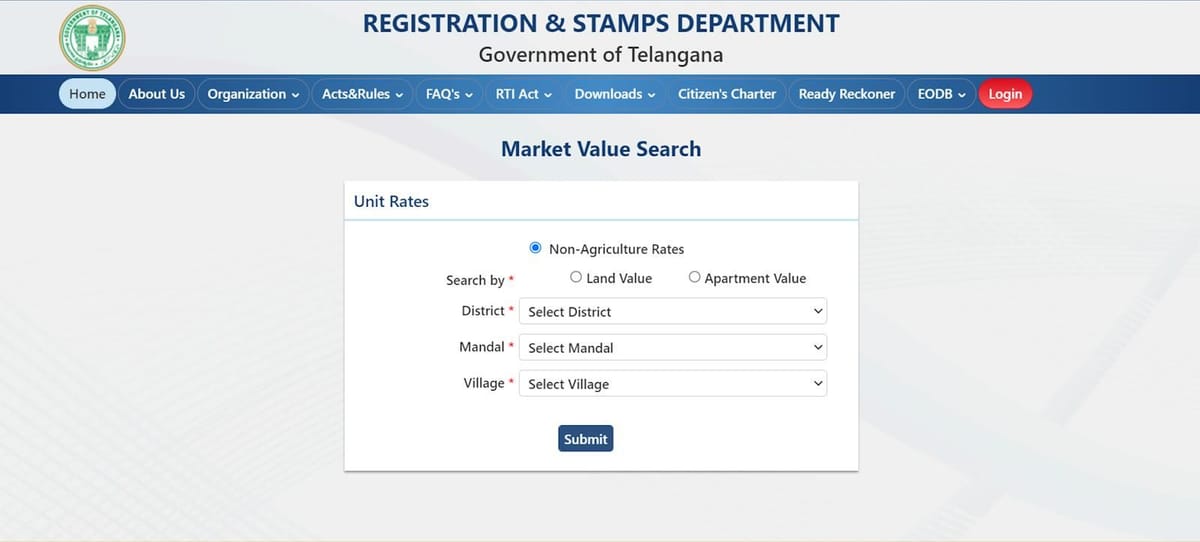
- Market Value Search: On the homepage, locate the "Market Value Search" tab under the "Online Services" section.
- Specify Details: Select the ‘Agricultural’ or ‘Non-Agricultural’ radio button.
- Geographic Filtering: Choose the District (e.g., Hyderabad or Rangareddy), Mandal, and Village/Locality from the dropdown menus.
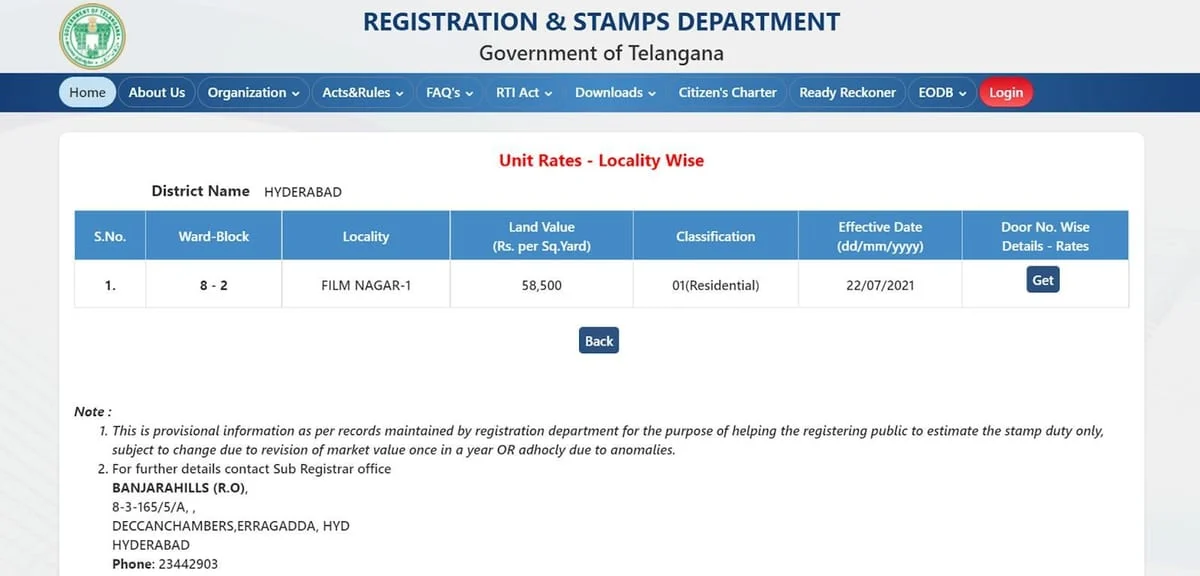
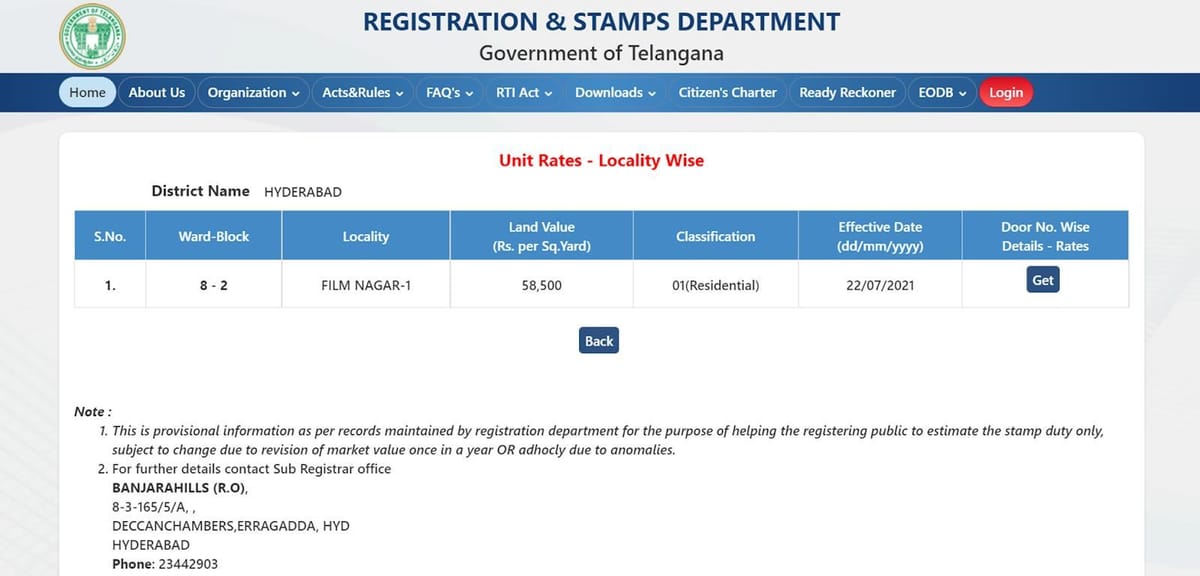
- Locality-Wise Results: A table will appear showing the unit rates for various localities.
- Door-Wise Specifics: For more granular data, users can click "Get" to see rates for specific door numbers or sub-localities, which provides the "Composite Rate" (Land + Construction).
Conclusion: The Future of Property Valuation in Hyderabad
As Hyderabad continues its trajectory toward becoming a global "megacity," the management of circle rates will remain a pivotal tool for economic governance. The shift toward a more data-driven, transparent valuation system reflects the city’s modern ethos.
For any prospective property owner or investor, staying updated on these rates is not merely a legal requirement but a financial necessity. While the market rate represents the city’s current sentiment, the circle rate represents its structural reality. As the city expands toward "Look East" and "Look South" policies, we can expect the guidance values in peripheral zones to see the next wave of significant revisions, mirroring the city’s ever-growing footprint.
Disclaimer: This report aims to provide updated information based on available government data and industry trends. However, real estate regulations and rates are subject to change. Readers are advised to verify specific property values through the official Telangana Registration and Stamps Department or consult with a certified legal expert before finalizing transactions.
