

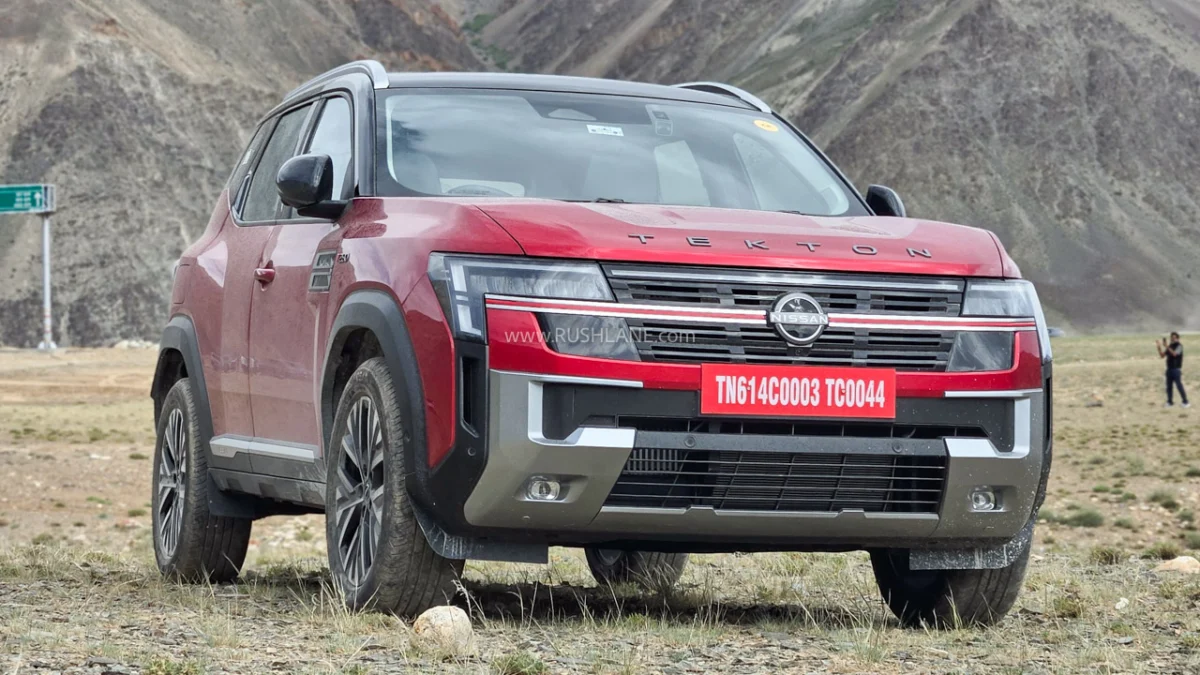
LEH, LADAKH – In a definitive display of mechanical endurance and logistical precision, Nissan Motor India Pvt Ltd has etched its name into the prestigious India Book of Records. The achievement comes on the heels of an ambitious trans-Himalayan expedition featuring the company’s latest flagship offering, the Nissan Tekton SUV. In what is being described as one of the most rigorous media drives in recent Indian automotive history, a massive convoy of 60 Tekton SUVs successfully navigated the treacherous terrain from the plains of Punjab to the high-altitude desert of Ladakh.
The record, officially titled the “Largest convoy of a single-model four-wheeler to reach Leh,” serves as a dual-purpose milestone: a validation of the Tekton’s rugged engineering and a strategic marketing masterstroke aimed at cementing Nissan’s reputation in the fiercely contested C-SUV segment.
The Record-Breaking Feat: A Himalayan Odyssey
The expedition saw 60 identical Nissan Tekton SUVs traverse a grueling 700-plus kilometer route, crossing some of the highest motorable passes in the world. While individual drives to Leh are a common rite of passage for automotive enthusiasts, the sheer scale of managing 60 vehicles—driven by members of the national automotive media—presents a unique set of challenges.
The India Book of Records validation required the convoy to maintain its integrity across the journey, ensuring that every vehicle that started the journey in Chandigarh successfully reached the finish line in Leh. This feat was not merely about speed, but about the collective reliability of the fleet under extreme atmospheric and geological pressure.
Chronology of the Expedition: From the Plains to the Peaks
The journey was meticulously planned over a three-day period, designed to test the Tekton across a spectrum of environments, altitudes, and temperatures.
Stage 1: The Ascent from Chandigarh
The journey commenced in Chandigarh, situated at an altitude of approximately 1,053 feet above sea level. This initial leg served as a baseline for the Tekton’s performance on well-paved highways and winding mountain roads. As the 60-vehicle convoy snaked its way toward Manali, the SUVs faced their first real test of thermal management and low-end torque while climbing the foothills of the Himalayas.
Stage 2: The Zanskar Challenge
From Manali, the convoy bypassed the traditional Leh-Manali highway in favor of the more demanding and recently opened route via the Zanskar Valley. This region is notorious for its "raw" terrain, featuring river crossings, loose gravel, and steep inclines. It was here that the Tekton’s suspension geometry and structural rigidity were put to the ultimate test.

Stage 3: Conquering Shinku La
The pinnacle of the drive—both literally and figuratively—was the crossing of the Shinku La Pass. Standing at a formidable altitude of 16,703 feet, Shinku La presents a hostile environment where oxygen levels are significantly depleted. For internal combustion engines, this "thin air" usually results in a marked drop in power. However, the Tekton’s turbocharged powertrains were tasked with maintaining momentum despite the atmospheric constraints.
Stage 4: The Descent to Leh
After successfully navigating the pass, the convoy descended into the Indus Valley, arriving at Leh city (11,480 feet). The final arrival marked the completion of the 700km odyssey, with all 60 units arriving in peak mechanical condition, thereby securing the record.
Supporting Data: Engineering and Performance Metrics
The Nissan Tekton’s success in the Himalayas can be attributed to its specific powertrain configurations, which were engineered to handle the "oxygen-starved" environments of Northern India.
Powertrain Diversity
Nissan has positioned the Tekton with two distinct turbo-petrol options, eschewing naturally aspirated engines in favor of forced induction—a critical advantage at high altitudes.
- The 1.0L Turbo Petrol: Serving as the entry point into the range, this engine is mated exclusively to a 6-speed manual transmission. Priced starting at Rs 10.5 lakh, it offers a balance of efficiency and accessible performance. During the drive, this variant demonstrated that even a smaller displacement engine, when turbocharged, can handle steep gradients if geared correctly.
- The 1.3L Turbo Petrol: This engine is the "powerhouse" of the lineup, claiming the title of the segment’s most powerful engine. It is available with either a 6-speed manual or a 6-speed wet-clutch Dual Clutch Transmission (DCT). The wet-clutch DCT was particularly noteworthy during the Himalayan ascent, as it provided quicker shifts and better heat dissipation compared to dry-clutch alternatives, preventing the "overheating" issues often associated with automatic gearboxes on long mountain climbs.
Pricing and Market Positioning
The Tekton is strategically priced to span a wide demographic:
- Base Variants: Starting at Rs 10.5 Lakh (Ex-showroom).
- Top-Spec Variants: Reaching up to Rs 18.6 Lakh (Ex-showroom).
By pricing the 1.3L Turbo DCT variant under the 19-lakh mark, Nissan is directly challenging established players, offering more horsepower per rupee than many of its rivals.
Official Responses: A Celebration of SUV Heritage
The achievement was celebrated by the leadership at Nissan Motor India, who viewed the record as more than just a certificate, but as a testament to the brand’s global DNA.

Mr. Saurabh Vatsa, Managing Director of Nissan Motor India, expressed his pride in the achievement:
“Entering the India Book of Records with the all-new Nissan TEKTON is a proud moment for Nissan Motor India and a fitting celebration of our 75-year SUV excellence. While the record is significant, what makes the achievement especially meaningful is what it represents.”
Vatsa further emphasized the real-world implications of the drive:
“Sixty TEKTON SUVs successfully completed a demanding Himalayan drive, demonstrating the vehicle’s capability, durability, and engineering strength in real-world conditions. This milestone reflects Nissan’s commitment to delivering premium SUVs that give customers confidence wherever their journeys take them. It also reinforces our belief in the all-new TEKTON as a vehicle engineered to perform across India’s diverse driving environments.”
The reference to "75 years of SUV excellence" points to Nissan’s global history with iconic nameplates like the Patrol and the Safari (global), suggesting that the Tekton inherits the ruggedness of its predecessors.
Implications: What This Record Means for the Indian Market
The successful completion of this 60-car convoy drive carries several significant implications for Nissan and the Indian automotive landscape.
1. Consumer Confidence and Reliability
In the Indian market, "Leh-tested" is often viewed as a gold standard for vehicle durability. By taking 60 units—rather than a single, specially prepared vehicle—Nissan has sent a clear message regarding the consistency of their manufacturing quality. For a prospective buyer in a metro city, the knowledge that the vehicle can handle Shinku La Pass provides a massive "safety cushion" of perceived reliability for daily commutes and occasional road trips.

2. Strategic Shift for Nissan India
For several years, Nissan India’s portfolio was heavily reliant on the Magnite compact SUV. While the Magnite was a commercial success, the Tekton represents Nissan’s move back into the premium, larger SUV space. This record-breaking event serves as a high-decibel "re-entry" announcement, signaling that Nissan is ready to compete on performance and technology, not just price.
3. The Power of Turbocharged Technology
The drive highlights the industry-wide shift toward downsizing and turbocharging. By showcasing the 1.3L Turbo’s performance at 16,000+ feet, Nissan is addressing consumer skepticism regarding smaller displacement engines. The Tekton’s ability to "punch above its weight" in thin air is a strong selling point for enthusiasts who prioritize driving dynamics.
4. Logistical and Operational Excellence
Organizing a 60-vehicle convoy through the Zanskar Valley is a logistical nightmare. From fuel supply and mechanical support to medical contingencies and communication in "no-network" zones, the success of the drive reflects Nissan’s operational maturity. This level of coordination often mirrors the brand’s after-sales and service network capabilities, further building trust with the customer base.
Conclusion
The Nissan Tekton’s entry into the India Book of Records is a calculated demonstration of strength. By conquering the Himalayas with a 60-car fleet, Nissan has bypassed traditional advertising in favor of a "trial by fire" (or in this case, a trial by ice).
As the Tekton begins its journey in the showrooms across India, it does so with a proven pedigree. With prices ranging from Rs 10.5 lakh to Rs 18.6 lakh and a powertrain lineup that has now been literally tested at the top of the world, the Tekton is well-positioned to disrupt the status quo of the Indian SUV market. For Nissan, this isn’t just a record; it is the foundation of a new era for the brand in India.
