

Visakhapatnam, India – June 16, 2026 – In a vibrant display of innovation and resilience, Visakhapatnam became the nexus for a pivotal conference dedicated to fostering the growth and sustainability of women-led enterprises. The event, aptly titled "Celebrating Women Entrepreneurs: Urban Ecosystem and Grassroots Leadership," convened a diverse array of stakeholders, including burgeoning entrepreneurs, established industry leaders, crucial ecosystem enablers, and influential community organizations. The primary objective was to forge collaborative pathways and devise strategies to bolster the entrepreneurial landscape for women across the region.
Organized by the formidable Global Alliance for Mass Entrepreneurship (GAME) and Aspire For Her (AFH), the conference received invaluable support from the Women’s Wing of the Visakhapatnam Chamber of Commerce and Industry (VCCI), underscoring the collaborative spirit driving this initiative. The event not only served as a platform for showcasing a remarkable spectrum of women-driven businesses but also facilitated crucial dialogues surrounding market access, financial empowerment, and the transformative potential of digital technologies.
The presence of esteemed dignitaries, including Member of Parliament M. Sribharat and VMRDA Commissioner N. Tej Bharath, lent significant weight to the proceedings. Their active participation in panel discussions highlighted the governmental and administrative commitment to nurturing a robust entrepreneurial ecosystem that champions women’s contributions.
A Hub of Enterprise: Showcasing Innovation and Resilience
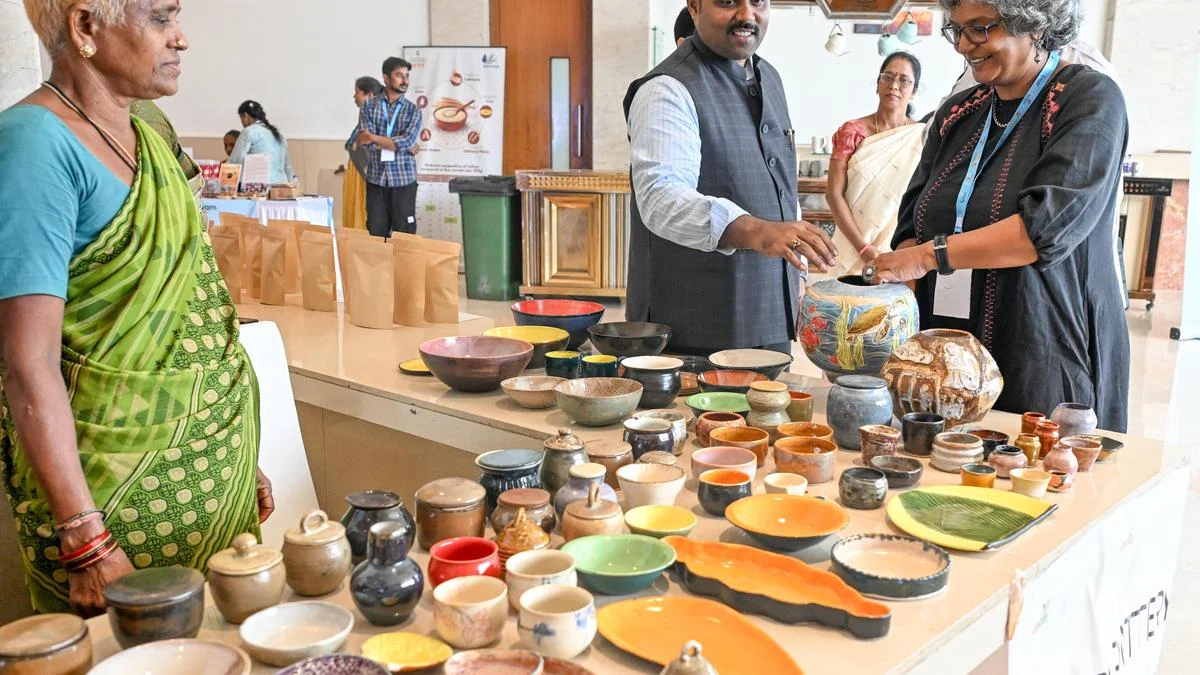
The conference’s exhibition zone was a testament to the diverse talent and entrepreneurial spirit of women in Visakhapatnam and its surrounding areas. Attendees were treated to a captivating array of products, spanning the spectrum from intricate handcrafted ceramics to value-added food products, each representing the culmination of dedication and vision.
Among the standout participants was Arra Pottery, a venture that captivated visitors with its exquisite handcrafted ceramic ware. The intricate designs and superior craftsmanship of their offerings provided a tangible glimpse into the artistic prowess and entrepreneurial drive of its founder. The VMRDA Commissioner, N. Tej Bharath, was observed engaging with the stall, signifying the official recognition and appreciation for such artisanal enterprises.
Another significant presence was the Sankalpa Art Village, an organization dedicated to promoting traditional arts and crafts, providing a platform for rural women artisans to showcase their creative talents and generate sustainable livelihoods. Their participation underscored the event’s commitment to inclusive growth and the preservation of cultural heritage through entrepreneurship.
A particularly inspiring exhibit was presented by the Visakhapatnam Town Fisherwomen Dry Fish Cooperative Society. As one of the oldest Fishermen Farmer Producer Organizations (FFPOs) in the region, this cooperative, registered in 1987, boasts a membership of 164 women actively involved in the processing and marketing of dry fish. Their long-standing presence and continued success in a traditionally male-dominated sector served as a powerful narrative of perseverance and collective empowerment. Their story resonated deeply, highlighting the economic contributions of women in the coastal communities and the vital role of cooperative models in empowering them.
Strategic Discussions: Navigating Challenges and Charting Future Growth
Beyond the vibrant exhibition, the conference delved into critical discussions that are paramount for the advancement of women entrepreneurs. Panel sessions and spotlight talks provided intimate platforms for women entrepreneurs to candidly share their experiences, both triumphs and tribulations. These dialogues critically examined the multifaceted challenges that women often encounter in the business world, including access to capital, navigating regulatory frameworks, balancing work and personal responsibilities, and overcoming societal biases.
A central theme that emerged from these discussions was the imperative of strengthening market linkages and fostering institutional support. Entrepreneurs articulated the need for more robust networks that connect them with potential buyers, distributors, and strategic partners. The importance of accessible and affordable financial services, including loans, grants, and investment opportunities tailored to the specific needs of women-led businesses, was also a recurring point. Furthermore, the transformative power of digital technologies in expanding market reach, enhancing operational efficiency, and accessing valuable business intelligence was underscored.
The deliberations also emphasized the significance of mentorship and skill development. Many participants expressed a desire for more structured mentorship programs that connect them with experienced entrepreneurs and industry professionals. This would provide them with invaluable guidance, practical advice, and a supportive network to navigate the complexities of business growth. Training programs focused on digital literacy, financial management, marketing strategies, and product development were identified as crucial for equipping women entrepreneurs with the tools they need to thrive in an increasingly competitive global market.
Voices from the Field: Building Scalable Enterprises
Subhash Kiran, Programme Director at GAME, articulated a core philosophy driving their initiatives. Speaking to The Hindu on the sidelines of the event, he stated, "Entrepreneurship flourishes when local ecosystems work together. Through collaborations with community organisations, industry, and market partners, we are working to help women entrepreneurs move beyond subsistence livelihoods and build enterprises that can scale and access larger markets." This statement encapsulates the overarching goal of fostering not just survival but sustainable growth and significant economic impact from women-led ventures.
GAME’s approach emphasizes the creation of supportive local ecosystems where entrepreneurs can access resources, mentorship, and market opportunities. By working closely with community organizations, they aim to identify and nurture nascent entrepreneurial talent, providing them with the necessary guidance and support to transform their ideas into viable businesses. The focus on "scaling" signifies a commitment to enabling women entrepreneurs to move beyond small-scale operations and establish businesses that can create jobs, contribute to economic development, and compete on a larger stage.
Divya Sampath of Aspire For Her shed light on the expansive reach and impact of her organization’s efforts. "Aspire For Her is a community of 1.2 million women. In collaboration with GAME, we are implementing the Hamsafal programme to strengthen entrepreneurial journeys and create access to opportunities," she explained. This revelation highlights the sheer scale of the network being cultivated by Aspire For Her, providing a powerful collective force for women entrepreneurs. The Hamsafal programme, a collaborative initiative with GAME, is specifically designed to provide a comprehensive support system for women entrepreneurs, encompassing mentorship, training, financial literacy, and market access. The program’s success is a testament to the power of collaboration and the strategic application of resources to empower women in their entrepreneurial pursuits.
A Chronology of Empowerment: From Vision to Reality
The journey towards empowering women entrepreneurs in Visakhapatnam has been a progressive one, marked by strategic planning and collaborative action. The "Celebrating Women Entrepreneurs: Urban Ecosystem and Grassroots Leadership" conference on Tuesday, June 16, 2026, represents a significant milestone in this ongoing endeavor.

The groundwork for such an event was laid through years of persistent advocacy and the establishment of foundational organizations like GAME and Aspire For Her. These organizations have been instrumental in identifying the unique challenges faced by women entrepreneurs and in developing targeted interventions to address them.
The partnership with the Women’s Wing of the Visakhapatnam Chamber of Commerce and Industry (VCCI) signifies a crucial step in integrating these efforts within the local business community. VCCI’s established network and influence provide a vital bridge between grassroots initiatives and the broader urban economic landscape.
The development of programs like Hamsafal, a collaborative effort between AFH and GAME, further illustrates a structured approach to entrepreneurship development. These programs are not ad-hoc interventions but rather carefully designed frameworks aimed at nurturing and scaling women-led businesses. The ongoing implementation of such programs, supported by events like the conference, creates a continuous cycle of learning, growth, and empowerment.
The presence of dignitaries like MP M. Sribharat and VMRDA Commissioner N. Tej Bharath on Tuesday indicates a growing recognition of the importance of women’s economic participation at the highest levels of governance. Their involvement suggests a commitment to policy reforms and resource allocation that will further strengthen the entrepreneurial ecosystem for women in the region.
The exhibition itself, featuring enterprises like Arra Pottery, Sankalpa Art Village, and the Visakhapatnam Town Fisherwomen Dry Fish Cooperative Society, represents the tangible outcomes of these collective efforts. Each of these businesses, with their unique stories and products, embodies the potential that is unlocked when women are provided with the right support and opportunities.
Supporting Data and Future Projections
While specific quantitative data on the immediate impact of the conference will emerge over time, the underlying principles and objectives are supported by broader trends in entrepreneurship and economic development.
- Global Rise of Women Entrepreneurs: Globally, there is a significant and growing trend of women entering entrepreneurship. This is driven by a desire for economic independence, flexibility, and the pursuit of innovative ideas. Reports from organizations like the World Bank and the International Monetary Fund consistently highlight the economic benefits of increasing women’s participation in the workforce and in business ownership.
- Impact of Ecosystem Support: Studies have shown a direct correlation between the presence of a robust entrepreneurial ecosystem and the success rate of new ventures. Access to mentorship, funding, networking opportunities, and supportive government policies significantly increases the likelihood of a business surviving and thriving. The conference’s focus on strengthening these very elements is therefore strategically aligned with proven success factors.
- Digital Transformation and Market Access: The digital revolution has democratized market access for businesses of all sizes. Women entrepreneurs, in particular, can leverage digital platforms to overcome geographical barriers, reach wider customer bases, and engage in e-commerce. The emphasis on digital opportunities at the conference is crucial for ensuring that women-led businesses remain competitive in the modern economy.
- Economic Multiplier Effect: Empowering women entrepreneurs has a significant multiplier effect on the economy. When women succeed in business, they tend to reinvest their earnings back into their families and communities, leading to improved education, healthcare, and overall economic well-being. This creates a virtuous cycle of growth and development.
The success of initiatives like the Hamsafal program, which aims to create access to opportunities for its 1.2 million members, suggests a potential for significant scale. If even a fraction of these women can successfully scale their enterprises, the economic impact on Visakhapatnam and beyond could be substantial. Future projections would likely focus on metrics such as job creation, revenue generation by women-led businesses, increased access to finance, and the overall growth of the formal sector driven by women entrepreneurs.
Official Responses and Commitment to Growth
The active participation and public statements from key officials at the "Celebrating Women Entrepreneurs" conference underscore a strong commitment to fostering an environment conducive to women’s economic empowerment.
VMRDA Commissioner N. Tej Bharath‘s visit to the handcrafted ceramic stall by Arra Pottery was more than just a symbolic gesture; it represented an acknowledgment of the value and potential of artisanal businesses led by women. His presence signals an intention to support such ventures through initiatives that could include facilitating market access, providing infrastructure support, or promoting local craftsmanship. The VMRDA, as a key development authority, has the potential to play a significant role in shaping the urban landscape to be more inclusive and supportive of diverse entrepreneurial endeavors.
Member of Parliament M. Sribharat‘s engagement in the discussions on strengthening the entrepreneurial ecosystem for women highlights the importance of this issue at the legislative and policy-making levels. His involvement suggests a commitment to advocating for policies that address the unique challenges faced by women entrepreneurs, such as easier access to credit, simplified regulatory processes, and programs that promote gender equality in business. The MP’s presence indicates that the aspirations of women entrepreneurs are being heard and considered within the broader national agenda for economic growth and development.
The collaborative effort involving the Global Alliance for Mass Entrepreneurship (GAME) and Aspire For Her (AFH), with the Visakhapatnam Chamber of Commerce and Industry (VCCI) as a partner, demonstrates a multi-stakeholder approach to problem-solving. This synergy ensures that initiatives are not confined to theoretical discussions but are grounded in practical implementation and local context. The VCCI’s role is particularly crucial in bridging the gap between grassroots aspirations and established business networks, providing a platform for collaboration and knowledge sharing.
The statements from GAME Programme Director Subhash Kiran and Aspire For Her representative Divya Sampath further solidify the commitment to tangible action. Kiran’s emphasis on collaborative ecosystems and moving beyond subsistence livelihoods, coupled with Sampath’s mention of the expansive Hamsafal program, paints a picture of a sustained and scalable effort. These organizations are not just facilitators; they are actively involved in designing and implementing programs that aim to create lasting impact and foster significant economic empowerment for women.
Implications: A Catalyst for Inclusive Economic Development
The "Celebrating Women Entrepreneurs: Urban Ecosystem and Grassroots Leadership" conference in Visakhapatnam is poised to have far-reaching implications, extending beyond the immediate benefits to the participating entrepreneurs.
- Economic Diversification and Growth: By empowering women to establish and scale their businesses, Visakhapatnam can expect to see a more diversified economic landscape. This will lead to the creation of new jobs, increased revenue generation, and a stronger contribution to the regional and national GDP. The focus on various sectors, from handicrafts to food processing, highlights the potential for inclusive growth across the economy.
- Enhanced Social Equity: The economic empowerment of women is intrinsically linked to social progress. When women have financial independence, they gain greater agency in their households and communities, leading to improved decision-making power, better health and education outcomes for their families, and a reduction in gender-based inequalities.
- Innovation and Entrepreneurial Culture: The conference serves as a catalyst for fostering a more vibrant and innovative entrepreneurial culture in Visakhapatnam. By showcasing success stories and facilitating knowledge exchange, it inspires more women to pursue their entrepreneurial aspirations and encourages a supportive environment for new ventures to emerge and thrive.
- Strengthened Community Resilience: Grassroots leadership, as highlighted in the conference’s theme, is crucial for building resilient communities. Women entrepreneurs often play a vital role in their local economies, providing essential goods and services and creating employment opportunities, especially in rural and peri-urban areas. Their success contributes to the overall stability and well-being of the community.
- Policy Influence and Advocacy: The high-level participation at the conference can translate into tangible policy changes. The dialogues and insights shared by entrepreneurs and ecosystem enablers can inform government policies, leading to more targeted support mechanisms, streamlined regulations, and increased investment in women’s entrepreneurship. This can create a more favorable long-term environment for women in business.
- Inspiration for Future Generations: The visibility and success of women entrepreneurs showcased at the event serve as powerful role models for younger generations of girls and women. Witnessing their peers achieve success can inspire them to pursue their own entrepreneurial dreams, creating a sustainable pipeline of future leaders and innovators.
In conclusion, the "Celebrating Women Entrepreneurs" conference in Visakhapatnam represents a significant stride towards building a more equitable and prosperous future. By bringing together key stakeholders, fostering critical dialogues, and showcasing inspiring success stories, the event has laid a strong foundation for the continued growth and empowerment of women entrepreneurs in the region. The collaborative spirit and the commitment to action demonstrated at this conference promise to unlock the full potential of women-led enterprises, driving both economic development and social progress.
