

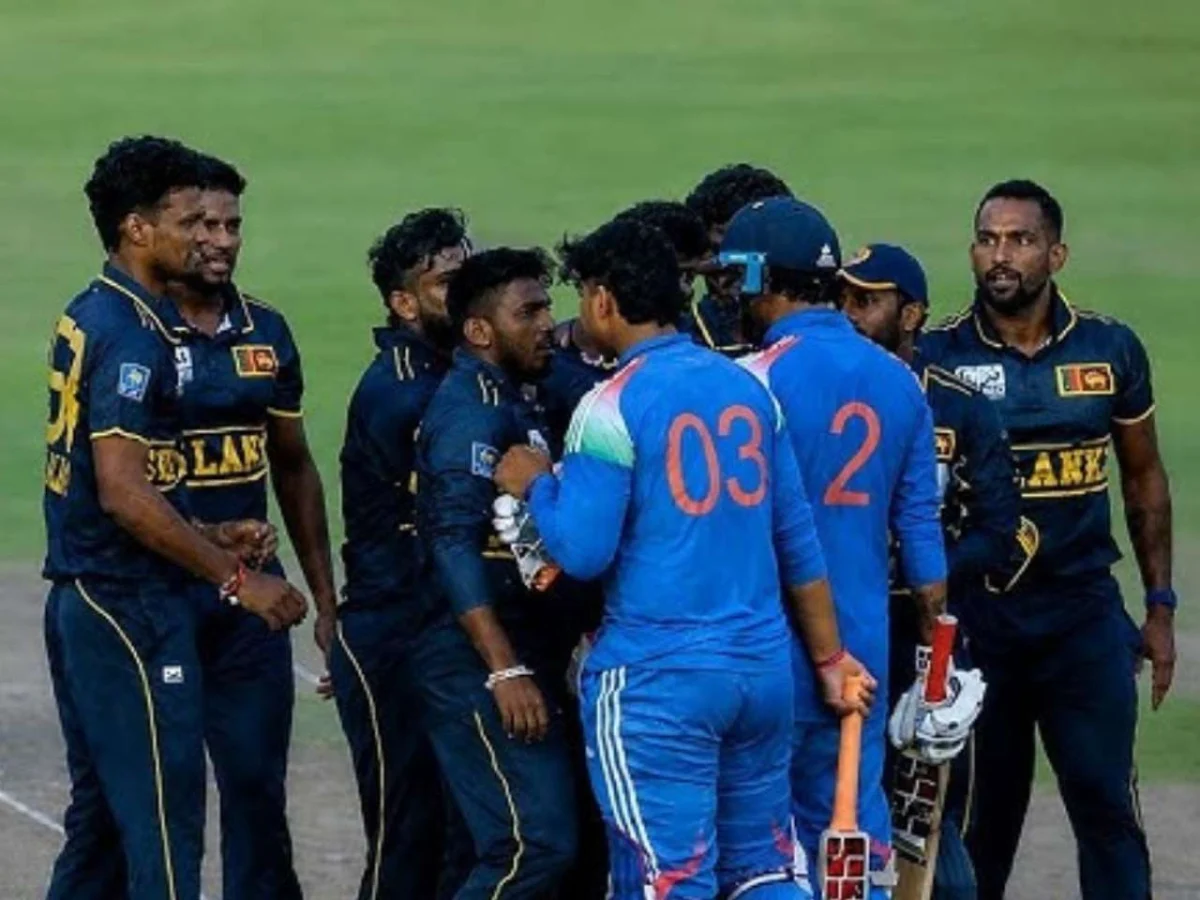
Dambulla, Sri Lanka – A dramatic and emotionally charged confrontation between India A batter Vaibhav Sooryavanshi and Sri Lanka A’s Vishen Halambage following a Super Over thriller in Dambulla has sent ripples through the cricketing world, sparking widespread debate and drawing attention to the intense pressures of developmental cricket. The incident, which unfolded at the Rangiri Dambulla International Stadium on Monday, saw the young Indian batter react vehemently to a verbal taunt after a heartbreaking defeat, leading to a physical altercation that briefly overshadowed the thrilling contest.
Reports have now shed light on the alleged exchange that ignited Sooryavanshi’s emotional outburst, providing crucial context to an incident that has become a talking point among fans and pundits alike. While the customary post-match handshakes eventually took place, the fiery encounter has raised questions about sportsmanship, player conduct, and the unique pressures faced by emerging talents in high-stakes ‘A’ team competitions.
Main Facts: A Post-Match Meltdown
The core of the incident centers around a heated exchange and physical push involving India A’s Vaibhav Sooryavanshi and Sri Lanka A’s Vishen Halambage. This occurred immediately after India A suffered a devastating Super Over defeat in a Tri-Nation A series match held at the Rangiri Dambulla International Stadium. The loss itself was a significant blow to India A’s hopes of reaching the tournament final, intensifying the already palpable tension.
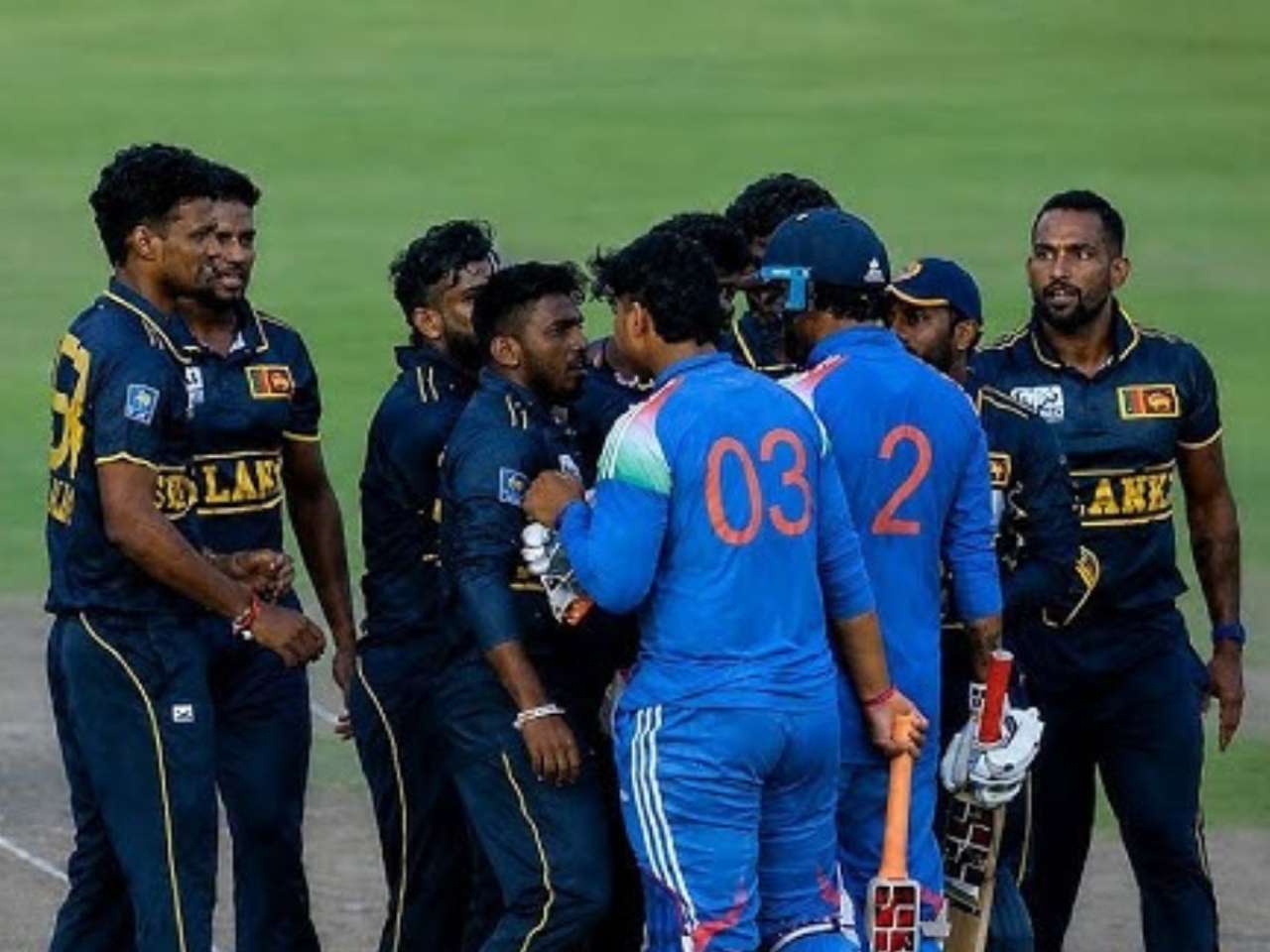
According to reports from Cricbuzz, the confrontation was sparked by Halambage’s provocative remark, "Match over…now you go home," directed at Sooryavanshi. This taunt elicited an immediate and furious response from the Indian batter, escalating into a physical push before other players intervened to de-escalate the situation. The incident has been widely discussed, fueled by a video clip circulating on social media platform X, which captured the moment of heightened aggression.
Adding another layer of complexity to the narrative is the controversy surrounding the Super Over itself. There are strong suggestions that the tie-breaker should not have been played due to insufficient light, a point disputed by India A captain Tilak Varma and acknowledged by Sri Lanka Cricket (SLC) officials. This underlying discontent likely contributed to the already volatile atmosphere, setting the stage for the post-match fireworks. Despite the intensity of the clash, both teams ultimately completed the traditional post-match handshake, though the lingering tension was evident. The incident has cast a shadow over the series, raising concerns about potential repercussions for the players involved, even if official sanctions from the International Cricket Council (ICC) are deemed unlikely for ‘A’ team fixtures.
Chronology of the Confrontation: From Tie to Tempest
The dramatic events of Monday evening in Dambulla were the culmination of a high-stakes Tri-Nation A series encounter between India A and Sri Lanka A. The match itself had been a gripping affair, showcasing the talent and competitive spirit of both sides. As the game drew to a close, a tense situation unfolded, leading to the necessity of a Super Over to determine a winner.
)
The Super Over Decider: With scores tied, the Super Over was activated, a sudden-death format designed to break stalemates. India A was tasked with chasing 17 runs, a challenging target in such a high-pressure scenario. The responsibility of bowling for Sri Lanka A fell to the relatively unknown 19-year-old slinger, Kugathas Mathulan from Jaffna. Mathulan, under immense pressure, delivered a stellar over, successfully defending the target and securing a surprising victory for the hosts. This loss in the Super Over was a significant blow to India A’s tournament aspirations, placing their chances of reaching the final in jeopardy. The elation of the Sri Lankan A team was palpable, contrasting sharply with the deep disappointment felt by the Indian contingent.
The Provocation: It was in this immediate aftermath of victory and defeat that the flashpoint occurred. As the players gathered, the emotions of the contest were still raw. According to multiple reports, including those from Cricbuzz, Sri Lanka A’s Vishen Halambage approached Vaibhav Sooryavanshi. In a moment that likely stemmed from the exhilaration of victory and perhaps a desire to add salt to the wounds of the vanquished, Halambage hurled a verbal insult at the Indian batter: "Match over…now you go home."
Sooryavanshi’s Fiery Reaction: This taunt proved to be the catalyst for the subsequent eruption. Sooryavanshi, clearly still reeling from the Super Over loss and the intense pressure of the moment, reacted instinctively and emotionally. He was seen charging back towards Halambage, his body language conveying profound anger and frustration. The verbal exchange escalated rapidly, with Sooryavanshi firing back his own retort. The situation quickly spiraled as the two players became physically aggressive, culminating in Sooryavanshi reportedly pushing the Sri Lankan A player aside.

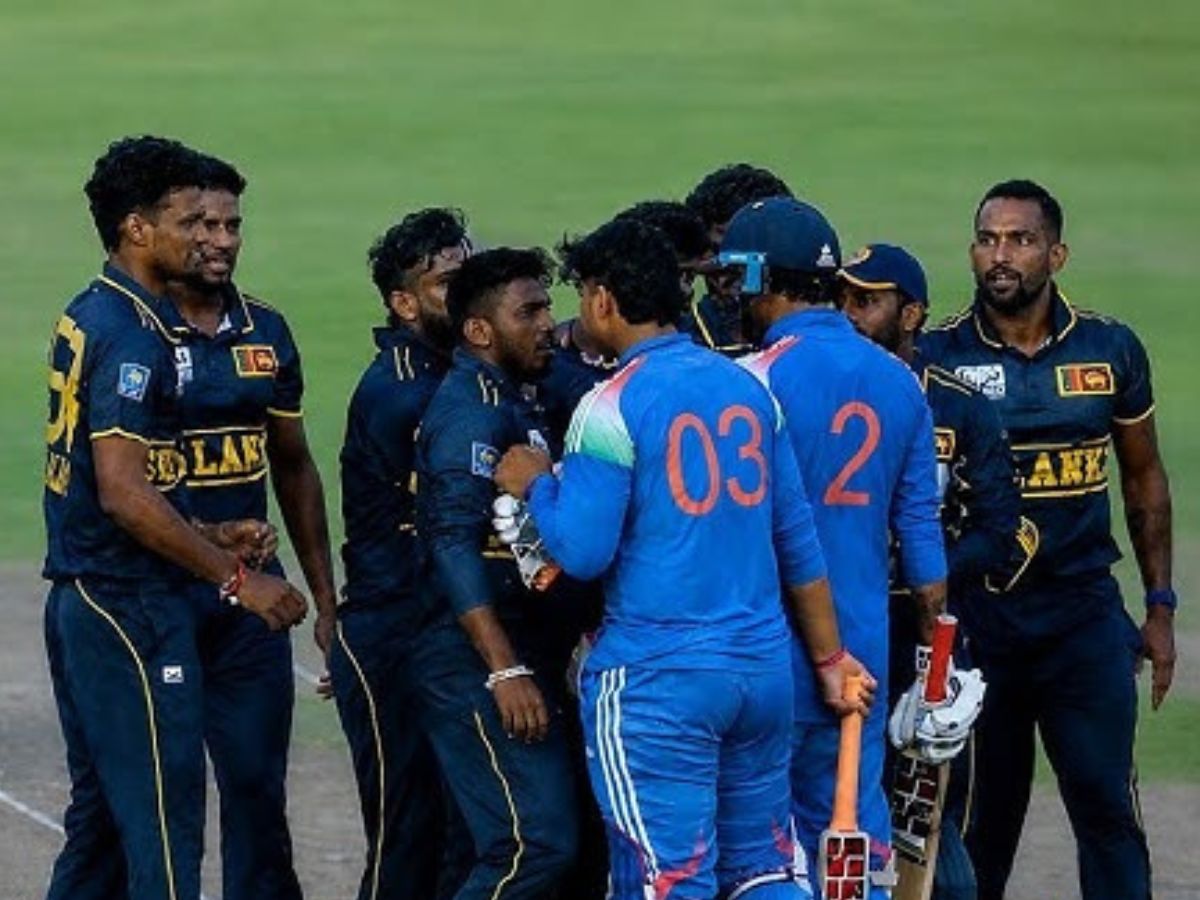
Intervention and De-escalation: The physical altercation prompted immediate intervention from other players on both sides. Teammates and support staff quickly rushed in to separate Sooryavanshi and Halambage, preventing the situation from escalating further into a full-blown brawl. The images and videos circulating online depict a chaotic scene, with players physically restraining their colleagues to restore order.
The Post-Match Handshake: Despite the heated nature of the confrontation, both teams did eventually complete the customary post-match handshake. This traditional gesture, often seen as a symbol of sportsmanship and mutual respect, was carried out amidst lingering tension, suggesting that while the immediate aggression had been quelled, the underlying feelings of resentment and frustration had not entirely dissipated. The incident, therefore, stands as a stark reminder of how quickly emotions can boil over in the crucible of competitive sport, especially when the stakes are high and outcomes are decided by the narrowest of margins.
Deeper Dive: The Context of the Super Over Controversy
Beyond the immediate player confrontation, the incident in Dambulla is deeply intertwined with a significant controversy surrounding the decision to play the Super Over itself. This contextual element adds another layer of understanding to the heightened emotions witnessed on the field.
)
Questioning the Decision to Play
Reports indicate a strong sentiment, particularly from the Sri Lankan A camp, that the Super Over should never have taken place. The primary reason cited was "insufficient light for further play." Cricket regulations are very strict about playing conditions, especially light, to ensure player safety and fair play. When natural light diminishes to a certain level, umpires are obligated to halt play, regardless of the match situation. If the conditions were indeed inadequate, proceeding with a Super Over would have been a contentious decision, potentially compromising player visibility and the integrity of the contest. Such a decision, if against the spirit of the game or safety protocols, could easily fuel frustration and anger among players, who are already under immense pressure.
Team Reactions to the Super Over
The reluctance to play the Super Over was not confined to one side. India A captain Tilak Varma was reportedly seen disputing decisions with the umpires, likely concerning the playing conditions and the viability of continuing the match. While the exact nature of his dispute is not fully detailed, it suggests a broader dissatisfaction with how the situation was being managed by the match officials. Similarly, Cricbuzz reported that the Sri Lanka A team "was not in favor of a tie-breaker at that moment." This collective apprehension from both sides highlights a potential breakdown in communication or a disagreement with the match officials’ assessment of the conditions. When both teams express reservations about continuing, especially under fading light, the decision to press ahead with a Super Over becomes even more questionable, creating an environment ripe for tension and disagreement.
Official Statements on Super Over
The sentiment regarding the Super Over’s legitimacy was echoed at an official level. A Sri Lanka Cricket (SLC) official, speaking to Cricbuzz, explicitly stated, "There should never have been a Super Over in the first place." This statement from a high-ranking board official lends significant weight to the argument that the match officials might have erred in their judgment. Such an admission, even if unofficial, suggests an acknowledgment within the crick Lankan cricketing fraternity that the conditions were not ideal for a continuation of play, let alone a high-stakes Super Over. This official stance further legitimizes the players’ frustrations and helps explain why emotions were running so high, creating a volatile atmosphere where a simple taunt could quickly ignite a fiery confrontation. The perceived unfairness or questionable decision-making surrounding the Super Over thus becomes a crucial backdrop to understanding the post-match meltdown.
)
Player Profiles and Performance Context
Understanding the personalities and current form of the players involved provides a deeper perspective on the confrontation. The pressures of ‘A’ team cricket, where players are constantly striving to prove themselves for national selection, can significantly amplify emotional reactions.
Vaibhav Sooryavanshi: The Under-Pressure Batter
Vaibhav Sooryavanshi is an emerging talent in Indian cricket, carrying the weight of expectation that comes with representing an India A squad. These tours are critical proving grounds for young players, offering them a platform to showcase their skills against international opposition and stake a claim for a spot in the senior national team. Sooryavanshi’s performances in the Tri-Nation A series had been mixed, with scores of 12, 44, and 21 in his three matches played so far. While the 44 was a promising knock, the overall inconsistency, particularly his inability to convert starts into significant scores, might have been a source of growing personal frustration.
The Super Over loss, especially in a crucial tournament game, would have been a bitter pill to swallow. For a young batter, struggling to find consistent rhythm and facing the immense pressure of securing a place, such a defeat can be particularly disheartening. His emotional reaction to Halambage’s taunt can therefore be seen not just as a response to the immediate provocation, but also as an outburst stemming from accumulated frustration, the sting of defeat, and the high-stakes environment he operates in. It highlights the fine line between competitive fire and emotional control that young athletes must learn to navigate.
)
Vishen Halambage: The Provocateur
Vishen Halambage, representing Sri Lanka A, found himself at the center of the controversy as the initiator of the verbal exchange. His taunt, "Match over…now you go home," while certainly provocative, is not entirely uncommon in the heat of competitive sport. It likely stemmed from the raw emotion of a hard-fought victory, particularly one achieved in a thrilling Super Over. For Halambage and his team, the win against a strong India A side would have been a moment of immense pride and celebration.
In such moments, adrenaline runs high, and judgment can be clouded by elation. While his comment crossed a line into unsportsmanlike conduct, it was arguably born out of the intensity of the rivalry and the joy of an unexpected win. His role as the provoker, however, places a significant spotlight on the need for all players, regardless of their team’s performance, to maintain decorum and respect for their opponents, even in victory.
Kugathas Mathulan: The Super Over Hero
While not directly involved in the confrontation, the performance of 19-year-old slinger Kugathas Mathulan from Jaffna is integral to the context of the incident. Mathulan was the bowler entrusted with the daunting task of defending 17 runs in the Super Over. His successful execution under such immense pressure was the decisive factor in Sri Lanka A’s victory. For a young, relatively unknown player to deliver in such a high-stakes moment is a testament to his skill and composure.
)
His heroics directly led to the Sri Lankan A team’s celebrations and, consequently, set the stage for Halambage’s taunt and Sooryavanshi’s reaction. Mathulan’s performance underscores the raw talent present in A-team cricket and how a single moment of brilliance can dramatically shift momentum and ignite a cascade of emotions, both positive and negative, among all involved. His contribution, though silent in the confrontation, was the trigger for the entire dramatic sequence.
Supporting Data and Broader Implications
The Dambulla incident, while specific to these players and this series, resonates with broader themes within cricket and professional sports. It highlights the unique pressures of ‘A’ team competition and the increasing scrutiny players face.
History of On-Field Confrontations in Cricket
Cricket, often dubbed the "gentleman’s game," has a rich history punctuated by moments of intense on-field rivalry and, at times, outright confrontation. From the infamous "Bodyline" series of the 1930s to more recent instances of heated sledging and verbal altercations, competitive fire has always been a part of the game. Iconic clashes like the Dhavan-Starc argument, the Warne-Samuels spat, or the countless verbal volleys between India and Australia demonstrate that emotions can run high even at the highest levels.
)
What sets the Sooryavanshi-Halambage incident apart, however, is the physical aspect and its occurrence in an ‘A’ team series. While sledging is often tolerated to a degree, physical contact crosses a line universally condemned. This event serves as a stark reminder that beneath the veneer of traditional sportsmanship, the desire to win, coupled with the pressure to perform, can push individuals to their emotional limits, occasionally resulting in regrettable actions. Such incidents, while unfortunate, become part of the sport’s narrative, often leading to debates about the "spirit of cricket."
The Role of A-Team Series: A Crucible of Talent
‘A’ team series are far more than mere exhibition matches; they are crucial developmental pathways for aspiring international cricketers. These tours serve several vital functions:
- Talent Identification: They provide a platform for selectors to assess players’ readiness for the senior national team against quality international opposition.
- Experience Building: Players gain invaluable experience in different conditions, against varied bowling attacks and batting line-ups, helping them adapt and grow.
- Pressure Cooker Environment: These matches, despite being a tier below full internationals, carry immense pressure. Players are fighting for their careers, aiming to impress coaches and selectors. A strong performance can open doors, while a poor one can set them back.
This inherent pressure creates a high-stakes environment where every run, every wicket, and every victory feels magnified. The intensity can be comparable to, if not at times exceeding, that of some senior international matches, as players are literally playing for their future. This context helps explain why emotions can run so high, and why a seemingly innocuous taunt can trigger such a strong reaction from a player like Sooryavanshi, who is undoubtedly under immense scrutiny to perform.
)
Media and Fan Reaction: The Digital Echo Chamber
In the age of instant communication and social media, on-field incidents quickly become global phenomena. The confrontation in Dambulla was no exception. The video clip of the altercation rapidly went viral on platforms like X (formerly Twitter), sparking a torrent of reactions from fans, former cricketers, and media outlets.
The debate has been widespread: some condemned Sooryavanshi’s physical reaction, emphasizing the need for professional conduct; others pointed fingers at Halambage for initiating the provocation; and many lamented the overall breakdown of sportsmanship. The incident trended online, demonstrating the power of digital media to amplify sporting controversies and shape public opinion. This intense scrutiny adds another layer of pressure on players, knowing that every action, every word, can be instantly captured, shared, and debated by millions. For young players still learning to navigate the public eye, such incidents can be particularly challenging, impacting their reputation and potentially their mental well-being.
Official Responses and Potential Repercussions
The aftermath of any on-field confrontation inevitably leads to questions about official action and disciplinary measures. In the case of the Dambulla incident, the hierarchy and nature of ‘A’ team cricket introduce unique considerations regarding potential sanctions.
)
ICC’s Stance on A-Team Series: Unlikely Sanctions
A significant point of discussion revolves around whether the International Cricket Council (ICC) will intervene. The general consensus, as reported by Cricbuzz, is that an ICC sanction is "unlikely." This is primarily due to the established protocol (or lack thereof) for ‘A’ team series:
- Absence of ICC Match Officials: The ICC rarely appoints its own match referees or umpires for ‘A’ team series. These matches are typically officiated by local umpires and overseen by match managers appointed by the host board (in this case, Sri Lanka Cricket).
- Jurisdiction: Disciplinary matters arising from ‘A’ team fixtures generally fall under the purview of the respective national cricket boards (BCCI and SLC) rather than the global governing body. The ICC’s Code of Conduct is primarily enforced in international matches and ICC-sanctioned tournaments.
Therefore, any announcement regarding a sanction from the ICC would indeed be "quite unexpected," as suggested by the reports. This does not, however, absolve the players or boards of responsibility; it simply means the disciplinary process would likely originate elsewhere.
Board-Level Action: BCCI and SLC’s Role
Given the ICC’s likely non-involvement, the onus of addressing the incident would fall squarely on the Board of Control for Cricket in India (BCCI) and Sri Lanka Cricket (SLC). Both boards have their own codes of conduct that players are expected to adhere to, regardless of the level of play.
)
- BCCI’s Stance: The BCCI is known for upholding high standards of discipline, especially for players representing India. While Sooryavanshi is a young player, his actions could warrant an internal review. This might range from a formal warning and counseling about managing emotions to a potential fine or even a temporary suspension from future ‘A’ team assignments, depending on the severity of the incident as perceived by the board.
- SLC’s Stance: Similarly, SLC would need to review Vishen Halambage’s conduct. While his team won, his role as the instigator of the verbal provocation is undeniable. SLC might also consider disciplinary action, emphasizing the importance of sportsmanship even in victory.
Any action taken by the respective boards would likely be aimed at educating the young players on professional conduct, ensuring such incidents do not recur, and maintaining the integrity of the game.
Apology Attempts: A Gesture of Sportsmanship
In a noteworthy development, Cricbuzz reported that the Sri Lanka A team "considered visiting the India A dressing room to apologize for their conduct." While it remained uncertain whether they would follow through, the very consideration of such a gesture speaks volumes.
- Significance: An apology, particularly after a heated confrontation, is a powerful act of sportsmanship. It acknowledges wrongdoing, helps defuse tension, and can go a long way in mending relationships between teams. In professional sport, where rivalries can be intense, such gestures are crucial for upholding the ‘spirit of cricket.’
- Impact on Relations: If an apology was indeed offered and accepted, it could help reset the atmosphere for the remainder of the series and foster better relations between the two cricketing nations at the developmental level. It demonstrates a commitment to moving past the incident and focusing on the game.
The absence of an ICC sanction does not mean the incident is without consequences. The reputational impact on the players, the potential for internal disciplinary action by their respective boards, and the importance of gestures like apologies all contribute to the broader repercussions of such a confrontation. The focus ultimately remains on ensuring that young talents learn from these experiences and uphold the highest standards of conduct.
)
Looking Ahead: India A’s Tournament Hopes and Player Futures
The Dambulla confrontation, while a significant talking point, also has tangible implications for India A’s campaign in the Tri-Nation A series and for the individual careers of the players involved.
Tournament Standings: A Slippery Slope for India A
India A’s performance in the Tri-Nation A series has been a mixed bag. They secured a victory in the series opener against Sri Lanka A, which offered a promising start. However, subsequent losses to Afghanistan A and then the Super Over defeat against Sri Lanka A have complicated their path significantly. With one win and two losses, their hopes of reaching the final are now precarious. The team will need to regroup quickly, both mentally and strategically, to salvage their tournament. The emotional fallout from the confrontation and the controversial Super Over decision will undoubtedly be a factor they need to overcome. Their ability to put this incident behind them and focus on upcoming matches will be crucial in determining their fate in the series.
Individual Player Development: A Test of Character
For Vaibhav Sooryavanshi, this incident serves as a critical, albeit harsh, lesson in managing emotions under pressure. While his talent is evident, his reaction highlights an area for development: maintaining composure even in the face of provocation and disappointment. Such incidents can be a double-edged sword for young players; they can either derail careers or become pivotal learning experiences that shape a more mature and resilient professional. Sooryavanshi’s future trajectory will depend not just on his cricketing skills, but also on his ability to demonstrate growth in his temperament and professional conduct. Coaches and mentors will undoubtedly play a vital role in guiding him through this period.
)
Similarly, Vishen Halambage will also face scrutiny for his role as the instigator. While his team secured a victory, his actions detract from the win and reinforce the need for all players to uphold the ‘spirit of cricket.’ For both players, how they respond to this incident – through self-reflection, apologies, and a renewed commitment to sportsmanship – will be a significant test of their character and professionalism.
Lessons Learned: For Players, Teams, and Officials
The Dambulla incident offers several valuable lessons for various stakeholders in cricket:
- For Players: It underscores the importance of emotional intelligence, resilience, and maintaining discipline, even in the most intense and frustrating situations. Young players, especially, need robust support systems to help them navigate the pressures of professional sport.
- For Teams: It highlights the need for team management to instill strong values of sportsmanship and respect, regardless of the outcome of a match. Post-match protocols and behavior should be consistently reinforced.
- For Match Officials: The controversy surrounding the Super Over due to insufficient light points to the critical importance of clear, consistent, and safety-first decision-making regarding playing conditions. Ambiguity or perceived unfairness can directly contribute to on-field tensions.
This incident, therefore, extends beyond a mere disciplinary issue. It is a moment for introspection across the cricketing ecosystem, emphasizing the ongoing commitment required to uphold the integrity and spirit of the game while nurturing the next generation of cricketing talent.
)
Conclusion: The Enduring Spirit of Cricket
The heated confrontation between Vaibhav Sooryavanshi and Vishen Halambage in Dambulla serves as a stark reminder of the raw emotions and immense pressures inherent in competitive sport, particularly at the developmental ‘A’ team level where players are fiercely vying for national recognition. What began as a dramatic Super Over climax quickly devolved into a regrettable display of aggression, ignited by a verbal taunt and fueled by the sting of defeat and the underlying controversy surrounding the playing conditions.
While the immediate physical altercation was swiftly quelled and the customary post-match handshakes observed, the incident has undoubtedly left an indelible mark on the Tri-Nation A series. It has sparked crucial conversations about player conduct, the fine line between competitive fire and unsportsmanlike behavior, and the critical role of match officials in ensuring fair play and safe conditions.
The likely absence of ICC sanctions does not diminish the gravity of the event; rather, it places the onus on the respective national boards, the BCCI and SLC, to address the matter internally. This incident offers a significant learning opportunity for both Sooryavanshi and Halambage – a chance to reflect on their actions, understand the impact of their behavior, and grow as professional athletes. The consideration of an apology by the Sri Lanka A team underscores the enduring importance of sportsmanship and the potential for reconciliation even after heated exchanges.
)
Ultimately, while moments of high tension and controversy are an unavoidable part of competitive sports, the spirit of cricket dictates that respect, integrity, and fair play should always prevail. As India A navigates its remaining matches and both players continue their journeys, this incident will serve as a powerful lesson in emotional management and the responsibility that comes with representing one’s nation, even at the ‘A’ team level. The hope remains that such confrontations pave the way for greater maturity and a renewed commitment to the values that define the beautiful game of cricket.
