

New Delhi, India – June 19, 2026 – For those who crave the sublime, few experiences rival the exhilaration of ascending thousands of meters above sea level, enveloped by a panorama of majestic peaks and boundless mountain vistas. These feats of engineering, far more than mere transportation, serve as gateways to some of the planet’s most awe-inspiring landscapes. This report delves into seven of the world’s highest cable car systems, ranked by the elevation of their uppermost stations, offering a unique perspective on the intersection of human ingenuity and natural grandeur.
The Apex of Altitude: Charting the World’s Highest Cable Car Stations
The allure of high-altitude travel has captivated humanity for centuries. Modern engineering, however, has transformed this aspiration into accessible reality through the development of sophisticated cable car systems. These aerial marvels not only connect remote and often inaccessible mountain communities but also provide unparalleled vantage points for appreciating the sheer scale and beauty of our planet’s mountain ranges. This exploration focuses on the remarkable achievements in cable car construction that allow us to touch the sky, examining their geographical significance, technical specifications, and the breathtaking experiences they offer.
The selection criteria for this report are based on the elevation of the highest passenger station reached by each cable car. This metric provides a clear and objective measure of their "height" in the context of global aerial transit. While other factors like length or gradient are significant, the ultimate altitude achieved by a passenger is a primary indicator of the engineering prowess and the unique environmental conditions these systems navigate.
Dagu Glacier Gondola, China: A Celestial Perch Above the Tibetan Plateau
At an astounding altitude of approximately 4,843 meters (15,889 feet), the Dagu Glacier Gondola in China proudly holds the distinction of boasting the world’s highest passenger cable car station. This remarkable engineering achievement transports visitors from the verdant embrace of alpine forests to the stark, icy beauty of a glacier-covered summit in a matter of minutes. The journey is not merely a physical ascent; it is a transition into a realm of unparalleled natural splendor.
From its lofty terminal, the gondola offers breathtaking, panoramic views that stretch across the vast expanse of the Tibetan Plateau. This region, often referred to as the "Roof of the World," presents a landscape of immense scale, characterized by snow-capped mountains, rolling highlands, and a profound sense of isolation. The Dagu Glacier Gondola provides an accessible and safe way for tourists and adventurers to witness this awe-inspiring scenery, often shrouded in mist and bathed in the ethereal light of high altitudes. The experience is often described as surreal, with the silence broken only by the whisper of the wind and the distant call of mountain birds. The visual spectacle includes the intricate patterns of glacial ice, the rugged contours of the surrounding peaks, and on clear days, a horizon that seems to stretch into infinity.
The construction of such a high-altitude facility presented significant engineering challenges. These included dealing with extreme weather conditions, thin air, and the need for robust infrastructure capable of withstanding seismic activity common in the region. The gondola’s design incorporates advanced safety features and materials that are resilient to the harsh alpine environment. The success of the Dagu Glacier Gondola underscores China’s commitment to developing its tourism infrastructure in remote and ecologically sensitive areas, balancing economic development with environmental preservation. The panoramic views of the Tibetan Plateau are not just visually stunning; they offer a profound connection to a landscape that has shaped cultures and traditions for millennia. The sheer scale of the vista from the Dagu Glacier Gondola is a testament to the power and beauty of the natural world, offering a perspective that is both humbling and inspiring.
Mérida Cable Car (Teleférico de Mérida), Venezuela: Ascending the Andes’ Majestic Peaks
Known locally as Mukumbarí, the Mérida Cable Car system in Venezuela is another titan of high-altitude aerial transport. Reaching an impressive elevation of approximately 4,765 meters (15,633 feet) at its highest point, Pico Espejo, this cable car system is not only among the highest but also one of the longest in the world. It traverses a significant portion of the Venezuelan Andes, a mountain range renowned for its dramatic peaks, deep valleys, and rich biodiversity.
The Mukumbarí system is an intricate network of four distinct cable car sections, each ascending to progressively higher altitudes. This phased approach allows for a gradual acclimatization to the thinning air and provides passengers with ever-more-spectacular views as they climb. The journey begins in the city of Mérida, nestled in a fertile valley, and ascends through diverse ecological zones, from lush cloud forests to the barren, windswept landscapes of the páramo. The final destination, Pico Espejo, offers a dramatic vista of the surrounding Andean giants, including the imposing peaks of Sierra Nevada National Park.
The engineering behind the Mérida Cable Car is a testament to human ambition in overcoming challenging mountainous terrain. The pylons are designed to withstand significant wind loads and the extreme temperature fluctuations characteristic of high altitudes. The cabins themselves are equipped with advanced climate control systems to ensure passenger comfort. The cable car’s length, spanning over 12 kilometers (7.5 miles), makes it a truly epic journey, offering a comprehensive exploration of the Andean landscape. The panoramic views from Pico Espejo are simply breathtaking, with snow-capped peaks piercing the azure sky and the vastness of the Andes stretching out in all directions. For those seeking an immersive experience of South America’s most iconic mountain range, the Mérida Cable Car offers an unparalleled adventure. The diverse ecosystems encountered along the ascent also highlight the region’s ecological importance, making the journey an educational as well as a visually stunning experience. The sheer scale of the operation and the elevation achieved underscore the remarkable engineering feats required to connect these remote mountain summits.
Mi Teleférico, Bolivia: An Urban Marvel with Alpine Views
While not exclusively a tourist attraction in the traditional sense, Bolivia’s "Mi Teleférico" in La Paz presents a unique case among high-altitude cable car systems. This extensive urban transport network, primarily designed to alleviate traffic congestion in the sprawling, high-altitude city, features several lines that operate at elevations exceeding 4,000 meters (13,123 feet). At its highest points, the system offers unparalleled, sweeping vistas of the Andes mountain range and the dense urban landscape of La Paz and its sister city, El Alto, spread out below like a miniature model.
Mi Teleférico is the world’s largest urban cable car system, comprising multiple lines, each with distinct colors and routes. The Red, Yellow, and Green lines, among others, ascend to significant altitudes, providing commuters and tourists alike with an extraordinary daily commute. The sensation of traveling by cable car above a bustling city, with the colossal Andes as a backdrop, is unlike any other. Passengers are treated to a bird’s-eye view of the labyrinthine streets, the colorful markets, and the iconic architecture of La Paz, all set against the dramatic backdrop of snow-capped volcanoes and rugged mountain peaks.
The engineering challenge for Mi Teleférico was to create a reliable and efficient public transportation system that could navigate the extreme topography of La Paz, a city built on steep hillsides. The system’s design incorporates state-of-the-art technology to ensure safety and operational efficiency. The continuous movement of the cabins, powered by sophisticated machinery, allows for high passenger throughput. The system’s integration into the daily lives of La Paz residents has had a transformative impact on urban mobility, reducing travel times and offering a more sustainable mode of transport. Beyond its practical function, Mi Teleférico has become a significant tourist attraction, offering an accessible and affordable way to experience the breathtaking scenery of the Bolivian Andes and the vibrant urban tapestry of La Paz. The panoramic views from its highest stations provide a profound appreciation for the city’s unique setting and the immense geological forces that shaped this Andean metropolis. The visual contrast between the dense urban sprawl and the vast, untamed wilderness of the mountains is a striking feature of the Mi Teleférico experience.
Gulmarg Gondola, India: A Himalayan Ascent to Skiing Paradise
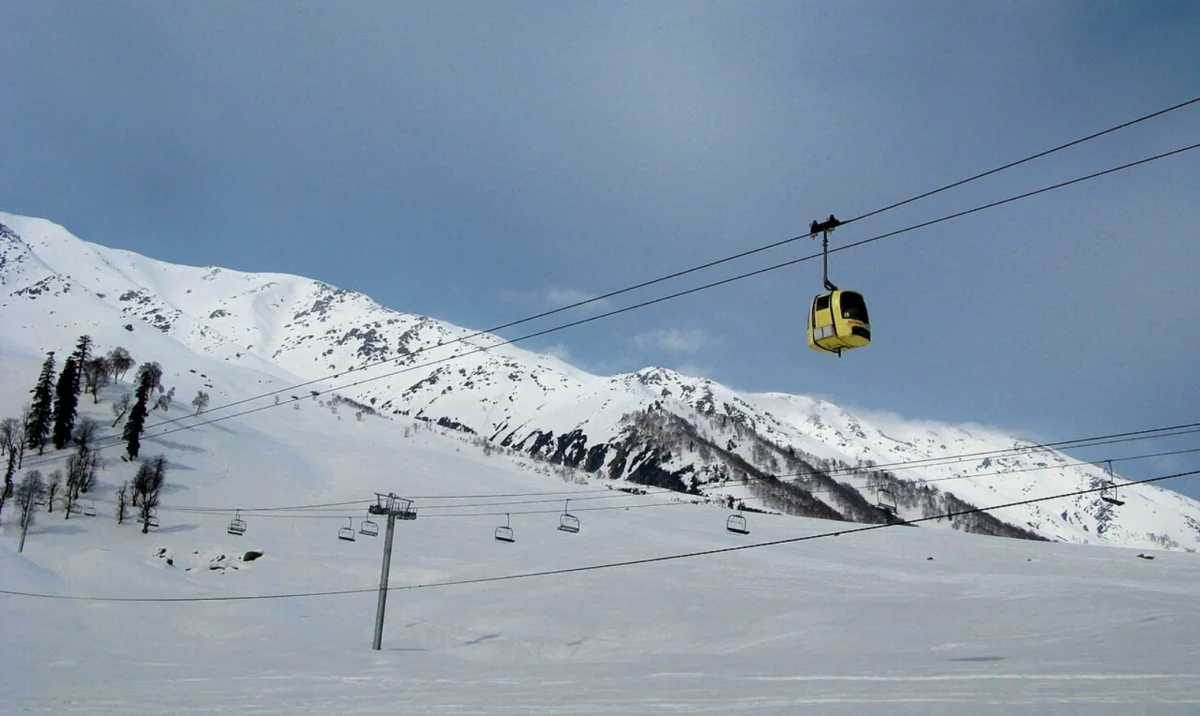
Nestled in the picturesque valley of Kashmir, the Gulmarg Gondola stands as one of the world’s highest operating cable cars, reaching an impressive altitude of nearly 3,980 meters (13,058 feet) on Apharwat Peak. This iconic gondola is a vital artery for the Gulmarg ski resort, a renowned destination for winter sports enthusiasts and a magnet for tourists seeking the majestic beauty of the Himalayas.
The Gulmarg Gondola is typically divided into two phases. Phase 1 ascends from the Gulmarg meadow to Kongdori Station, while Phase 2, the higher and more dramatic section, continues to the summit of Apharwat Peak. The ride itself is an experience of sublime beauty. As the cabins ascend, the landscape transforms from verdant alpine meadows, dotted with wildflowers in the summer, to vast expanses of snow-covered slopes in the winter. The panoramic views of the surrounding Himalayas are simply breathtaking, with snow-capped peaks stretching as far as the eye can see. On clear days, the majestic Nanga Parbat, one of the world’s highest mountains, can be glimpsed on the horizon.
The construction of the Gulmarg Gondola involved significant engineering feats to overcome the challenging terrain and harsh winter conditions. The pylons and cables are designed to withstand heavy snowfall, strong winds, and the risk of avalanches. The cabins are equipped to provide comfort and safety to passengers, even in sub-zero temperatures. The gondola’s presence has transformed Gulmarg into a globally recognized skiing destination, attracting a diverse range of visitors, from seasoned skiers and snowboarders to those simply seeking to experience the grandeur of the Himalayas from a unique perspective. The journey to the summit of Apharwat Peak offers a sense of profound awe, allowing visitors to immerse themselves in the pristine beauty of the Indian Himalayas. The visual spectacle of the vast, snow-covered slopes and the towering peaks creates an unforgettable impression, solidifying the Gulmarg Gondola’s status as a must-visit attraction for anyone exploring this enchanting region of India. The image of the Gulmarg Gondola against the backdrop of snow-laden peaks is a powerful symbol of adventure and natural beauty.
Matterhorn Glacier Paradise, Switzerland: Europe’s Highest Cable Car Station
In the heart of the Swiss Alps, Europe’s highest mountain cable car station, the Matterhorn Glacier Paradise, stands at a remarkable altitude of approximately 3,883 meters (12,740 feet). This extraordinary feat of engineering offers visitors an unparalleled journey to a realm of eternal snow and ice, providing breathtaking vistas of the iconic Matterhorn and a sea of other majestic Alpine peaks.
The ascent to the Matterhorn Glacier Paradise is an integral part of the Zermatt ski area and a popular year-round destination. The cable car journey itself is a spectacle, as it glides over dramatic glacial landscapes, offering increasingly spectacular views. From the summit station, visitors are greeted with a 360-degree panorama that encompasses Switzerland, Italy, and France. The most striking feature is the majestic Matterhorn, its distinctive pyramidal shape dominating the skyline. Beyond this iconic peak, dozens of other formidable Alpine summits pierce the sky, creating a scene of unparalleled natural grandeur.
The engineering behind this high-altitude cable car system is a testament to Swiss precision and innovation. The infrastructure is designed to withstand extreme weather conditions, including heavy snowfall, high winds, and sub-zero temperatures. The cable cars are equipped with advanced safety features and robust construction to ensure a smooth and secure ride. The Matterhorn Glacier Paradise also features a number of attractions at its summit, including an ice palace carved deep within the glacier, offering a unique subterranean experience. The panoramic viewing platforms provide an unobstructed perspective of the surrounding mountain range, making it a prime location for photography and for simply soaking in the immense beauty of the Alps. The experience of standing at such a high elevation, surrounded by some of the world’s most famous mountains, is profoundly humbling and exhilarating. The Matterhorn Glacier Paradise is not just a cable car ride; it is an immersion into the raw power and sublime beauty of the European Alps. The journey offers a profound appreciation for the geological forces that shaped these magnificent mountains and the human ingenuity that allows us to explore them with such accessibility.
Aiguille du Midi Cable Car, France: Gateway to Mont Blanc’s Majesty
The Aiguille du Midi cable car in the French Alps is a legendary ascent, whisking visitors to one of the most spectacular viewpoints in the Alps at an altitude of approximately 3,842 meters (12,605 feet). This iconic cable car offers a dramatic and unforgettable journey to the heart of the Mont Blanc massif, Western Europe’s highest mountain.
The Aiguille du Midi cable car is a two-stage system, starting from the town of Chamonix. The first stage takes passengers to the Plan de l’Aiguille mid-station, from where the second stage ascends the sheer rock face to the summit. As the cabins climb, the views become increasingly dramatic, with the jagged peaks of the Alps unfolding in all their glory. Upon arrival at the summit station, visitors are treated to breathtaking, close-up views of Mont Blanc and its surrounding glaciers. The panoramic vistas extend across the French, Swiss, and Italian Alps, offering a truly awe-inspiring perspective of this iconic mountain range.
The engineering of the Aiguille du Midi cable car is a marvel of modern technology. The system is designed to operate in extreme alpine conditions, with robust construction to withstand high winds and heavy snowfall. The sheer vertical ascent and the exposed nature of the route present significant engineering challenges, which have been met with innovative solutions. At the summit, visitors can explore various viewing terraces, including "Step into the Void," a glass-walled observation box that juts out over a precipice, offering a thrilling sense of standing on the edge of the world. The Aiguille du Midi cable car is not just a mode of transport; it is an adventure that allows visitors to experience the raw power and immense beauty of the Alps from an unparalleled vantage point. The proximity to Mont Blanc and the vastness of the surrounding mountainscape create an unforgettable impression, solidifying its reputation as one of the world’s most dramatic cable car journeys. The visual impact of the rugged, snow-dusted peaks and the vast, seemingly endless expanse of the Alps is a powerful reminder of nature’s grandeur.
Fansipan Cable Car, Vietnam: The "Roof of Indochina" Reached
Connecting visitors to the summit of Fansipan, often referred to as the "Roof of Indochina," the Fansipan Cable Car in Vietnam offers a dramatic ascent through misty valleys and rugged mountain terrain. Reaching an elevation of over 3,100 meters (10,170 feet), this modern cable car system provides an accessible route to one of Southeast Asia’s most iconic peaks.
The Fansipan Cable Car, inaugurated in 2016, has significantly transformed the experience of visiting Fansipan, previously a challenging multi-day trek. The journey begins at the base station in Sa Pa and ascends through lush cloud forests and along steep mountain ridges. The cabins offer panoramic views of the surrounding Hoàng Liên Sơn mountain range, often shrouded in mist, creating an ethereal and mystical atmosphere. As the cable car climbs, the landscape transforms, revealing dramatic valleys, cascading waterfalls, and the unique flora and fauna of the region.
The engineering of the Fansipan Cable Car is a remarkable achievement, overcoming the logistical and environmental challenges of constructing a large-scale infrastructure project in a remote mountain region. The system is designed to be robust and reliable, capable of operating in varying weather conditions. The length of the cable car, one of the longest in the world, allows for a comprehensive exploration of the mountain’s diverse ecosystems. At the summit, visitors can explore various attractions, including temples, pagodas, and observation decks, all offering stunning views of the surrounding mountains. The Fansipan Cable Car has opened up this spectacular natural wonder to a wider audience, allowing more people to experience the breathtaking beauty of Vietnam’s highlands and the grandeur of the "Roof of Indochina." The journey provides a profound connection to the natural landscape, with the misty valleys and rugged peaks creating a sense of wonder and adventure. The visual spectacle of the vast, green mountain slopes, often veiled in mist, offers a unique and unforgettable perspective on this remarkable Southeast Asian landscape.
Chronology of Elevation: A Timeline of High-Altitude Engineering
The pursuit of conquering the skies via cable car is a relatively recent phenomenon, driven by technological advancements and an increasing desire to explore and access mountainous regions. While early cable systems were rudimentary, modern innovations have allowed for progressively higher and more ambitious constructions.
-
Early 20th Century: The genesis of modern cable car technology can be traced back to the early 20th century. Pioneering systems were developed in Europe, primarily for industrial purposes like mining and logging, and later for early tourism. These early systems were limited by the materials and engineering capabilities of the time, generally operating at much lower altitudes.
-
Mid-20th Century Innovations: Following World War II, advancements in metallurgy and engineering led to more robust and reliable cable car systems. This period saw the construction of more significant tourist-oriented cable cars in the Alps and other mountainous regions, pushing the boundaries of achievable altitudes. However, the systems that would eventually reach the extreme heights of today were still in their nascent stages.
-
Late 20th Century Breakthroughs: The late 20th century marked a significant leap in high-altitude cable car construction. Improved cable tensioning, more powerful and efficient propulsion systems, and advanced safety mechanisms allowed engineers to design systems that could operate at considerably higher elevations. The foundations for some of the current record-holders were laid during this era, with a focus on reaching previously inaccessible peaks for tourism and sport.
-
21st Century Pinnacle: The 21st century has witnessed the realization of some of the most ambitious high-altitude cable car projects. The development of advanced materials, sophisticated computer modeling for stress and wind resistance, and a greater understanding of the physiological effects of altitude on passengers have enabled the construction of systems like the Dagu Glacier Gondola and the Mérida Cable Car. These modern marvels not only achieve unprecedented heights but also integrate advanced passenger comfort and safety features. The Fansipan Cable Car, while not reaching the absolute highest altitudes, represents a significant contemporary achievement in terms of length and its role in transforming access to a major natural landmark.
The chronological progression highlights a continuous effort to push the limits of what is technically feasible, transforming remote and daunting mountain landscapes into accessible destinations for millions worldwide. Each new construction builds upon the lessons learned from its predecessors, further refining the technology and expanding the possibilities of aerial transit at extreme elevations.
Supporting Data: Technical Specifications and Environmental Considerations
The construction and operation of the world’s highest cable cars are subject to a multitude of technical specifications and environmental considerations. These factors are critical for ensuring safety, efficiency, and the longevity of these complex engineering marvels.
Key Technical Specifications:
- Maximum Operating Altitude: This is the primary metric for ranking these systems, measured in meters or feet above sea level. For example, the Dagu Glacier Gondola operates at approximately 4,843 meters, while the Fansipan Cable Car reaches over 3,100 meters.
- Cable Length and Span: The total length of the cable system and the maximum distance between support towers are crucial for structural integrity and the overall design. The Mérida Cable Car, with its over 12 kilometers of cable, exemplifies a system designed for traversing vast distances.
- Vertical Ascent: The total vertical distance covered by the cable car is a key indicator of the steepness and scale of the journey.
- Towing Speed: The speed at which the cabins travel is determined by passenger capacity, operational efficiency, and safety considerations. High-altitude systems often balance speed with the need for a comfortable and manageable ascent for passengers.
- Cabin Capacity: The number of passengers each cabin can accommodate influences the overall throughput and operational logistics of the system.
- Propulsion System: Modern cable cars utilize powerful electric motors, often with sophisticated control systems, to ensure consistent and reliable operation, even under challenging conditions.
- Material Science: The selection of high-strength steel cables, durable cabin materials, and robust support structures is paramount for withstanding extreme weather, wear and tear, and the immense forces involved in high-altitude operation.
Environmental Considerations:
- Extreme Weather Conditions: High-altitude environments are characterized by thin air, intense UV radiation, high winds, heavy snowfall, and extreme temperature fluctuations. Cable car systems must be engineered to withstand these conditions. This includes specialized lubrication for cables, de-icing systems for cabins and towers, and wind speed monitoring to ensure safe operation.
- Geological Stability: The terrain where these cable cars are built can be prone to seismic activity, landslides, and avalanches. Rigorous geological surveys and reinforced foundations are essential to ensure the stability of the entire system.
- Ecological Impact: The construction and operation of such large infrastructure projects can have an environmental impact. Careful planning is required to minimize disruption to fragile alpine ecosystems, including responsible waste management and the use of construction methods that reduce soil erosion.
- Atmospheric Pressure and Oxygen Levels: The thin air at high altitudes affects both mechanical systems and human physiology. While modern cabins are pressurized to some extent, passengers are still advised to acclimatize and be aware of the risks of altitude sickness. The operational efficiency of machinery can also be affected by lower air density.
- Visual Impact: The integration of cable car infrastructure into pristine mountain landscapes requires careful consideration of the visual impact. Designers often strive to create structures that are as unobtrusive as possible, blending with the natural environment.
The successful operation of these high-altitude cable cars is a testament to meticulous planning, advanced engineering, and a deep understanding of the environmental forces at play. They represent a sophisticated interplay between human ingenuity and the raw power of nature.
Official Responses and Future Prospects
The development and operation of these high-altitude cable car systems have garnered significant attention from governments, tourism boards, and local communities. The "official responses" to these projects often center on economic development, enhanced tourism, and improved accessibility.
Economic Development and Tourism: For regions reliant on tourism, these cable cars are often seen as transformative infrastructure. Governments and tourism authorities frequently champion these projects as catalysts for economic growth, attracting international visitors, creating jobs in hospitality and related services, and boosting local economies. The Gulmarg Gondola in India, for instance, has been instrumental in positioning Kashmir as a premier winter sports destination. Similarly, the Mérida Cable Car in Venezuela, despite facing economic challenges in the country, remains a significant draw for international tourists seeking to experience the Andes.
Accessibility and Connectivity: Beyond tourism, some cable car systems, like Mi Teleférico in Bolivia, are explicitly designed to improve urban mobility and connect communities separated by challenging topography. The official narrative in such cases emphasizes the social benefits, reducing commute times for residents and fostering greater integration within the urban fabric.
Environmental Stewardship and Sustainability: While the primary drivers are often economic, there is a growing emphasis on the environmental sustainability of these projects. Official statements increasingly highlight efforts to minimize ecological impact during construction, the use of renewable energy sources where feasible, and the promotion of responsible tourism practices. For example, the development of the Fansipan Cable Car in Vietnam has been accompanied by initiatives to protect the surrounding natural environment and promote ecotourism.
Future Prospects: The trend towards developing higher and more ambitious cable car systems is likely to continue. Future prospects include:
- Technological Advancements: Expect further innovations in materials science, propulsion efficiency, and autonomous operation, enabling even higher and longer cable car routes.
- Integration with Other Infrastructure: Cable cars are increasingly being integrated into broader transportation networks, serving as crucial links to airports, train stations, and other tourist attractions.
- Focus on Sustainability: Growing environmental awareness will likely lead to a greater emphasis on sustainable design and operation, including the use of solar power and advanced waste management systems.
- Exploration of New Frontiers: As technology advances, we may see cable cars being developed in previously inaccessible regions, opening up new possibilities for adventure tourism and scientific research in extreme environments.
- Enhanced Passenger Experience: The focus will continue to be on providing a comfortable, safe, and immersive experience for passengers, with innovations in cabin design, onboard information systems, and augmented reality features that enhance the scenic journey.
The ongoing development of these high-altitude cable car systems reflects a persistent human desire to explore and connect with the most awe-inspiring landscapes on Earth. As technology evolves, these aerial marvels will undoubtedly continue to redefine the boundaries of travel and offer unparalleled perspectives on our planet’s magnificent mountain ranges.
Implications: Redefining Access and Experiencing the Sublime
The existence and continued development of the world’s highest cable car systems carry profound implications, fundamentally altering how we access, perceive, and interact with mountainous environments. These engineering marvels are more than just transportation; they represent a paradigm shift in our relationship with the sublime.
Democratization of High-Altitude Exploration: Historically, reaching the highest peaks was the domain of intrepid mountaineers and seasoned explorers. Cable cars have democratized this experience, making the breathtaking vistas and the unique atmospheric conditions of high altitudes accessible to a much broader demographic, including families, older individuals, and those with limited physical mobility. This accessibility fosters a wider appreciation for the grandeur of mountain ranges like the Himalayas, the Andes, and the Alps, potentially cultivating a greater sense of environmental stewardship.
Economic Transformation of Remote Regions: The economic impact of these cable car systems on their surrounding regions is often transformative. They act as powerful engines for tourism, creating jobs, stimulating local businesses, and driving infrastructure development in areas that might otherwise remain economically marginalized. The Gulmarg Gondola, for example, has significantly boosted the tourism economy of Kashmir, while the Fansipan Cable Car has revitalized tourism in Vietnam’s Sapa region. This economic influx, however, necessitates careful management to ensure that development is sustainable and does not overwhelm the natural environment.
Engineering Prowess and Human Ambition: The construction of these high-altitude systems stands as a testament to human ingenuity and our relentless drive to overcome seemingly insurmountable challenges. They push the boundaries of material science, structural engineering, and operational logistics. Each successful project represents a triumph of human ambition, demonstrating our capacity to build complex structures in some of the planet’s most unforgiving environments. This engineering prowess inspires future generations and showcases the potential for technological advancement to unlock new frontiers of exploration and access.
The Experience of the Sublime and Human Connection: The primary implication for individuals is the profound experience of the sublime. Gliding thousands of meters above sea level, surrounded by towering peaks and vast, untamed landscapes, offers a perspective that is both humbling and exhilarating. This experience fosters a deep connection with nature, reminding us of our place within the grand tapestry of the natural world. It provides moments of awe, wonder, and introspection, often described as spiritual or transcendent. For many, the journey is not just about the destination but about the transformative power of the ascent itself, offering a unique vantage point from which to contemplate the immensity and beauty of our planet.
Environmental Considerations and Sustainable Tourism: The proliferation of high-altitude tourism, facilitated by cable cars, also brings significant environmental implications. While modern systems strive for sustainability, the increased human presence in fragile alpine ecosystems raises concerns about waste management, habitat disruption, and carbon emissions associated with travel to these destinations. The long-term sustainability of these projects hinges on responsible tourism practices, robust environmental regulations, and a continued commitment to minimizing ecological footprints. The success of these ventures will increasingly be measured not only by their economic returns but also by their ability to preserve the pristine beauty of the landscapes they showcase.
In conclusion, the world’s highest cable car systems are more than just feats of engineering; they are conduits to unparalleled natural beauty, catalysts for economic growth, and symbols of human ambition. They redefine access to the Earth’s most dramatic landscapes, offering experiences that are both profoundly personal and globally significant, while also posing important questions about our responsibility to preserve these fragile environments for generations to come.
