

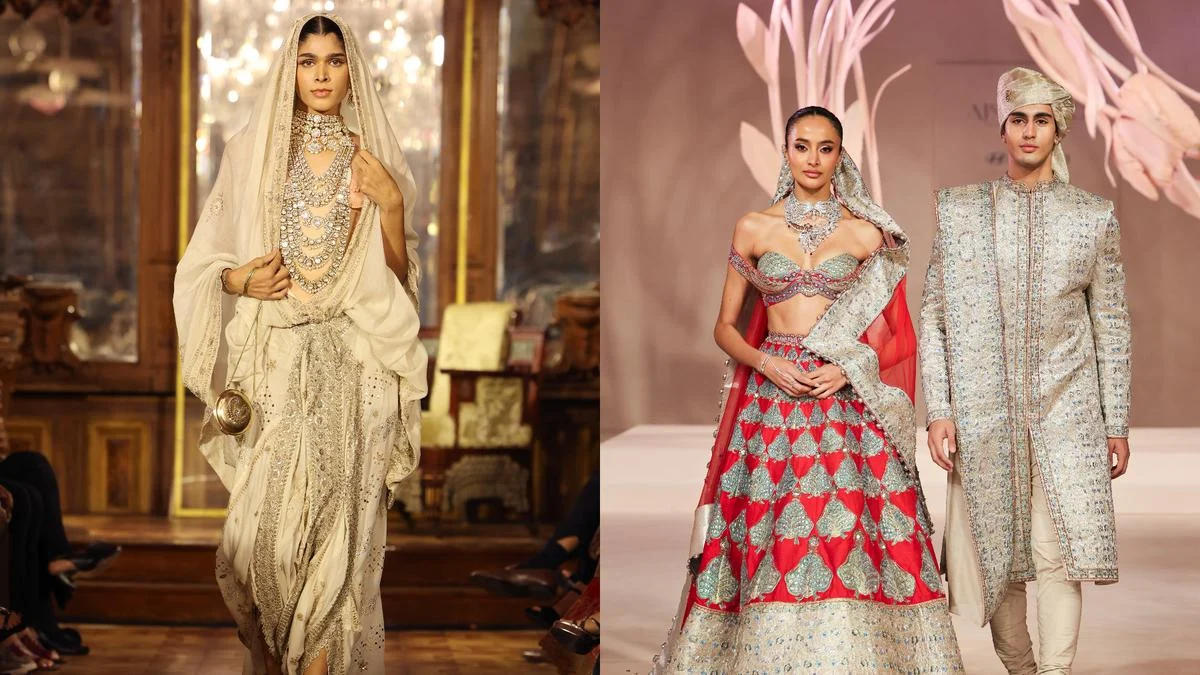
The recent India Couture Week (ICW) has not only showcased the breathtaking artistry of Indian designers on a global stage but has also illuminated a significant shift in the country’s luxury market. While established hubs like Delhi and Mumbai continue to be vital, the opulent world of high fashion is increasingly casting its gaze towards burgeoning metropolises, driven by a confluence of rising affluence, evolving consumer aspirations, and strategic commercial expansion. The opening show by Anamika Khanna in Hyderabad and Rahul Mishra’s grand finale in Delhi serve as potent symbols of this dual evolution – celebrating Indian creativity while simultaneously tapping into the immense commercial potential residing in centers outside the traditional fashion epicenters.
A Paradigm Shift: Hyderabad Takes Center Stage
Historically, India Couture Week has been synonymous with Delhi. However, this year’s edition marked a significant departure with its opening show by celebrated designer Anamika Khanna gracing the historic Taj Falaknuma Palace in Hyderabad. This strategic choice underscores Hyderabad’s burgeoning importance as a luxury market. The city, known for its regal past and a growing demographic of ultra-rich individuals, is no longer just a secondary market; it’s a primary destination for discerning, high-spending clientele. Khanna’s collection, a masterful blend of Barmer embroidery and Kalighat paintings, resonated deeply within this opulent setting, hinting at the rich cultural tapestry that Hyderabad offers.
The significance of this move is amplified by Khanna’s planned opening of a new store in Hyderabad in 2025, a testament to the city’s commercial allure. This isn’t an isolated incident. Rahul Mishra, whose Paris Couture Week showcase was echoed in his ICW finale, has also recognized Hyderabad’s potential, opening a store in Banjara Hills in 2024. His collection, featuring signature embellished gowns, saris, and skirts, is poised to find eager buyers not only for lavish Indian weddings at home but also for the diaspora abroad.

The Growing Influence of Tier-II Cities
The expansion of India’s high fashion scene beyond Delhi and Mumbai is not merely a trend; it’s a reflection of a broader economic and social transformation. Knight Frank’s 2026 wealth report highlights a significant concentration of ultra-high-net-worth individuals (UHNWIs) – those with a net worth of $30 million or more – across five key cities: Mumbai, Delhi, Bengaluru, Hyderabad, and Chennai. Notably, Hyderabad accounts for a substantial 6.3% of this elite demographic, making it a compelling market for luxury brands.
Neelesh Hundekari, partner and head of fashion and luxury for Asia-Pacific at Kearney, observes a crucial shift: "Aspirations are exactly the same everywhere." This democratization of aspirations, fueled by social media and increasing affluence, means that consumers in cities beyond the traditional metros are now as informed and desirous of high-end fashion as their counterparts in Delhi and Mumbai. This surge in demand is creating a fertile ground for designers and luxury brands to cultivate new markets.
Furthermore, the economic realities of operating in these emerging centers are becoming increasingly attractive. The comparatively lower cost of real estate and related services in cities like Hyderabad, Chennai, Kolkata, and Bengaluru, compared to the exorbitant prices in Mumbai and Delhi, translates into potentially higher profit margins for brands. This financial advantage, coupled with the saturation of the established markets, is prompting a strategic pivot.

A Rich Heritage and a Flourishing Design Ecosystem
Hyderabad’s embrace of high fashion is not entirely a new phenomenon. The city has a long-standing association with luxury, evident in its historical patronage of pearls, the intricate ‘khada’ dupatta, and the majestic jewels of the Nizams. This historical affinity for opulence has cultivated a sophisticated clientele. Moreover, Hyderabad boasts its own talented pool of designers, including Jayanti Reddy, Anushree Reddy, Aisha Rao, and Suhani Pittie, who contribute to the city’s vibrant fashion landscape.
The recent influx of investment from major conglomerates like Reliance Brands Limited (RBL) and the Aditya Birla Group further underscores the commercial viability of these emerging luxury hubs. These investments are not only facilitating the physical expansion of established brands but are also creating a more robust ecosystem for the entire luxury fashion value chain.
Designers Speak: Evolving Consumer Demands and a Wider Reach
The designers themselves are vocal about this evolving landscape. JJ Valaya, a veteran designer, notes that "big cities are saturated. (Consumers in smaller cities) have aligned themselves with whatever’s happening in the world." He observes that fashion consumers across India are more aware and informed, thanks to the pervasive influence of social media and growing affluence.

Rimzim Dadu, known for her innovative use of materials, shares a compelling anecdote about the shift in consumer confidence: "When we first started experimenting with metal and came up with the steel saree, brides were unsure. They wanted to wear it but sought advice from their relatives if it would be apt for the occasion. Now, women know exactly what they want, they’re not seeking approval." She further highlights the growing reach of her brand, with clients from cities like Hyderabad, Kolkata, and Nagpur attending her shows in Delhi, and even international clients from Bangladesh and Nepal becoming increasingly common.
This growing awareness and confidence extend to a nuanced understanding of occasion dressing. Arpita Mehta, who recently debuted her couture collection, observes distinct stylistic preferences across different cities: "Hyderabad has a refined sense of dressing that feels elegant and sophisticated, often favouring timeless craftsmanship. Chandigarh brings a playful energy, with an openness to experimenting… Chennai has a quieter, more understated approach."
Strategic Expansion: A Multi-Pronged Approach
The physical expansion of luxury brands into tier-II and tier-III cities is a testament to their strategic foresight. Tarun Tahiliani celebrated his 30th anniversary with a grand show in Hyderabad earlier this year. Sabyasachi is set to unveil new boutiques in Bengaluru and Hyderabad in 2025, signaling his commitment to these growth markets.

The trend extends beyond couture. International brands are also recognizing the potential. Off-White opened a store in Bengaluru earlier this year, while multi-brand watch retailer TimeVallée established a boutique in Chennai. Ralph Lauren is slated to enter Kolkata in 2025. Aditya Birla’s The Collective, a multi-brand fashion chain, has expanded its presence into Patiala, Jalandhar, and Raipur within the last two years, retailing brands like Karl Lagerfeld and Michael Kors. Ogaan is set to open a new location in Chennai in 2025, and Sanjay Garg’s Raw Mango debuted a boutique in Kolkata last year.
JJ Valaya’s bridge-to-luxury line, JJV Kapurthala, specifically targets accessibility, enabling him to extend his reach into cities like Ludhiana, Chandigarh, Jaipur, and Ahmedabad. He believes that "there is a whole ecosystem opening up, tier 2 and tier 3 cities are becoming very open to embracing luxury."
Tailoring Strategies for Local Markets
While the overarching trend is towards expansion, designers are mindful of tailoring their strategies to the specific nuances of each city. Rimzim Dadu, for instance, adapts her merchandising at her Hyderabad store to cater to the city’s tendency for more spontaneous shopping, ensuring a greater availability of pieces with shorter production lead times or those that are readily available off-the-rack.

Aisha Rao emphasizes the growing importance of personal style over geographical location, stating that "it is, however ‘exciting to see couture resonate across emerging markets throughout the country, where customers are increasingly seeking pieces that balance individuality, craftsmanship and modern elegance.’" This suggests a future where bespoke and personalized luxury experiences will be paramount, regardless of the consumer’s city of residence.
The Road Ahead: Navigating Growth and Investment
The increasing demand from smaller cities is undeniable, yet top designers remain cautiously optimistic about aggressive physical expansion. This cautious approach might be influenced by the inherent complexities of managing a distributed retail footprint. However, this could shift as corporate investors, driven by the pursuit of commercial growth, increasingly push for expansion into these profitable new markets. The influx of investment from RBL and Aditya Birla Group indicates a strong appetite for scaling up operations in these burgeoning luxury landscapes.
The narrative of Indian couture is no longer confined to the well-trodden paths of Delhi and Mumbai. The ICW’s foray into Hyderabad, alongside the continued expansion of designers into a multitude of tier-II and tier-III cities, signals a vibrant and dynamic future for Indian luxury. This evolution is driven by a potent combination of burgeoning affluence, a globalized outlook among consumers, and a strategic recognition of the untapped commercial potential lying beyond the traditional metros. As designers continue to innovate and investors capitalize on these emerging markets, India’s couture landscape is set to become even more diverse, inclusive, and globally influential.
