

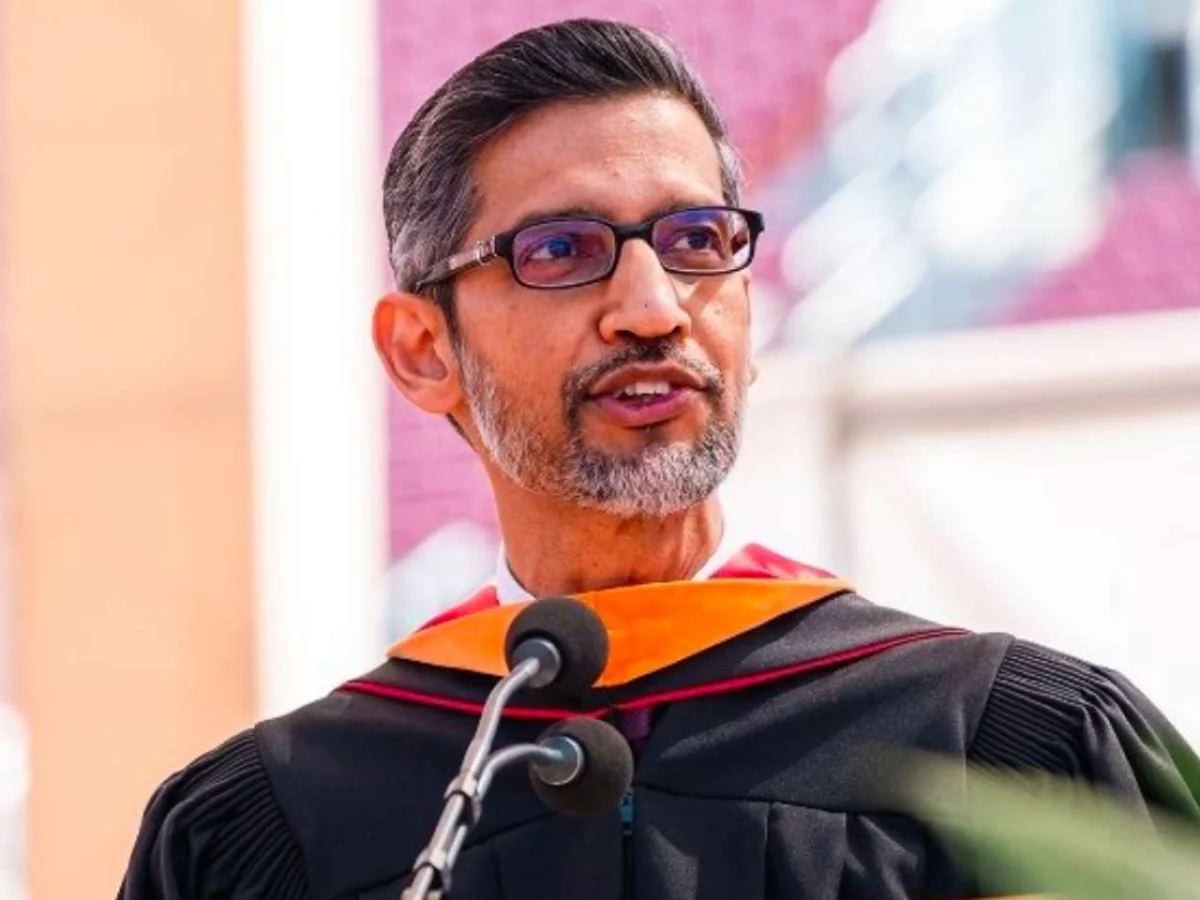
STANFORD, CA – June 15, 2026 – A highly anticipated graduation ceremony at Stanford University, intended to celebrate academic achievement and future aspirations, was punctuated by an unexpected and potent display of student activism today. A significant number of graduating students staged a walkout during the keynote address by Google CEO Sundar Pichai, transforming a moment of traditional pomp into a public forum for corporate accountability. The demonstration, spearheaded by groups like Students for Justice in Palestine and No Tech for Apartheid, directly challenged Google’s alleged involvement in controversial government and defense contracts, particularly with the Israeli military, the US Department of Homeland Security (DHS), and Immigration and Customs Enforcement (ICE).
The protest underscored a growing sentiment on college campuses across the United States regarding the ethical responsibilities of major technology companies and their role in global conflicts and domestic policy. As Pichai, a distinguished Stanford alumnus and one of the most influential figures in the tech world, began his address, the carefully planned walkout sent a clear message, drawing national attention to the contentious debate surrounding tech ethics and corporate complicity.
A Graduation Interrupted: The Scene Unfolds
The atmosphere at Stanford University’s main commencement venue was initially one of jubilant anticipation. Thousands of graduates, adorned in caps and gowns, sat alongside proud family members and faculty, eagerly awaiting the culminating moments of their academic journey. The selection of Sundar Pichai, the visionary leader of Google, as the commencement speaker was widely seen as a testament to Stanford’s prestige and its deep ties to the technology industry. His presence promised an inspiring address, rich with insights into innovation, leadership, and the future.
However, beneath the surface of celebration, a distinct undercurrent of dissent had been brewing for weeks. Organizers had meticulously planned their protest, leveraging social media and campus networks to rally support. As Pichai took to the podium, a hush fell over the crowd, but it was quickly followed by a rustle of movement from designated sections of the graduating class.
)
Approximately ten minutes into Pichai’s speech, as he was sharing lighthearted anecdotes and personal advice, a coordinated group of graduates began to rise from their seats. Without shouting or disruptive theatrics, they quietly and deliberately turned their backs to the stage. Some held small, handmade signs with slogans like "No Tech for Apartheid" or "Google: Drop Project Nimbus." With solemn expressions, they filed out of the venue in an orderly fashion, their silent departure creating a powerful visual statement. The sight of dozens, perhaps hundreds, of graduates exiting mid-speech caused a palpable stir among the remaining audience members, with whispers and murmurs filling the gaps in Pichai’s address.
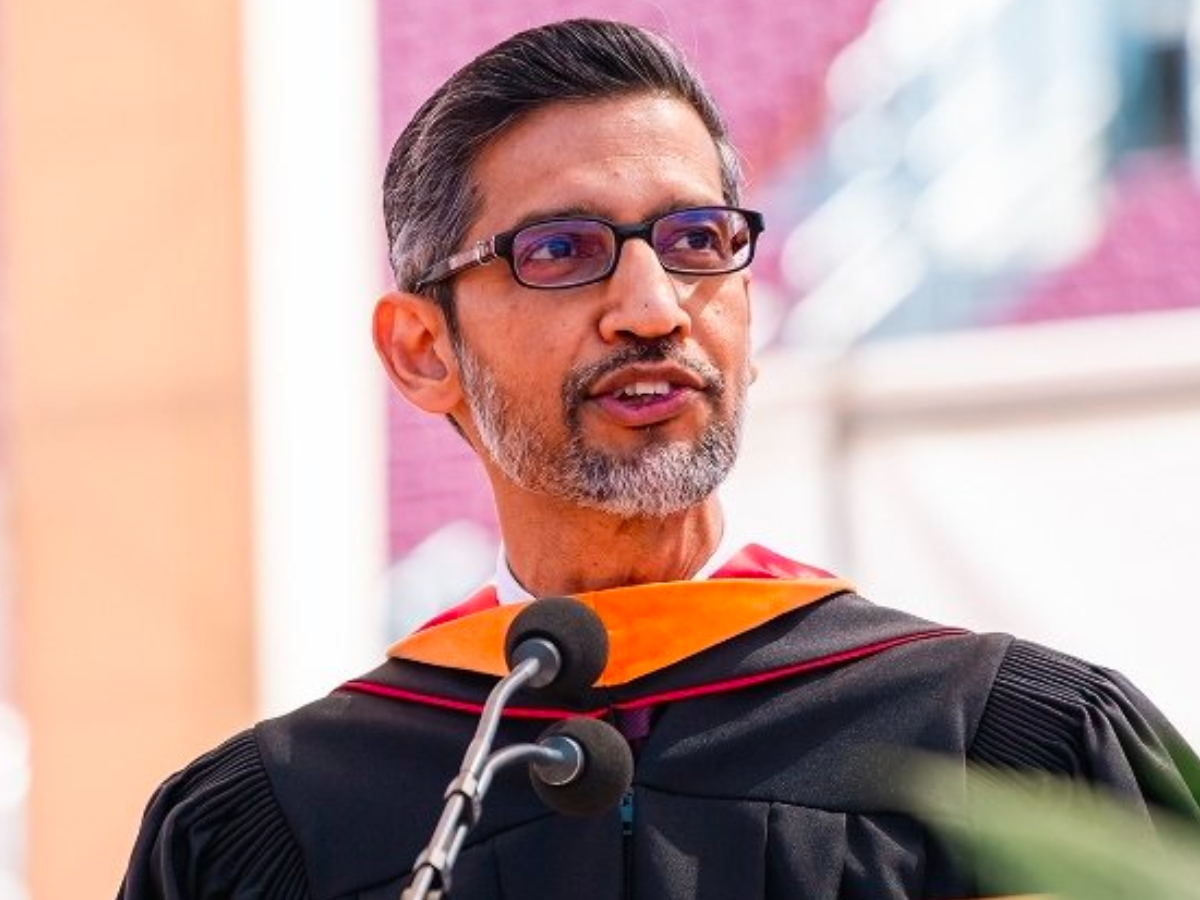
Pichai, a seasoned public speaker, maintained his composure throughout the walkout. He continued his speech without interruption, his gaze sweeping across the remaining audience, acknowledging the disruption but not directly addressing it. His decision to proceed seamlessly through his prepared remarks was interpreted by some as a strategic move to de-escalate the situation and prevent the protest from entirely overshadowing the ceremony. Others, however, viewed it as a missed opportunity for dialogue or a sign of indifference to the students’ concerns. The image of graduates walking out while one of the world’s most powerful tech leaders spoke became an immediate flashpoint on social media, with videos and photos of the event quickly going viral.
)
The Core of the Discontent: Google’s Controversial Contracts
The student protest was not an isolated incident but the latest manifestation of a sustained campaign by activist groups against what they perceive as Google’s unethical involvement in government and defense sectors. The primary targets of the students’ ire were Google’s reported contracts with the Israeli military, the US Department of Homeland Security (DHS), and Immigration and Customs Enforcement (ICE).
Project Nimbus: The Israel Connection

At the forefront of the controversy is "Project Nimbus," a $1.2 billion joint cloud computing and artificial intelligence contract awarded to Google and Amazon Web Services (AWS) by the Israeli government and its military in 2021. The contract aims to provide cloud services, including advanced AI and machine learning capabilities, to Israel’s defense establishment.
Critics, particularly groups like Students for Justice in Palestine (SJP) and No Tech for Apartheid, argue that Project Nimbus enables and exacerbates human rights abuses against Palestinians. They contend that the technology could be used for surveillance, data collection, and enhancing military operations in the occupied Palestinian territories, thus making Google complicit in what they describe as a system of apartheid. The "No Tech for Apartheid" campaign, which has gained significant traction since its inception, has consistently highlighted the ethical implications of tech companies profiting from military and surveillance contracts that impact vulnerable populations. They argue that providing such advanced infrastructure to a military engaged in a long-standing conflict with human rights concerns crosses a critical ethical line for companies that often brand themselves as champions of open information and innovation for good.
)
Internal dissent within Google has also been a significant factor. Reports have surfaced over the past few years detailing employee protests, petitions, and even resignations stemming from discomfort with Project Nimbus. These employees have expressed concerns that Google’s core values are being compromised by its involvement in projects with such sensitive geopolitical and human rights ramifications. The Stanford protest is seen by organizers as an extension of this internal struggle, bringing the debate directly to Google’s leadership in a highly public setting.
DHS and ICE Contracts: Domestic Surveillance Concerns
)
Beyond Project Nimbus, the students’ protest also targeted Google’s reported contracts with the US Department of Homeland Security (DHS) and Immigration and Customs Enforcement (ICE). These contracts, often involving cloud services, data analytics, and potentially AI tools, have drawn criticism from civil liberties advocates and human rights organizations.
Opponents argue that these contracts facilitate mass surveillance, contribute to the separation of families at the border, and empower agencies involved in controversial immigration enforcement practices. For instance, critics claim that tech companies providing services to ICE may inadvertently support the agency’s efforts to track, detain, and deport undocumented immigrants, raising significant ethical questions about the role of technology in sensitive social and political issues. The concerns echo broader debates about the "surveillance-industrial complex" and the extent to which private tech companies should collaborate with government agencies on projects that could infringe on privacy or civil rights. Activist groups contend that by providing essential technological infrastructure, Google becomes an integral part of a system that many view as unjust and inhumane.
)
The protest at Stanford thus served as a dual-pronged attack, challenging Google’s ethical footprint both on the international stage and within domestic borders, linking the company to a range of human rights and civil liberties issues.
Broader Context: The Campus Activism Landscape
The Stanford walkout is not an isolated incident but rather indicative of a broader resurgence in student activism on US campuses. Universities, historically hotbeds of social and political movements, are once again becoming focal points for debates on corporate responsibility, geopolitical ethics, and social justice.
)
Students across the nation have been increasingly vocal in demanding that their institutions and the companies they engage with align with progressive values. From divestment campaigns against fossil fuel companies to protests against university investments in corporations with controversial labor practices, students are pushing for a more ethically conscious engagement with the world. The issue of Palestine and Israel, in particular, has seen heightened activism on campuses, often leading to intense and sometimes divisive debates.
The "No Tech for Apartheid" movement itself represents a convergence of these trends, specifically targeting the role of technology in perpetuating what activists describe as oppressive systems. It builds on a legacy of tech worker activism and a growing public awareness of the profound societal impact of technological advancements, demanding that companies not only innovate but also uphold a high standard of ethical conduct. The Stanford protest, involving graduates directly walking out, highlights a new level of commitment and a willingness to disrupt traditional ceremonies to make their voices heard, signaling a potential shift in how future generations of tech professionals view their industry’s responsibilities.
)
Sundar Pichai’s Approach: A Light Touch Amidst Heavy Issues
In stark contrast to the gravity of the protest, Sundar Pichai chose a remarkably lighthearted and personal tone for his commencement address. Rather than delving into the intricacies of artificial intelligence, the future of quantum computing, or the complexities of global tech leadership, Pichai focused on offering graduates relatable life advice, emphasizing optimism, resilience, and the importance of an open mind.
"I know today is about giving you all advice," he began, "But people have also been giving me a lot of advice on what to say. Actually, it’s been the same advice, and it’s about what not to say." He then humorously referenced the challenge of pronouncing his own surname, joking, "People thought it would be really difficult for me. It is the last two letters of my last name, after all." This self-deprecating humor and conversational style aimed to connect with the graduates on a more personal level, moving away from the formal pronouncements often expected from a CEO of his stature.
)
He recounted anecdotes from his early days in California, reflecting on the cultural shifts he experienced and how understanding context can fundamentally alter one’s perspective. He encouraged students to embrace change, remain curious, and approach their careers with a sense of wonder. His speech was notably devoid of any direct mention of Google’s business operations, the ongoing AI revolution, or the ethical debates swirling around the tech industry, including the very protest unfolding before him.
This deliberate choice of a "light" speech can be interpreted in several ways. It might have been a strategic decision to avoid inadvertently legitimizing the protest by addressing it, or to maintain the celebratory spirit of the graduation for the majority of attendees. Alternatively, some critics might view it as a missed opportunity to engage with critical ethical questions, or even as a form of evasion, sidestepping the uncomfortable truths being raised by the students. For the protesting students, Pichai’s non-engagement with their concerns likely reinforced their belief that direct action was necessary to force a conversation that Google’s leadership might prefer to avoid.
)
Official Responses and the Silence of Google
The immediate official responses to the walkout were, for the most part, muted. Stanford University officials, while acknowledging the protest, generally maintained that the university upholds principles of free speech and peaceful demonstration. A spokesperson for Stanford, who requested anonymity due stated university policy not to comment on individual protests during private events, reiterated the institution’s commitment to fostering open dialogue while ensuring the safety and respect of all attendees. No immediate disciplinary action against the protesting students was announced, indicating a careful balancing act by the university to respect student activism while maintaining the decorum of the ceremony.
From Google’s side, there was no immediate official statement regarding the protest or the contracts in question. This silence is consistent with Google’s general approach to public controversies surrounding Project Nimbus and other government contracts, which often involves reiterating its commitment to ethical AI principles and contractual obligations, without directly engaging with specific activist claims in real-time. Pichai’s decision to continue his speech without interruption further solidified this stance of non-engagement during the event itself.
)
However, the protest organizers, Students for Justice in Palestine and No Tech for Apartheid, were quick to claim the walkout as a significant success. In a joint statement released shortly after the ceremony, they declared: "Today, Stanford graduates sent an unequivocal message to Sundar Pichai and Google: We will not stand by silently while our institutions normalize complicity in oppression. Our walkout demonstrates the growing moral clarity among future tech leaders that technology must be used for human betterment, not for enabling apartheid or surveillance. This is just the beginning." They called upon Google to immediately terminate Project Nimbus and all contracts with DHS and ICE, urging the company to prioritize human rights over profit.
Reactions from the broader audience were mixed. Many family members expressed pride in the students’ courage and commitment to their beliefs, while others felt the protest had marred a special occasion. Some alumni and faculty members privately expressed support for the students’ right to protest, highlighting the historical role of universities as platforms for social change.
)
Implications: A Shifting Landscape for Tech and Academia
The Stanford walkout carries significant implications for Google, the broader tech industry, and the future of student activism.
For Google and Sundar Pichai: The protest, occurring at a highly visible event at a premier tech university, adds another layer of public pressure on Google regarding its controversial contracts. It reinforces the perception that the company’s ethical choices are under intense scrutiny, not just from external advocacy groups but from the very talent pool it seeks to recruit. This could potentially impact Google’s reputation among young, socially conscious graduates, making it harder to attract top talent who prioritize ethical corporate practices. While Pichai maintained his composure, the incident undoubtedly cast a shadow over what was meant to be a celebratory moment, raising questions about how Google will navigate these mounting pressures in the future.
)
For the Tech Industry: The incident serves as a stark reminder to all major technology companies that their involvement in government and defense contracts will not go unchallenged. As AI and other advanced technologies become increasingly integrated into sensitive areas like military operations, border control, and surveillance, the demand for ethical oversight and transparency will only grow. This protest could encourage similar actions at other universities and within other tech companies, potentially prompting a re-evaluation of ethical guidelines and public engagement strategies across the industry.
For Student Activism: The walkout demonstrates the enduring power and evolving tactics of student activism. By choosing a symbolic and highly visible moment like a commencement speech, the students effectively amplified their message to a national and international audience. This success could inspire future generations of students to leverage similar high-profile events to advocate for social and political change, particularly concerning corporate responsibility and global justice issues.
)
The Future of Tech Ethics and AI: The protest also intersects with the broader debate on the ethical implications of artificial intelligence. While Pichai himself has described AI as one of the biggest technological shifts of this generation, the walkout pushes the conversation beyond job displacement and economic impact to fundamental questions of human rights, privacy, and algorithmic bias. It demands that companies developing powerful AI tools consider not only their technical capabilities but also their potential for misuse and their societal consequences. The students’ message is clear: the future of technology must be built on a foundation of ethical responsibility, not just innovation and profit.
As the echoes of the Stanford walkout reverberate, it becomes clear that the lines between technological advancement, corporate ethics, and social justice are increasingly intertwined. The incident serves as a powerful testament to the rising generation’s determination to hold powerful institutions accountable and to shape a future where technology truly serves humanity, rather than enabling its oppression. The debate over Google’s contracts is far from over, and the Stanford protest ensures it will remain a central point of contention for years to come.
