

By [Your Name/Journalist Name]
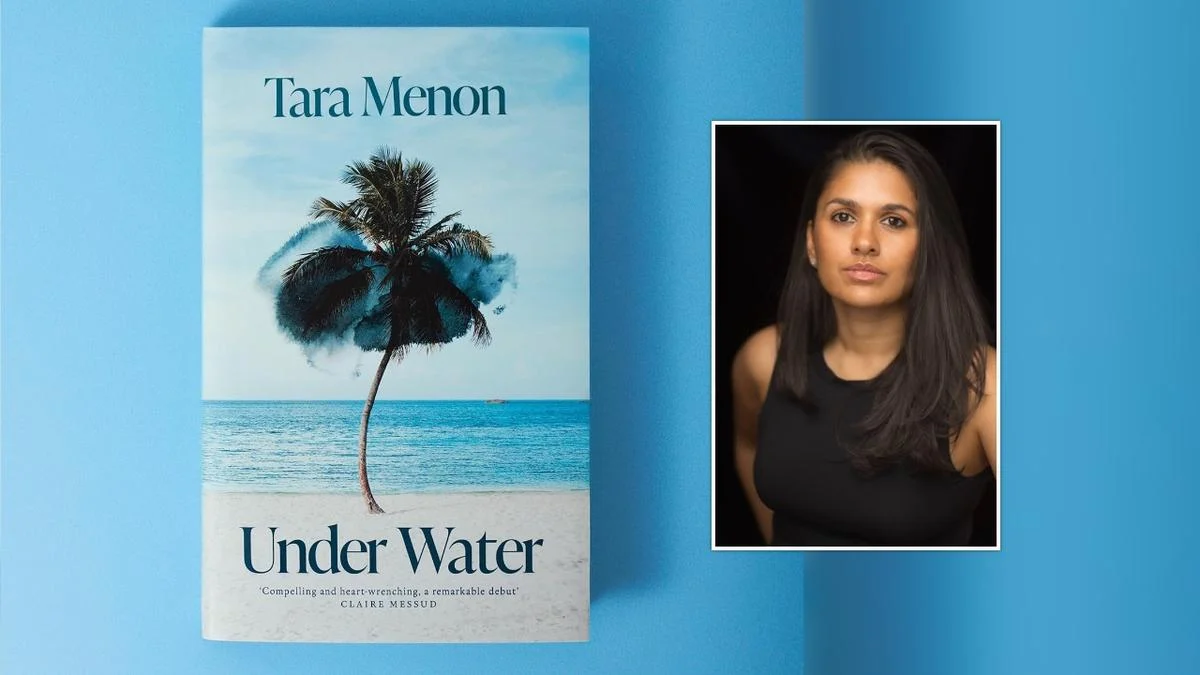
In the landscape of contemporary literature, debut novels often struggle to find a voice that is both distinct and resonant. However, Tara Menon’s Under Water, published by Simon & Schuster India, emerges as a profound exploration of the human condition, navigating the murky depths of grief, the vibrancy of female friendship, and the looming shadow of ecological collapse. By braiding together two disparate timelines and geographies—the lush, natural beauty of Thailand and the glass-and-steel isolation of New York City—Menon crafts a narrative that is as much about the internal world of the narrator as it is about the external world we are rapidly losing.
Main Facts: A Narrative of Loss and Legacy
At its core, Under Water is a story of a friendship that defies the conventional tropes of popular fiction. The primary narrator, Marissa, introduces the reader to her world through the lens of Alfred Tennyson’s In Memoriam A.H.H., an elegy written for his friend Arthur Henry Hallam. This intertextual reference serves as the novel’s compass. Marissa observes that while the English language is replete with vocabulary for the love and loss of romantic partners, it remains remarkably impoverished when it comes to the grief associated with friends.
The novel seeks to rectify this linguistic and emotional deficit. It centers on the bond between Marissa and Arielle, a friendship formed in the cradle of childhood in Thailand. This relationship, described as wholesome, nurturing, and healing, stands in stark contrast to the "frenemy" or "toxic friendship" tropes that have dominated recent literary trends. However, this bond is tragically severed, leaving Marissa in a state of perpetual "submergence"—a metaphor that permeates the book’s imagery and title.
Publication Details
- Under Water
- Author: Tara Menon
- Publisher: Simon & Schuster India
- Price: ₹699
- Genre: Literary Fiction / Eco-fiction
Chronology: Two Worlds, Two Disasters
The novel’s structure is a "braided narrative," a technique that allows Menon to juxtapose different eras of Marissa’s life to highlight the erosion of her spirit and the environment.
2004: The Thai Eden and the Great Wave
The earlier timeline is set in Thailand during the early 2000s. For Marissa, this period represents a "bright, wholesome, and happy" existence. Having met Arielle at the age of seven, the two spend nearly a decade inseparable. This segment of the book is characterized by "ripe lushness," where the characters are in constant proximity to the natural world.
However, this timeline is anchored by the looming tragedy of 2004—the Indian Ocean tsunami. The disaster serves as a pivot point, not just for the plot, but for the thematic exploration of how sudden, violent natural forces can rewrite a human life in a matter of seconds. The death of Arielle during this period becomes the "original sin" of Marissa’s adult life, a trauma from which she never truly surfaces.
2012: The New York Purgatory and Hurricane Sandy
The second timeline finds Marissa in New York City in 2012. The contrast is jarring. No longer surrounded by the vibrant biodiversity of Thailand, she is trapped in the "crowded isolation" of Manhattan. Marissa works as an editorial assistant at a luxury travel magazine, a role she views with a mixture of cynicism and professional proficiency.
Her job involves writing "purple prose"—lavish, florid descriptions of exotic locales she has never visited—to entice wealthy bankers and lawyers. This disconnect between her writing and her reality mirrors her internal state. Lonely, bored, and profoundly unhappy, she navigates the city through casual sex and bouts of shoplifting, attempting to fill the void left by Arielle. This timeline culminates in the period leading up to Hurricane Sandy, suggesting a cyclical nature to disaster; whether in the East or the West, the water eventually comes for everyone.
Supporting Data: Eco-Fiction and the Language of the Sea
Menon’s work has been noted for its significant contribution to the genre of "eco-fiction." The novel does not merely use the environment as a backdrop; it treats the Earth as a character experiencing its own form of grief.

Pelagic Metaphors and Wildlife
The book is saturated with pelagic (open sea) metaphors and rich imagery. Manta rays, in particular, serve as a recurring motif, representing both the majesty of the ocean and the fragility of life. Through Marissa’s eyes, the reader is introduced to a plethora of environmental crises:
- Poaching and Overfishing: The exploitation of marine life for commercial gain.
- Species Extinction and Roadkill: The quiet, often ignored ways in which human infrastructure destroys biodiversity.
- Coral Bleaching: A direct result of rising sea temperatures, mirroring Marissa’s own "fading" vitality.
- Unethical Wildlife Tourism: A critique of how humans consume nature as a spectacle rather than respecting it as a sanctuary.
The "Quiet" Devastation of Climate Change
One of the most poignant observations in the novel is Marissa’s reflection on the nature of ecological collapse. She notes that while people expect climate change to be "spectacular" and cinematic, the reality is often "quiet, subtle, humdrum." This mirrors the novel’s approach to grief; it isn’t always a loud, wailing event, but a slow, suffocating submergence.
Official Responses and Literary Context
While official literary awards for the debut are still in the nascent stages of the book’s release cycle, early critical reception highlights Menon’s ability to "bring places alive."
The Editor’s Mandate
A key scene in the novel involves Marissa’s editor giving her advice on her first day: "Your readers should be able to close their eyes and be there." Critics agree that Menon has taken this advice to heart. Her descriptions of New York’s grit and Thailand’s greenery are immersive, creating what reviewers call an "urgency" in the prose that makes the book a "remarkably easy read despite its heavy themes."
Sidestepping Clichés
Literary analysts have pointed out that Menon successfully avoids the "fractious female friendship" trope. By making the bond between Marissa and Arielle a "safe place" of nurturing and healing, Menon offers a counter-narrative to the popular "Mean Girls" or "competitive friend" archetypes found in contemporary fiction. This choice elevates the tragedy of Arielle’s death, as the reader feels the loss of a genuine sanctuary.
Implications: The Intersection of Personal and Planetary Grief
The implications of Under Water extend beyond the story of one woman’s loss. The novel poses a challenging question to the reader: How do we mourn a world that is dying while we are still living in it?
The Invisibility of "Friend-Grief"
By highlighting the lack of language for the loss of friends, Menon touches on a sociological reality. Our society prioritizes the nuclear family and romantic partnerships in its mourning rituals. Friends are often relegated to the periphery of "official" grief. Under Water suggests that this lack of recognition makes the healing process even more difficult, as the bereaved are forced to mourn in a vacuum.
The Role of Literature in the Climate Crisis
As a work of eco-fiction, the novel suggests that the role of the modern writer is to bridge the gap between "purple prose" (the romanticized, commercialized view of nature) and the "quiet devastation" of reality. Marissa’s journey from writing fake travelogues to acknowledging the "ecological churn" of the oceans represents a call to witness.
Final Reflection
Tara Menon’s Under Water is a haunting debut that refuses to look away from the uncomfortable truths of our era. It reminds us that whether we are in the crowded streets of New York or the deep waters of the Andaman Sea, we are all connected by our capacity for love and our vulnerability to loss. In the end, the novel suggests that while we may feel "submerged" by our circumstances, the act of naming our grief—and the wildlife we are losing—is the first step toward finding our way back to the surface.
About the Author:
Tara Menon is a rising voice in Indian English literature. With a background that spans multiple cultures, her writing often explores themes of displacement, environmentalism, and the intricacies of human relationships. ‘Under Water’ is her first novel.
