

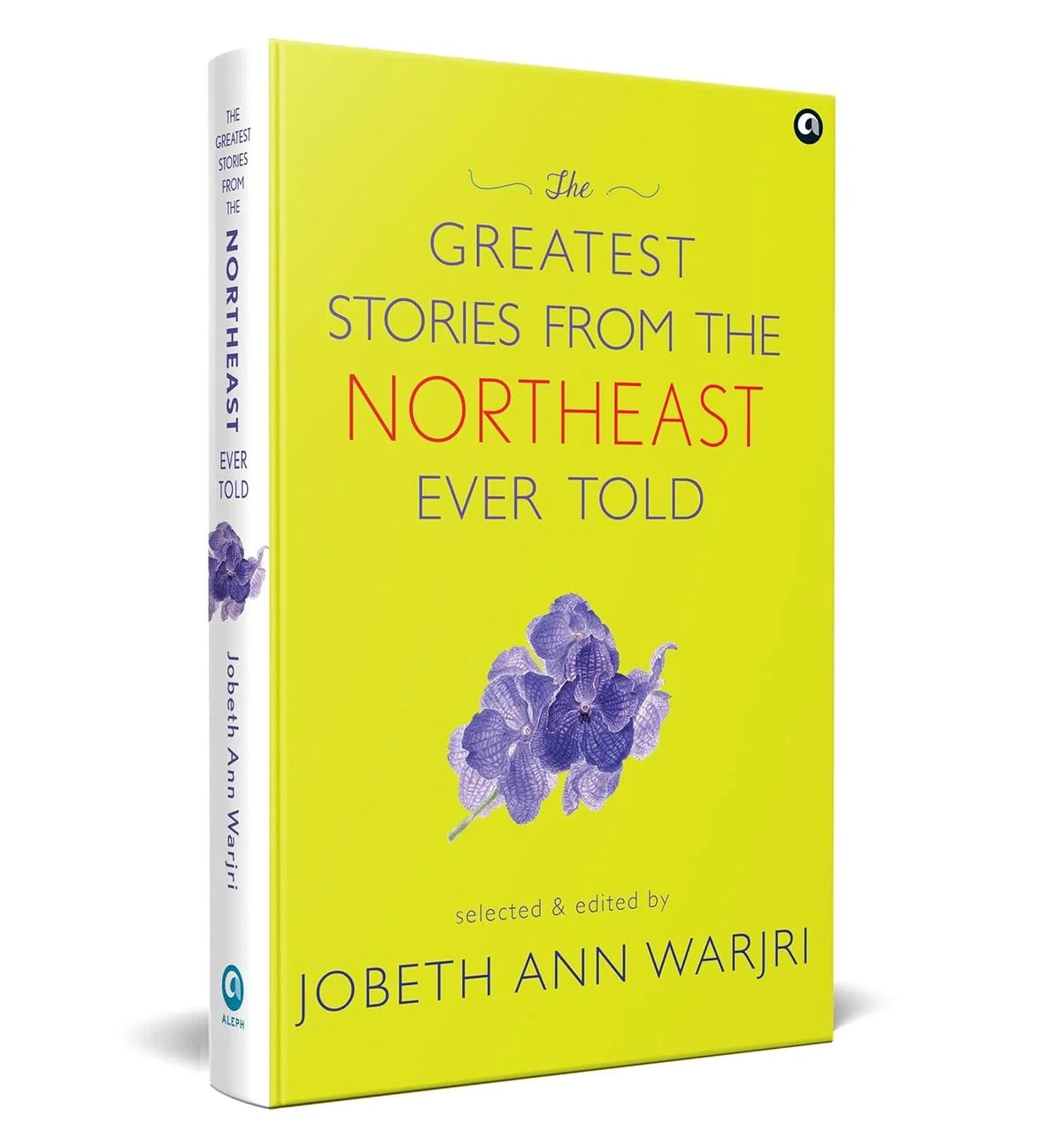
The literary landscape of India has long been a mosaic of diverse voices, yet for decades, a significant portion of this tapestry remained obscured by the shadows of geographical isolation and political turbulence. The Northeast—a region comprising eight states, each with its own distinct linguistic, cultural, and historical identity—has often been relegated to the periphery of the Indian "national imagination." However, a new landmark anthology, The Greatest Stories from the Northeast Ever Told, edited by Jobeth Ann Warjri and published by Aleph Book Company, seeks to dismantle these barriers. By curating twenty-seven stories that span generations and geographies, the collection offers a profound reclamation of narrative agency, asserting that the literature of the Northeast is not merely a "regional" curiosity but a central pillar of Indian letters.
Main Facts: A Landmark Anthology of Regional Brilliance
The Greatest Stories from the Northeast Ever Told is an ambitious project curated by Jobeth Ann Warjri, a writer, teacher, and researcher whose academic and creative background provides a sturdy foundation for this collection. Published as part of Aleph’s "Greatest Stories Ever Told" series, the volume carries the heavy weight of its title, attempting to represent the "best" of a region that is home to over 200 ethnic groups and nearly as many languages.
The anthology features 27 short stories, many of which are translated into English from indigenous languages such as Assamese, Manipuri, and various Tibeto-Burman dialects. The contributors range from legendary literary figures like the late Mamoni Raisom Goswami and Temsula Ao to contemporary powerhouses like Janice Pariat and Aruni Kashyap. Priced at ₹799, the book is designed to be both an archival treasure and an accessible entry point for readers unfamiliar with the region’s complex realities.
The core mission of the book is twofold: first, to challenge the reductionist view of the Northeast as a monolith of conflict; and second, to showcase the seamless integration of oral traditions with modern literary techniques. The stories traverse themes of identity, displacement, gender, and the supernatural, proving that while the region’s history is indeed marked by trauma, its literary output is defined by a resilient and multifaceted humanity.

Chronology: The Evolution of Northeastern Literary Consciousness
To understand the significance of this anthology, one must look at the chronological evolution of literature in the Northeast, which has moved through several distinct phases.
1. The Oral Tradition and Folk Foundations
Before the widespread adoption of written scripts and the introduction of English and Assamese as dominant literary languages, the Northeast thrived on oral storytelling. Communities like the Khasi, Naga, and Mizo maintained their histories through songs, chants, and myths. This anthology honors this "pre-history" by including stories that draw heavily on folklore, such as Shalim Hussain’s The Madness of Tree Ghosts, which evokes the ancient, mystical relationship between remote communities and the spirits of the forest.
2. The Rise of Political Realism (Post-Independence)
Following India’s independence in 1947, the Northeast faced decades of neglect, border disputes, and insurgency. This era gave birth to a literature of "witnessing." Writers began to document the impact of militarization and the Armed Forces Special Powers Act (AFSPA). The anthology captures this era through the works of writers like Bhabendra Nath Saikia and Mamoni Raisom Goswami, who wrote during periods of intense social transition.
3. The Modern Synthesis (1990s–Present)
The turn of the 21st century saw a surge in writers from the Northeast writing directly in English or being translated into global languages. This period marked a shift from purely political narratives to a more nuanced exploration of the "everyday." Writers like Temsula Ao and Mamang Dai began to receive national recognition (including Sahitya Akademi and Padma awards), bridging the gap between the regional and the national. The current anthology represents the pinnacle of this synthesis, blending the "old guard" with a new generation of experimental writers.

Supporting Data: Themes, Authors, and Literary Texture
The strength of Warjri’s curation lies in the thematic breadth of the selections. The stories are not merely grouped by geography but are woven together by shared human concerns.
The Struggle for Dignity and Survival
Several stories in the collection grapple with the rawest forms of human existence. Bhabendra Nath Saikia’s Rats is a harrowing exploration of poverty, where a mother’s battle against hunger becomes a battle for her soul. Similarly, Abdus Samad’s The Cost of Hunger explores the tragic erosion of identity under the pressure of extreme deprivation. These stories provide "data points" on the socio-economic hardships that have historically plagued parts of the region, yet they prioritize the character’s internal dignity over their external victimhood.
The Ecological and the Supernatural
The Northeast’s unique ecology plays a starring role in the anthology. Yeshe Dorjee Thongchi’s The Smell of Bamboo Blossoms deals with the "Mautam"—the cyclic flowering of bamboo that leads to rat infestations and subsequent famine. This is not just a story; it is a reflection of a recurring historical catastrophe in Mizoram and Arunachal Pradesh. Aruni Kashyap’s For the Greater Common Good further enriches this by blending the spectral with the political, showing how the ghosts of the past continue to haunt the development projects of the present.
Queer Narratives and Modern Identity
Breaking away from traditional tropes, the anthology includes vital queer voices. Janice Pariat’s Boats on Land is a standout, offering a delicate, lyrical look at teenage desire and self-discovery in a society often characterized by rigid social norms. This inclusion is significant as it demonstrates the region’s evolving social fabric and the bravery of its writers in addressing heteronormative constraints.

The Statistics of Representation
- Total Stories: 27
- Gender Balance: A near-equal split between male and female perspectives, reflecting the traditionally strong (though often suppressed) role of women in Northeastern societies.
- Geographical Spread: Representation from Assam, Nagaland, Manipur, Meghalaya, Mizoram, and Arunachal Pradesh.
Official Responses: Critical Reception and Editorial Critique
While the anthology has been hailed as a "triumph of curation," it has also invited professional scrutiny regarding its structure and scope.
Editorial Vision
Jobeth Ann Warjri has been praised for her "inclusive eye." Critics note that by placing established titans alongside emerging voices, she has created a "dialogue across time." Her decision to include translations is seen as a necessary bridge, as much of the region’s best work remains locked within vernacular languages.
Critical "Quibbles"
No anthology is without its flaws. Professional reviewers have noted three primary areas for improvement:
- Structural Coherence: Some critics argue that a thematic arrangement (e.g., "Stories of the Supernatural," "Stories of Conflict") would have provided a smoother reading experience than the current, somewhat eclectic sequence.
- The Glossary Gap: A recurring criticism is the lack of a comprehensive glossary. The Northeast is linguistically dense; terms for local food, spirits, and social hierarchies are often left untranslated. While this maintains "cultural purity," it can occasionally alienate the non-local reader.
- Geographical Focus: The inclusion of a story set in Nepal has been questioned by some as "out of place," potentially diluting the specific focus on the Indian Northeast.
Despite these points, the consensus among literary journalists is that the book is a "necessary correction" to the Indian literary canon.

Implications: Challenging the "Othering" of the Northeast
The publication of The Greatest Stories from the Northeast Ever Told has significant implications for the future of Indian literature and the socio-political perception of the region.
1. Dismantling the "Conflict-Only" Narrative
For too long, the Northeast was only "news" when there was violence. This anthology shifts the focus to the "everyday textures of life, love, longing, and belonging." By showing that people in Nagaland or Manipur worry about pork recipes, family gossip, and teenage crushes just as much as they do about political unrest, the book humanizes a region that has been "othered" for decades.
2. Asserting Literary Merit
The collection asserts that Northeastern literature does not need the "charity" of inclusion; it demands it based on sheer merit. The prose of Temsula Ao or the humor of Mayookh Barua stands toe-to-toe with any contemporary writing in the world. This helps move the conversation from "regional interest" to "universal excellence."
3. A Resource for the "National Imagination"
As India strives for greater internal integration, cultural literacy is as important as infrastructure. This book serves as a vital resource for readers in Delhi, Mumbai, or Bengaluru to understand the psychic landscape of their fellow citizens in the East. It provides a "literary map" that is far more detailed and accurate than any political map.

4. The Future of Translation
The success of this volume is likely to spur further investment in translating works from the "minority" languages of the Northeast. It proves there is a market for these stories, encouraging publishers to look beyond the dominant Assamese and English narratives to the wealth of stories waiting in the hills of Mizoram or the valleys of Manipur.
In conclusion, The Greatest Stories from the Northeast Ever Told is more than just a book; it is a cultural intervention. While it may falter slightly in its structural execution, its emotional and intellectual impact is undeniable. It stands as a testament to the fact that the Northeast is not a "frontier" to be conquered or a "problem" to be solved, but a vibrant, living heart of Indian creativity.
