

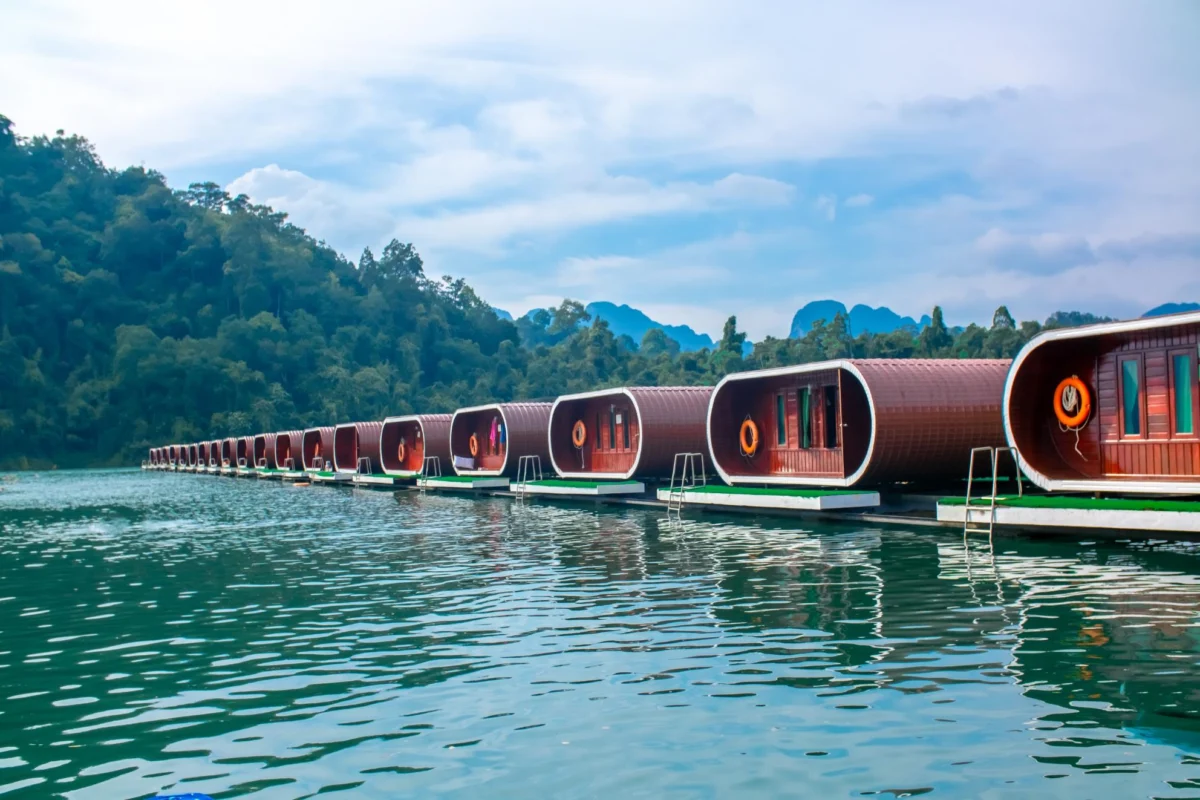
Executive Summary: The Dawn of Plug-and-Play Architecture
The global real estate landscape is undergoing a seismic shift, moving away from the "bricks-and-mortar" permanence of the 20th century toward high-efficiency, portable, and technologically integrated living solutions. At the forefront of this revolution is the "Capsule House"—a prefabricated, aerodynamic residential pod that looks more like a lunar module than a traditional cottage.
In India, where traditional construction is often plagued by labor delays, material waste, and regulatory hurdles, the capsule house is emerging as a disruptive force. These units, which arrive at a site fully constructed and ready for immediate occupancy, are increasingly being adopted for luxury eco-tourism, backyard secondary suites, and high-end remote offices. As the Indian middle class seeks "glamping" experiences and minimalist lifestyles, the capsule house represents the intersection of luxury, portability, and sustainability.
1. The Main Facts: Defining the Capsule House
A capsule house is a pre-engineered, factory-assembled residential module characterized by its use of aerospace-grade materials and a futuristic aesthetic. Unlike traditional modular homes that often mimic standard house shapes, capsule houses embrace a "pod" design, utilizing curved edges, panoramic glass, and sleek metallic finishes.
Technical Specifications and Composition:
- The Shell: Most premium units utilize an aerodynamic aluminum alloy shell. This material is chosen for its high strength-to-weight ratio and its natural resistance to corrosion, which is vital in India’s humid and coastal regions.
- Glazing: The hallmark of the capsule design is the use of curved, double-glazed tempered glass. This provides 270-degree views while maintaining high thermal efficiency.
- Internal Layout: Every square inch is optimized. A standard capsule house typically includes a sleeping area, a compact kitchenette, and a modular bathroom, often integrated with smart home systems that control lighting, temperature, and security via a central interface.
- Installation: Because they are "plug-and-play," these structures require minimal site preparation—usually just concrete pillars or a simple steel frame—rather than a deep foundation.
2. Chronology: From Sci-Fi Concept to Indian Realty Reality
The concept of capsule living isn’t entirely new, but its commercial viability in India has evolved through several distinct phases:
- 1970s – The Experimental Phase: The world first took notice of capsule architecture with the Nakagin Capsule Tower in Tokyo (1972). While revolutionary, the technology of the time struggled with insulation and maintenance.
- 2010s – The Shipping Container Boom: As sustainability became a buzzword, shipping container homes gained popularity in India. However, users soon discovered the limitations of steel boxes: poor thermal insulation and a cramped, industrial feel.
- 2020-2022 – The Pandemic Catalyst: The COVID-19 pandemic accelerated the demand for "remote sanctuaries." Professionals sought backyard offices, and the hospitality industry looked for ways to build resorts without large-scale onsite construction crews.
- 2023-Present – The Luxury Capsule Era: High-end manufacturers began exporting "spaceship" style pods to India. Specialized importers now facilitate the logistics, from factory assembly in tech-hubs to crane-assisted installation in the Himalayan foothills or the beaches of Goa.
3. Supporting Data: Comparing the Capsule to the Container
To understand why investors are pivoting toward capsule houses, one must look at how they compare to their predecessor, the container house.
| Feature | Capsule House | Container House |
|---|---|---|
| Primary Material | Aluminum Shell / Fluorocarbon coating | Corrugated Corten Steel |
| Aesthetic | Futuristic, Aerodynamic, Luxury | Industrial, Boxy, Rugged |
| Insulation | Superior (Factory-injected polyurethane) | Poor (Requires extensive internal cladding) |
| Interior Volume | Feels spacious due to curved glass | Feels narrow (8ft width limit) |
| Setup Time | 24–48 hours on-site | Weeks (due to onsite cutting/welding) |
| Lifespan | 50+ Years (Rust-proof) | 25–30 Years (Prone to oxidation) |
Cost Analysis in the Indian Context:
While a basic shipping container might start at ₹2 Lakhs for the shell, the cost of making it livable often brings the total to ₹10-15 Lakhs. In contrast, a fully furnished, premium capsule house ranges from ₹25 Lakhs to ₹60 Lakhs, depending on the size and "smart" features. Despite the higher entry price, the ROI for resort owners is significantly faster due to the "Instagrammable" nature of the architecture and the lack of maintenance costs.
4. Pros and Cons: A Balanced Investor Perspective
The Advantages
- Rapid Deployment: A resort can be fully operational within weeks of order placement, as opposed to years for traditional construction.
- Portability: These units are classified as "movable property" in many jurisdictions. If a business location fails, the owner can literally lift the house and move it to a new site.
- Climate Resilience: Designed to withstand extreme winds and temperatures, the aluminum shells do not crack like concrete or rot like wood.
- Minimal Environmental Footprint: No onsite mixing of cement or debris generation occurs, preserving the natural landscape of eco-sensitive zones.
The Disadvantages
- Logistical Complexity: While the house is portable, transporting a 10-ton pod requires heavy-duty flatbed trucks and massive cranes. In rural India, narrow roads can make delivery impossible.
- High Upfront Capital: Unlike traditional homes where costs can be spread over a long construction period, capsule houses require significant upfront payment.
- Limited Customization: Since they are factory-molded, owners cannot easily move walls or expand the structure once it is delivered.
- Regulatory Grey Areas: Indian building bylaws are still catching up. Classifying these as "temporary" vs. "permanent" structures can lead to confusion regarding property taxes and utility connections.
5. Official Responses and Expert Perspectives
Leading architects and real estate consultants are cautiously optimistic about the segment.
Architectural Insight:
"The capsule house solves the ‘Last Mile’ problem of architecture," says a Mumbai-based modular design consultant. "In places like Leh or the Western Ghats, bringing in raw materials and labor is an ecological and financial nightmare. A capsule house bypasses that entire struggle."
Real Estate Market Analysis:
Market analysts at firms like Magicbricks note that while the capsule house is currently a "niche" luxury product, it is carving out a significant space in the second-home market. Investors are no longer looking for a 3BHK villa that sits empty; they want a unique, low-maintenance pod that can be listed on Airbnb for premium rates.
Engineering Standards:
Manufacturers emphasize that these units are not "tents" or "trailers." They are engineered to meet stringent safety standards, including fireproofing and seismic resistance, making them safer than many hastily built brick structures in earthquake-prone zones.
6. Interior Innovation: Maximizing Minimalist Living
The interior design of a capsule house is a masterclass in ergonomics. To maintain the sleek aesthetic, designers employ several "hidden" features:
- Invisible Storage: Utilizing the "dead space" in the curved corners for pull-out drawers.
- Multi-functional Furniture: Murphy beds that transform into desks and foldable dining surfaces.
- Smart Integration: Centralized HVAC systems and "smart glass" that can turn opaque at the touch of a button for privacy, eliminating the need for bulky curtains.
7. Implications: The Future of the Indian Construction Industry
The proliferation of capsule houses in India carries several long-term implications for the industry:
1. The Democratization of Design: High-end, architecturally significant living spaces are no longer reserved for those who can afford celebrity architects. A buyer in a tier-3 city can now order a world-class design and have it delivered to their plot.
2. Shift in Labor Dynamics: The demand may shift from onsite masonry and carpentry to factory-based precision engineering and onsite logistics/crane operation.
3. Sustainability Goals: As India pushes for "Green Building" certifications, the low-waste, energy-efficient nature of capsule houses aligns perfectly with national environmental targets. The ease of integrating solar panels and rainwater harvesting systems into these pods makes them ideal for off-grid living.
Final Thoughts
The capsule house is more than a fleeting trend; it is a response to the modern world’s need for flexibility, speed, and style. For the Indian investor, it offers a unique proposition: a luxury asset that is as mobile as it is durable. As the infrastructure for transporting these units improves across the subcontinent, the "spaceship" in the backyard may soon become as common as the traditional bungalow.
While challenges regarding financing and local permits remain, the sheer efficiency of the capsule house suggests that the future of Indian housing may well be factory-made.
