

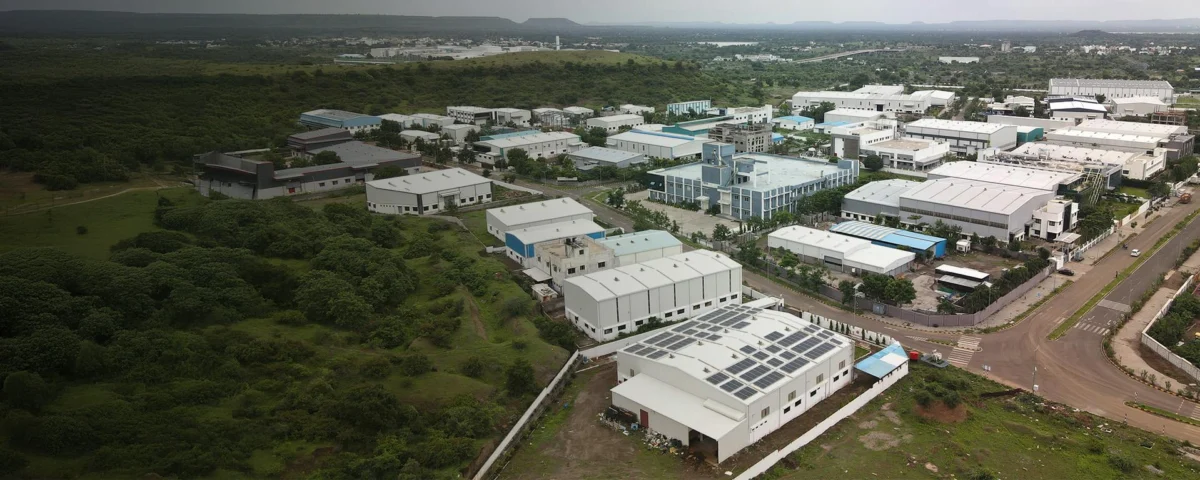
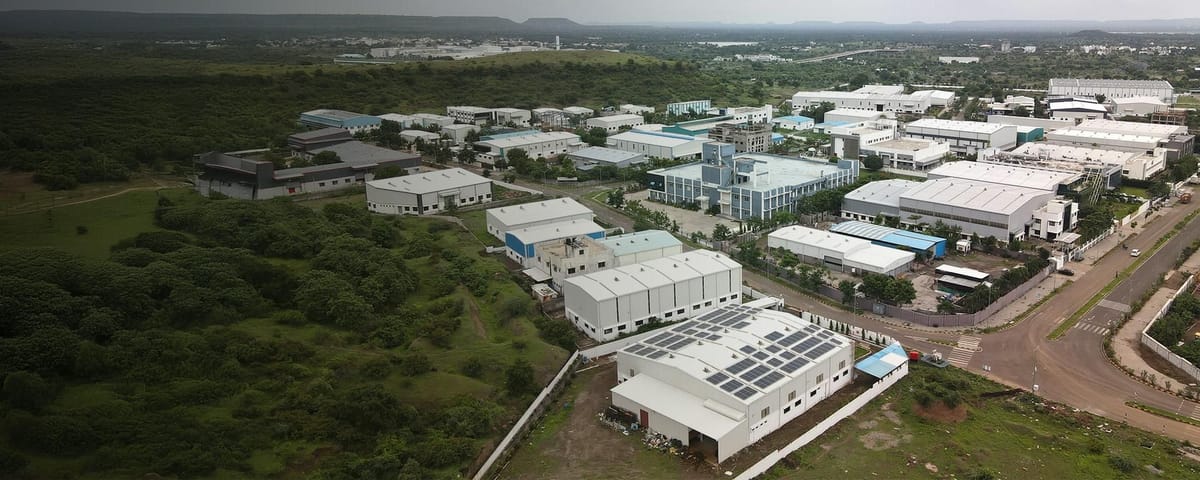
The industrial landscape of Maharashtra is undergoing a seismic shift. At the heart of this transformation lies Auric City (Aurangabad Industrial City), a visionary project that represents India’s most ambitious foray into smart, integrated industrial urbanism. Strategically located near the historic city of Aurangabad—now officially known as Chhatrapati Sambhajinagar—Auric City is not merely an industrial estate; it is a meticulously planned greenfield smart city designed to compete with the world’s leading manufacturing hubs.
Spanning approximately 10,000 acres, Auric City is a cornerstone of the Delhi-Mumbai Industrial Corridor (DMIC). By blending world-class infrastructure with high-quality residential spaces, the project aims to foster a "walk-to-work" culture that balances economic productivity with human well-being.
I. Main Facts: The Blueprint of a Modern Industrial Marvel
Auric City is being developed by Maharashtra Industrial Township Limited (MITL), a joint venture between the National Industrial Corridor Development and Implementation Trust (NICDIT) and the Maharashtra Industrial Development Corporation (MIDC). The project is divided into two primary nodes: the Shendra Industrial Area and the Bidkin Industrial Area.
Key Project Specifications
The development is governed by a master plan that emphasizes balance. Unlike traditional industrial zones that become "ghost towns" after office hours, Auric City is designed as a living ecosystem.
- Total Land Area: Approximately 4,143 hectares (~10,000 acres).
- Land-Use Split: A strategic 60:40 ratio, where 60% of the land is dedicated to industrial use, and the remaining 40% is allocated for residential, commercial, institutional, and open green spaces.
- Strategic Linkage: It serves as a major node on the $100 billion Delhi-Mumbai Industrial Corridor, benefiting from the Dedicated Freight Corridor (DFC).
- Smart Governance: The city is managed via a Central Command and Control Centre (C4), which monitors everything from traffic and CCTV to water leakage and power grids in real-time.
The Nodes: Shendra and Bidkin
The Shendra node (approx. 8.48 sq. km) was the first to be developed and has already attracted significant global investment. The Bidkin node is significantly larger (approx. 32 sq. km) and is being developed in phases to accommodate mega-industries, including large-scale automotive and textile plants.
II. Chronology: From Vision to Reality
The evolution of Auric City is a testament to India’s long-term commitment to the "Make in India" initiative. Understanding its timeline reveals how the project moved from a conceptual framework to a functioning smart city.
- 2006-2007: The Conceptual Phase: The Government of India and the Government of Japan signed a Memorandum of Understanding to develop the Delhi-Mumbai Industrial Corridor. Aurangabad was identified as a key "Early Bird" project due to its existing industrial base.
- 2011-2014: Land Acquisition and Planning: Massive land acquisition drives were conducted in the Shendra and Bidkin belts. Master planning was awarded to international consultants to ensure the city met global standards.
- 2016: The Launch of MITL: Formerly known as Aurangabad Industrial Township Limited (AITL), the special purpose vehicle was formed to fast-track the development.
- 2018: Infrastructure Milestone: The completion of the Auric Hall—the city’s landmark administrative building and "brain"—marked the beginning of active operations.
- 2019-2021: Global Investments: Major players, such as the South Korean textile giant Hyosung and various Tier-1 automotive suppliers, began operations.
- 2022-Present: Residential Expansion: With the industrial core established, the focus shifted toward "Auric City Homes," including massive affordable housing projects under MHADA to ensure a local workforce.
III. Supporting Data: Infrastructure and Economic Impact
The success of Auric City is rooted in its "plug-and-play" infrastructure. For an investor, the city offers a "zero-period" setup, meaning the basic necessities for a factory are available from day one.
World-Class Infrastructure Data
- Water Management: The city features a state-of-the-art water treatment plant and a recycled water network. Every drop of industrial effluent is treated and reused for landscaping and industrial cooling, aiming for a "Zero Liquid Discharge" status.
- Power Reliability: Power is supplied via an underground cabling network, ensuring 24/7 uninterrupted supply with SCADA (Supervisory Control and Data Acquisition) monitoring to detect faults instantly.
- Digital Connectivity: The entire city is fiber-optic enabled. The ICT (Information and Communication Technology) infrastructure supports high-speed internet, smart poles with public Wi-Fi, and emergency call boxes.
- Underground Utility Trenches: One of the most significant engineering feats at Auric is the use of underground trenches for all utilities. This means the roads will never need to be dug up for repairs, significantly reducing maintenance costs and traffic disruptions.
Industrial Clusters and Sectoral Focus
Auric City has successfully attracted a diverse range of industries, reducing the region’s historical over-reliance on any single sector. The key sectors include:
- Automobile and Auto Components: Leveraging Aurangabad’s existing status as a hub for companies like Skoda-Volkswagen and Endurance.
- Engineering and Electronics: Focusing on high-end manufacturing and consumer electronics.
- Pharmaceuticals: Benefiting from the proximity to existing pharma clusters in the region.
- Food Processing: Utilizing the rich agricultural hinterland of the Marathwada region.
- Textiles: Highlighted by the massive investment from Hyosung, which produces spandex for global markets.
IV. Official Responses and Governance: A New Model for Business
Official statements from Maharashtra Industrial Township Limited (MITL) emphasize that Auric City is designed to eliminate the "Red Tape" usually associated with Indian industrial projects.
The Single Window System
Government officials have highlighted the "e-land allotment" process. Unlike traditional methods where land acquisition could take months or years, Auric offers a transparent, online system where investors can view available plots, check zoning regulations, and apply for allotment digitally.
Government Vision
State officials have frequently noted that Auric City is a "City of the Future." During various investment summits, the Maharashtra government has positioned Auric as the primary destination for companies looking to de-risk their supply chains from China. The inclusion of MHADA (Maharashtra Housing and Area Development Authority) projects—aiming to build 5,500 homes—shows a clear government directive to prevent the creation of "industrial slums" and instead build a dignified urban environment for workers.
Ease of Doing Business (EODB)
The city offers a "Single Window Clearance" for building plan approvals, water connections, and environmental clearances. This administrative efficiency is a core pillar of the Auric City development plan, aimed at reducing the "cost of doing business" by saving time.
V. Implications: Social, Economic, and Regional Transformation
The implications of Auric City extend far beyond the borders of Chhatrapati Sambhajinagar. It is a project of national significance with the potential to rebalance Maharashtra’s economy.
Economic De-congestion of Mumbai and Pune
For decades, Maharashtra’s industrial growth was concentrated in the Mumbai-Thane-Pune triangle. Auric City provides a viable, high-tech alternative, encouraging industries to move into the Marathwada region. This helps in the geographical decentralization of wealth and opportunity.
The "Walk-to-Work" Paradigm
The 40% allocation for non-industrial use is a game-changer. By providing Auric City homes, schools, hospitals, and shopping malls within the same ecosystem as the factories, the city reduces the carbon footprint of commuting and improves the quality of life for employees. This holistic approach is expected to attract high-quality talent who might otherwise prefer living in metros like Mumbai or Bengaluru.
Connectivity as a Multiplier
The city’s proximity to the Aurangabad International Airport and the upcoming Samruddhi Mahamarg (Mumbai-Nagpur Expressway) cannot be overstated. The expressway will cut travel time to Mumbai significantly, making the port facilities at JNPT (Jawaharlal Nehru Port Trust) more accessible for exporters based in Auric.
Environmental Sustainability
As a greenfield smart city, Auric has been designed with sustainability at its core. The extensive green cover, smart LED street lighting, and integrated waste management systems serve as a blueprint for future urban developments in India. It demonstrates that industrialization does not have to come at the cost of the environment.
Conclusion: A New Standard for Indian Industry
Auric City (Aurangabad Industrial City) is more than a collection of factories; it is a statement of intent. It represents India’s transition from unplanned industrial growth to a sophisticated, data-driven, and human-centric urban model.
With its strategic location, cutting-edge infrastructure, and a master plan that values residential life as much as industrial output, Auric City is poised to become the new benchmark for smart cities globally. For investors, it offers a stable and efficient platform for growth. For the people of Maharashtra, it offers a promise of a modern lifestyle and high-quality employment. As the Shendra and Bidkin nodes continue to fill with global giants, the map of Indian industry is being redrawn, with Chhatrapati Sambhajinagar firmly at its center.
