LUCKNOW – In a move that reaffirms its ambition to become the "Expressway State" of India, the Uttar Pradesh government has unveiled a massive ₹15,000 crore land acquisition plan for three new greenfield expressways. This strategic investment is poised to redraw the economic map of Northern India, bridging the gap between isolated rural hinterlands and established commercial hubs.
Spanning a cumulative 565 kilometers, the proposed network—comprising the Vindhya Expressway, the Meerut-Haridwar Expressway, and the Vindhya Purvanchal Link Expressway—represents a significant pillar in the state’s strategy to achieve a $1 trillion economy. By acquiring approximately 8,200 hectares of land across 650 villages, the state is not merely building roads; it is laying the foundation for a new era of infrastructure-led real estate development.
Main Facts: The Scope of the ₹15,000 Crore Investment
The scale of the project is unprecedented for regional connectivity. The Uttar Pradesh Expressways Industrial Development Authority (UPEIDA) is set to oversee the acquisition process, which targets three distinct geographical corridors:
- The Vindhya Expressway (320 km): This is the longest of the three projects, designed to connect Prayagraj with the mineral-rich district of Sonbhadra. The route will traverse Bhadohi (India’s carpet hub) and Mirzapur, providing a high-speed artery for both industrial goods and passenger traffic in the southern tip of the state.
- The Meerut-Haridwar Expressway (145 km): Aimed at bolstering the National Capital Region’s (NCR) connectivity with Uttarakhand, this corridor will streamline transit through Western Uttar Pradesh. It is expected to significantly reduce travel time for pilgrims, tourists, and commercial logistics between Meerut and the holy city of Haridwar.
- The Vindhya Purvanchal Link Expressway (100 km): This project serves as a vital connector in Eastern Uttar Pradesh, linking the Vindhya region with the existing Purvanchal Expressway. It is designed to integrate the eastern districts into the state’s wider high-speed network, facilitating smoother trade routes toward Bihar and beyond.
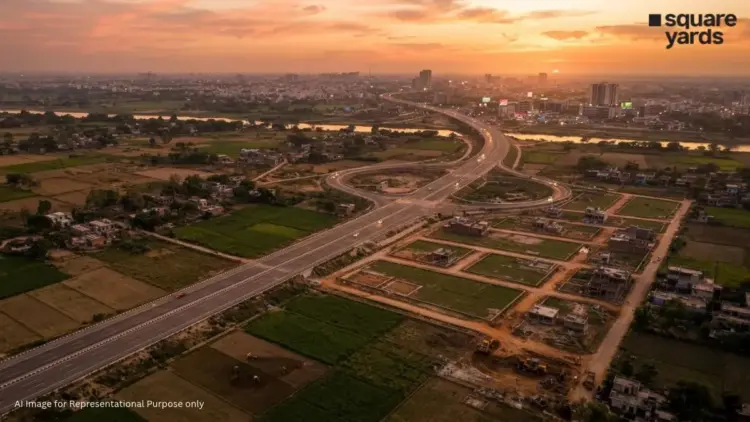
The total land requirement of 8,200 hectares highlights the government’s commitment to "Greenfield" development—building on entirely new land rather than expanding existing roads—to ensure straighter routes, higher speed limits, and the creation of brand-new economic nodes.
Chronology: From Vision to Land Acquisition
The development of these expressways follows a decade of aggressive infrastructure expansion in Uttar Pradesh. To understand the current momentum, one must look at the timeline of the state’s "Expressway Revolution":
- 2012–2017: The completion of the Yamuna Expressway and the Agra-Lucknow Expressway set the benchmark for high-speed corridors in India.
- 2021–2022: The inauguration of the 341-km Purvanchal Expressway and the 296-km Bundelkhand Expressway shifted the focus toward the state’s underdeveloped eastern and southern regions.
- 2023–2024: The state government prioritized the "Ganga Expressway" (594 km) and began identifying "missing links" in the network.
- Late 2024 (Current Phase): The Cabinet cleared the budgetary allocation of over ₹15,000 crore specifically for land acquisition for the Vindhya, Meerut-Haridwar, and Vindhya Purvanchal Link projects.
- 2025–2026 (Projected): According to Square Yards’ property-rate projections and market data, this period is expected to see the peak of land procurement and the commencement of civil construction contracts.
Supporting Data: Real Estate Trends in the Impact Zones
The announcement of these expressways has already begun to ripple through the real estate markets of the affected districts. Data provided by Square Yards offers a granular look at how these markets are responding.
Meerut: A Market in Transition
Meerut stands as one of the most developed residential markets in the path of the new expressways. However, the data shows a period of price correction and stabilization:
- Price Trends: The average asking price in Meerut stood at approximately ₹5,000 per square foot (psf) in mid-2026. This follows a decline from a peak of ₹6,350 psf in December 2025.
- Inventory: As of November 2026, there were 1,309 properties listed for sale, with a staggering 910 of these being residential plots.
- Outlook: Market analysts suggest that the Meerut-Haridwar Expressway will likely trigger growth in the city’s peripheral locations, where large tracts of land are available for planned townships.
Prayagraj: The Premium Tier
Prayagraj remains a high-value market, particularly in its northern pockets which will benefit from the Vindhya Expressway:
- Allahabad North: Commands a premium average asking price of ₹10,300 psf, reflecting a 4.42% increase in apartment values recently.
- Allahabad West & South: These areas offer more affordable entry points at ₹6,950 psf and ₹4,950 psf, respectively.
- Investor Sentiment: The expressway is expected to turn Prayagraj into a logistics hub, potentially driving up demand for commercial real estate alongside residential growth.
Mirzapur & Chandauli: The Rise of Plotted Developments
In smaller markets like Mirzapur and Chandauli, the real estate landscape is dominated by plotted land rather than high-rise apartments.
- Mirzapur (Chunar & Vindhyachal): Plots are currently highly affordable. In Chunar, a 1,000-sq-ft plot can be found for ₹8 lakh (₹800 psf). In Vindhyachal, prices rise slightly to approximately ₹1,200 psf.
- Chandauli (The Varanasi Connection): Positioned near the spiritual and economic hub of Varanasi, Chandauli’s rates are higher, ranging from ₹1,991 to ₹2,475 psf.
- Varanasi Benchmarks: For comparison, the broader Varanasi market sees apartment prices at ₹7,000 psf and villas at ₹7,400 psf. The western micromarket of Varanasi is the most expensive at ₹7,900 psf.
Official Responses and Strategic Intent
While official statements from the Uttar Pradesh Expressways Industrial Development Authority (UPEIDA) emphasize "seamless connectivity," the broader government narrative focuses on the PM Gati Shakti National Master Plan.
Officials from the State’s Infrastructure and Industrial Development Department have noted that these expressways are not merely transit routes but "economic corridors." The government plans to develop industrial clusters, food processing parks, and logistics warehouses alongside the interchanges of these three expressways.
"The ₹15,000 crore allocation is a testament to the state’s fiscal commitment to time-bound infrastructure delivery," said a senior state official (anonymized for journalistic reportage). "By acquiring land through a transparent, direct-purchase model or the Land Acquisition Act, we are ensuring that farmers are compensated fairly while creating a clear path for private developers to follow."
The government has also indicated that these projects will be integrated with the One District One Product (ODOP) initiative. For example, the Vindhya Expressway will provide better market access for the brassware of Mirzapur and the carpets of Bhadohi.
Implications: What This Means for Homebuyers and Investors
The transformation of 8,200 hectares of rural land into a modern transit network carries significant implications for various stakeholders.
1. For Homebuyers: Beyond the Road
While the promise of an expressway is alluring, real estate experts warn end-users to prioritize "liveability" over "connectivity." A high-speed road reduces travel time between cities, but for daily life, proximity to schools, hospitals, and employment centers remains paramount. The real benefit for homebuyers will be the decongestion of inner-city roads as heavy commercial traffic moves to the expressways.
2. For Investors: The "Interchange" Strategy
Speculative land buying in remote villages often leads to "dead capital" if the land lacks infrastructure. Savvy investors are focusing on Interchanges—the points where expressways meet existing state highways. These locations are the most likely candidates for future petrol pumps, hotels, warehouses, and organized residential colonies.
3. Risk Assessment: The Liquidity Challenge
As seen in the Mirzapur data, low entry prices (₹800 psf) do not always equate to high returns. Smaller markets often suffer from low liquidity; it is easy to buy land but difficult to find a buyer when one wishes to exit. Furthermore, investors must verify land use permissions (CLU – Change of Land Use) to ensure that agricultural land can indeed be used for residential or commercial purposes.
4. Economic Multiplier Effect
The construction phase itself is expected to generate thousands of local jobs. Post-construction, the improved "Ease of Doing Business" in the Vindhya and Purvanchal regions could attract manufacturing units away from the saturated hubs of Noida and Ghaziabad, leading to a more balanced distribution of wealth across the state.
Conclusion
Uttar Pradesh’s ₹15,000 crore investment is a bold bet on the future. By connecting the dots between Meerut, Haridwar, Prayagraj, and Sonbhadra, the state is creating a web of accessibility that could redefine the North Indian real estate market. However, the success of this "Greenfield" dream will depend on how effectively the government can marry these roads with social infrastructure—transforming these corridors from mere transit routes into vibrant, livable communities. For the cautious investor and the hopeful homebuyer, the map of Uttar Pradesh is currently being rewritten, one kilometer at a time.