

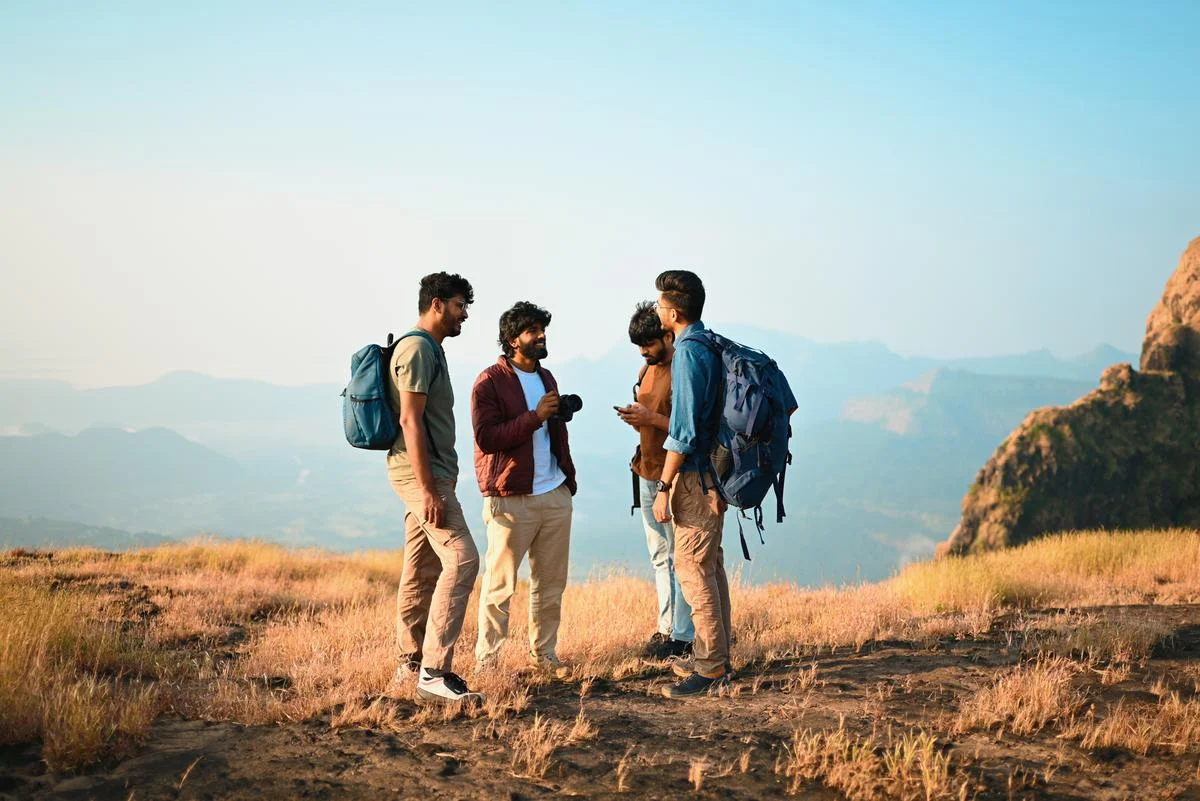
For a nation whose citizens are currently among the most sought-after travelers in the global tourism economy, Indians find themselves in a peculiar position. They are simultaneously courted by luxury brands and national tourism boards while being subjected to an inordinate amount of scrutiny regarding their behavior abroad. As India cements its status as a global travel powerhouse, a complex narrative is emerging—one that pits staggering economic contributions against a digital culture of hyper-criticism and shifting international policies.
Main Facts: The Economic Powerhouse and the Policy Pivot
According to the Mastercard Economics Institute’s Travel Trends 2025 report, India has solidified its position as one of the world’s fastest-growing outbound travel markets. Destinations across Southeast Asia and the Middle East, including Thailand, Vietnam, Japan, Indonesia, and the UAE, have reported a massive surge in Indian arrivals. In 2024 alone, Thailand welcomed more than 2.1 million Indian visitors, positioning India as one of its most valuable source markets.
However, this economic embrace has recently met with a sudden policy cooling. In a notable U-turn, Thailand rolled back its 60-day visa-free scheme for 93 countries, including India. Under the new regulations, Indian travelers have been moved back to the paid Visa-on-Arrival (VoA) category. This shift requires travelers to pay a fee of 2,000 Thai Baht (approximately ₹5,500–₹6,000) and navigate additional entry formalities, such as the mandatory Thailand Digital Arrival Card (TDAC).

This policy change reflects a broader global tension. While nations crave the liquidity and spending power of the Indian middle class, they are also grappling with the logistical and social challenges of managing massive visitor influxes. Thai authorities have specifically cited concerns regarding overstays, illegal employment, and the potential misuse of long-term tourist permissions as the primary drivers for the tightening of immigration rules.
Chronology: From Domestic Growth to Global Dominance
The evolution of the Indian traveler has followed a steep trajectory over the last two decades.
- The Early 2000s: International travel was largely the domain of the ultra-wealthy or those traveling for business and education. Outbound numbers were modest, and the "Indian tourist" was a rare sight in many European or Southeast Asian hubs.
- 2010–2019: The rise of low-cost carriers and a booming middle class transformed travel into a status symbol and a regular lifestyle choice. This decade saw the "volume story" take shape, with millions of first-time passport holders exploring neighboring nations.
- Post-Pandemic (2022–Present): Following the lifting of COVID-19 restrictions, India’s outbound market didn’t just recover; it exploded. "Revenge travel" morphed into a sustained trend. By 2024, India became a critical pillar for the tourism industries of countries like Thailand and South Africa.
- 2025 and Beyond: The current phase is marked by a shift from "volume to value." While the sheer number of travelers continues to rise, there is an increasing focus on luxury, curated experiences, and adventure tourism, with Indian spending abroad estimated to exceed US$40 billion annually.
Supporting Data: The Value of the Indian Passport
The significance of the Indian traveler is best understood through the lens of data. Beyond the 2.1 million arrivals in Thailand, other regions are seeing similar spikes. South African Tourism reports that India is now among its top 10 source markets globally. Gcobani Mancotywa, Regional General Manager for South African Tourism, noted that nearly 70,000 Indians visited the country in 2025, with over 82,500 traveling between January 2025 and March 2026.

Keyur Joshi, founder of the eco-resort Tipai and a veteran of the Indian travel industry through his work with MakeMyTrip, emphasizes that the Indian outbound market has transitioned into a "value story." Estimates suggest that at its peak, India accounted for more than 30 million international departures annually. More importantly, Indian travelers are no longer just looking for budget deals; they are increasingly investing in high-end accommodation, wellness retreats, and gastronomy, making them high-yield visitors for host nations.
Official Responses and Expert Perspectives
The discourse surrounding Indian travelers is often split between official hospitality and social media vitriol. While tourism boards are rolling out the red carpet, the internet frequently highlights "unruly" behavior.
The Industry View
Hospitality professionals argue that the focus on isolated incidents is misplaced. Keyur Joshi points out that while social media amplifies a viral reel of a group dancing at an airport, the industry is focused on the "long-term value" of the traveler. "The industry isn’t focused on a viral reel from an airport. It’s looking at a traveler who is spending more, traveling further, and becoming increasingly important to destinations worldwide," Joshi states.

Similarly, Gcobani Mancotywa of South African Tourism highlights that Indian travelers are valued for their "meaningful engagement" with local culture and wildlife, rather than just their numbers.
The Behavioral Context
Sumir Nagar, a behavioral specialist and performance coach with three decades of experience in the global banking sector, suggests that India is simply the latest occupant of a "reputational chair" previously held by other nations.
"In the 1980s, it was the Japanese," Nagar explains. "They were caricatured as traveling in tight groups, photographing everything, and rushing from landmark to landmark." He notes that this led to the "Paris Syndrome," where Japanese tourists were so overwhelmed by the reality of a city not meeting their romanticized expectations that they required psychiatric help. After the Japanese, the Chinese faced similar scrutiny in the 2000s. "We are the latest occupant… someone else will inherit the moment a new economy puts a few hundred million first-time passport-holders on planes," Nagar adds.

Implications: Visibility and the Burden of Representation
The primary challenge for the Indian traveler today is the "visibility" factor. When a traveler from a Western nation behaves poorly, they are often viewed as an individual making a bad choice. When an Indian traveler behaves poorly, it is frequently read as a categorical failure of the nationality.
Social Media as a Double-Edged Sword
Journalist Prathap Nair, who lives in Germany, argues that the obsession with the "unruly Indian" is often stronger within India than it is abroad. "The problem is that social media rewards the unusual," Nair says. "Nobody posts a video of tourists quietly following the rules. They post the one incident that gets clicks."
This internal criticism was highlighted by journalist Mansi Shah, who recalled an incident in Georgia where a traveler from West Asia cut a queue. She noted that if the offender had been Indian, the incident would likely have been filmed and used as "evidence" of poor national etiquette. "I think sometimes we dislike ourselves more than anybody else does," Shah observes.

The Role of Social Conditioning
The friction observed abroad often has roots in domestic realities. An IT consultant from Bengaluru noted that behavior criticized internationally—such as loud music or a lack of respect for public space—is frequently seen in Indian hill stations like Ladakh or Mussoorie.
"We’ve not learned how to respect public space because there is very little public space in India," says Rahul Jagtiani, a luxury travel specialist and host of The Plush Podcast. "We’re 1.4 billion people packed tightly together." This lack of "spatial awareness" can lead to cultural clashes in quieter, more regulated European or East Asian environments.
Furthermore, India’s deeply hierarchical society can sometimes lead to a "sense of entitlement" in destinations perceived as cheaper or more accessible, such as parts of Southeast Asia, whereas the same travelers might be more deferential in the US or Europe.

Conclusion: A Learning Curve on a Global Stage
The current state of Indian travel is defined by a rapid learning curve. As a "new class of traveler" emerges from a rapidly rising economy, they are navigating the complexities of global etiquette while carrying the massive weight of their nation’s reputation.
The policy shifts in countries like Thailand serve as a reminder that tourism is a delicate balance of economic benefit and regulatory management. However, the broader narrative—one of a vibrant, high-spending, and curious population exploring the world—remains the dominant reality.
As Rahul Jagtiani concludes, when millions of people from a rising power begin to travel, they become impossible to ignore. The "mildly ridiculous holiday moment" may go viral, but it is the $40 billion in spending and the millions of respectful cultural exchanges that will ultimately define the legacy of the Indian traveler in the 21st century. The burden of being an Indian traveler today is not just about avoiding the "bad traveler" label; it is about realizing that in the eyes of the world, every individual journey is a piece of a much larger, unfolding national story.
