

MUMBAI – In a significant move to consolidate its leadership in the Indian electric vehicle (EV) market, Tata Motors has announced an aggressive suite of discounts and consumer benefits for July 2026. This strategic intervention comes on the heels of the highly anticipated launch of the Sierra EV and is designed to streamline inventory as the company nears its goal of a 100% electrified passenger vehicle portfolio.
With benefits ranging from ₹50,000 to a staggering ₹3.35 lakh, the July 2026 promotional window represents one of the most substantial price corrections in the domestic EV sector to date. The move targets a broad spectrum of buyers, from entry-level hatchback enthusiasts to premium SUV aficionados, signaling Tata’s intent to maintain its dominant market share amidst increasing competition from both domestic and international manufacturers.
Main Facts: A Multi-Tiered Discount Strategy
The discount structure for July 2026 is not a "one-size-fits-all" model. Instead, Tata Motors has curated a complex matrix of incentives tailored to specific models, manufacturing dates, and trim levels. These benefits are categorized into four primary streams:
- Direct Cash Discounts: Immediate price reductions on the ex-showroom cost.
- Exchange and Scrappage Bonuses: Incentives for customers trading in older Internal Combustion Engine (ICE) vehicles or scrapping end-of-life cars.
- Intervention Bonuses: Targeted tactical discounts to move specific slow-moving variants.
- Loyalty Bonuses: Special rewards for existing Tata vehicle owners to encourage brand retention within the EV ecosystem.
The flagship of this discount drive is the Curvv EV, which sees a maximum benefit of ₹3.35 lakh for pre-update models. Conversely, the Nexon EV, a consistent top-seller, receives the most conservative price adjustment, reflecting its steady demand and lower inventory levels.
Chronology: The Road to a Fully Electric Portfolio
To understand the scale of these discounts, one must look at Tata Motors’ recent product lifecycle milestones. The July 2026 discounts are not merely a reaction to market sluggishness but a calculated phase in a broader product roadmap.
- Early 2026: Tata Motors launched the facelifted Punch EV, introducing the Acti.ev architecture to the micro-SUV segment. This rendered several "pre-facelift" units as legacy inventory.
- May 2026: The Curvv EV received the "X Series" update, which brought enhanced software and minor aesthetic tweaks. This update created a surplus of the original Curvv EV variants that now carry the highest discounts.
- June 2026: The official launch of the Sierra EV. As the "most advanced EV yet" from the Tata stable, the Sierra EV has shifted consumer attention upward, necessitating a price correction for the Harrier EV to maintain its value proposition.
- July 2026: Implementation of the current discount scheme. This period serves as a bridge before the expected (though unconfirmed) launch of the Safari EV later in the year.
The company is currently only two models away—the Safari EV and the Altroz EV—from offering an electric version of every vehicle in its lineup. While the Altroz EV has remained in a developmental "back seat" despite multiple motor show appearances, the Safari EV is the final piece of the "New Forever" EV puzzle.
Supporting Data: Model-Specific Breakdown
The following data outlines the maximum potential savings available to consumers this month. It is important to note that these figures represent the upper ceiling of benefits, often applicable to top-spec trims or specific older manufacturing year (MY) stock.
1. Curvv EV: The Heavy Hitter (Up to ₹3.35 Lakh)
The Curvv EV remains the focal point of Tata’s liquidation strategy. For variants manufactured prior to the May 2026 X Series update, the company is offering:
- Cash Discount: Up to ₹3,00,000.
- Other Benefits: Up to ₹35,000 (Exchange/Loyalty).
This massive price slash is intended to clear the way for the X Series, which features improved V2L (Vehicle-to-Load) and V2V (Vehicle-to-Vehicle) charging capabilities.
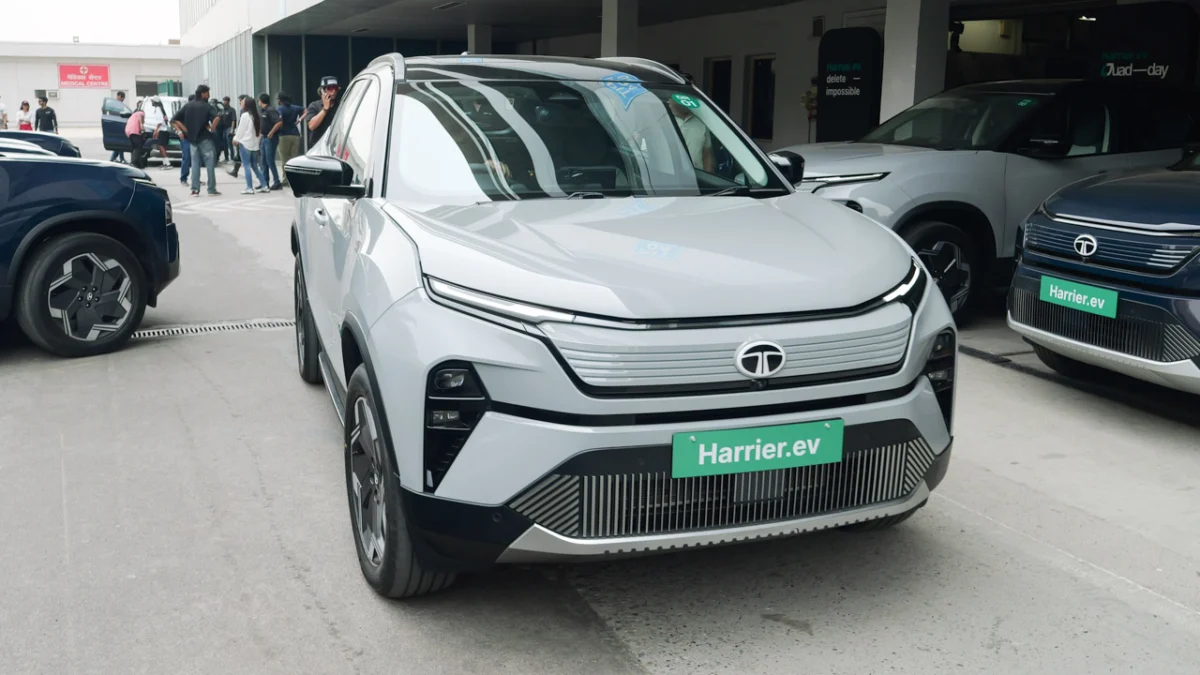
2. Harrier EV: The Flagship Value (Up to ₹2.75 Lakh)
As the premium electric SUV in the lineup, the Harrier EV’s discount structure is unique. Notably, it offers no direct cash discount. Instead, Tata is leveraging brand loyalty:
- Intervention Benefit: Up to ₹1,00,000.
- Loyalty Bonus: Up to ₹1,00,000.
- Exchange/Scrappage Bonus: Up to ₹75,000.
This approach protects the "premium" brand equity of the Harrier nameplate while still offering significant financial relief to repeat customers.
3. Tiago EV and Punch EV: The Volume Drivers (Up to ₹1.45 Lakh)
Both the Tiago EV and Punch EV are seeing identical maximum discount ceilings of ₹1.45 lakh, though the distribution differs:
- Tiago EV: Following a major facelift earlier this year, pre-facelift Long Range (LR) variants are being incentivized with ₹1 lakh in cash discounts plus exchange and intervention benefits. Medium Range (MR) variants see a more modest total benefit of ₹65,000.
- Punch EV: The pre-facelift LR variants receive a ₹1.1 lakh cash discount, while MR variants are eligible for up to ₹1.25 lakh in total benefits.
4. Nexon EV: The Resilient Performer (Up to ₹50,000)
The Nexon EV continues to be the "gold standard" for Tata’s electric sales. Because it maintains a healthy order bank, the discounts are minimal:

- Cash Discount: ₹15,000.
- Exchange/Scrappage Bonus: Up to ₹35,000.
The Nexon EV remains the least discounted model, proving its enduring popularity in the mid-size electric SUV segment.
Official Responses and Market Context
While Tata Motors has not issued a formal press release detailing the specific reasons for the July 2026 "Price Discovery" phase, dealership sources and industry analysts point to a two-pronged motivation.
A senior executive at a leading Mumbai-based Tata dealership stated, "The arrival of the Sierra EV has redefined the price-to-feature expectations of our premium clientele. To ensure that the Harrier EV and Curvv EV remain competitive against new entrants in the market, these tactical adjustments were necessary. We are also seeing a concerted effort to move pre-update stock of the Tiago and Punch to make room for the 2027 model year production cycles."
Industry analysts suggest that the "Intervention Bonus" is a new addition to Tata’s vocabulary, designed to give dealers more flexibility in closing deals. Unlike a fixed cash discount, an intervention bonus allows the company to provide additional support on a case-by-case basis to counter aggressive pricing from competitors like Mahindra’s BE (Born Electric) series and MG’s updated ZS EV range.
Furthermore, the emphasis on "Scrappage Bonuses" aligns with the Indian government’s evolving Vehicle Scrappage Policy, providing an additional layer of financial incentive for owners of aging diesel SUVs to transition to the Tata EV ecosystem.
Implications: What This Means for the Indian EV Market
The scale of these discounts carries several long-term implications for the automotive landscape in India:
1. Accelerated Adoption and Price Parity
By offering discounts of over ₹3 lakh on premium models, Tata Motors is effectively bringing the "Total Cost of Ownership" (TCO) of EVs closer to their ICE counterparts at the point of purchase. This narrows the "green premium" that has historically deterred middle-class buyers.
2. Impact on Resale Value
A recurring concern for EV early adopters is the depreciation of their assets. Massive discounts on new vehicles can put downward pressure on the resale value of existing EVs. However, Tata’s focus on "Loyalty Bonuses" for the Harrier EV suggests a strategy to mitigate this by rewarding current owners who choose to upgrade within the brand.
3. Inventory Management as a Competitive Tool
Tata Motors is demonstrating a sophisticated approach to inventory management. By clearing out "pre-facelift" and "pre-update" models, they ensure that their showrooms only feature the latest technology, such as the Acti.ev platform and the new UI/UX found in the Sierra EV. This prevents the "technological obsolescence" that often plagues fast-moving EV markets.
4. The "Safari EV" Anticipation
The aggressive clearing of Harrier EV and Curvv EV stock strongly suggests that the Safari EV is nearing production readiness. By reducing the inventory of its current flagship SUVs, Tata is creating the necessary "breathing room" in the supply chain and showroom floors for the Safari EV’s debut, which is expected to set a new benchmark for seven-seater electric mobility in India.
Conclusion for Consumers
For prospective EV buyers, July 2026 presents a rare "sweet spot" in the market. The combination of mature products (like the Nexon EV) and heavily incentivized premium models (like the Curvv EV) offers a variety of entry points into electric mobility.
However, experts recommend that buyers visit dealerships in person, as the "Intervention" and "Loyalty" bonuses are often subject to dealer-level negotiations and the specific manufacturing date of the vehicle in stock. As Tata Motors inches closer to its 100% electrification goal, this month’s discount drive may well be the final major "clearance" before the brand transitions into a new era of standardized, high-margin electric luxury.
