

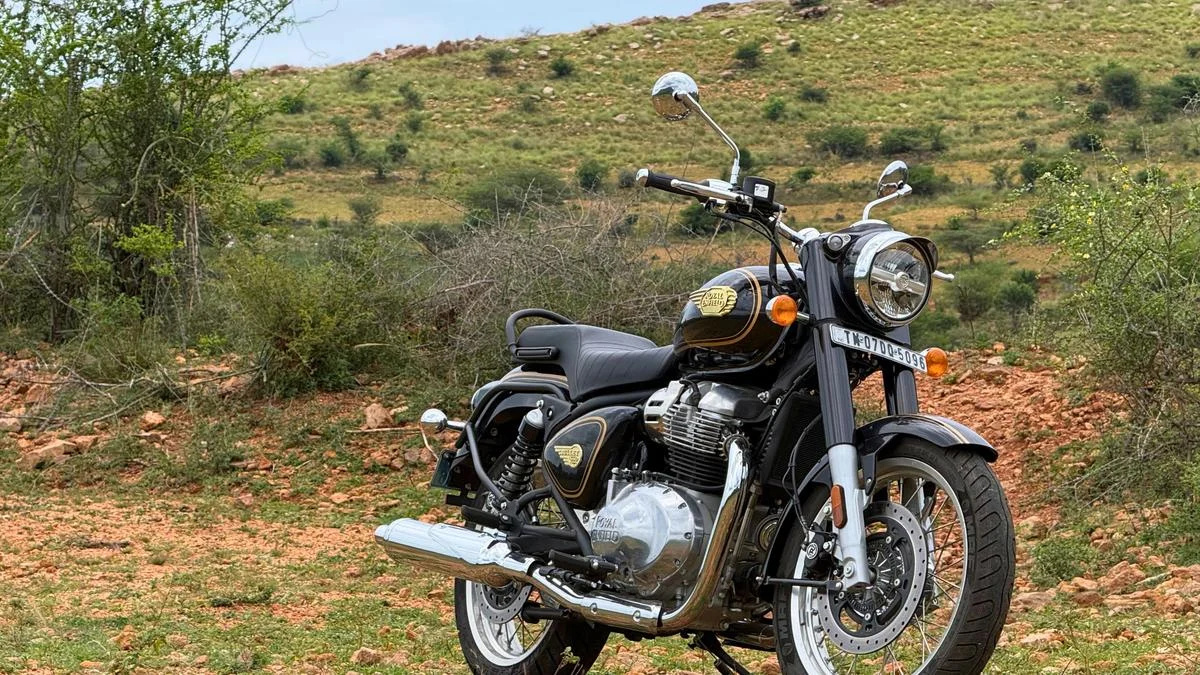
The Royal Enfield Bullet is not merely a motorcycle; it is a cultural icon, a symbol of endurance, and the longest-running motorcycle model in continuous production in the world. For decades, the Bullet was defined by its rhythmic single-cylinder "thump," a mechanical heartbeat that resonated with generations of riders. However, as the global motorcycling landscape shifts toward greater refinement and high-speed touring capability, the inevitable has occurred. Royal Enfield has officially integrated its most prestigious nameplate into its acclaimed 650cc parallel-twin platform.
The arrival of the Bullet 650 marks a pivotal moment in the company’s history. It represents the marriage of a legendary aesthetic with a modern powertrain that has already proven its mettle in the Interceptor, Continental GT, Super Meteor, and the recently launched Classic 650. Priced at ₹3.64 lakh (ex-showroom), the Bullet 650 is positioned as the ultimate expression of heritage motorcycling, refined for the 21st century.
Main Facts: The Transition to Twin-Cylinder Power
The core of the Bullet 650’s identity shift lies in its engine. By moving away from the traditional 350cc or 500cc single-cylinder architecture, Royal Enfield has addressed the primary limitation of the legacy Bullet: its struggle with high-speed cruising and mechanical vibrations.
Technical Specifications at a Glance:
- Engine: 648cc, air-oil cooled, SOHC, parallel-twin.
- Performance: 47 PS at 7,250 rpm and 52.3 Nm of torque at 5,650 rpm.
- Transmission: 6-speed constant mesh with a slipper and assist clutch.
- Chassis: Steel tubular spine frame.
- Braking: 320mm front disc; 300mm rear disc; Dual-channel ABS.
- Weight: 243 kg (kerb weight).
- Price: ₹3.64 lakh (ex-showroom).
The motorcycle retains the iconic silhouette that has defined the brand since 1932. Key design elements include the teardrop-shaped fuel tank, hand-painted gold pinstripes (the legendary "Madras Stripes"), and the signature "tiger eye" pilot lamps flanking the main headlamp. While the engine is modern, the visual language remains rooted in the post-war era of motorcycling.

Chronology: From the 1932 Roots to the 650 Era
To understand the significance of the Bullet 650, one must look at the chronology of its development. The Bullet nameplate first appeared in 1932, evolving through various iterations including the G2, the Electra, and the modern-day Classic-inspired variants. For the better part of a century, the Bullet was synonymous with a heavy-flywheel, long-stroke single-cylinder engine.
The journey toward the 650 variant began in 2018 with the global launch of the Interceptor 650 and Continental GT 650. These models introduced a brand-new parallel-twin engine developed at Royal Enfield’s UK Technical Centre. The platform was designed to be modular, capable of powering various styles of motorcycles.
Following the success of the 650 twins, Royal Enfield systematically expanded the range. The Super Meteor 650 brought cruiser ergonomics, and the Shotgun 650 introduced a bobber aesthetic. In late 2024, the company finally turned its attention to its "crown jewels"—the Classic and the Bullet. The launch of the Bullet 650 completes this cycle, bringing the most traditional nameplate in the lineup up to modern performance standards.
Supporting Data: Performance, Engineering, and Ergonomics
The Parallel-Twin Experience
The 648cc engine is widely regarded as one of the most balanced twin-cylinder units in the mid-capacity segment. In the Bullet 650, this engine delivers power with a linear, predictable surge. Unlike the old single-cylinder engines that felt strained above 80 kmph, the Bullet 650 finds its "sweet spot" between 100 kmph and 120 kmph.

Data from road tests indicates that while the "thump" of the old 350cc unit is gone, it has been replaced by a "throaty roar." The 270-degree firing order of the parallel-twin provides a deep exhaust note through the chrome peashooter pipes, ensuring the bike still sounds substantial, even if the cadence has changed.
Ride Quality and Chassis Dynamics
The Bullet 650 utilizes a steel tubular spine frame that offers significantly more torsional rigidity than the frames of older Bullets. This is supported by:
- Front Suspension: 43mm telescopic forks with 120mm of travel.
- Rear Suspension: Twin shock absorbers with 90mm of travel, adjustable for preload.
- Tyres: A 19-inch front and 18-inch rear wheel setup (100/90-R19 and 140/70-R18 respectively), which maintains the classic "tall" stance of a Bullet while providing a large contact patch for stability.
Despite its 243 kg kerb weight, the motorcycle is engineered with a low center of gravity. However, the data suggests a caveat for shorter riders: the 800mm seat height combined with the bike’s width makes it a "heavy lift" during low-speed maneuvers or when backing into tight parking spots.
Fuel Efficiency and Range
In real-world conditions, the Bullet 650 shows a variance in efficiency. While Royal Enfield claims figures upwards of 25 kmpl, spirited riding—especially in hilly terrain or heavy urban traffic—can see this drop to approximately 18-20 kmpl. For a 650cc twin, these figures are competitive, though long-distance tourers will need to plan fuel stops carefully given the tank capacity.

Official Responses and Market Positioning
Royal Enfield’s leadership has consistently maintained that the Bullet 650 is not intended to replace the smaller-capacity models but to provide an "upgrade path" for loyalists. Company representatives emphasize that the Bullet 650 is for the rider who has "grown up" with the brand and now requires a machine capable of crossing continents without the mechanical fatigue associated with older designs.
Bullet 650 vs. Classic 650: The Internal Rivalry
A common query from the motorcycling community involves the distinction between the Bullet 650 and the Classic 650. Both bikes share the same engine and frame, leading some to question the need for both.
Royal Enfield’s design philosophy provides the answer:
- The Classic 650 is more "ornate," featuring heavier chrome accents, a distinct "loop" frame at the rear, and a different seat configuration.
- The Bullet 650 is more "stoic" and "functional." It retains the single-piece step-up bench seat and the squared-off rear mudguard that have been Bullet hallmarks for decades.
According to market analysts, this dual-pronged approach allows Royal Enfield to capture two distinct types of "retro" buyers: those who want a premium, showy machine (Classic) and those who want a rugged, timeless tool (Bullet).

Implications: The Future of Heritage Motorcycling
The launch of the Bullet 650 has significant implications for both Royal Enfield and the global mid-sized motorcycle market.
1. The Democratization of Twin-Cylinder Engines
By pricing the Bullet 650 at ₹3.64 lakh, Royal Enfield continues its strategy of making multi-cylinder motorcycles accessible to the masses. Historically, 600cc+ motorcycles were the domain of expensive European or Japanese imports. Royal Enfield has effectively "democratized" this segment, allowing average riders to experience the refinement of a twin-cylinder engine.
2. Global Export Potential
The Bullet 650 is not just for the Indian market. Its Euro 5+ compliance and high-speed capability make it a formidable contender in the UK, Europe, and North American markets, where "A2" license holders are looking for stylish, highway-capable retro bikes. It positions Royal Enfield as a global leader in the "modern classic" category.
3. The End of the "Vibration" Era
For decades, riding a Bullet was an exercise in managing vibrations. The move to the 650 platform effectively ends this era. While purists may miss the "character" of a vibrating engine, the broader market implication is that Royal Enfield is now a brand associated with mechanical sophistication. This shift is likely to attract a younger demographic that values the retro aesthetic but refuses to compromise on modern comfort and reliability.

4. Safety Standards
The inclusion of dual-channel ABS and a robust braking system (320mm front/300mm rear) signifies a shift in safety priorities. As Indian highways improve and average speeds increase, the Bullet 650 provides the stopping power necessary to match its engine performance—a critical evolution for a model that was once criticized for its lackluster drum brakes.
Verdict: A Legend Refined
The Royal Enfield Bullet 650 is a masterclass in heritage preservation. It manages to retain the "soul" of a motorcycle designed in the 1930s while utilizing a powertrain that can hold its own in 2024. It is a heavy, substantial, and imposing machine that demands respect, yet it remains surprisingly approachable due to its smooth power delivery and neutral handling.
While the loss of the traditional "thump" is a nostalgic blow to some, the gains in refinement, top-end speed, and touring comfort are undeniable. For the rider who wants to cruise at 110 kmph all day with the sun glinting off hand-painted gold pinstripes, the Bullet 650 is, quite simply, in a class of its own. It is no longer just a "thumper"; it is a sophisticated long-distance machine that proves legends don’t have to die—they just need to evolve.
