

ROME — Ferrari has never been a company to shy away from the precipice of change. Throughout its storied history, the Maranello-based marque has repeatedly challenged the automotive status quo, transitioning from front-engined icons to mid-engined maestros, embracing turbocharging when atmospheric purity was the norm, and integrating hybridization to bridge the gap between mechanical soul and electrical efficiency. Yet, even by the standards of a brand defined by revolution, the unveiling of the Ferrari Luce marks a moment of unprecedented significance—and perhaps, unprecedented risk.
The Luce is not merely Ferrari’s first foray into the world of battery-electric vehicles (BEVs). It is a comprehensive reimagining of what a Ferrari can be in an era of decarbonization. As a five-seat, four-door grand tourer powered by a quad-motor electric drivetrain, the Luce arrives as a bold departure from the high-octane drama that has fueled the brand’s mythology for nearly eight decades. While Ferrari describes the model as the "beginning of a new chapter," the car has already ignited a firestorm of debate, leaving enthusiasts and investors wondering if this is an evolution of the brand or a fundamental shift in its identity.
Main Facts: A Technical Tour de Force
The Ferrari Luce is built upon a bespoke, ground-up electric architecture designed specifically to handle the unique demands of high-performance electrification. Eschewing the compromise of a multi-powertrain platform, Ferrari engineers have utilized the freedom of a "skateboard" chassis to push the boundaries of grand touring performance.
Performance Specifications
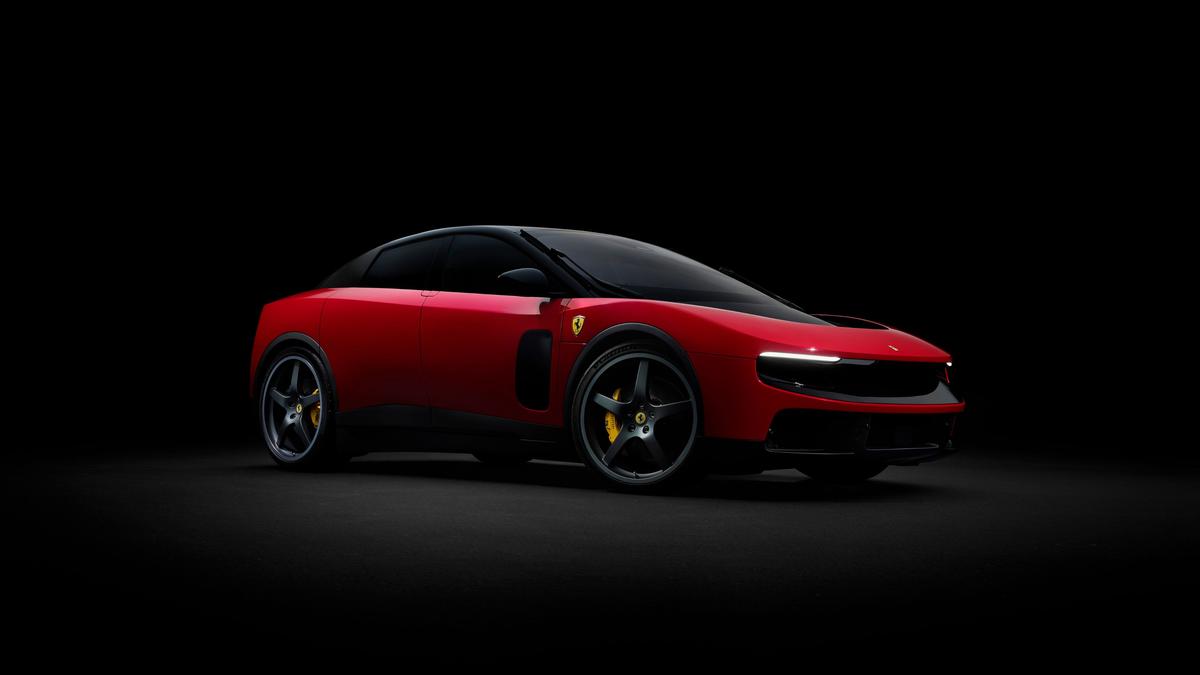
At the heart of the Luce lies a quad-motor setup—one for each wheel—delivering a combined output of 1,050 horsepower. This enables the 2,260-kilogram vehicle to achieve performance figures that rival the brand’s most dedicated track machines:
- 0-100 km/h: 2.5 seconds
- 0-200 km/h: 6.8 seconds
- Top Speed: Over 310 km/h
Battery and Charging
Power is stored in a 122 kWh battery pack integrated directly into the vehicle’s structural floor, lowering the center of gravity and enhancing torsional rigidity. Ferrari claims a range of more than 530 kilometers (WLTP) on a single charge. Furthermore, the Luce utilizes an 800V architecture, supporting 350 kW fast charging that can add 70 kWh of energy—roughly 300 km of range—in approximately 20 minutes.
Pricing and Availability
Positioned at the absolute pinnacle of the luxury EV market, the Luce is expected to carry a price tag of approximately €500,000 before options. For the Indian market, this translates to a figure well beyond ₹5 crore once import duties, local taxes, and the inevitable bespoke customizations are factored in.
Chronology: The Road to the Luce
The Luce is the culmination of Ferrari’s "multi-energy strategy," a roadmap laid out by CEO Benedetto Vigna to navigate the transition toward carbon neutrality without abandoning the brand’s performance DNA.
The project reportedly began in earnest shortly after the success of the SF90 Stradale, Ferrari’s first plug-in hybrid. While other manufacturers announced plans to go "all-electric" by specific dates, Maranello maintained a more nuanced stance, insisting that internal combustion engines (ICE), hybrids, and EVs would coexist within their lineup.

The reveal in Rome this week was the climax of years of secretive development. Unlike previous Ferrari launches, which often focused on lap times at Fiorano, the Luce’s debut emphasized its collaboration with LoveFrom, the creative collective led by legendary former Apple designer Sir Jony Ive and renowned industrial designer Marc Newson. This partnership, announced in 2021, signaled early on that Ferrari’s first EV would not follow the traditional automotive design playbook.
Supporting Data: Engineering the "Emotional" EV
One of the primary criticisms leveled against electric vehicles is their perceived lack of "soul"—the absence of the mechanical symphony and tactile feedback inherent in a combustion engine. Ferrari’s engineering team spent thousands of hours addressing this through three specific pillars:
1. The Sound Philosophy
Rather than playing a digital recording of a V12 through speakers—a solution Ferrari deemed "inauthentic"—the Luce features a patented system that amplifies the genuine vibrations of the electric motors. Sensors mounted on the drivetrain capture the harmonic frequencies of the motors and the resonance of the axles, transmitting them into the cabin in real-time. The result is a soundscape that evolves naturally with speed and torque, providing the driver with a physical connection to the car’s effort.
2. Torque Management and Driving Dynamics
To mask its substantial weight, the Luce employs a sophisticated suite of active systems. The four-motor setup allows for infinite torque vectoring, capable of braking the inside wheels and over-driving the outside wheels with millisecond precision. This is paired with Ferrari’s first fully electric all-wheel-drive system and an advanced active suspension system that uses electronic actuators to counteract body roll, allowing the heavy GT to mimic the agility of a much lighter sports car.
3. The Human-Machine Interface (HMI)
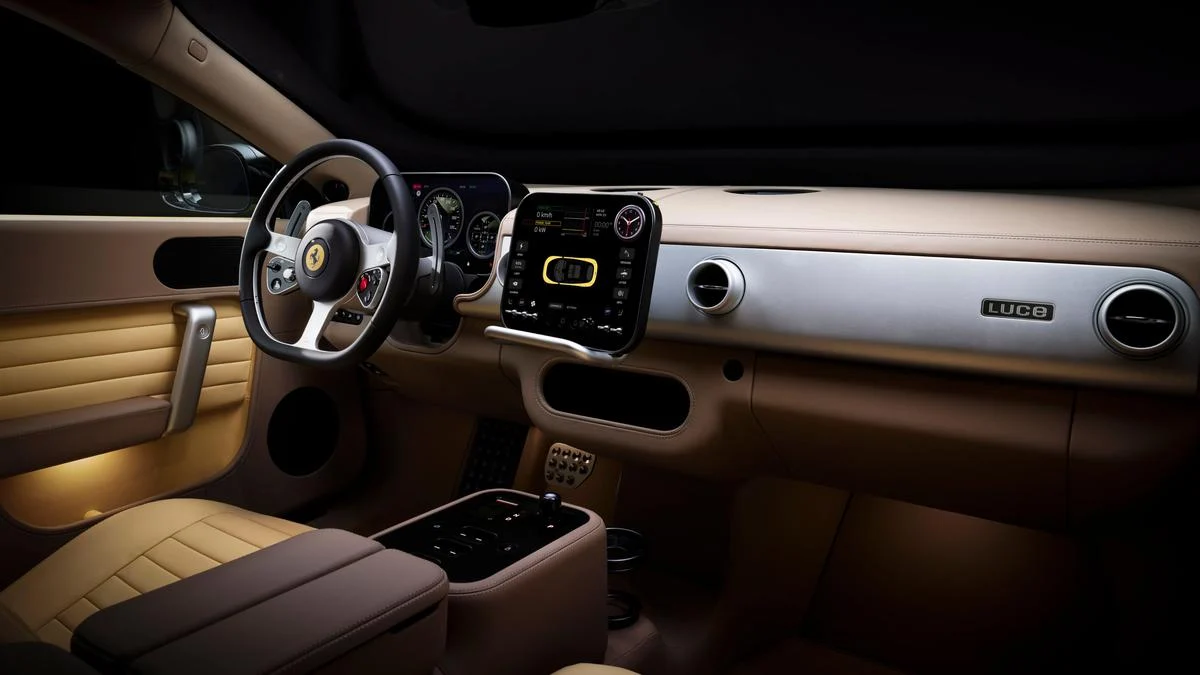
The interior of the Luce represents a leap forward in cabin technology. Developed in partnership with Samsung, the cockpit features curved OLED displays and a windshield that utilizes Corning Gorilla Glass for enhanced clarity and weight reduction. Even the physical key has been reinvented, incorporating E Ink technology that changes its aesthetic based on the car’s status or the driver’s profile.
Official Responses and Market Reaction
The initial reception to the Luce has been a study in polarization. Within hours of the Rome unveiling, Ferrari’s stock (RACE) reportedly dipped by nearly seven percent. Analysts suggest this volatility stems from investor uncertainty regarding whether the "Ferrari aura"—and the massive profit margins that come with it—can be successfully translated to a market where "performance" is increasingly commoditized by high-output electric motors from less prestigious brands.
The Company’s Stance
Ferrari’s leadership remains steadfast. "The Luce was never intended to replace our petrol-powered heritage," a company spokesperson stated. "It is an expansion of the Ferrari ecosystem. We are providing our clients with a new way to experience the thrill of the Prancing Horse, made possible only through the unique characteristics of electric propulsion."
The Enthusiast Backlash
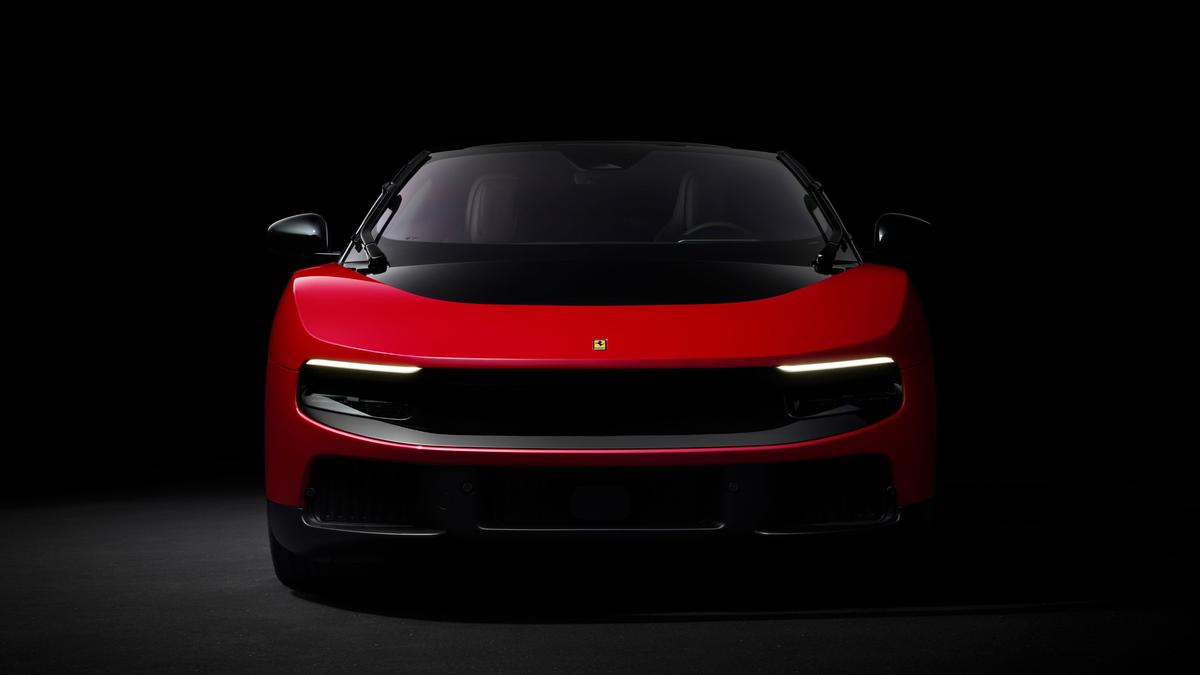
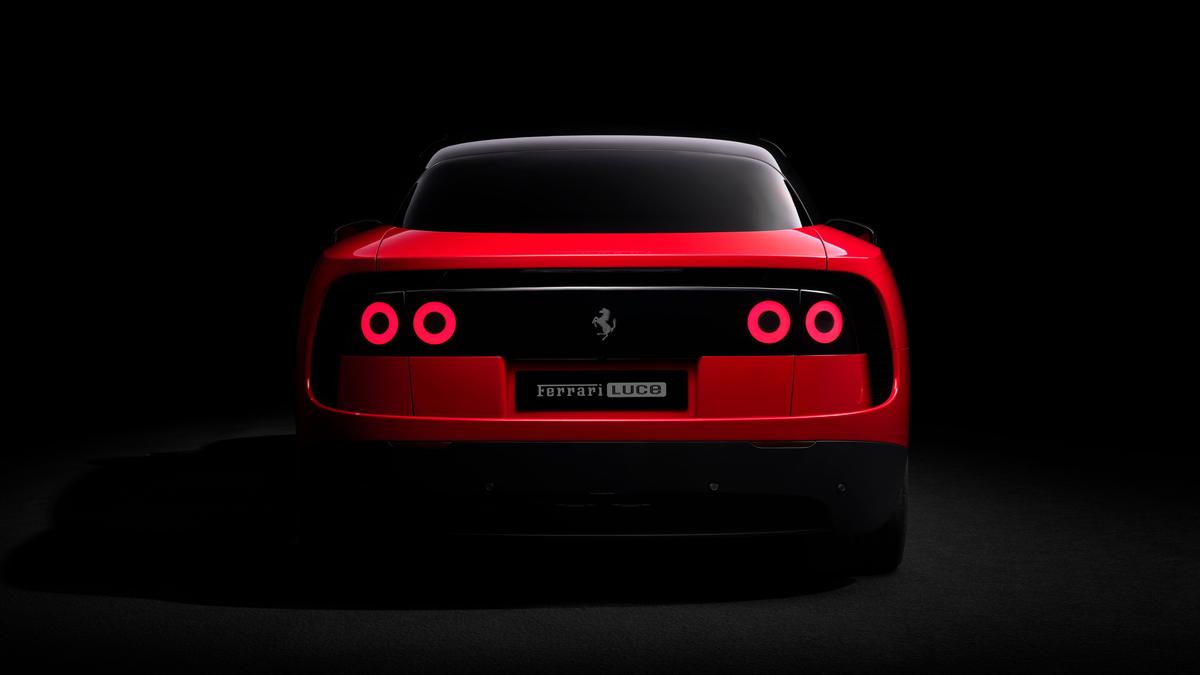
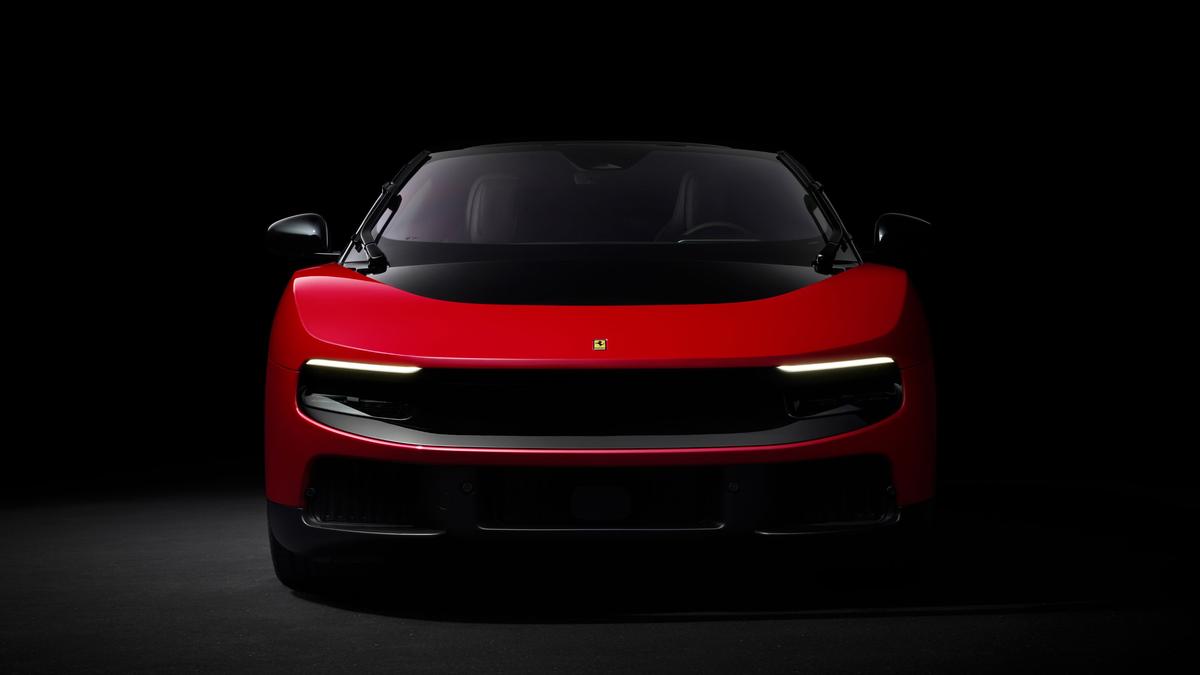
On enthusiast forums and social media, the reaction has been more visceral. Purists have criticized the "shell-like" minimalist design, which lacks the aggressive air intakes and muscular sculpting of the F8 or the 12Cilindri. Many argue that by partnering with LoveFrom, Ferrari has prioritized "luxury tech" aesthetics over the "passionate drama" of Italian automotive art.
Implications: A High-Stakes Gamble on a New Demographic
The Ferrari Luce is perhaps the most significant litmus test for the ultra-luxury automotive sector. Its success or failure will likely determine how other high-end manufacturers, such as Lamborghini and Aston Martin, approach their own full-electric transitions.
1. Attracting the "Tech-Wealth" Segment
The Luce appears designed to court a new generation of buyers—individuals who have built their fortunes in the technology sector and value minimalism, sustainability, and digital integration as much as 0-100 times. By moving away from the "petrol-head" tropes of the past, Ferrari is betting that there is a significant market for a car that feels like a piece of high-end industrial design rather than a traditional racing machine.
2. The Risk of Brand Dilution
The danger for Ferrari lies in the potential alienation of its "Tifosi" and loyal collectors. The brand’s value is built on a foundation of exclusivity and emotional theatre. If the Luce is perceived as a "clinical" or "sanitized" experience, Ferrari risks losing the very soul that allows it to command half-million-dollar price tags.
3. A Precedent for Future Models
Technologically, the Luce serves as a laboratory. The torque management systems, the battery integration, and the "authentic sound" technology will undoubtedly trickle down into future hybrid models and eventually, more focused electric supercars. Even if the Luce’s design remains divisive, its engineering ensures that Ferrari will remain at the forefront of the performance conversation.
Conclusion
The Ferrari Luce is a car of contradictions. It is a Ferrari with five seats, four doors, and no engine. It is a machine capable of 1,050 horsepower that whispers instead of screams. It is a product of Maranello that looks like it was designed in Cupertino.
Whether the Luce will be remembered as the car that saved Ferrari for the 21st century or the moment the brand lost its way remains to be seen. History, however, favors the bold. Ferrari has spent decades proving that it can redefine itself without losing its essence. With the Luce, the company is betting that the Prancing Horse can still gallop, even when the sound of its hooves is replaced by the hum of high-voltage electrons. For the enthusiasts currently mourning the loss of the V12 roar, the only way to be certain will be to get behind the wheel and see if the "emotion" Ferrari promises is truly there, hidden within the silicon and the cells.
