

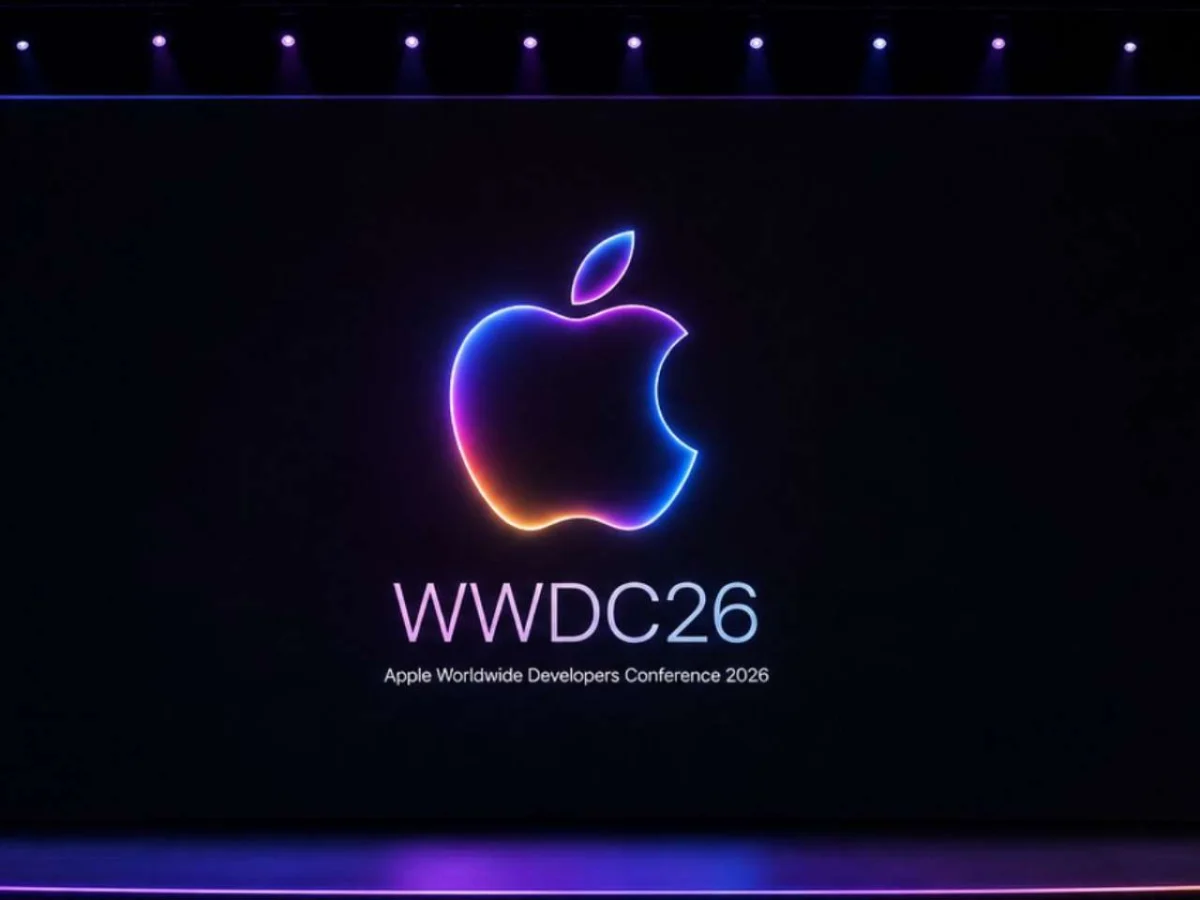
CUPERTINO, CALIFORNIA – June 8, 2026 – The technology world is poised for a significant shift as Apple prepares to host its annual Worldwide Developers Conference (WWDC) 2026. Kicking off on June 8th at 10:30 PM IST (10:00 AM PDT) from the iconic Apple Park in Cupertino, California, this year’s conference is widely anticipated to be one of the most pivotal in recent memory. Industry observers and consumers alike are eagerly awaiting a comprehensive overhaul of Apple’s software ecosystem, headlined by the expected debut of iOS 27, macOS 27, and a dramatically re-engineered Siri 2.0, all underpinned by a pervasive focus on advanced Artificial Intelligence (AI).
This year’s WWDC is more than just an annual update cycle; it signals Apple’s definitive and expansive foray into the AI landscape, aiming to integrate intelligent features seamlessly across its vast array of devices. From the iPhone to the Mac, iPad, Apple Watch, Apple TV, and the burgeoning visionOS platform, the Cupertino giant is set to unveil a vision where software is not merely functional but inherently adaptive, predictive, and profoundly personal. The stakes are high as Apple seeks to solidify its position in the rapidly evolving AI arms race, promising a user experience that is both intuitive and revolutionary.
The Stage is Set: June 8th at Apple Park
The main event, Apple’s opening keynote, will commence on June 8th, broadcasting live from Apple Park, the company’s sprawling headquarters. For audiences in India, the live stream will begin at 10:30 PM IST, offering a real-time window into the announcements. This keynote traditionally sets the tone for the entire week-long conference, providing a high-level overview of the major software advancements and strategic directions Apple plans to pursue in the coming year. While the core of WWDC is geared towards developers, the keynote is designed to captivate a global audience, showcasing features that will soon become integral to millions of users’ daily lives.
The expectation is that CEO Tim Cook, alongside senior vice presidents like Craig Federighi (Software Engineering) and John Giannandrea (Machine Learning and AI Strategy), will take the stage to detail the ambitious scope of Apple’s AI initiatives. Their presentations will not only unveil new software versions but also articulate the underlying philosophy driving these technological leaps, particularly how Apple plans to differentiate its AI offerings through its unwavering commitment to user privacy and on-device processing.
)
Chronology of Innovation: How to Tune In and What WWDC Represents
For developers, WWDC is an indispensable annual gathering, offering deep dives into new APIs, frameworks, and tools that will shape the next generation of applications. For the broader public, it’s a spectacle of innovation, a glimpse into the future of personal technology.
Global Access: Watching WWDC 2026 Live
Apple has made it exceptionally easy for a global audience to participate in the excitement of WWDC 2026. The opening keynote will be streamed live across multiple platforms, ensuring accessibility for tech enthusiasts, developers, and curious onlookers worldwide.

- Apple’s Official Website: The primary destination for the live stream will be Apple’s dedicated WWDC section on its official website. This platform often provides additional resources and information immediately following the keynote.
- Apple’s YouTube Channel: A popular choice for many, Apple’s official YouTube channel will host the live broadcast, allowing for easy viewing across various devices and often featuring a replay immediately after the event concludes.
- Apple TV App: Users with Apple TV devices, as well as those with the Apple TV app on their iPhones, iPads, or other compatible smart devices, can tune in directly through the app for a seamless viewing experience.
These multiple avenues ensure that regardless of location or preferred device, individuals can stay abreast of every major announcement as it unfolds, bridging geographical distances and fostering a collective sense of anticipation.
A Legacy of Development: The Significance of WWDC
The Worldwide Developers Conference has been a cornerstone of Apple’s strategy since its inception. While the event’s format has evolved over the decades – from smaller gatherings to massive online productions – its core purpose remains steadfast: to empower developers with the tools and knowledge necessary to build groundbreaking applications for Apple’s platforms.
)
Historically, WWDC has been the launching pad for many of Apple’s most transformative technologies. It was where the original iPhone SDK was announced, igniting the app economy. It introduced Swift, Apple’s powerful programming language, and laid the groundwork for entirely new product categories like the Apple Watch and Apple Vision Pro. Each year, WWDC serves as a barometer for Apple’s strategic direction, revealing not just product updates but the underlying technological philosophies that will guide the company for years to come.
This year, the focus on AI marks a significant inflection point. Just as mobile computing and touch interfaces defined earlier eras, generative AI and intelligent systems are poised to define the next. WWDC 2026 is therefore not just about new versions of operating systems; it is about Apple’s comprehensive answer to the AI revolution, demonstrating how it plans to integrate these powerful capabilities while maintaining its core values of privacy, simplicity, and user experience.
)
Supporting Data: Diving Deep into Anticipated Releases
The sheer breadth of expected announcements underscores the magnitude of WWDC 2026. While the overarching theme is AI, its manifestation will be seen across every major operating system, promising a cohesive and intelligent experience across the Apple ecosystem.
iOS 27: Redefining the iPhone Experience
iOS, the bedrock of the iPhone experience, is slated for a significant overhaul with iOS 27. Beyond the customary performance enhancements and bug fixes, expectations are high for features that leverage AI to fundamentally change how users interact with their devices.
)
- Advanced Personalization: Imagine an iPhone that not only learns your habits but proactively adapts its interface and suggestions based on your context. iOS 27 could introduce dynamic home screen layouts, intelligent widget stacks that shift based on time of day or location, and even personalized app suggestions that go beyond simple usage frequency.
- Improved Productivity: AI integration could streamline workflows in native apps. For instance, an enhanced Photos app might offer more sophisticated search capabilities ("find photos of my dog at the park last summer") or automatically generate short highlight reels from vacations. Notes could gain AI-powered summarization, and Mail might offer intelligent drafting suggestions or priority inbox management.
- AI in Core Apps: Features like Live Text and Visual Look Up are just the beginning. iOS 27 could see AI deepen its presence in Camera for more intelligent scene recognition and editing suggestions, in Safari for smart content summarization or privacy-focused ad blocking, and in Maps for predictive routing based on real-time traffic and personal preferences.
- Enhanced Security and Privacy: While AI often raises privacy concerns, Apple is expected to frame its AI advancements through a privacy-first lens. On-device machine learning will likely be emphasized, ensuring that personal data used for AI processing remains on the user’s device, not in the cloud. New privacy controls specifically for AI features are also anticipated.
- Seamless Integration with Other Apple Devices: Expect iOS 27 to further tighten the continuity between the iPhone and other Apple hardware, using AI to predict and facilitate handoffs, automate tasks across devices, and create a truly unified digital environment.
macOS 27: Intelligence for the Desktop
The Mac operating system, macOS 27, is expected to receive a similar infusion of AI, enhancing productivity and creativity for desktop users.
- Continuity Features: Building on existing Continuity, AI could enable even more intelligent handoffs between iPhone and Mac, perhaps predicting when a user wants to continue a task on a larger screen. Universal Control might see AI-driven enhancements for more intuitive multi-device setups.
- AI-Powered Creativity Tools: For professionals, macOS 27 could introduce AI-powered features in apps like Pages, Keynote, and Numbers, offering advanced content generation, intelligent layout suggestions, and data analysis. Creative applications like Final Cut Pro and Logic Pro could leverage AI for more efficient editing, audio mastering, or content generation, accelerating workflows for artists and designers.
- System Performance and Management: AI could be used to optimize system resources more intelligently, predicting app usage to pre-load components, managing background processes more efficiently, and even dynamically adjusting power consumption for improved battery life on laptops.
- Enterprise Applications: With increasing adoption of Macs in business, macOS 27 could include AI features tailored for enterprise, such as intelligent data organization, enhanced security protocols, and streamlined remote management capabilities.
iPadOS 27: Bridging the Gap
iPadOS 27 is expected to continue its evolution, striving to make the iPad an even more capable and versatile device, especially for professional workflows.
)
- Professional Workflows: AI could enhance multitasking capabilities, making Stage Manager even more intuitive or introducing new ways to interact with multiple apps simultaneously. Handwriting recognition with Apple Pencil could become more sophisticated, leveraging AI for better text conversion and diagramming.
- Multitasking Enhancements: Expect AI to play a role in smarter window management, dynamic app pairing, and intelligent suggestions for how to best utilize the iPad’s screen real estate, especially with external displays.
- AI for Education and Creativity: In educational settings, AI could offer personalized learning experiences, while for creative users, it could power new generative art tools or assist in complex design tasks.
watchOS 27, tvOS 27, and visionOS 27: Expanding the Ecosystem
The AI advancements will permeate across Apple’s entire hardware spectrum:
- watchOS 27: Expect more proactive health insights, AI-driven fitness coaching, and even more context-aware notifications on the Apple Watch. Advanced sensor data analysis through AI could lead to earlier detection of health anomalies.
- tvOS 27: AI could personalize content recommendations on Apple TV more deeply, improve search capabilities, and potentially enable new interactive experiences with smart home integration.
- visionOS 27: For the spatial computing platform, AI will be critical. It could enable more natural interactions, enhance virtual assistant capabilities within the immersive environment, and power advanced content generation for spatial experiences, pushing the boundaries of what’s possible with Apple Vision Pro.
Siri 2.0: The AI-Powered Conversational Assistant
Perhaps the most anticipated announcement is ‘Siri 2.0,’ signaling a monumental leap for Apple’s long-standing virtual assistant. For years, Siri has faced criticism for lagging behind competitors in terms of responsiveness and contextual understanding. Siri 2.0 aims to address these limitations head-on, leveraging advanced generative AI capabilities.
)
- Addressing Past Limitations: The current Siri often struggles with complex queries, multi-turn conversations, and understanding nuanced context. Siri 2.0 is expected to overcome these hurdles, offering a far more natural and capable conversational experience.
- Generative AI Capabilities: This is the core of Siri’s transformation. Users can expect Siri to be able to draft emails, summarize documents, generate creative text, and even write basic code snippets. This would move Siri beyond a command-and-control interface to a true collaborative assistant.
- Context Awareness: Siri 2.0 will likely be deeply integrated with user data (with strong privacy safeguards), allowing it to understand the current context of a conversation, app usage, or location. This means it could respond more intelligently to follow-up questions or offer relevant suggestions without explicit prompts.
- Multi-Modal Interactions: Beyond voice, Siri 2.0 could seamlessly integrate with text input, images, and video. Imagine pointing your iPhone camera at a dish and asking Siri for the recipe, or having Siri analyze a complex graph and summarize its key findings.
- Smart Home Integration: With enhanced intelligence, Siri 2.0 will become an even more powerful hub for smart home control, allowing for more complex routines and intuitive natural language commands to manage connected devices.
The AI Core: On-Device vs. Cloud Intelligence
Apple’s approach to AI is expected to heavily emphasize on-device processing. This means that many of the advanced AI computations will occur directly on the iPhone, Mac, or iPad, rather than being sent to remote cloud servers.
- Privacy Implications: On-device AI is a key differentiator for Apple. By processing data locally, user privacy is significantly enhanced as personal information does not leave the device. This aligns perfectly with Apple’s long-standing commitment to user data protection.
- Speed and Efficiency: Local processing can lead to faster response times for AI tasks, as there’s no latency involved in sending data to and from the cloud. It also reduces reliance on internet connectivity, making AI features more reliable in various environments.
- Hybrid Approach: While on-device AI will be paramount, it’s likely Apple will adopt a hybrid approach. Certain complex or resource-intensive AI tasks might still leverage cloud infrastructure, but only with anonymized or aggregated data, or with explicit user consent and robust encryption. This balance allows Apple to deliver powerful AI while upholding its privacy principles.
Official Stance and Industry Perspectives
While Apple maintains a tight lid on its WWDC announcements until the keynote, its strategic moves and public statements over the past year offer clear indications of its direction.
)
Apple’s Strategic Pivot to AI: A Long-Anticipated Shift
Apple’s CEO Tim Cook has repeatedly hinted at the company’s significant investments in generative AI. In recent earnings calls and interviews, Cook has stated that Apple sees "incredible potential" in generative AI and is investing "quite a bit" in the technology. This WWDC is the culmination of years of research, acquisitions of AI startups, and internal development. The company has been quietly building its AI capabilities, from its custom neural engines in its A-series and M-series chips to its dedicated machine learning teams.
This pivot is not merely reactive to the industry trend but a deliberate strategic move to enhance its ecosystem and maintain its competitive edge against tech giants like Google, Microsoft, and Amazon, all of whom have aggressively pushed their AI agendas. Apple’s unique advantage lies in its tightly integrated hardware and software, allowing for highly optimized on-device AI experiences.
)
Balancing Innovation with Privacy: Apple’s Enduring Ethos
One of the most critical aspects of Apple’s AI strategy will be its approach to privacy. Historically, Apple has positioned itself as a champion of user privacy, often contrasting its practices with those of data-hungry competitors. With the rise of AI, particularly generative AI, privacy concerns have amplified.
Apple is expected to reiterate and strengthen its privacy commitments, explaining how its AI features are designed with privacy at their core. This will likely involve:
)
- On-device processing: As mentioned, minimizing data transfer to the cloud.
- Differential privacy: Techniques to train AI models on user data without revealing individual identities.
- Transparency and control: Providing users with clear information about how their data is used for AI and offering granular controls to manage these settings.
- Data minimization: Only collecting and processing the data absolutely necessary for AI features to function.
This commitment to privacy will be a crucial differentiator for Apple’s AI offerings, aiming to build user trust in a landscape increasingly wary of data exploitation.
Developer Ecosystem: New Tools and Opportunities
WWDC is fundamentally for developers, and the AI focus will bring a plethora of new tools and opportunities. Apple is expected to unveil:
)
- New AI/ML APIs: Frameworks that allow developers to integrate Apple’s advanced AI capabilities directly into their apps, from natural language processing to image recognition and generative features.
- Enhanced Core ML: Updates to Apple’s machine learning framework, making it easier and more efficient for developers to deploy on-device machine learning models.
- Xcode and Swift Improvements: Development environment enhancements to support AI development, potentially with new debugging tools for machine learning models and Swift language improvements for AI tasks.
- Vision Pro AI APIs: Specific APIs for developers to build AI-powered spatial computing experiences on visionOS, opening up entirely new categories of applications.
These tools will empower developers to create a new generation of intelligent applications, ensuring that Apple’s ecosystem remains vibrant and innovative.
Analyst Projections and Market Buzz
Market analysts have largely welcomed Apple’s anticipated AI push. "This WWDC could be Apple’s most significant software event in a decade," states [Hypothetical Analyst Name], a senior tech analyst at [Hypothetical Research Firm]. "They’ve been quietly building for this, and now they’re ready to show how their integrated approach to hardware and software can deliver a differentiated AI experience, especially with a strong privacy narrative."
)
Others suggest that a revitalized Siri 2.0 is crucial. "[Hypothetical Analyst Name] from [Hypothetical Investment Bank] notes, "Siri has been an Achilles’ heel for Apple. A truly intelligent, context-aware Siri could not only boost user satisfaction but also open up new revenue streams through enhanced service integration and smart home capabilities." The market is watching closely to see if Apple can deliver an AI experience that not only matches but surpasses its competitors in key areas of user experience and privacy.
Broader Implications: Reshaping the Tech Landscape
The announcements at WWDC 2026 are not merely about product updates; they carry significant implications for the broader technology industry, competitive dynamics, and the future of human-computer interaction.
)
The Competitive Arena: Challenging Google, Microsoft, and OpenAI
Apple’s comprehensive AI push positions it directly against formidable competitors. Google has long been an AI leader with its search, Assistant, and now Gemini models. Microsoft has deeply integrated OpenAI’s GPT models into its Copilot suite and Windows. Amazon has Alexa and its own robust AI infrastructure.
Apple’s differentiator will be its ecosystem integration and privacy-first approach. While competitors often rely heavily on cloud-based AI, Apple’s emphasis on on-device processing offers a distinct advantage in terms of speed, privacy, and seamless hardware-software synergy. This could force competitors to re-evaluate their own AI strategies, particularly regarding data handling and local processing capabilities. The battle for the "intelligent assistant" will intensify, with Siri 2.0 aiming to reclaim lost ground and redefine expectations.
)
User Experience Revolution: A More Intuitive Digital Life
For the average user, the implications are profound. A truly intelligent iPhone or Mac, equipped with a highly capable Siri 2.0, could transform daily digital interactions. Tasks that once required multiple steps or manual input could become automated or conversational. From managing schedules and communications to content creation and information retrieval, the user experience is expected to become significantly more intuitive, proactive, and personalized. This shift could lead to greater productivity, reduced digital friction, and a more seamless integration of technology into everyday life. The "personal computer" evolves into a "personal intelligence assistant."
Economic and Technological Ripple Effects
The economic impact of a successful AI pivot by Apple could be substantial. It could drive a new wave of hardware upgrades as users seek to leverage the full capabilities of AI-powered software. The developer economy would also see a boom, with new opportunities for creating AI-centric applications and services. Furthermore, Apple’s advancements in on-device AI could accelerate research and development in edge computing and energy-efficient AI hardware across the industry. This could lead to a broader push towards more distributed, private, and efficient AI systems.
)
Ethical Considerations and the Future of AI
As AI becomes more pervasive, ethical considerations surrounding bias, transparency, and control become paramount. Apple, with its strong stance on privacy, is expected to address these concerns directly. By emphasizing on-device AI and user control, Apple aims to develop AI responsibly, ensuring that powerful new features do not come at the cost of user autonomy or data security. This approach could set a new industry standard for ethical AI development, pushing other tech companies to adopt similar privacy-centric models.
Conclusion: A Glimpse into Apple’s Intelligent Future
Apple WWDC 2026 is poised to be a landmark event, not just for Apple but for the entire technology industry. The anticipated unveiling of iOS 27, macOS 27, and a dramatically revitalized Siri 2.0, all powered by a deep integration of AI, signifies a strategic reorientation for the company. This is Apple’s definitive statement in the age of artificial intelligence – a commitment to delivering powerful, intuitive, and, crucially, private AI experiences across its ecosystem.
)
As the world tunes in on June 8th, the excitement is palpable. The announcements from Apple Park will not only shape the next generation of Apple devices but will also provide a compelling vision for how intelligence can be seamlessly woven into the fabric of our digital lives, promising a future that is smarter, more personal, and inherently more capable. The era of the intelligent Apple ecosystem is about to begin.
