

By [Your Name/Journalist Team]
Originally reported by Manisha Chauhan, updated June 08, 2026, 11:05 AM IST
SCIENCE
Main Facts
Earth is poised to encounter a powerful solar eruption today, June 8, 2026, potentially igniting a "strong" G3-level geomagnetic storm and significantly elevating the chances of rare and spectacular aurora sightings across unusually low latitudes. Space weather forecasters worldwide are on high alert as material ejected from the Sun’s Active Region 4461 races towards our planet at an astonishing speed of nearly 1,400 kilometres per second. While the primary allure for many lies in the promise of the ethereal Northern and Southern Lights, experts are also closely monitoring for potential impacts on critical infrastructure, including power grids, satellite communications, and GPS systems. The precise intensity and global reach of this celestial event hinge on a crucial, yet currently unknown, factor: the orientation of the incoming magnetic field embedded within the solar cloud.
)
Chronology: The Sun’s Fury Unfolds
The recent flurry of solar activity began several days ago, culminating in a specific event that has captured the urgent attention of space weather scientists.
)
- June 6, 2026: The Initial Blast: The catalyst for the impending storm occurred on June 6, 2026, when Active Region 4461, a particularly dynamic area on the Sun’s surface, unleashed an M1.8-class solar flare. Solar flares are powerful bursts of radiation, classified by their X-ray brightness into A, B, C, M, and X categories, with M-class flares being mid-level. While M1.8 is not an exceptionally strong flare in isolation, what made this event particularly significant was its companion.
- The Dense Core Filament Eruption: Crucially, the M1.8 flare was accompanied by the eruption of a dense core filament. Solar filaments are immense structures of relatively cool, dense plasma held aloft above the Sun’s surface by powerful magnetic fields. When these magnetic fields become unstable, the filament can erupt, launching vast quantities of plasma and magnetic energy into space. This particular eruption was not merely a release of light and radiation but a substantial expulsion of charged particles and magnetic field, forming what is known as a Coronal Mass Ejection (CME).
- A Fast-Moving CME: This CME, carrying the dense core filament material, was observed to be travelling at an impressive speed of nearly 1,400 kilometres per second (approximately 3.1 million miles per hour). Such high velocities significantly shorten the travel time from the Sun to Earth, giving space weather agencies less lead time for precise impact assessments.
- The Journey to Earth: Having been launched on June 6, the ejected material is now expected to intercept Earth’s magnetic field sometime today, June 8, 2026. This relatively short transit time underscores the intensity and speed of the initial eruption. Upon impact, the interaction of this solar material with our planet’s magnetosphere will trigger the geomagnetic storm.
Supporting Data: Unpacking the Science of Space Weather
To fully appreciate the implications of this event, it’s essential to understand the underlying science of solar activity and its interaction with Earth.

Understanding Solar Eruptions: Flares, Filaments, and CMEs
The Sun is a dynamic star, constantly emitting energy and particles. Periodically, its activity intensifies, leading to phenomena that can affect Earth.
- Solar Flares: These are sudden, intense bursts of radiation emanating from the Sun’s surface. They are essentially powerful explosions caused by the tangling, crossing, or reorganizing of magnetic field lines near sunspots. Flares emit X-rays and ultraviolet radiation that travel at the speed of light, reaching Earth in about eight minutes. They can cause short-lived radio blackouts and degrade GPS signals, particularly on the sunlit side of Earth. The M1.8 flare from Active Region 4461 was the initial indicator of heightened activity.
- Coronal Mass Ejections (CMEs): Unlike flares, which are primarily radiation events, CMEs are massive expulsions of plasma and magnetic field from the Sun’s corona (outer atmosphere). They are slower than flares, taking hours to several days to reach Earth, but they carry far more mass and magnetic energy. The eruption of the dense core filament on June 6 was precisely such a CME. These are the primary drivers of significant geomagnetic storms.
- Solar Filaments: As described, a solar filament is a vast, elongated structure of cooler, denser plasma suspended above the Sun’s surface by strong magnetic fields. When these magnetic fields become unstable and break, the filament can erupt outwards, often associated with a solar flare, and forms a significant component of a CME. Scientists are particularly attentive to filament eruptions because they tend to be denser and carry more magnetic material, leading to potentially stronger geomagnetic effects upon arrival at Earth. The sheer mass and magnetic complexity within this particular filament are key reasons for the "strong" storm watch.
Earth’s Magnetic Shield and Magnetic Reconnection
Earth possesses a vital defense mechanism against the constant onslaught of solar particles: its magnetosphere. This protective bubble, generated by our planet’s molten iron core, deflects most of the solar wind and charged particles. However, during a CME, this shield can be temporarily breached.
)
- The Magnetosphere: Earth’s magnetic field extends tens of thousands of kilometers into space, forming a cavity around our planet. When a CME approaches, it compresses the magnetosphere on the sunward side and stretches it into a long "magnetotail" on the night side.
- Magnetic Reconnection: The Critical Alignment: The intensity of a geomagnetic storm is largely determined by a process called magnetic reconnection. The magnetic field embedded within the incoming CME cloud (known as the Interplanetary Magnetic Field, or IMF) has a specific orientation. If this IMF points southward – directly opposite to Earth’s naturally northward-pointing magnetic field – the two fields can "reconnect." This allows large amounts of solar energy, plasma, and charged particles to efficiently stream into Earth’s magnetosphere and upper atmosphere, significantly intensifying the geomagnetic storm and fueling more vibrant auroral displays. This southward alignment is the crucial, currently unknown variable that will determine the storm’s ultimate severity.
Decoding the Geomagnetic Storm Scale (G-Scale)
Geomagnetic storms are classified by the National Oceanic and Atmospheric Administration (NOAA) on a five-level scale, from G1 (Minor) to G5 (Extreme), based on the Kp index, which measures disturbances in Earth’s magnetic field.
- G1 (Minor): Can cause minor impacts on power grids, weak fluctuations in power lines, and minor impacts on satellite operations. Auroras are typically seen only in high-latitude regions (e.g., northern US states, Canada, northern Europe).
- G2 (Moderate): May cause voltage alarms in power systems and require corrective actions. Can affect spacecraft operations, requiring orientation changes. Auroras can extend to mid-latitudes.
- G3 (Strong): The current forecast level. This implies the potential for significant impacts.
- Power Systems: Requires voltage corrections; false alarms may be triggered on protective devices.
- Spacecraft Operations: Surface charging may occur on satellites, requiring orientation adjustments; increased drag on low-Earth orbit satellites.
- Navigation: Intermittent problems with satellite navigation (GPS) and low-frequency radio navigation (LORAN) can occur.
- Auroras: Can be seen much farther from the poles, extending to mid-latitude regions (e.g., as low as Pennsylvania in the US, or parts of northern India if conditions align).
- G4 (Severe): While the primary forecast is G3, experts acknowledge that brief G4-level conditions remain possible if the incoming magnetic field alignment is particularly favorable for storm development.
- Power Systems: Widespread voltage control problems and some protective system issues; potential for grid damage.
- Spacecraft Operations: Extensive surface charging; orientation problems for satellites; high drag on low-Earth orbit satellites.
- Navigation: Degradation of satellite navigation and low-frequency radio navigation for hours.
- Auroras: Can be seen at very low latitudes (e.g., as low as Alabama or northern Florida in the US).
- G5 (Extreme): The most intense level, capable of causing catastrophic disruptions.
- Power Systems: Widespread power system collapse and transformer damage; complete grid breakdown in some areas.
- Spacecraft Operations: Severe surface charging and orientation problems; extensive disruptions to satellite services.
- Navigation: Complete blackout of high-frequency radio communication and satellite navigation for several hours to days.
- Auroras: Can be seen globally, even near the equator.
The current G3 watch, with a possibility of brief G4 conditions, signifies a notable space weather event that warrants careful monitoring.
)
Official Responses and Global Preparedness
Space weather forecasting is a global effort, with multiple agencies constantly monitoring the Sun and its effects on Earth.
)
- NOAA’s Space Weather Prediction Center (SWPC): As the U.S. government’s official source for space weather alerts and forecasts, NOAA SWPC has been instrumental in issuing the G3 (Strong) geomagnetic storm watch. Their scientists meticulously analyze data from various solar observatories and upstream satellites to provide critical information to industries and the public.
- NASA: NASA’s fleet of solar observation missions, such as the Solar Dynamics Observatory (SDO) and STEREO (Solar Terrestrial Relations Observatory), provide crucial real-time data on solar flares, CMEs, and other solar phenomena. These observations are vital for understanding the origins and trajectories of space weather events.
- European Space Agency (ESA): ESA also plays a significant role in space weather monitoring and research, contributing to the global network of observatories and developing advanced forecasting models.
- Indian Space Research Organisation (ISRO): While India may not be a primary target for direct infrastructure impacts from G3 storms, ISRO monitors space weather events due to their potential effects on its satellite fleet and ground-based communication systems. Their scientists contribute to international research and maintain preparedness for such events.
- International Collaboration: The nature of space weather necessitates international collaboration. Data from observatories around the world are pooled and analyzed, allowing for a more comprehensive understanding and better forecasting models. Governments, power grid operators, airlines, and satellite companies rely on these official alerts to take precautionary measures. These include adjusting satellite orbits, preparing backup systems for power grids, and rerouting high-latitude flights to avoid increased radiation exposure.
Implications: Beyond the Beauty of the Lights
While the primary excitement surrounding this storm is the increased potential for aurora sightings, its implications extend much further, touching various technological systems that underpin modern society.
)
The Spectacle of Auroras: A Global Phenomenon?
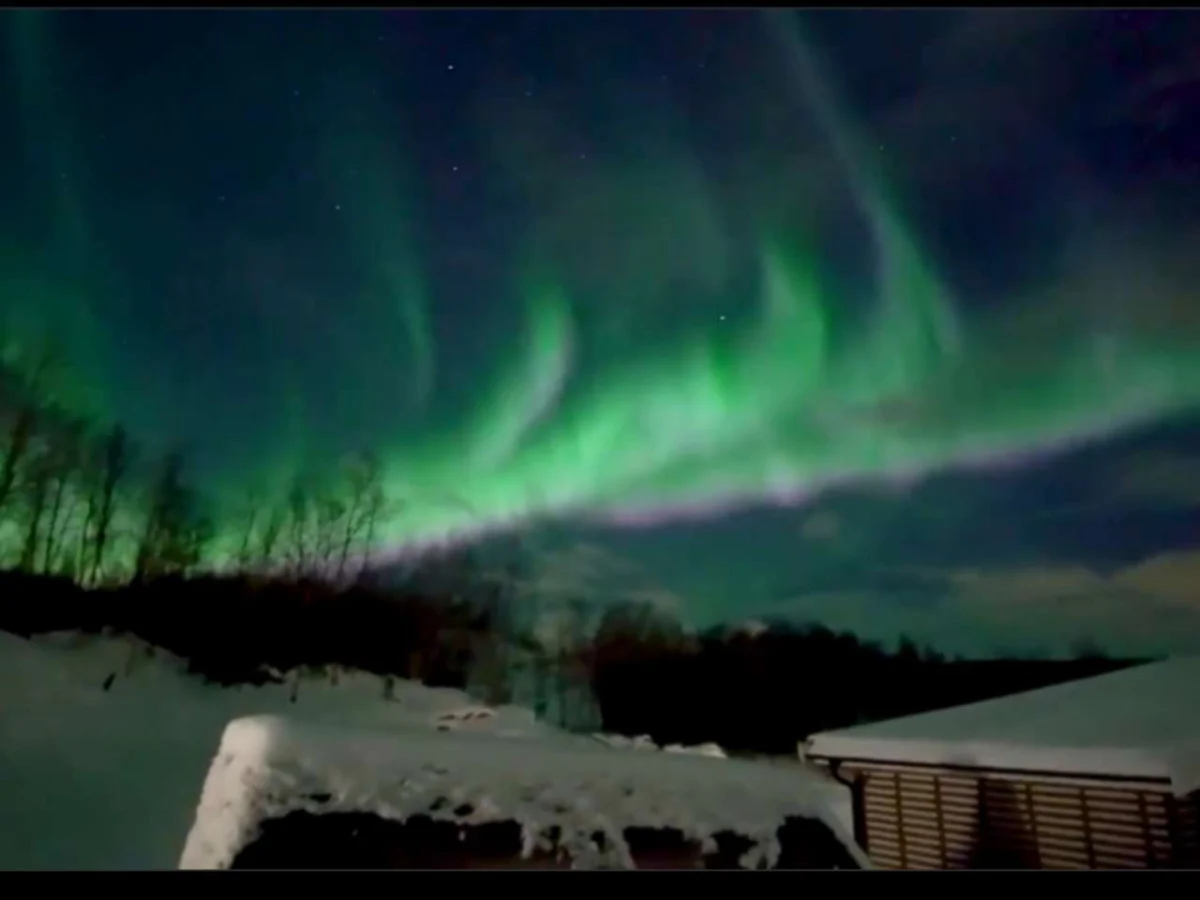
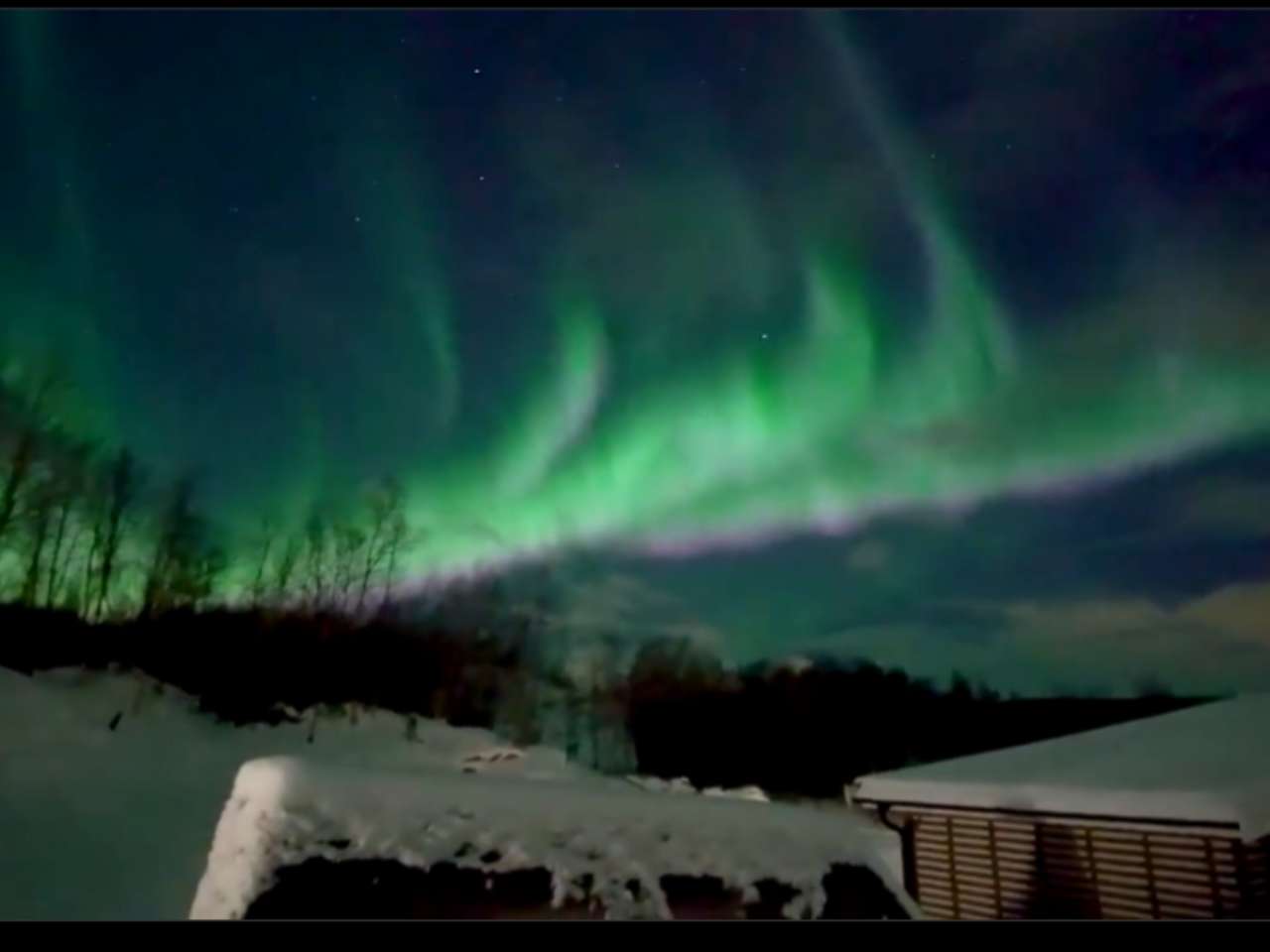
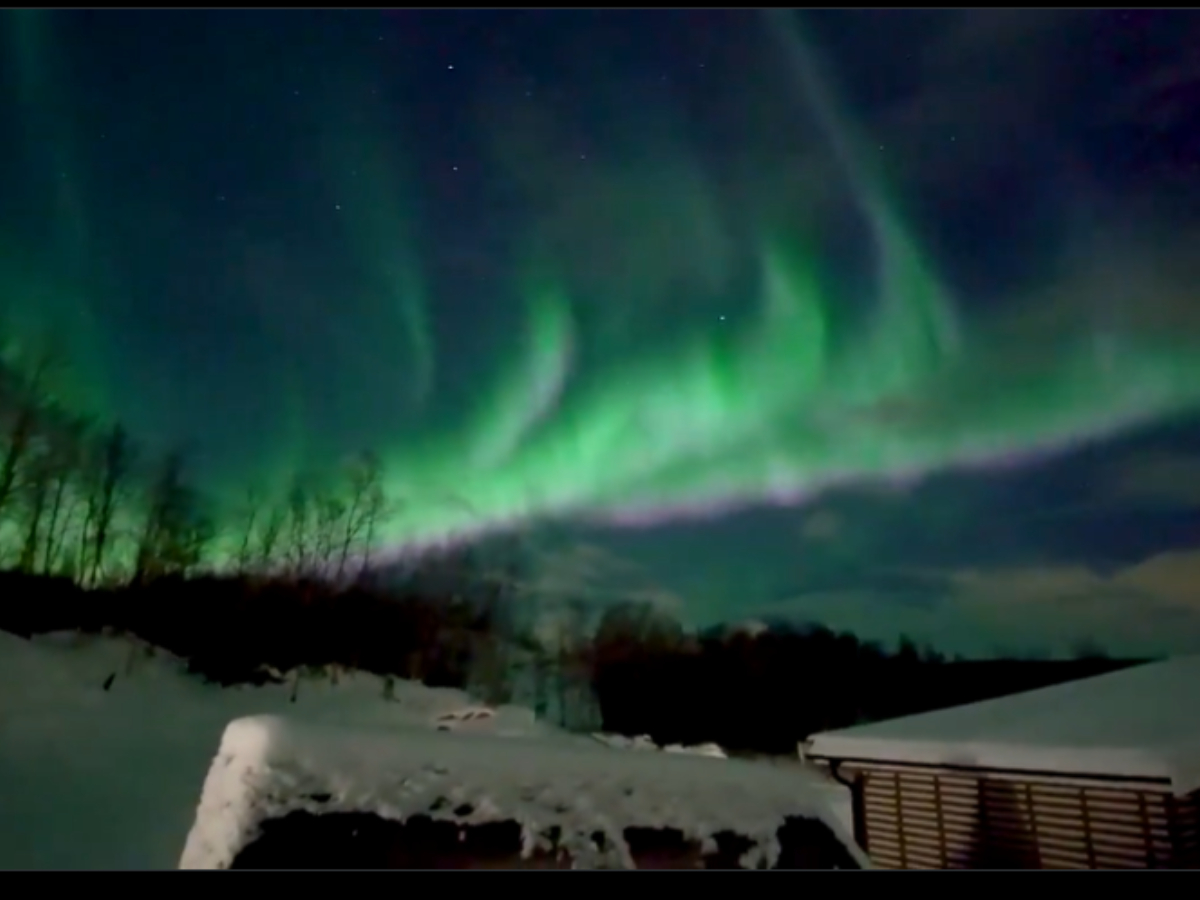
The most anticipated outcome of a strong geomagnetic storm is the enhanced visibility of auroras – the Northern Lights (Aurora Borealis) and Southern Lights (Aurora Australis). These mesmerizing displays occur when charged particles from the Sun collide with gases in Earth’s upper atmosphere, exciting them and causing them to emit light.
- Typical Aurora Zones: Auroras are usually confined to the polar regions, appearing as glowing ovals around the magnetic poles.
- Expanding the View: During strong geomagnetic storms like the anticipated G3 event, the auroral ovals expand significantly, pushing the visible displays to much lower latitudes than usual. This is why regions like Canada, the northern United States, parts of Europe (including the UK, Scandinavia), New Zealand, and southern Australia are expected to witness spectacular shows.
- Auroras in India: A Rare Possibility? The prospect of auroras being visible from India is indeed rare but not entirely impossible during major solar storms. If the storm briefly reaches G4 (Severe) levels, and local weather conditions (clear, dark skies away from light pollution) are optimal, observers in parts of northern India could potentially witness faint auroral activity near the horizon. Such an event would be highly unusual and memorable for the region, though it would likely manifest as a subtle glow rather than the vibrant curtains seen at higher latitudes. Historically, such sightings from India are exceptionally rare, making any potential glimpse a significant event.
Technological Vulnerabilities: The Silent Threat
Beyond the celestial spectacle, strong geomagnetic storms pose tangible risks to our technology-dependent world.
)
- Power Grids: One of the most significant concerns is the potential for geomagnetically induced currents (GICs) in long conductors like power transmission lines. GICs can cause transformers to overheat and trip protective relays, leading to widespread power outages. While modern grids have some resilience, a strong storm like a G3 (or a G4 brief period) could strain systems, potentially causing localized blackouts or equipment damage. The Quebec blackout of 1989, caused by a G5 storm, serves as a stark reminder of this vulnerability.
- Satellite Operations: Satellites in Earth orbit are particularly susceptible.
- Surface Charging: Energetic particles can accumulate on satellite surfaces, leading to electrostatic discharges that can damage sensitive electronics.
- Radiation Damage: Increased radiation levels can degrade electronic components and solar panels over time.
- Increased Drag: For satellites in low-Earth orbit, the heating and expansion of Earth’s upper atmosphere during a storm increase atmospheric drag, requiring more fuel to maintain orbit and potentially shortening their operational lifespan.
- Communication Disruptions: Satellite-based communication, including television broadcasts, internet services, and crucial military communications, can be disrupted.
- Navigation and Communication Systems (GPS, Radio): Global Positioning System (GPS) signals can be degraded or lose accuracy due to disturbances in the ionosphere, an atmospheric layer affected by solar storms. High-frequency (HF) radio communications, used by aviation, maritime, and military sectors, can experience blackouts or significant interference, particularly over polar routes.
- Aviation: Airlines often reroute flights over polar regions to save time and fuel. During a geomagnetic storm, these flights face increased radiation exposure for passengers and crew, as well as potential communication outages. Airlines receive space weather advisories to adjust flight paths if necessary.
- Pipelines: Long pipelines can also experience geomagnetically induced currents, leading to corrosion and integrity issues, requiring monitoring and mitigation strategies.
- Spacecraft and Astronauts: Astronauts aboard the International Space Station (ISS) and future deep-space missions face increased radiation exposure during solar storms, necessitating protective measures and potential shelter.
The Unpredictable Variable: Forecasting Challenges
Despite sophisticated monitoring tools and advanced scientific understanding, one crucial piece of information remains elusive until the very last moments: the exact orientation of the magnetic field embedded within the incoming solar cloud.
- The 15-60 Minute Window: Scientists cannot accurately determine the precise southward or northward orientation of the Interplanetary Magnetic Field (IMF) until the solar cloud passes specialized monitoring satellites. These satellites, such as DSCOVR (Deep Space Climate Observatory) and ACE (Advanced Composition Explorer), are strategically positioned at the L1 Lagrangian point, roughly 1.5 million kilometres (about 930,000 miles) from Earth, directly between the Sun and our planet. This positioning allows them to act as early warning sentinels, detecting the solar wind and IMF orientation before it reaches Earth.
- The Crucial Delay: The information from these L1 satellites provides forecasters with only a critical window of 15 to 60 minutes’ notice before the solar material actually impacts Earth’s magnetosphere. This short lead time means that while a general storm strength (like G3) can be predicted, the specific intensity and global reach of the auroras, as well as the severity of potential technological disruptions, remain uncertain until almost the moment of impact.
- Ongoing Research: This challenge highlights the ongoing need for improved space weather forecasting models and potentially more advanced observational platforms. Scientists are continuously working to refine their understanding of solar physics and the complex interactions between the Sun and Earth, aiming for longer and more accurate predictive capabilities.
Historical Context: Lessons from Past Storms
)
The concern surrounding solar storms is not new. History offers powerful lessons about their potential impact.
- The Carrington Event (1859): This is the benchmark for extreme space weather. A massive solar storm in 1859, now estimated to be a G5-level event, caused auroras visible worldwide, even near the equator. More significantly, it induced currents in telegraph lines, causing sparks, fires, and delivering electric shocks to operators. If a storm of this magnitude were to strike today, with our vastly more interconnected and technology-dependent society, the consequences could be catastrophic, potentially causing widespread and long-lasting power outages, satellite failures, and communication blackouts.
- The Quebec Blackout (1989): A G5 storm in March 1989 caused the collapse of Hydro-Québec’s power grid in Canada, leaving six million people without electricity for nine hours. This event demonstrated the vulnerability of modern power infrastructure to solar storms.
- Other Notable Events: Less severe, but still impactful, storms have occurred throughout history, highlighting the constant need for vigilance and preparedness. Each event provides valuable data for refining our understanding and improving our resilience.
Conclusion: A Blend of Awe and Alertness
)
As the powerful solar eruption from Active Region 4461 closes in on Earth, a unique blend of scientific awe and practical concern permeates the global space weather community. The promise of spectacular auroral displays, potentially gracing skies in regions unaccustomed to such beauty, offers a captivating reminder of our planet’s cosmic connections. Simultaneously, the potential for disruption to essential technological systems underscores the importance of continuous monitoring and preparedness.
For now, space weather agencies across the globe remain on high alert, meticulously analyzing incoming data and waiting for that final, crucial piece of information from the L1 satellites. The next few hours will determine how dramatic tonight’s space weather becomes – whether it delivers a modest celestial light show or a truly spectacular, and potentially challenging, event for our interconnected world. The impending solar storm serves as a powerful reminder of the Sun’s dynamic nature and our ongoing journey to understand and adapt to its influence.
)
Find your daily dose of All Latest News including Sports News, Entertainment News, Lifestyle News, explainers & more. Stay updated, Stay informed- Follow DNA on WhatsApp.
