

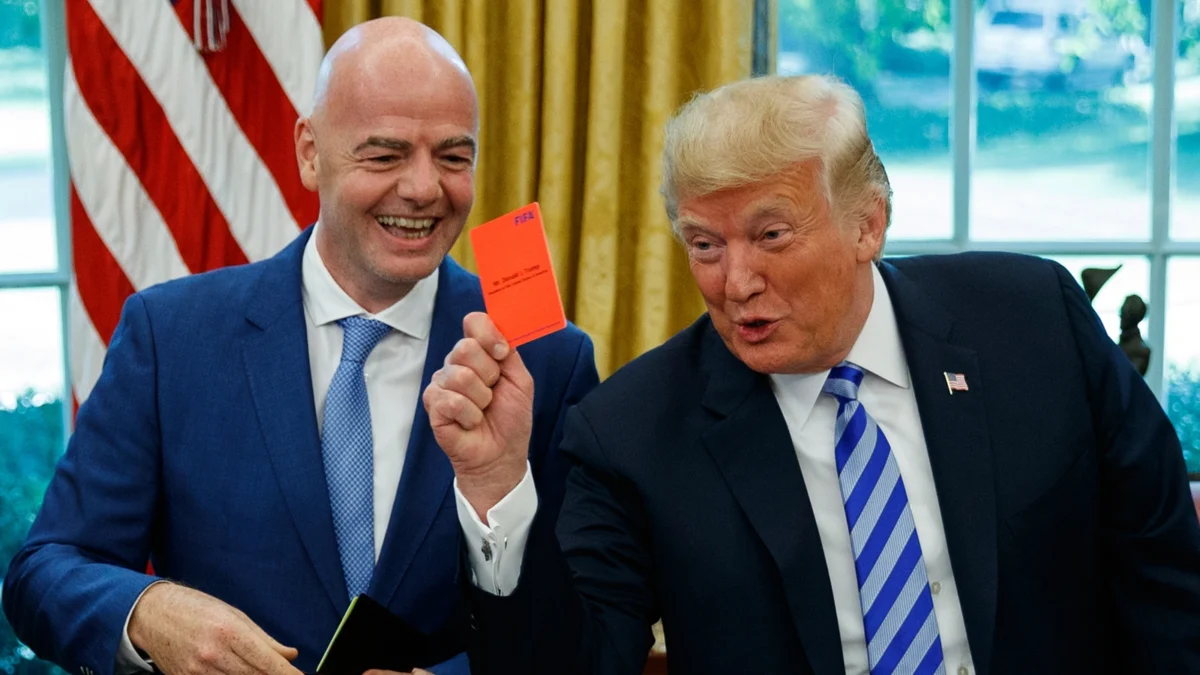
A stunning development has rocked the FIFA World Cup, with USMNT striker Folarin Balogun dramatically reinstated for his country’s maiden quarterfinal appearance against Belgium. The decision, which has sent shockwaves through the international football community, came after an extraordinary intervention by US President Donald Trump, who personally lobbied FIFA President Gianni Infantino to overturn a red card.
The incident, which saw Balogun dismissed during the round-of-16 clash against Bosnia and Herzegovina, initially plunged the US Men’s National Team into despair. However, what transpired next was an unprecedented display of political influence on the global sporting stage, raising serious questions about the integrity of FIFA’s disciplinary processes and the impartiality of the tournament.
The Red Card Incident and USMNT’s Despair
The pivotal moment arrived in the hotly contested round-of-16 match between the co-hosts USMNT and Bosnia and Herzegovina. With the game finely poised, USMNT’s top scorer, Folarin Balogun, was involved in a challenge with Bosnian midfielder Tarik Muharemovic. The referee, deeming it a serious foul, brandished a red card, sending Balogun off the pitch and leaving the American squad facing the daunting prospect of their historic quarterfinal clash against Belgium without their most potent attacking threat.
The dismissal was met with immediate and widespread consternation from the US bench and fans alike. Team management reportedly fretted over alternative strategies, publicly voicing their frustration and even assigning blame to the match official for what they perceived as an unduly harsh decision. Balogun, a player crucial to the USMNT’s World Cup ambitions, especially after netting three goals in the tournament, walked off the field with his head bowed, seemingly resigned to missing a career-defining match. The team’s dreams of progressing further in their home World Cup appeared to hang by a thread, jeopardized by a single, contentious call.
An Unconventional Solution: Trump’s Direct Line to FIFA
Amidst the growing anxiety within the US camp, an unlikely figure emerged as the architect of a potential reprieve: US President Donald Trump. Despite having notably skipped the opening ceremony and not watching a single match of the tournament – including those involving his own nation, the USMNT – Trump stepped into the fray when his national team needed him most. His solution was as direct as it was extraordinary: a series of phone calls to FIFA President Gianni Infantino.
According to reports, including a detailed account in The New York Times, Trump leveraged his personal relationship with Infantino, whom he described as a "friend." This friendship had been publicly cemented just a year prior, when Infantino had bestowed upon Trump a "peace prize" during the World Cup draw ceremony, an event that itself had drawn scrutiny. The President reportedly initiated contact with Infantino not once, but thrice, making his appeal clear: he asked if FIFA’s disciplinary committee could review the decision to red-card Balogun.
This direct line of communication from a head of state to the head of football’s global governing body immediately signaled an intervention of unprecedented scale in modern football. While leaders have historically engaged with sporting bodies, a direct appeal to overturn a specific on-field disciplinary decision in the middle of a major tournament is virtually unheard of. Trump’s involvement transcended the usual diplomatic pleasantries, moving into the realm of active advocacy for a sporting outcome.
The intervention, however, did not end with just presidential phone calls. The New York Times further reported that the Trump administration mobilized resources to support the appeal. This included recruiting a team of lawyers to formally present the case to FIFA. Beyond official channels, influential figures also played a role. Commerce Secretary Howard Lutnick and Scott Goodwin, a prominent donor to US Soccer and a well-known hedge fund manager, reportedly lent their weight to the effort, indicating a concerted, multi-pronged campaign to secure Balogun’s reinstatement. The combined pressure, emanating from the highest echelons of US power and influence, put FIFA in an unenviable position.
FIFA’s Controversial Reversal: Invoking a Rare Clause
The intense lobbying efforts bore fruit on Sunday evening. FIFA, the global football governing body, made the astonishing announcement that the red card and subsequent ban on Folarin Balogun had been lifted. The decision was justified by invoking Chapter 4, Article 27 of the Disciplinary Code, a clause that states: "The judicial body may decide to fully or partially suspend the implementation of a disciplinary measure."
This specific article, while part of FIFA’s regulations, is rarely, if ever, used to overturn an automatic one-match suspension following a direct red card in a major tournament. Its application in this instance immediately drew sharp criticism and raised questions about the impartiality and consistency of FIFA’s disciplinary process. The timing and circumstances of its invocation, coming directly after high-level political pressure, led many to conclude that the decision was politically motivated rather than based purely on footballing jurisprudence.
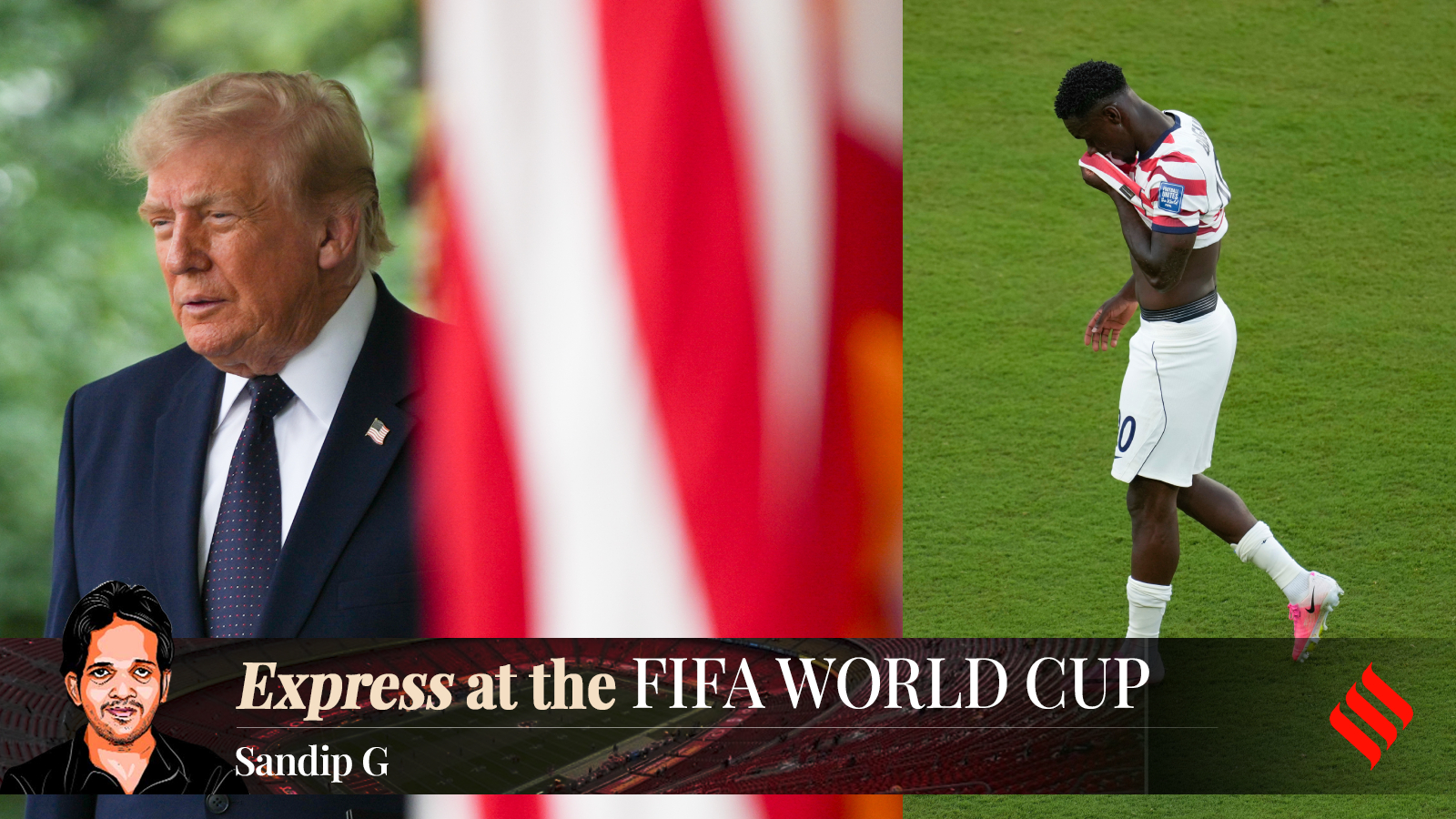
Within minutes of FIFA’s announcement, President Trump took to his social media platform, X, to claim victory. "Thank you to FIFA for doing what was right and reversing a great injustice!" he posted, celebrating the outcome as a personal triumph. Later, speaking to reporters from the Oval Office, Trump elaborated on his involvement, framing it as a simple request for fairness rather than a directive. "All I did, I asked for a review, because I didn’t think it was a foul… I didn’t tell him what to do. I can’t tell him what to do," he asserted.
He went on to offer his own analysis of the incident, steadfastly maintaining Balogun’s innocence. "It should never have resulted in a dismissal. That wasn’t a foul. That wasn’t even an infraction. That was two guys running full speed that happened to crash into each other," Trump explained. He further clarified his stance by adding, "If he punched him in the face, if he did something wrong, I’d feel differently." His statements, while denying direct command, underscored his firm belief that the original decision was flawed and that his intervention was merely to rectify an error.
Historical Precedents and the Modern Era
While unprecedented in its overt political nature in the modern game, the involvement of heads of state in sporting matters is not entirely without historical precedent, though the context and rules were vastly different.
One notable instance occurred during the 1962 World Cup. Brazilian legend Garrincha was controversially sent off after kicking a Chilean player, provoked by a rough tackle during their semi-final match. In an era before codified automatic suspensions, the aftermath saw significant political maneuvering. Chilean President Jorge Alessandri and his Brazilian counterpart, Joao Goulart, reportedly engaged in negotiations to ensure Garrincha, a pivotal player, would not miss the final. Peruvian President Manuel Prado Ugarteche even personally called the referee, his compatriot, to downplay the incident. Garrincha was eventually let off with a warning after the game, partly because the linesman, whose testimony was crucial, failed to appear for the hearing. However, crucial to understanding this precedent is the fact that red cards back then did not carry the automatic one-match suspension that is a cornerstone of modern football regulations. The rules were less stringent, less centralized, and more open to interpretation and external influence.
In the modern era, after FIFA’s regulations were codified and standardized, overturning one-match bans, especially for direct red cards in a World Cup, has become exceedingly rare. The introduction of VAR (Video Assistant Referee) was meant to further solidify the integrity of on-field decisions, providing an additional layer of review, albeit one that still relies on human interpretation. The principle of automatic suspension following a red card is deeply embedded in FIFA’s Disciplinary Code, designed to ensure fairness and consistency across all matches and players. This makes the Balogun decision a glaring anomaly, standing in stark contrast to decades of established practice and regulatory evolution. The unique nature of this reversal immediately set it apart from any previous incidents, sparking intense debate about the future application of FIFA’s rules.
Official Responses: Outrage and Accusations of Compromised Integrity
The decision to reinstate Folarin Balogun was met with a chorus of outrage and accusations, particularly from Belgium and UEFA, Europe’s football governing body. The swift and unprecedented reversal ignited a firestorm, questioning the very foundations of fair play and sporting integrity.
The Royal Belgian Football Federation expressed its "astonishment" at FIFA’s decision. Still reeling from the shock, the Belgian team management immediately began deliberating whether to appeal against the overturned ban, viewing it as a severe blow to sporting fairness. Belgium’s coach, Rudi Garcia, did not mince words, delivering a scathing rebuke during a press conference. "I just found out that July 5 is FIFA’s April Fools’ Day," Garcia quipped, his sarcasm thinly veiling his profound disappointment and anger. His comment underscored the perception that the decision was a joke at the expense of fair competition, undermining the efforts and preparation of his team.
UEFA, European football’s governing body, issued a strong and unequivocal statement, publicly questioning FIFA’s integrity and the fundamental principles upon which football operates. "Football, like any other sport, relies on rules, which are the basis for fair, honest, and transparent competition," UEFA declared. Their statement went on to directly challenge FIFA’s justification for the reversal: "Sometimes rules are open to interpretation. In this case not. A minimum automatic suspension of one match following a red card is not a discretionary option and does not require the decision of a competent body to be enacted."
UEFA emphasized that the principle of an automatic one-match ban is deeply "embedded in regulations" and "cannot be made subject to exceptions," especially "in the middle of a tournament where several other players have been in the same situation and regularly served their suspension." This pointed critique highlighted the perceived hypocrisy and double standard, suggesting that Balogun had received preferential treatment not afforded to other players who had faced similar disciplinary action. UEFA’s strong stance signaled a significant rift with FIFA over the handling of the incident, raising concerns about the future relationship between the two powerful football bodies.
Within the USMNT camp, the reaction was, predictably, one of relief and pleasant surprise. Midfielder Christian Pulisic articulated the team’s perspective, welcoming the decision. "For me it’s not a thing to debate. That is fantastic, not only for us because we are going to have another player available, but for football. I say to open the possibility to repair a little bit of the bad decisions," Pulisic stated. His comments suggested a belief that the system had, in this instance, corrected an injustice, aligning with President Trump’s view of the original call.
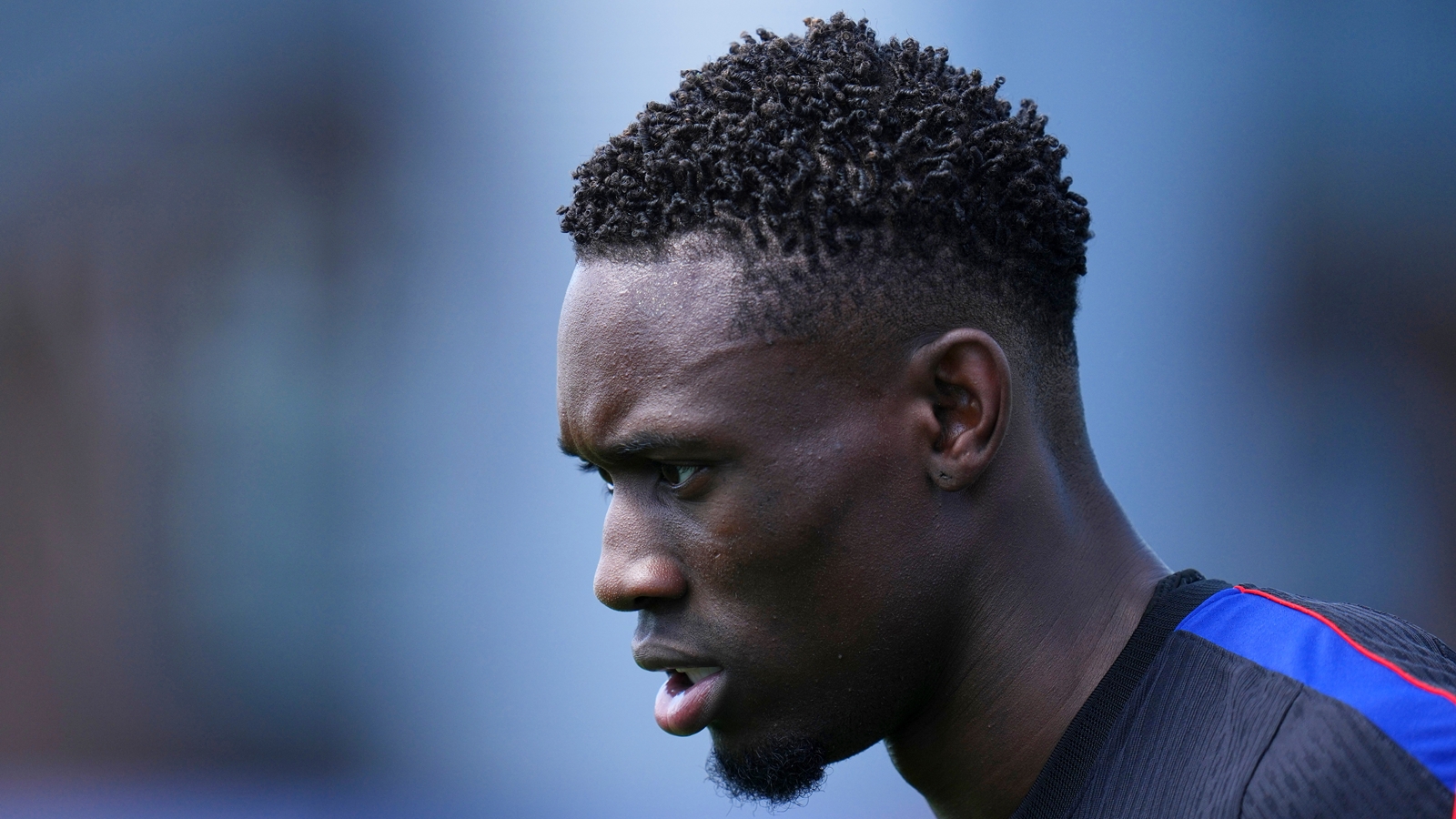
Even England’s manager, Thomas Tuchel, whose team had faced its own disciplinary issues, weighed in on the Balogun incident, stating his belief that the initial red card was harsh. "I think, first of all, to be very clear, that it was not a red card. But VAR (Video Assistant Referee) got involved, and obviously three people from VAR and the referee checked it and were of the opinion it is a yellow card so the decision is made," Tuchel commented. While acknowledging the original process, his implicit support for the idea that the decision was wrong resonated with the US narrative. The incident, meanwhile, rapidly became the tournament’s primary talking point, dominating sports news cycles and sparking widespread humor and memes across social media. Following England’s win over Mexico, when asked if captain Harry Kane would lobby the US President over teammate Jarell Quansah, who had also received a red card, Tuchel humorously replied, "Maybe, that’s a good starting point," illustrating how Trump’s intervention had become a template for seeking extraordinary reprieves.
Broader Implications: FIFA’s Integrity, Diplomacy, and Fair Play
The extraordinary reversal of Folarin Balogun’s red card, orchestrated by US President Donald Trump, carries profound and far-reaching implications for FIFA, the integrity of international football, and the delicate balance between sports and politics.
FIFA’s Integrity and Governance: This incident deals a severe blow to FIFA’s credibility and its long-standing efforts to project an image of impartiality and independent governance. The perception that a head of state can directly influence disciplinary decisions at the highest level undermines the authority of referees, the VAR system, and FIFA’s own disciplinary committees. It raises serious questions about whether rules are applied equally to all nations, or if political and economic power can override sporting regulations. Critics argue that this sets a dangerous precedent, potentially opening a "Pandora’s Box" where powerful nations or influential figures might attempt to leverage their connections to alter outcomes in future tournaments, thereby eroding public trust in the fairness of the game.
The Blurring of Lines: Diplomacy and Sports: The intervention vividly illustrates the increasing entanglement of high-level diplomacy with global sporting events. While host nations often enjoy certain advantages, a direct presidential appeal to overturn a specific on-field decision goes beyond traditional diplomatic courtesies. It highlights the significant political capital invested in major sporting events, especially when the host nation’s team is performing well. This blurring of lines between political influence and sporting outcomes could create an environment where the "soft power" of nations is directly translated into competitive advantage, fundamentally altering the nature of international sports competition.
Fairness of Competition and Precedent: The most immediate and tangible impact is on the fairness of the ongoing World Cup. Belgium, as USMNT’s quarterfinal opponent, is understandably "astonished" and feels disadvantaged. They prepared for a match against a team without its leading scorer, only to have him reinstated at the eleventh hour. This creates an uneven playing field and undermines the principle that all teams adhere to the same rules. Furthermore, the decision establishes a precedent that could be cited in future disciplinary cases, potentially leading to a flood of appeals from other nations or clubs seeking similar extraordinary reprieves, arguing that if one nation can secure such a reversal, others should be afforded the same opportunity.
The Authority of Refereeing and VAR: The intervention also significantly diminishes the authority of match officials and the VAR system. If a decision, reviewed and confirmed by VAR, can be overturned by external political pressure, it sends a clear message that the on-field and technological adjudication processes are not final. This could lead to increased disrespect for officials and an erosion of confidence in the decisions made during games, further complicating an already challenging aspect of modern football.
Folarin Balogun’s Personal Story and Irony: Balogun’s personal narrative adds another layer of complexity and irony to the situation. Two years prior, he faced a pivotal decision about which nation to represent: Nigeria, his parents’ homeland; the UK, where he was raised; or the US, where he was born after a flight from New York to the UK refused to board his heavily pregnant mother. His choice of the US now sees him at the center of an international sporting and political firestorm. The profound irony lies in the fact that the "mightiest president in the world," known for sharpening anti-immigration policies, has effectively "bailed out" a player whose very US citizenship is a consequence of a border-crossing birth. This juxtaposition underscores the often-unpredictable and contradictory nature of global politics and personal destinies.
The Tournament’s Future and USMNT’s Trajectory: With Balogun reinstated, the USMNT’s hopes for advancing further in their home World Cup have been dramatically revitalized. The pressure on Balogun himself will be immense, as he takes to the field knowing his presence is due to an unprecedented intervention. Should USMNT defeat Belgium, the "player of the game" might, in the eyes of many, truly be the man who has not attended a single match of his country this World Cup. The lingering questions and controversy, however, will undoubtedly cast a long shadow over any future successes for the USMNT in this tournament, forever associating their run with this extraordinary and contentious event.
Conclusion: A Stain on the World Cup?
The reinstatement of Folarin Balogun marks one of the most controversial moments in World Cup history, blurring the lines between sport, politics, and power in an unprecedented manner. While USMNT players and fans may celebrate the reprieve for their star striker, the global football community, particularly the "astonished" Belgians and the indignant UEFA, view it as a profound compromise of FIFA’s integrity and the fundamental principles of fair play.
The direct intervention by US President Donald Trump, leveraging his personal relationship with FIFA President Gianni Infantino, has ignited a firestorm of debate, raising critical questions about the autonomy of sports governance and the susceptibility of global tournaments to external political pressure. As the USMNT prepares for its quarterfinal clash, the shadow of this extraordinary decision looms large. The outcome of their match, and indeed the remainder of the tournament, will be viewed through a lens of skepticism and scrutiny, forever marked by the day a phone call from the Oval Office reshaped the destiny of a World Cup star and, arguably, tarnished the spirit of the beautiful game.
