


Auckland, New Zealand – July 11, 2026 – In a landmark visit marking the first by an Indian Prime Minister to New Zealand in four decades, Prime Minister Narendra Modi on Saturday declared absolute confidence in a monumental leap for economic ties between India and New Zealand. Highlighting the swift conclusion of a historic Free Trade Agreement (FTA) and a substantial investment commitment, PM Modi unveiled an ambitious roadmap aimed at doubling bilateral trade to NZ$7 billion (approximately Rs 35,000 crore) by 2030.
Addressing a distinguished gathering at the Business and Sports Engagement event in Auckland, Prime Minister Modi emphasized that the India-New Zealand FTA, remarkably concluded in a record nine months, is poised to unlock unprecedented opportunities across a myriad of sectors. This pivotal visit, undertaken at the invitation of New Zealand Prime Minister Christopher Luxon, signifies a profound recalibration of bilateral relations, formally elevating them to a ‘Strategic Partnership.’
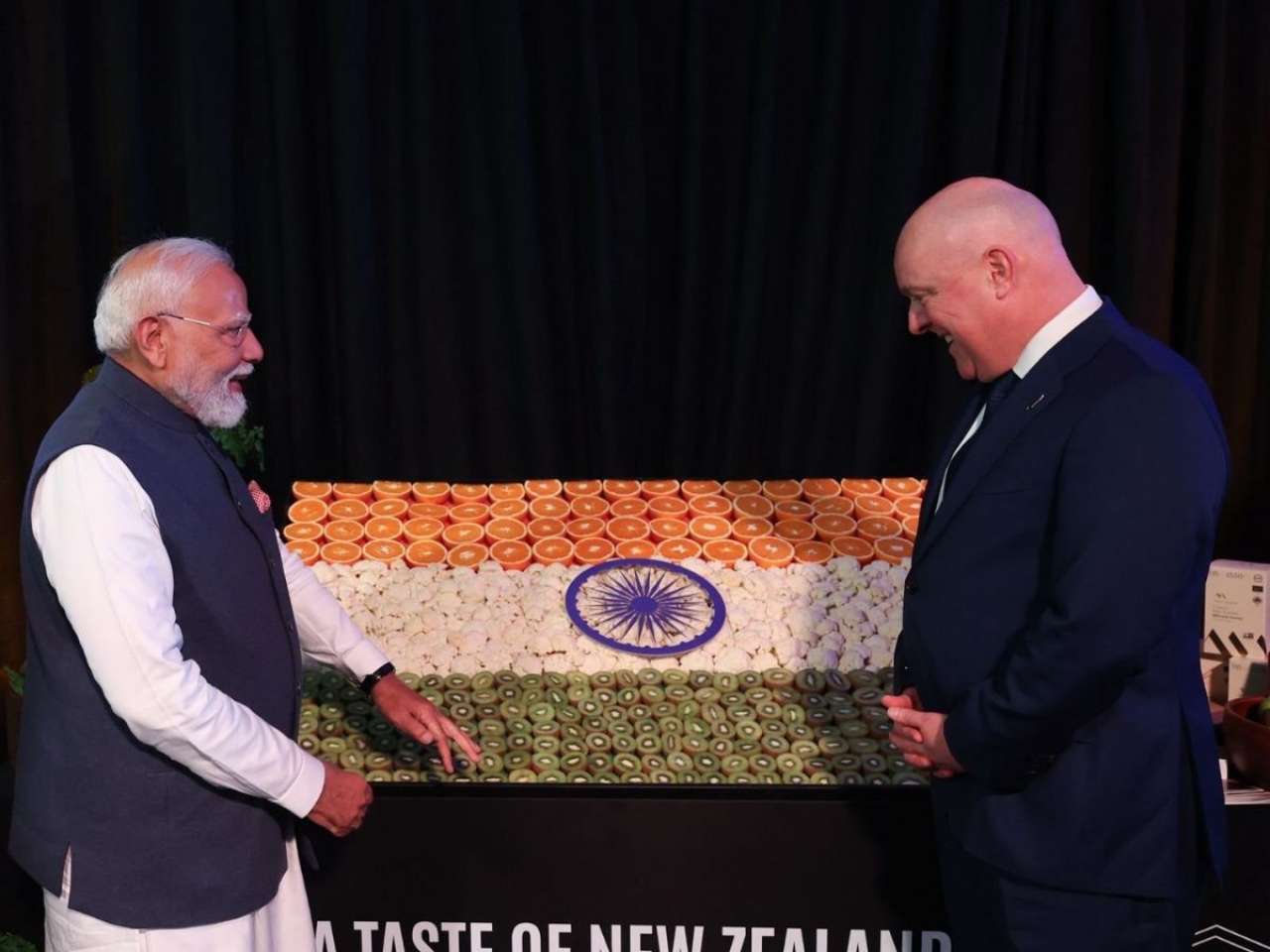
"This year, our two countries concluded a Free Trade Agreement in a record time of just nine months. This agreement will create new opportunities for all of you in market access, investment, services and technology. I am confident that together we will double our bilateral trade by 2030," the Prime Minister stated with conviction, underscoring the collaborative spirit driving this renewed engagement.
Beyond the immediate trade prospects, PM Modi drew attention to New Zealand’s long-term financial commitment, a robust USD 20 billion investment in India over the next 15 years. This significant pledge, he noted, is a powerful testament to the burgeoning global confidence in India’s robust economic trajectory and its potential as a global growth engine. "This is not just a commitment to investment, but also to being a partner in India’s development journey," PM Modi added, framing the investment as a collaborative stride towards India’s continued progress.
)
The event, steeped in historical significance, formally marked the elevation of bilateral ties to a ‘Strategic Partnership,’ coinciding with the official adoption of the "India-New Zealand Strategic Partnership: Roadmap to 2030." This comprehensive roadmap establishes an ambitious framework designed to deepen cooperation across critical areas including trade, agriculture, security, innovation, and people-to-people connections over the next four years, setting a clear trajectory for accelerated engagement until the end of the decade.
The Historic Overture: A 40-Year Wait Culminates in Strategic Partnership
Prime Minister Modi’s visit to New Zealand, from July 10-11, 2026, was not merely a routine diplomatic engagement; it was a moment imbued with profound historical weight. The last visit by an Indian Prime Minister to New New Zealand was four decades ago, underscoring a period of relative dormancy in high-level political exchanges. The current visit, therefore, signals a deliberate and strategic effort by both nations to reinvigorate and elevate their relationship to a level commensurate with their shared values, democratic traditions, and converging interests in the Indo-Pacific region.

From the moment Prime Minister Modi landed in Auckland, the air was thick with anticipation of a new chapter. The formal reception by Prime Minister Christopher Luxon set the tone for intensive discussions, culminating in the joint declaration to elevate the bilateral relationship to a ‘Strategic Partnership.’ This decision, as outlined in the India-New Zealand Joint Statement, goes beyond mere rhetoric, endorsing a roadmap designed to "guide joint action over the next four years" and foster cooperation across a broad spectrum of areas.
The Joint Statement further elaborated on the shared vision: "both leaders agreed to an ambitious long-term vision for the Strategic Partnership, which aims to take bilateral relations to a new level, strengthen existing cooperation mechanisms and explore new avenues for deepening cooperation, both bilaterally and multilaterally." This commitment reflects a recognition that in an increasingly complex global landscape, forging strong, diversified partnerships is paramount for economic resilience and geopolitical stability.
)
PM Modi, addressing the gathered audience, eloquently articulated the significance of his visit: "From India, I have come bearing the message of the aspirations and ambitions of 140 crore people." This statement not only conveyed the immense potential of the Indian market but also emphasized the collective will and dynamism of its vast populace, positioning India as an attractive and reliable partner on the global stage. The reciprocation from New Zealand, particularly the readiness to engage at such a high strategic level, speaks volumes about the growing appreciation of India’s geopolitical and economic heft.
Economic Nexus: The FTA, Investment, and the 2030 Trade Horizon
The economic dimension forms the bedrock of this revitalized partnership, with the Free Trade Agreement (FTA) and the ambitious trade target taking centre stage. The conclusion of the India-New Zealand FTA in a mere nine months is a testament to the political will and efficient negotiation on both sides. In an era where complex trade deals often languish for years, this swift resolution signals a mutual eagerness to dismantle barriers and foster greater economic integration.
)
The FTA is designed to be a catalyst for growth, creating "new opportunities for all of you in market access, investment, services and technology." For India, this means enhanced access to New Zealand’s high-value agricultural products, specialized technologies, and world-class services, particularly in dairy, horticulture, and education. Conversely, New Zealand stands to gain significant access to India’s massive and rapidly expanding consumer market, which presents unparalleled opportunities for its exports, services, and investment.
The aspirational goal of doubling bilateral two-way trade in goods and services to NZ$7 billion (Rs 35,000 crore) by 2030 is a bold declaration. While current bilateral trade figures hover below this ambitious target, the roadmap provides a clear directive for both nations to intensify their efforts. This target implies a substantial annual growth rate, necessitating aggressive market penetration, diversification of trade baskets, and robust implementation of the FTA’s provisions. The roadmap explicitly states that both sides will "work together on next steps for the India-New Zealand Free Trade Agreement to ensure its early entry into force and effective implementation," highlighting the critical importance of translating agreement into tangible economic benefits.
)
Crucially, the USD 20 billion investment commitment from New Zealand over the next 15 years represents a significant vote of confidence in India’s long-term economic prospects. This investment is anticipated to flow into a range of sectors, including:
- Infrastructure Development: India’s massive infrastructure push – encompassing roads, railways, ports, airports, and smart cities – offers fertile ground for New Zealand’s expertise in sustainable infrastructure and urban planning.
- Renewable Energy: As India aggressively pursues its renewable energy targets, New Zealand’s leadership in geothermal, hydro, and wind energy technologies could find substantial opportunities for investment and collaboration.
- Technology and Innovation: Investments could target India’s burgeoning startup ecosystem, fostering collaboration in areas like artificial intelligence, fintech, agritech, and digital services.
- Agriculture and Food Processing: Leveraging New Zealand’s advanced agricultural practices, dairy processing technologies, and food safety standards, investments could boost India’s food processing sector, improve supply chains, and enhance food security.
- Manufacturing: With India’s ‘Make in India’ initiative, New Zealand companies could explore manufacturing opportunities, particularly in specialized components or niche high-tech products.
This long-term financial commitment not only injects capital into the Indian economy but also brings valuable technological know-how, best practices, and managerial expertise, contributing significantly to India’s developmental journey.
)
The Roadmap to 2030: Pillars of Comprehensive Cooperation
The "India-New Zealand Strategic Partnership: Roadmap to 2030" is a meticulously crafted framework designed to foster comprehensive cooperation beyond purely economic ties. It outlines several key pillars that will underpin the intensified engagement:
1. Trade and Economic Cooperation: As elaborated, this forms the core, focusing on the FTA’s implementation, market access, investment facilitation, and the doubling of bilateral trade. It also envisages collaboration on supply chain resilience and digital trade.
)
2. Agriculture and Food Processing: Given New Zealand’s global leadership in sustainable agriculture, dairy, and food technology, and India’s vast agricultural base and growing food processing sector, this area holds immense potential. Collaboration could involve sharing best practices in farming techniques, food safety standards, post-harvest management, cold chain infrastructure, and value-added food processing. New Zealand’s expertise in dairy genetics and herd management could significantly benefit India’s burgeoning dairy industry.
3. Technology and Innovation: Both nations are keen to leverage technology for growth. The roadmap emphasizes collaboration in emerging technologies such as Artificial Intelligence, quantum computing, cybersecurity, and space technology. It also promotes joint research and development initiatives, fostering a vibrant ecosystem for startups and technological innovation through incubators and accelerators.
)
4. Education and Skill Development: India is a major source of international students, and New Zealand offers world-class educational institutions. The roadmap aims to enhance student and faculty exchanges, promote joint research programs, and facilitate mutual recognition of qualifications. Additionally, collaboration in vocational training and skill development can address the demand for a skilled workforce in both economies.
5. Tourism and Cultural Exchange: Strengthening people-to-people connections is vital for a robust bilateral relationship. The roadmap encourages increased tourism flows in both directions, promoting cultural festivals, arts exchanges, and sporting events. Such initiatives help foster mutual understanding and appreciation between the two diverse cultures.
)
6. Security and Defence: In an increasingly complex Indo-Pacific region, cooperation on security matters is paramount. The roadmap outlines enhanced dialogue on regional security architecture, maritime domain awareness, counter-terrorism efforts, and cybersecurity. This collaboration contributes to regional stability and reinforces a rules-based international order. India’s growing role as a net security provider in the Indian Ocean and New Zealand’s commitment to a stable Pacific align well in this regard.
7. Renewable Energy and Climate Change: Both India and New Zealand are committed to combating climate change and transitioning to greener economies. The roadmap encourages collaboration in renewable energy technologies, energy efficiency, sustainable resource management, and climate resilience initiatives. Sharing expertise in areas like geothermal energy, carbon capture technologies, and sustainable agriculture practices will be mutually beneficial.
)
Official Voices and Anticipated Repercussions
Prime Minister Modi’s statements during the visit resonated with a forward-looking vision, emphasizing partnership and shared prosperity. His assertion that New Zealand’s investment is a commitment to "being a partner in India’s development journey" underscores a shift from a transactional relationship to a more collaborative, strategic alliance. The elevation to a Strategic Partnership, formalized by both Prime Ministers, signifies a shared understanding of their respective roles in the global arena and the potential for synergy.
While specific direct quotes from Prime Minister Christopher Luxon in the original article are limited, the joint statement and the very nature of the visit clearly indicate New Zealand’s enthusiastic embrace of this deepened engagement. For New Zealand, strengthening ties with India offers several compelling advantages: diversification of its trade portfolio, reducing reliance on traditional partners; access to one of the world’s largest and fastest-growing consumer markets; and enhanced geopolitical leverage through alignment with a major Indo-Pacific power. PM Luxon’s invitation to PM Modi, breaking a 40-year hiatus, itself speaks volumes about his government’s strategic intent to cultivate this relationship.
)
The business communities in both nations are expected to react positively to these developments. Industry associations, chambers of commerce, and export councils will likely ramp up efforts to facilitate trade missions, investment forums, and B2B linkages. The clarity provided by the FTA and the Roadmap to 2030 offers a predictable policy environment, which is crucial for long-term business planning and investment decisions. Academics and think tanks will also keenly observe the implementation of these agreements, analyzing their impact on economic growth, innovation, and regional dynamics.
Broader Geopolitical and Economic Implications
The renewed vigor in India-New Zealand relations carries significant implications, extending beyond bilateral benefits to impact regional and global dynamics.
)
For India:
- Economic Diversification: It aids India’s strategy to diversify its trade partners and reduce dependence on any single region, bolstering its economic resilience.
- "Act East" Policy Reinforcement: The partnership strengthens India’s "Act East" policy, extending its reach into the Pacific and reinforcing its role as a responsible stakeholder in the broader Indo-Pacific.
- FDI Attraction: The substantial investment commitment from New Zealand serves as a powerful signal to other international investors, reinforcing India’s attractiveness as a foreign direct investment (FDI) destination.
- Global Stature: Enhanced partnerships with developed nations like New Zealand further elevate India’s global diplomatic and economic stature.
For New Zealand:
)
- Market Access: It provides New Zealand with unprecedented access to India’s vast and rapidly growing market, offering significant opportunities for its exports and services.
- Reduced Economic Concentration: Diversifying trade away from heavily concentrated markets helps New Zealand enhance its economic security and reduce vulnerabilities.
- Indo-Pacific Engagement: Strengthening ties with India allows New Zealand to deepen its engagement in the Indo-Pacific, aligning with its broader foreign policy objectives of promoting regional stability and prosperity.
- Technological Advancement: Collaboration in areas like technology, renewable energy, and sustainable agriculture can bring new innovations and expertise to New Zealand.
Regional and Global Impact:
- Regional Stability: A stronger India-New Zealand partnership contributes to the overall stability and prosperity of the Indo-Pacific region, promoting a rules-based international order.
- Multilateralism: The cooperation can extend to multilateral forums, allowing both nations to jointly advocate for shared interests on global issues such as climate change, sustainable development, and trade liberalization.
- South-South Cooperation Model: This partnership can serve as a model for cooperation between a large developing economy and a developed nation, demonstrating how diverse economies can find common ground for mutual benefit.
Challenges and the Path Forward
While the enthusiasm for this renewed partnership is palpable, successful implementation will require sustained effort and a pragmatic approach to potential challenges. These may include:
)
- Effective FTA Implementation: Ensuring that the provisions of the FTA are effectively communicated, understood, and utilized by businesses on both sides. Streamlining customs procedures and resolving non-tariff barriers will be crucial.
- Supply Chain Resilience: Building robust and resilient supply chains that can withstand global shocks, a lesson learned from recent geopolitical events.
- Regulatory Alignment: Harmonizing regulations and standards where feasible to reduce compliance costs for businesses.
- Cultural and Business Practices: Bridging differences in business culture and practices to foster smoother collaborations.
- Global Economic Headwinds: Navigating potential global economic slowdowns or geopolitical uncertainties that could impact trade and investment flows.
Despite these challenges, the clear vision articulated in the "India-New Zealand Strategic Partnership: Roadmap to 2030" and the high-level political commitment demonstrated by Prime Ministers Modi and Luxon provide a strong foundation. The focus on sustained political will, active engagement from the private sector, and continuous dialogue will be critical in translating these ambitious goals into tangible outcomes.
In conclusion, Prime Minister Narendra Modi’s historic visit to New Zealand marks a transformative moment, heralding a new era of deeper engagement. The swift conclusion of the FTA, the significant investment commitment, and the elevation to a Strategic Partnership underscore a shared vision for prosperity and collaboration. As both nations embark on this ambitious "Roadmap to 2030," the world watches keenly, anticipating the fruits of a partnership poised to redefine economic and strategic ties in the Indo-Pacific and beyond.
)
(With ANI inputs)
