

Nestled within the rugged, wind-swept expanse of eastern Ladakh’s Changthang plateau, Tso Moriri is more than a breathtaking vista of cobalt waters against barren peaks. At an altitude of 4,522 meters, it is the highest Ramsar-listed wetland of international importance, serving as a critical sanctuary for rare Trans-Himalayan biodiversity. Yet, beneath its frozen surface and within its saline sediments, a silent, microscopic struggle is unfolding—one that carries profound implications for our understanding of global climate change.
A pioneering study led by the Bose Institute in Kolkata has revealed that the native microbial communities of Tso Moriri act as a complex "biological thermostat." While these microbes initially accelerate warming through the release of greenhouse gases as the permafrost thaws, they also possess an inherent thermal ceiling that may eventually curb their own emissions. This discovery offers a new, nuanced perspective on the feedback loops that define the fragile ecosystems of the "Third Pole."
1. Main Facts: The Microbe-Driven Feedback Loop
The core of the research revolves around the relationship between rising temperatures and microbial metabolism. In high-altitude desert ecosystems like the Changthang plateau, the soil and water are traditionally nutrient-poor, dominated by "oligotrophic" microbes—organisms adapted to survive on very little. However, the study focused on "copiotrophic" microbes, which are the high-performance engines of the microbial world.
The Positive Feedback Loop
As climate change causes the Himalayan summer to arrive earlier and stay longer, the frozen landscape of Tso Moriri thaws. This "activation" wakes up cold-adapted copiotrophic microbes. These organisms consume complex organic matter at high rates, breaking it down into simpler compounds like acetate and carbon dioxide. This, in turn, provides a feast for native methanogens—microbes that produce methane as a metabolic byproduct. Because methane is over 25 times more potent than carbon dioxide at trapping heat, this creates a "positive feedback loop": warming leads to microbial activity, which leads to gas release, which leads to further warming.

The Biological Thermostat
The breakthrough finding of the Bose Institute study is the identification of a "negative feedback loop." The researchers discovered that these cold-adapted microbes have a strict thermal limit. Once temperatures rise above a certain threshold (approximately 28°C), their metabolic activity slows down significantly. As their activity wanes, the supply of raw materials for methane production dwindles, effectively "turning down" the greenhouse gas output.
Microbial Border Control
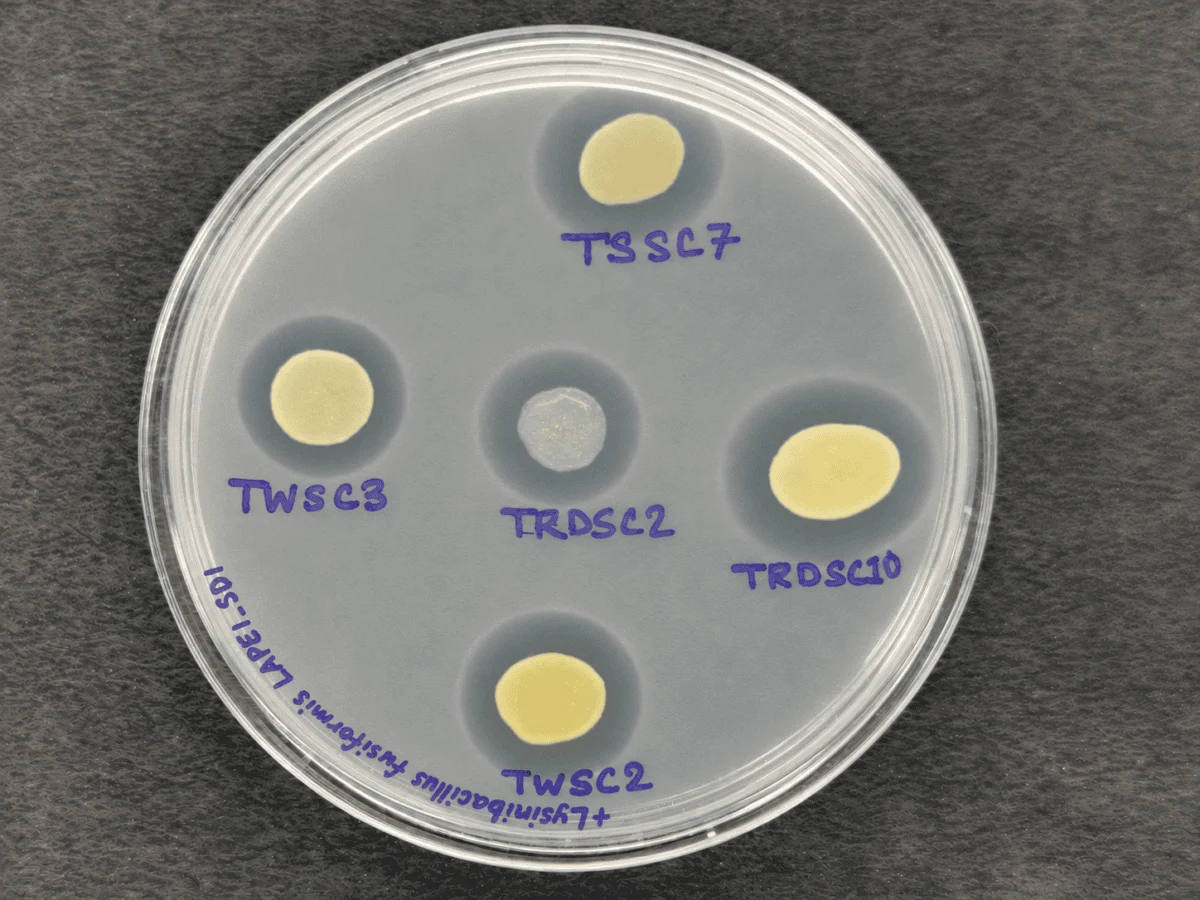
Beyond climate regulation, the study highlighted a defensive mechanism within the soil. Native Actinobacteria, which make up a significant portion of the microbial population, produce natural antibiotics. These compounds serve as a "border control" system, preventing invasive, heat-loving microbes from encroaching on the high-altitude territory as the climate warms.
2. Chronology: From the Plateau to the Laboratory
The investigation into Tso Moriri’s microbial life followed a rigorous timeline of field collection and sophisticated genomic analysis.
- November (Pre-Freeze Collection): The research team, led by Professor Wriddhiman Ghosh, arrived at Tso Moriri just as the lake began its transition into the winter freeze. Samples were meticulously collected from three distinct micro-environments: the lake’s brackish water, the oxygen-poor sediment at the bottom, and the weathered rock dust on the surrounding slopes.
- Laboratory Isolation: Back at the Bose Institute in Kolkata, the team utilized "freeze-thaw" cycles to mimic the natural conditions of Ladakh. This allowed them to isolate 27 specific bacterial species that are uniquely adapted to the extreme cold of the Trans-Himalaya.
- Genomic Mapping: Once isolated, 15 selected species underwent high-throughput genomic sequencing. This allowed researchers to identify the specific genes responsible for breaking down carbohydrates and producing methane precursors.
- Thermal Stress Testing: The final phase involved observing these microbes under varying temperatures. By subjecting the cultures to a range from -10°C to 42°C, the team was able to map the exact "functional window" of the ecosystem, leading to the discovery of the 28°C threshold.
3. Supporting Data: Temperature Thresholds and Genomic Resilience
The study’s conclusions are supported by a wealth of physiological and genomic data that illustrates the delicate balance of life in extreme environments.
The Functional Window
The laboratory experiments provided a clear map of how these microbes respond to heat:

- -10°C to 0°C: Most isolates remained metabolically active, with some even showing marginal growth, proving their resilience to the harsh Himalayan winter.
- 4°C to 15°C: This was identified as the "optimal growth range." Within this window, the microbes are most efficient at turning over carbon and releasing gases.
- 28°C: The "tipping point." At this temperature, four major isolates ceased growth entirely.
- 37°C to 42°C: The "extinction zone" for native species. Nearly 60% of the isolated species stopped growing at 37°C, and by 42°C, the native community was effectively dormant or dead.
Genomic Evidence of Adaptation
The genomic analysis revealed that these microbes possess a specialized toolkit of "Carbohydrate-Active Enzymes" (CAZymes). These enzymes allow them to process the tough, complex organic matter found in high-altitude bogs. Furthermore, the presence of "thermotolerance genes" suggests that while these microbes prefer the cold, they have evolved some capacity to survive the increasing spikes in summer temperatures currently being recorded in Ladakh.
Actinobacteria Dominance
In the rock dust samples, Actinobacteria accounted for 54% of the microbial community. This is a significant data point, as Actinobacteria are the primary source of naturally occurring antibiotics. Their dominance suggests that the soil has an inherent chemical defense system against foreign microbial invasions.
4. Official Responses and Expert Insights
The study has garnered significant attention from the Indian scientific community, with experts emphasizing both the ingenuity of the research and the warnings it contains.
Professor Wriddhiman Ghosh (Lead Researcher, Bose Institute):
Ghosh emphasizes the "thermostat" hypothesis, noting that while the feedback loop is currently positive (accelerating warming), the existence of a biological limit provides a glimmer of hope for ecosystem stability. "The indigenous microbial communities are not just passive victims of warming; they function as a biological regulator that could suppress runaway greenhouse effects," Ghosh noted in the study findings.
Dr. Raju Biswas (Microbial Ecologist, Indian Institute of Science):
Biswas, who was not involved in the study, praised the "biogeothermometer" concept. "Soils in high-altitude deserts are nutrient-poor, but the carbon they turn over is a vital signal of ecosystem health. Monitoring how these microbial communities shift along temperature gradients offers a sensitive, natural way to track the real-time impacts of climate change," Biswas stated. He also highlighted that the transition from lab to field is complex, requiring more "in-situ" experiments to confirm how water availability and freeze-thaw cycles affect these results.

Dr. Rakshak Kumar (Associate Professor, Tripura University):
Kumar focused on the "collective resilience" of the microbes. "The study shows that ecosystem resilience emerges from community interactions. These microbes share resources and replace one another to keep the environment stable. It’s a sophisticated social network at a microscopic level," Kumar explained. He added that the study extends our understanding of the "lower thermal limits" of life, which is crucial for predicting how the Himalayan permafrost will behave in the coming decades.
5. Implications: The Future of the Trans-Himalayan Ecosystem
The findings from Tso Moriri have far-reaching implications for climate modeling, conservation strategy, and our understanding of biodiversity.
Refining Climate Models
Most current global climate models treat soil microbial activity as a linear function—assuming that as it gets warmer, microbes will simply produce more gas. The discovery of a 28°C "thermal ceiling" suggests that these models may need to be adjusted. In high-altitude regions, the microbial contribution to warming might plateau or even decrease if temperatures exceed certain limits, providing a natural (though grim) brake on emissions.
Conservation of the "Invisible" Biome
When we think of conserving Tso Moriri, we often focus on the Snow Leopard or the Black-necked Crane. However, this research underscores the need to protect the "invisible" microbial biome. If the native, antibiotic-producing Actinobacteria are wiped out by extreme heat, the soil could be colonized by invasive pathogens or heat-adapted microbes that lack the "thermostat" function, potentially leading to even higher greenhouse gas emissions.
The Threat of Invasive Microbes
The "border control" identified in the study is under threat. As the world warms, heat-adapted microbes from lower altitudes are moving upward. If the native cold-adapted species cannot adapt fast enough, the unique chemical and biological signature of the Trans-Himalaya could be lost forever, replaced by a homogenized microbial landscape that is less efficient at maintaining the region’s delicate carbon balance.

A Sentinel for Global Change
Tso Moriri serves as a "canary in the coal mine." Because high-altitude ecosystems react more quickly and intensely to temperature shifts than lowland areas, the microbial changes observed here provide a preview of what may happen to other permafrost regions, such as the Arctic and Antarctic.
In conclusion, the microscopic inhabitants of Tso Moriri are far more than simple decomposers. They are the guardians of a fragile thermal equilibrium, working collectively to resist invasion and regulate the very atmosphere that threatens their existence. As the Changthang plateau continues to warm, the survival of this "biological thermostat" may well determine the ecological future of the roof of the world.
