

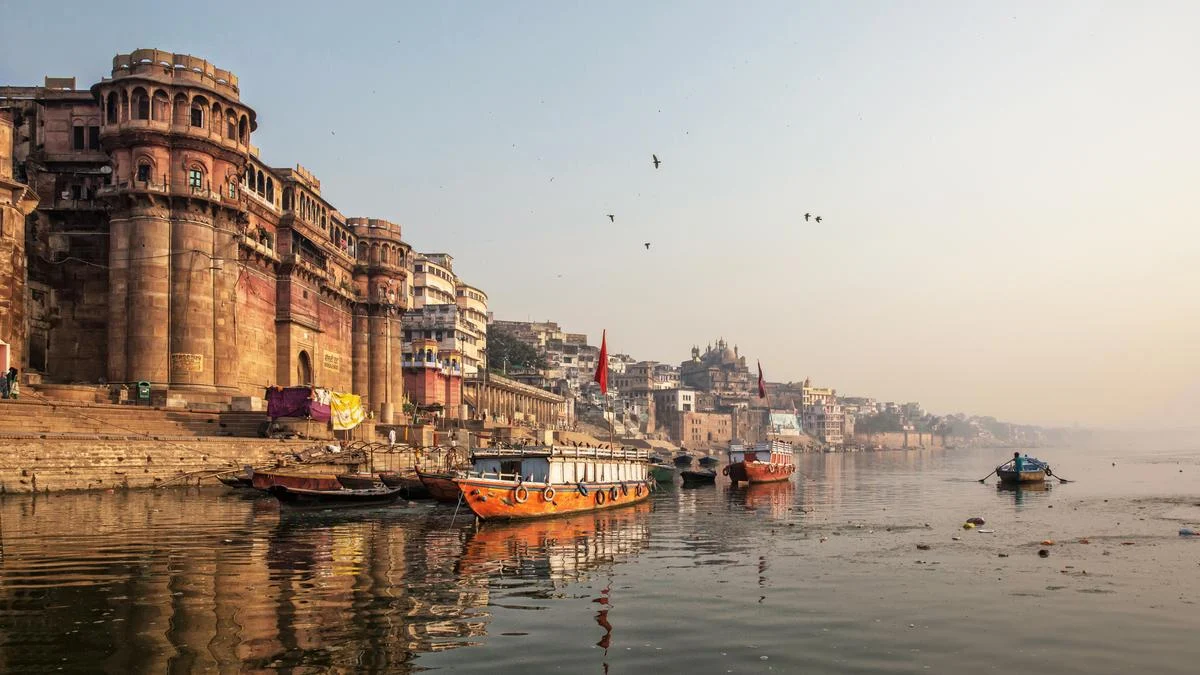
VARANASI — In the labyrinthine heart of Varanasi, a city where time is measured not in years but in millennia, a subtle revolution is taking place. It is a transformation that seeks to bridge the gap between the raw, sensory-heavy street life of the world’s oldest living city and the sophisticated demands of modern luxury tourism. At the center of this evolution stands the BrijRama Palace, a 214-year-old fortress-turned-palace that has recently unveiled an ambitious 10-course vegetarian tasting menu, signaling a new chapter in the city’s culinary and hospitality narrative.
This report explores the intersection of heritage preservation, high-end gastronomy, and the enduring cultural rituals that define the city of Kashi.

Main Facts: The Intersection of Tradition and Modernity
Varanasi, also known as Benares or Kashi, has long been a destination for pilgrims and scholars. However, the contemporary traveler is increasingly seeking a "fortified" heritage experience—one that offers the comforts of luxury without insulating the guest from the city’s authentic, often chaotic, charm.
The BrijRama Palace, situated at the historic Darbhanga Ghat, serves as the primary case study for this shift. Originally built in 1812, the property has undergone an 18-year restoration process to emerge as a 32-room boutique hotel. Its latest offering at the fine-dining restaurant, Aangan, is a 10-course vegetarian tasting menu designed by Chef Devansh Seth. This menu represents a strategic move to elevate local ingredients—such as radish and tender coconut—into the realm of experimental fine dining, all while adhering to the city’s strict cultural norms regarding meat and alcohol.

Beyond the palace walls, the city’s traditional "chaat" culture continues to thrive, with establishments like Kashi Chaat Bandar and Pahalwan Lassi remaining essential touchpoints for visitors. The city’s identity remains rooted in its geography: the 84 ghats that line the Ganga, the wrestling pits (akharas) that preserve ancient fitness rituals, and the nightly Ganga Aarti that draws thousands to the river’s edge.
Chronology: A Journey Through the Sensory Landscape
Day 1: The Street and the River
The immersion begins with the city’s climate. In the height of summer, the 45°C heat creates an atmosphere that mirrors the city’s favorite snack: tamatar chaat. At Kashi Chaat Bandar, the experience is visceral. Guests are wedged onto hard benches amidst "samosa-wielding strangers," consuming a soupy bowl of tomatoes and potatoes simmered in ghee, finished with butter and crisp namkeen.

As evening descends, the focus shifts to the river. At the Alka Hotel, which has been managed by the same family for generations, visitors observe the transition of Kashi into its nocturnal state. Over glasses of chilled thandai—a creamy concoction of milk and soaked cashews—the rhythm of the city changes. The Ganga Aarti at Dashashwamedh Ghat begins, a choreographed ritual of fire and chanting that serves as the city’s heartbeat.
Day 2: The Architectural and Culinary Ascent
The transition from the streets to the BrijRama Palace is facilitated by boat, docking at Darbhanga Ghat. The arrival is marked by a blend of the regal and the mundane: a reception committee featuring a gold-tasselled umbrella and the sound of a conch shell, juxtaposed against local devotees taking sacred dips in the river.

The afternoon is dedicated to the "Benares Thali" at the Darbhanga restaurant, featuring local staples such as khatta meeta kaddu (tamarind and jaggery-laced pumpkin), dimona (cumin-scented green peas), and alu dum stuffed with paneer. The day concludes with the unveiling of the 10-course menu at Aangan, an experimental journey that includes "fortified heritage radish bricks" and a "Rasmalai tres leches cake."
Day 3: Physicality and Philosophy
The final phase of the journey moves toward Tulsi Ghat and the Swaminath Akhara. Here, the city’s ancient fitness traditions are on display. Under the guidance of Gyanshankul Singh, a certified strength coach and poet, visitors are introduced to the Hanuman gada (mace). The morning is a study in physical discipline, followed immediately by the traditional consumption of jalebis and lassi—a reminder that in Varanasi, health and indulgence are two sides of the same coin.

Supporting Data: The Logistics of Heritage Restoration
The transformation of BrijRama Palace from a dilapidated fort into a UNESCO-protected luxury site was a logistical feat that underscores the challenges of working in an ancient urban environment.
- Timeline: The restoration took 18 years (1994–2012) following the acquisition by Brijrama Hospitality.
- Material Logistics: Due to the narrow gullies (alleys) of Varanasi, cars cannot reach within a kilometer of the palace. Every piece of construction material, including 90-kilogram sandstone pillars from Mirzapur, had to be transported via boat.
- Architectural Heritage: The building utilizes a combination of sun-soaked sandstone and Makrana marble. The interiors feature Tehkari mirror work and vintage furniture sourced from royal estate sales.
- Historical Innovation: In 1915, the property was acquired by King Rameshwar Singh Bahadur of Darbhanga, who installed Asia’s first hand-pulled elevator to navigate the steep climb from the ghat to the palace.
Official Responses: The Management’s Vision
Manish Singh, General Manager of BrijRama Palace, emphasizes that the hotel’s mission is to act as a guardian of history rather than just a provider of luxury.

"This is a UNESCO-protected site," Singh noted during a tour of the property. "Our responsibility is to balance contemporary luxury with the obligations that come with being a historic property on an iconic ghat."
Singh highlights that the hotel prizes "passion over economics," noting that the 18-year restoration was a labor of love intended to preserve the integrity of the 1812 structure. This sentiment is echoed in the culinary department, where Chef Devansh Seth explains the rationale behind the new 10-course menu. The goal, according to the culinary team, is to showcase the "history of Varanasi" through locally sourced produce while pivoting on traditional recipes to create something entirely contemporary.

Local business owners, such as Ashutosh Choudhary of the Alka Hotel, see this influx of high-end tourism as a positive development for the city’s ecosystem. "Varanasi brings so many people together—tourists, scholars, students, artists," Choudhary says. "We have the best snacks and the best views, and now we have the world’s attention."
Implications: The Future of Heritage Tourism in Kashi
The evolution of Varanasi’s hospitality and culinary scene has several significant implications for the region’s future:

1. The Rise of "Experimental Heritage"
The success of Aangan’s 10-course vegetarian menu suggests a growing market for "experimental heritage" dining. Travelers are no longer satisfied with standard international fare; they seek sophisticated interpretations of local traditions. By elevating the humble radish or the seasonal malaiyo (a saffron-infused milk foam) into a fine-dining context, Varanasi is positioning itself as a culinary destination on par with global heritage hubs.
2. Sustainable Preservation
The 18-year restoration of BrijRama Palace sets a precedent for how dilapidated structures along the Ganga can be repurposed. By converting a fort into a boutique hotel, the project provides a self-sustaining model for architectural preservation that does not rely solely on government grants.

3. Cultural Integration vs. Insulation
BrijRama’s strategy of encouraging guests to explore the city—meeting local artists, visiting Japanese cafes like 4689 Coffee Roasters, and training at akharas—represents a shift away from "bubble tourism." This integration ensures that the economic benefits of luxury travel trickle down to local artisans, students, and small business owners.
4. Maintaining the Sacred-Secular Balance
As Varanasi modernizes, the challenge remains to maintain the delicate balance between its sacred identity and its secular growth. The city’s legend—that one only visits when "called"—remains its most potent marketing tool. Whether drawn by the promise of spiritual liberation or the intrigue of "fortified radish bricks," the influx of visitors ensures that Varanasi remains what it has always been: a city that is simultaneously ancient and perpetually new.

In conclusion, the intersection of the Hanuman gada, the tamatar chaat, and the 10-course tasting menu at BrijRama Palace reflects a city that is comfortable in its own skin, even as it tries on a new, more luxurious mantle. Varanasi continues to prove that it can accommodate the world’s most demanding travelers without losing the raw, elemental pulse that has defined it for over two millennia.
