GURUGRAM — In the rapidly evolving landscape of the National Capital Region (NCR), infrastructure has long been the primary catalyst for socio-economic transformation. The latest project poised to redefine the geography of Southern Haryana is the upcoming 46-kilometer, four-lane Gurugram-Rewari Highway. With a completion target set for September 2026, this Greenfield and Brownfield hybrid corridor is designed to slash travel times, decongest existing arteries, and unlock billions in real estate and industrial value.
As the deadline approaches, the project is being hailed as the "new lifeline" for a region that bridges the gap between the high-octane corporate environment of Gurugram and the industrial heartlands of Rewari and Manesar.
1. Main Facts: The Blueprint of a Modern Corridor
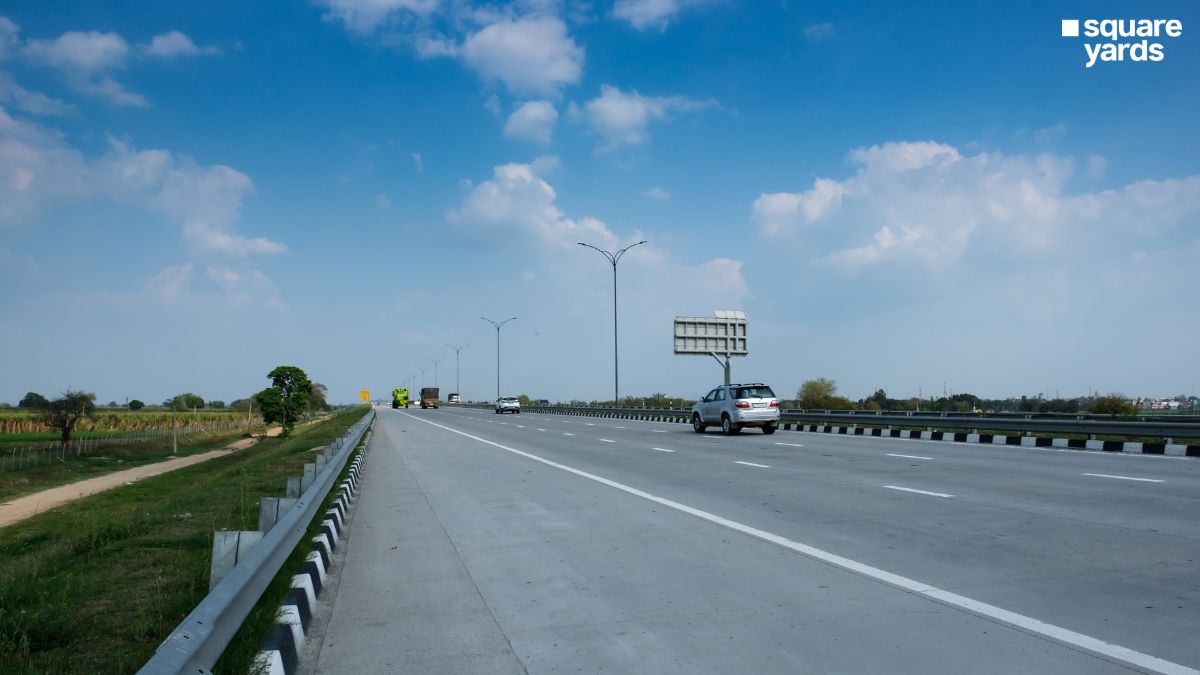
The Gurugram-Rewari Highway (NH-352W) is more than just a road; it is a strategic bypass designed to alleviate the mounting pressure on the existing NH-48 (Delhi-Jaipur Highway). The project spans approximately 46 kilometers, starting from the burgeoning hub of Sector 88B near the Dwarka Expressway and terminating in Rewari.
Key Specifications:
- Length: 46 Kilometers.
- Lane Configuration: 4-lane divided carriageway with provisions for future expansion.
- Starting Point: Sector 88B, Gurugram (Dwarka Expressway junction).
- Key Intersections: Direct connectivity to the Kundli-Manesar-Palwal (KMP) Expressway.
- Travel Time: Expected to drop from the current 90–120 minutes (during peak hours) to a mere 45 minutes.
- Primary Beneficiaries: New Gurugram, Manesar, Pataudi, and Rewari.
The highway is designed to facilitate high-speed transit while ensuring that local commuters in the Pataudi sub-division are no longer throttled by heavy freight traffic passing through narrow township roads. By segregating local traffic from long-distance commuters, the highway aims to improve safety and fuel efficiency across the board.
2. Chronology: From Concept to 2026 Completion
The development of the Gurugram-Rewari Highway has been a phased journey, reflecting the complex land acquisition and engineering challenges inherent in the NCR’s dense terrain.
- Conceptualization and Approval: The project was greenlit as part of the Union Government’s broader vision to enhance connectivity within the Bharatmala Pariyojana framework. The objective was to create a secondary route to Rewari that bypasses the chronic bottlenecks at Kherki Daula and Manesar.
- Phase 1 (The Dwarka-KMP Link): The first phase involves a 10-km stretch connecting the Dwarka Expressway with the KMP Expressway. This segment is currently the highest priority, as it provides an immediate vent for traffic coming from Delhi via the Dwarka Expressway.
- Phase 2 (The Pataudi-Rewari Stretch): The second phase covers the remaining 36 kilometers, passing through the historic town of Pataudi and reaching Rewari. This section involves significant greenfield construction to bypass the congested urban limits of Pataudi.
- Current Status (July 2026): As of the latest updates, the project is in an advanced stage of construction. Large sections of the earthwork and flyover substructures have been completed.
- The Final Countdown: The National Highways Authority of India (NHAI) and its contractors are working toward a full operational rollout by September 2026.
3. Supporting Data: The Real Estate and Investment Ripple Effect
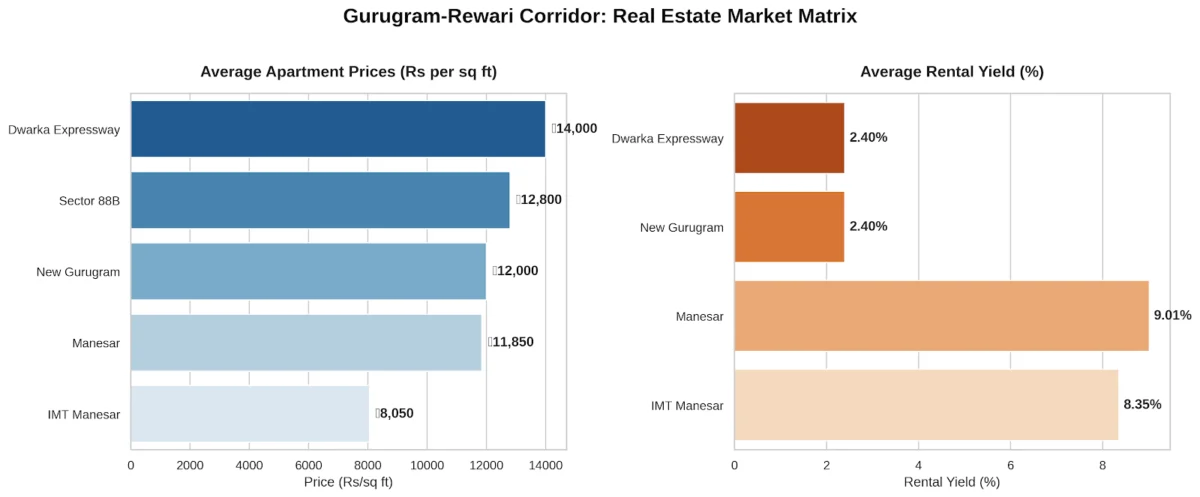
Infrastructure is the precursor to investment. As the highway takes shape, the real estate markets along its path are witnessing a significant uptick in valuation and demand. Data from Square Yards Intelligence suggests that the "Highway Effect" is already being priced into the micro-markets of Southern Haryana.
Residential Market Analysis
The corridor connects varying price points, making it attractive for a wide demographic of buyers, from luxury seekers to industrial workers.
| Micro-Market | Avg. Price (per sq. ft.) | Avg. Rental (psf) | Rental Yield |
|---|---|---|---|
| Dwarka Expressway | ₹14,000 | ₹28 | 2.40% |
| Sector 88B | ₹12,800 | N/A | N/A |
| New Gurugram | ₹12,000 | ₹24 | 2.40% |
| Manesar | ₹11,850 | ₹89 | 9.01% |
| IMT Manesar | ₹8,050 | ₹56 | 8.35% |
Key Takeaways from the Data:
- The Manesar Yield Phenomenon: Perhaps the most striking figure is the 9.01% rental yield in Manesar. This is exceptionally high for the Indian residential market (where 2-3% is standard). This is driven by the massive industrial workforce requiring managed housing and studio apartments near IMT Manesar.
- Affordability in IMT Manesar: At ₹8,050 per sq. ft., IMT Manesar remains a "value buy" for investors looking to capitalize on the logistics boom that the new highway will facilitate.
- The Premium Core: Dwarka Expressway and Sector 88B have emerged as the premium nodes, with prices crossing the ₹13,000 mark. The highway provides these residents with a "back exit" to industrial hubs, bypassing the main city traffic.
4. Official Responses and Infrastructure Integration
While the highway is a standalone engineering marvel, official statements from the Ministry of Road Transport and Highways (MoRTH) emphasize its role in a "multi-modal" ecosystem.
Integration with RRTS
Planning officials have highlighted that the highway will work in tandem with the proposed Delhi-Gurugram-SNB-Alwar Regional Rapid Transit System (RRTS). While the highway handles freight and private vehicular movement, the RRTS will manage high-speed commuter rail. Together, they form a "Double Corridor" that ensures Southern Haryana is no longer a peripheral region but a core extension of the capital.
Decongesting the "Old" NH-48
NHAI officials have noted in progress reviews that the primary goal is to shift at least 30-40% of the non-destined heavy vehicle traffic away from the Kherki Daula toll area. "By providing a direct link from the Dwarka Expressway to Rewari, we are effectively giving the industrial belt of Manesar a dedicated artery that does not conflict with the residential traffic of central Gurugram," noted a senior project consultant.
5. Implications: Beyond the Asphalt
The completion of the Gurugram-Rewari Highway will have far-reaching implications for the socio-economic fabric of the region.
A Logistics and Warehousing Revolution
Rewari has long been a secondary player in the NCR logistics scene, overshadowed by Binola and Bilaspur. However, the new highway, with its seamless connection to the KMP Expressway (and by extension, the Dedicated Freight Corridor), positions Rewari as a primary logistics hub. Lower land costs in Rewari compared to Gurugram make it an ideal site for "Big Box" warehousing and regional distribution centers for e-commerce giants.
The Transformation of Pataudi
Pataudi, once known primarily for its heritage and semi-rural charm, is being reinvented as a suburban residential destination. The highway bypasses the congested interior of the town, allowing for the development of organized townships along the highway’s periphery. Urban planners predict that Pataudi will become what Sohna was five years ago—an affordable alternative for middle-income professionals working in Gurugram or Manesar.
Industrial Expansion of IMT Manesar
The Industrial Model Township (IMT) Manesar is currently home to thousands of units, including giants like Maruti Suzuki. The highway reduces the "logistics friction" for these companies. Faster movement of raw materials and finished goods to the Dwarka Expressway (and onward to Delhi or the Airport) will enhance the ease of doing business, likely attracting more Japanese and Korean investments into the region.
Environmental and Social Impact
Reduced travel time from 90 minutes to 45 minutes isn’t just a matter of convenience; it’s a massive reduction in the carbon footprint of the region. Less idling in traffic at Manesar and Pataudi means lower emissions. Furthermore, the highway is expected to spur the development of social infrastructure—hospitals, schools, and shopping complexes—in the previously underserved "middle ground" between Gurugram and Rewari.
6. Conclusion: The Dawn of a New Hub
As the September 2026 deadline looms, the Gurugram-Rewari Highway stands as a testament to the power of connectivity. It is a project that solves yesterday’s problems—congestion and isolation—while creating tomorrow’s opportunities in housing, industry, and commerce.
For investors, the data is clear: the rental yields in the industrial segments and the capital appreciation in the residential segments suggest a market that is still in its ascendancy. For the commuter, the promise of a 45-minute journey represents a significant upgrade in quality of life.
Southern Haryana is no longer just an "extension" of the city; with the completion of this highway, it is set to become a self-sustaining economic powerhouse, integrated into the very heart of the National Capital Region’s future growth story.