


LUCKNOW – For millions of families across the sprawling landscape of Uttar Pradesh, the quest for a permanent residence—a sanctuary that offers both security and dignity—remains a cornerstone of the "Indian Dream." In India’s most populous state, where rapid urbanization meets a burgeoning middle class, the responsibility of bridging the housing gap falls upon the shoulders of the Uttar Pradesh Awas Evam Vikas Parishad (UPAVP), also known as the UP Housing and Development Board.
As the state pivots toward a trillion-dollar economy, the UPAVP has transformed from a traditional construction body into a tech-driven facilitator of modern living. This comprehensive report explores the mechanisms, digital infrastructure, and strategic initiatives of the UP Awas Vikas Parishad, providing a roadmap for prospective homeowners and an analysis of its socio-economic impact.
1. The Mandate: What is UP Awas Vikas Parishad?
The UP Awas Vikas Parishad is the premier statutory body established by the Government of Uttar Pradesh to ensure planned urban development and provide affordable housing solutions. Operating under the Uttar Pradesh Housing and Development Board Act, 1965, the Parishad was conceived to tackle the housing shortage by developing integrated townships that include not just residential units, but also commercial spaces, educational institutions, and healthcare facilities.
Core Objectives
The Parishad’s mandate is multifaceted, focusing on:
- Inclusive Housing: Designing and constructing residential units for all income segments, including Economically Weaker Sections (EWS), Lower Income Groups (LIG), Middle Income Groups (MIG), and High Income Groups (HIG).
- Urban Planning: Acquiring land and developing it with modern infrastructure, including sewage systems, electricity, and paved roads.
- Financial Accessibility: Offering properties at competitive rates compared to private developers, often with easier financing options and government subsidies.
Often referred to colloquially as UP Awas Vikas or UPAVP, the board serves as a stabilizing force in the real estate market, ensuring that the dream of homeownership remains accessible to the common citizen.
2. Chronology: The Evolution of Housing Schemes in UP
The history of UPAVP is a narrative of adaptation. In its early decades, the board focused on basic plotted developments. However, as land became a premium commodity in cities like Lucknow, Ghaziabad, and Meerut, the focus shifted toward vertical expansion and multi-story apartment complexes.
The Shift to Modernity
In recent years, the Parishad has launched several landmark schemes that reflect the changing lifestyle of the modern Indian family. Notable among these are:

- The Ayodhya Expansion: A flagship project involving residential plots in Sector 8C, Ayodhya, aimed at accommodating the massive influx of residents and investors following the city’s religious and cultural resurgence.
- The FCFS Model: Traditionally, UPAVP relied on a lottery system for allotment. Recognizing the need for speed and transparency, the board introduced the First-Come-First-Serve (FCFS) scheme. This allows buyers to book ready-to-move-in flats instantly through an online portal, eliminating the long wait times associated with traditional draws.
- Integrated Townships: Projects like the Vrindavan Yojana in Lucknow and the Siddharth Vihar Yojana in Ghaziabad have become benchmarks for self-sustained urban living, offering a mix of luxury and affordability.
3. Supporting Data: Decoding the Digital Infrastructure
In alignment with the "Digital India" initiative, UPAVP has migrated the majority of its public-facing services to the digital realm. The official website, upavp.in, and its associated portals serve as the central nervous system for all housing transactions.
Key Online Portals and Their Functions
To streamline the user experience, the Parishad operates through several specialized domains:
| Service Category | Portal URL | Primary Function |
|---|---|---|
| Official Information | https://upavp.in/ |
Policy updates, scheme announcements, and vacant property lists. |
| Applicant Management | https://upavp.co.in/login |
Citizen registration, application tracking, and payment history. |
| Instant Booking | https://upavponline.in/fcfsonl/ |
Real-time booking of flats under the FCFS scheme. |
| Document Repository | Site Content Section | Downloadable PDFs of scheme brochures and layouts. |
The "Citizen Login" Ecosystem
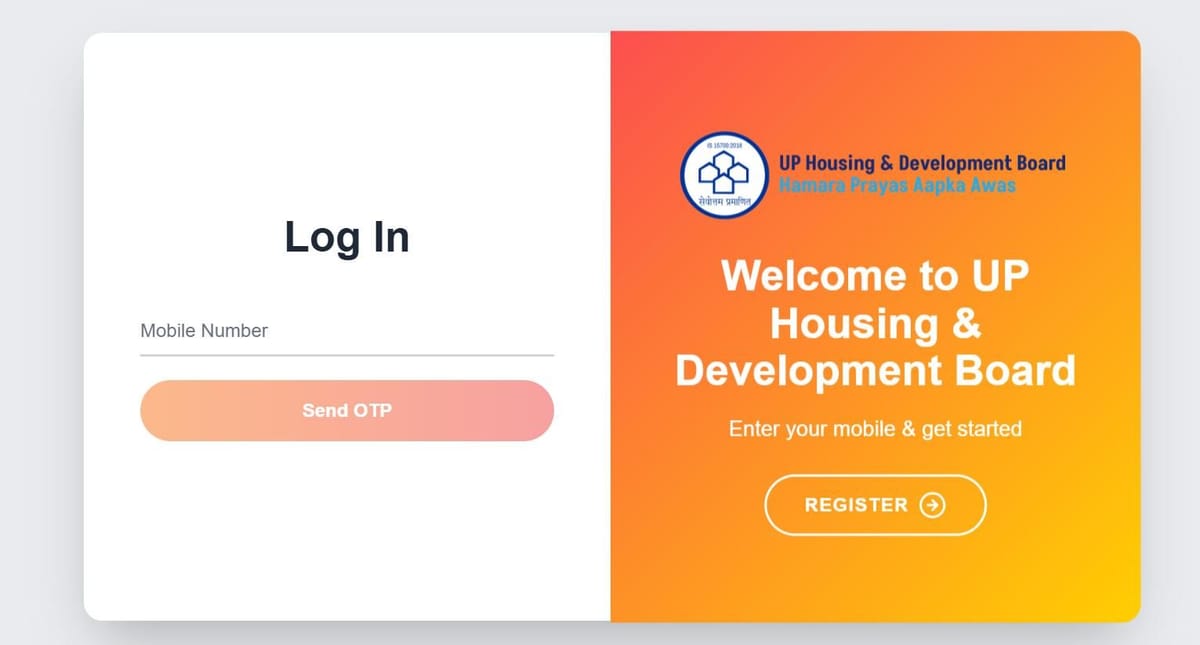
The UPAVP Login portal is a critical tool for any applicant. It allows users to:
- Monitor Allotments: Check the status of their application in real-time.
- Financial Management: Pay installments, generate receipts, and view outstanding dues.
- Grievance Redressal: Submit complaints or queries directly to the administrative office.
The introduction of mobile-based OTP (One-Time Password) logins has significantly lowered the barrier to entry, ensuring that even those with basic digital literacy can navigate the system.
4. Official Process: A Step-by-Step Guide to Registration
For those looking to secure a home through the UP Awas Vikas Yojana, the Parishad has standardized a rigorous yet transparent online application process.
Phase 1: Registration and Profile Creation
Before applying for a specific plot or flat, an individual must register on the citizen portal.
- Step 1: Visit the official UPAVP website and navigate to the "Online Services" or "Citizen Login" section.
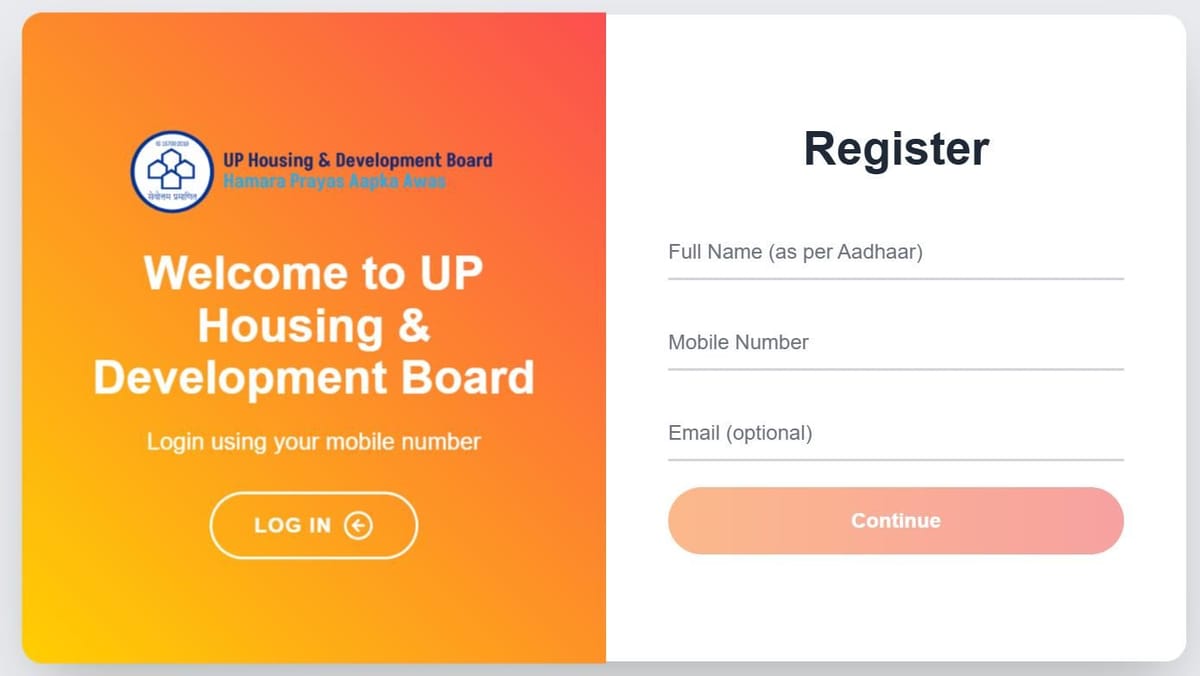
- Step 2: Click on "Register." You will be required to provide a valid mobile number and email address.
- Step 3: Complete the profile by entering personal details, including Aadhaar information and permanent address.
- Step 4: Secure the account with a password or use the mobile-OTP login feature for subsequent visits.
Phase 2: Applying for a Scheme
Once registered, the applicant can browse active schemes.
- Selection: Users can view detailed brochures for schemes like the Ayodhya Sector 8C plots or Lucknow’s high-rise apartments.
- Documentation: Applicants must upload digital copies of their ID proof, income certificates (if applying under LIG/EWS categories), and photographs.
- Payment of Registration Fee: A "token amount" or registration fee (usually 5% to 10% of the property value) must be paid online via Net Banking, Credit/Debit cards, or UPI.
Phase 3: Allotment and Possession
For lottery-based schemes, the Parishad conducts a transparent draw, often broadcast live or performed in the presence of observers. For FCFS schemes, the allotment is instantaneous upon successful payment. Once the full payment is processed and legal formalities are completed, the Parishad issues an allotment letter, followed by physical possession.
5. Official Responses: Governance and Public Support
The UPAVP is headquartered in Lucknow, acting as the brain of the state’s housing strategy. The leadership emphasizes that the board is not merely a developer but a service provider.
Contact and Redressal
The head office, located at 104, Mahatma Gandhi Marg, Lucknow, handles high-level policy and approval. However, for the average citizen, the Parishad has established multiple touchpoints:
- Toll-Free Helpline: 1800-180-5333 / 0522-2236803
- Public Query Windows: The Lucknow office complex features dedicated counters for public queries, scheme design explanations, and allotment approvals.
- Email Support: [email protected]
Official spokespersons for the board have frequently highlighted that the digital transition is designed to eliminate middlemen and reduce corruption. By moving the "UP Awas Vikas List" of available properties online, the board ensures that every citizen has an equal opportunity to view and book properties without needing political or administrative "reach."
6. Implications: The Socio-Economic Impact of UPAVP
The activities of the UP Awas Vikas Parishad have far-reaching implications for the state’s economy and social fabric.
Urban De-congestion
By developing satellite townships on the outskirts of major cities like Lucknow and Kanpur, UPAVP helps de-congest aging city centers. These planned areas prevent the growth of slums and ensure that urban expansion is orderly and sustainable.
Real Estate Stabilization
The presence of a government-backed developer prevents private builders from monopolizing the market. UPAVP’s pricing often sets a "benchmark," forcing private players to keep their rates competitive and their quality high.
Empowerment of the Lower-Income Bracket
Through the integration of the Pradhan Mantri Awas Yojana (PMAY), UPAVP has enabled thousands of EWS and LIG families to own homes with substantial government subsidies. This move toward "Housing for All" is a critical component of social stability, providing families with an asset that can be used for collateral and long-term financial security.
Investment Potential
For investors, UPAVP properties are considered "safe bets." Because the land titles are cleared by the government and the projects are RERA-registered, the risk of legal disputes is virtually zero. Properties in schemes like the Ayodhya development have seen significant appreciation in value, making them lucrative for long-term wealth generation.
7. Conclusion: The Road Ahead
The UP Awas Vikas Parishad has successfully transitioned from a legacy bureaucratic body into a modern, transparent, and citizen-centric organization. Through its robust online portals—upavp.in and upavponline.in—it has democratized the process of homeownership in Uttar Pradesh.
As the state continues to urbanize at an unprecedented rate, the challenges for UPAVP will grow. The focus is now shifting toward "Smart Housing"—incorporating green energy, rainwater harvesting, and digital connectivity into every project. For the common man in UP, the Parishad remains the most reliable bridge between the dream of a safe home and the reality of a title deed.
Whether you are a first-time buyer looking for a modest LIG flat in Lucknow or an investor eyeing a plot in the burgeoning city of Ayodhya, the UP Awas Vikas Parishad offers a regulated, transparent, and accessible path to property ownership.
Disclaimer: This report is intended for informational purposes. While every effort has been made to ensure accuracy based on current UPAVP guidelines and industry reports, housing policies and property availability are subject to change by the Government of Uttar Pradesh. Prospective buyers are advised to verify all details on the official UPAVP portal before making financial commitments.
