

SCIENCE
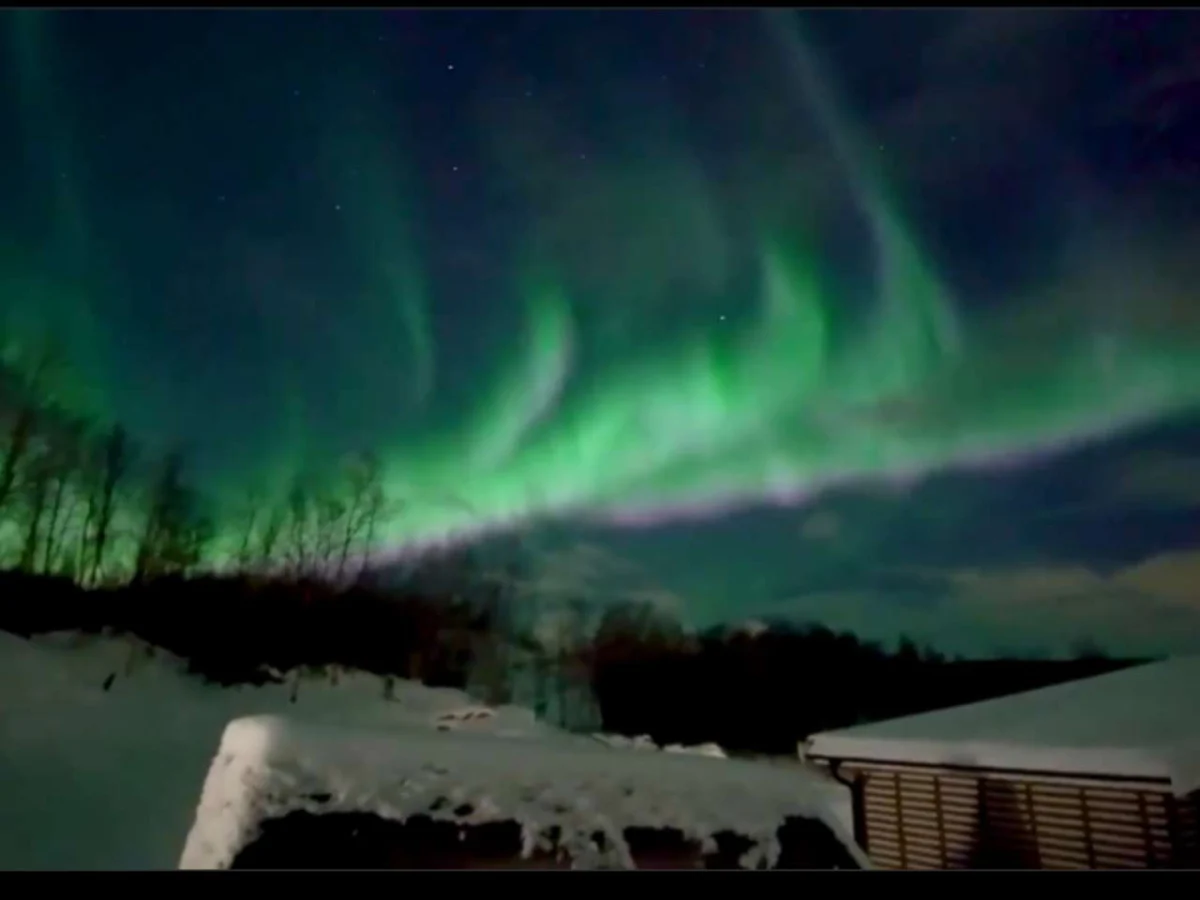
June 8, 2026 – Earth is currently bracing for the imminent arrival of a powerful solar eruption, a coronal mass ejection (CME) that departed the Sun on June 6. Experts are monitoring the event closely, as it is expected to strike Earth’s magnetic field today, potentially triggering a strong G3-class geomagnetic storm. This celestial interaction significantly increases the chances of rare and spectacular aurora sightings, even in latitudes unaccustomed to such cosmic light shows.
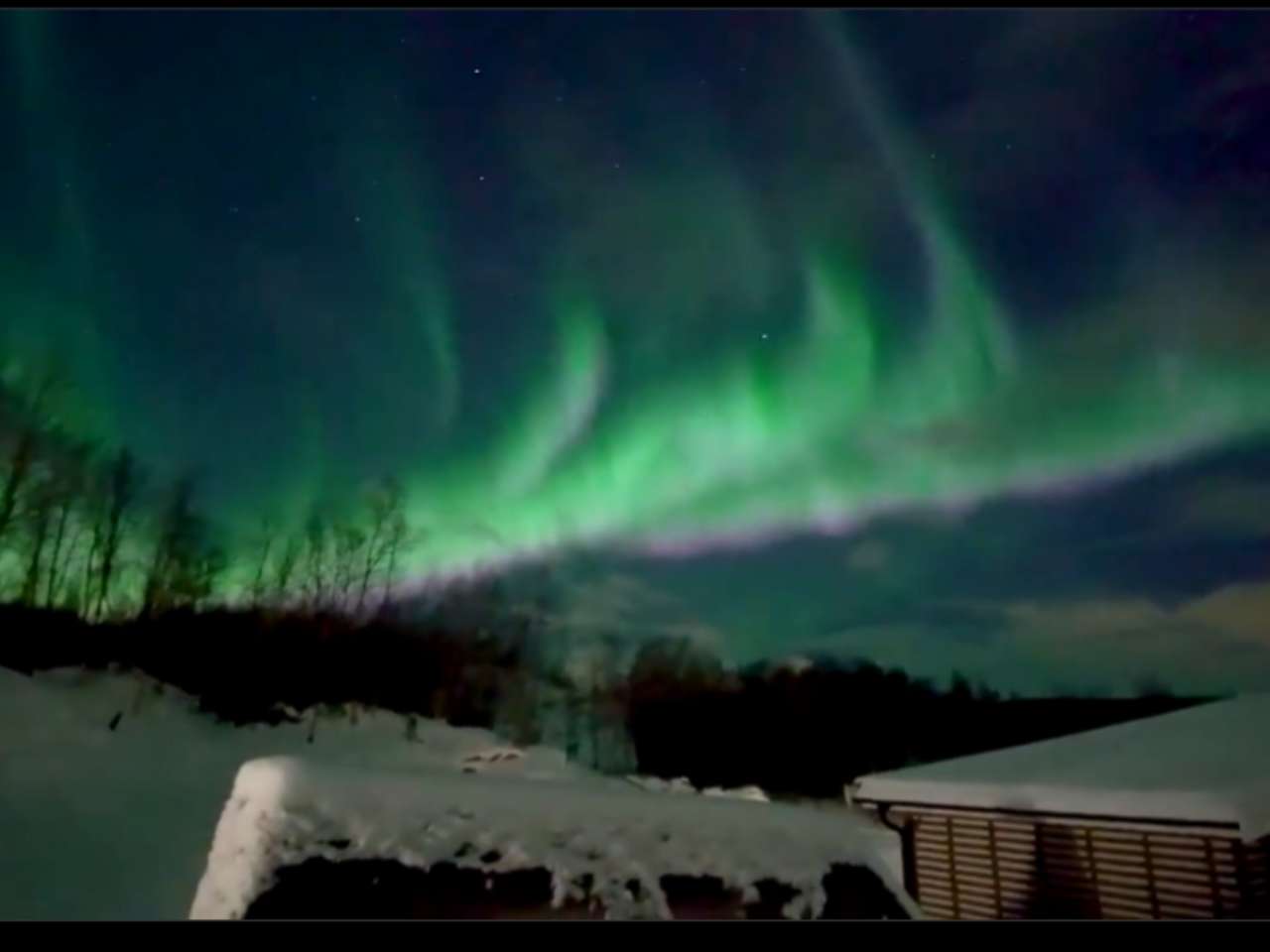
The anticipation has gripped space weather enthusiasts and scientists alike, as the Sun, currently in an active phase of its solar cycle, has been particularly dynamic in recent days. However, one specific blast from an active region designated Active Region 4461 has garnered global attention due prompting forecasters to issue a G3 (Strong) geomagnetic storm watch. Should the conditions align precisely, this event could paint the skies with vibrant auroral displays, pushing them to unusually low latitudes across the globe.
The Solar Event Unfolds: A Filament’s Fiery Departure
The genesis of this impending space weather event can be traced back to June 6, when Active Region 4461, a dynamic and complex area on the Sun’s surface, erupted with an M1.8-class solar flare. M-class flares are considered mid-level on the solar flare scale, capable of causing minor to moderate radio blackouts on Earth. While solar flares are a relatively common occurrence, what made this particular event exceptional and of significant interest to the scientific community was its accompaniment by the eruption of a "dense core filament."
)
This colossal structure, a massive ribbon of magnetised plasma suspended above the Sun’s surface, detached and was hurled into space alongside the flare. Scientists, including prominent space weather experts like Dr. Tamitha Skov, quickly noted the significance of this dual event. The material ejected during this powerful eruption is now hurtling towards Earth at an astonishing speed of nearly 1,400 kilometres per second (approximately 870 miles per second), making its arrival imminent today.
Understanding the Science Behind the Spectacle
To fully appreciate the significance of this event, it’s crucial to delve into the fundamental phenomena driving space weather: solar flares, coronal mass ejections, solar filaments, and their interaction with Earth’s protective magnetic field.
)
What are Solar Flares and Coronal Mass Ejections (CMEs)?
Solar Flares: These are intense bursts of radiation emanating from the Sun. They occur when magnetic energy built up in the solar atmosphere is suddenly released, accelerating charged particles to near light speed. Flares are classified by their X-ray brightness into A, B, C, M, and X categories, with X-class being the most powerful. An M1.8 flare, while not the most extreme, is still substantial enough to cause noticeable effects. The primary impact of a solar flare reaching Earth’s atmosphere is the disruption of radio communications, particularly high-frequency (HF) radio, on the sunlit side of the planet.
Coronal Mass Ejections (CMEs): Unlike flares, which are primarily bursts of radiation, CMEs are massive expulsions of plasma and magnetic field from the Sun’s corona (outermost atmosphere). They can contain billions of tons of material and travel at speeds ranging from a few hundred to over two thousand kilometres per second. When a CME is directed towards Earth, as in the current scenario, it can trigger a geomagnetic storm upon impact with our planet’s magnetosphere. It’s the CME, not the flare itself, that is primarily responsible for geomagnetic storms and auroras. The M1.8 flare on June 6 was the precursor to the CME that is now en route.

The Enigma of Solar Filaments
The involvement of a "dense core filament" in the June 6 eruption adds a crucial layer of complexity and potency to the approaching solar storm. A solar filament is essentially a gigantic ribbon of relatively cool, dense plasma suspended above the Sun’s surface by powerful, arching magnetic fields. While "cool" in cosmic terms, the plasma within a filament can still reach temperatures between 5,000 and 10,000 degrees Celsius. This is significantly cooler than the Sun’s blazing outer atmosphere, the corona, which can exceed one million degrees Celsius, making filaments appear as dark, elongated structures against the brighter solar disk when viewed in certain wavelengths of light.
The importance of filament eruptions lies in their inherent density and magnetic complexity. When the intricate magnetic fields that hold a filament in place become unstable – often due to shearing motions or magnetic reconnection – the entire structure can erupt into space. This expulsion carries enormous amounts of plasma and, critically, a highly organised magnetic field. Scientists have long observed that filament eruptions often lead to stronger and more impactful geomagnetic effects on Earth compared to many ordinary solar eruptions because they deliver a more concentrated and magnetically coherent package of material into the interplanetary medium. This increased magnetic complexity is a key factor space weather forecasters are closely monitoring in the current event.
)
Earth’s Magnetic Shield and Geomagnetic Storms
Our planet is not defenceless against these solar onslaughts. Earth possesses a formidable natural shield: its magnetosphere. This vast, invisible bubble, generated by the molten iron core of our planet, deflects the constant stream of charged particles known as the solar wind, protecting our atmosphere from being stripped away.
However, when a powerful CME, laden with its own magnetic field, slams into the magnetosphere, this shield can be temporarily overwhelmed or compressed. A geomagnetic storm ensues when the incoming solar plasma and its embedded magnetic field interact with Earth’s magnetosphere. This interaction injects energy into the magnetosphere, causing disturbances in its magnetic field lines, driving electrical currents in the upper atmosphere, and accelerating charged particles into the polar regions. These energetic particles then collide with atoms and molecules in Earth’s atmosphere, exciting them and causing them to emit light – the stunning phenomenon we know as the aurora borealis (Northern Lights) and aurora australis (Southern Lights).
)
The G-Scale: Categorizing Geomagnetic Storms
Geomagnetic storms are classified by the National Oceanic and Atmospheric Administration (NOAA) Space Weather Prediction Center (SWPC) on a five-point scale, from G1 to G5, based on the Kp index (a measure of geomagnetic activity). Each level indicates a different degree of intensity and potential impact:
- G1: Minor Storm (Kp=5) – Can cause weak power grid fluctuations, minor impact on satellite operations, and aurora visible at high latitudes.
- G2: Moderate Storm (Kp=6) – Potential for voltage alarms in power systems, minor satellite orientation issues, and aurora visible at higher mid-latitudes.
- G3: Strong Storm (Kp=7) – Requires voltage corrections in power systems, can cause intermittent satellite navigation problems, and auroras become visible much farther from the poles, reaching mid-latitudes. This is the current forecast level.
- G4: Severe Storm (Kp=8) – Can trigger widespread voltage control problems and false alarms in protective devices, cause significant satellite navigation errors and extended outages, and auroras visible at very low latitudes. Brief G4 conditions remain a possibility for the current event.
- G5: Extreme Storm (Kp=9) – Poses risks of widespread power system collapse, extensive satellite damage and prolonged outages, and auroras visible at equatorial latitudes. Historical examples include the Carrington Event of 1859.
The current forecast calls for a G3 storm, indicating a strong event with significant potential for aurora displays and minor technological impacts. Experts, however, caution that brief periods of G4-level conditions are not out of the question, particularly if the incoming magnetic field aligns favorably for storm development.
)
The Dance of the Auroras: How Earth’s Sky Lights Up
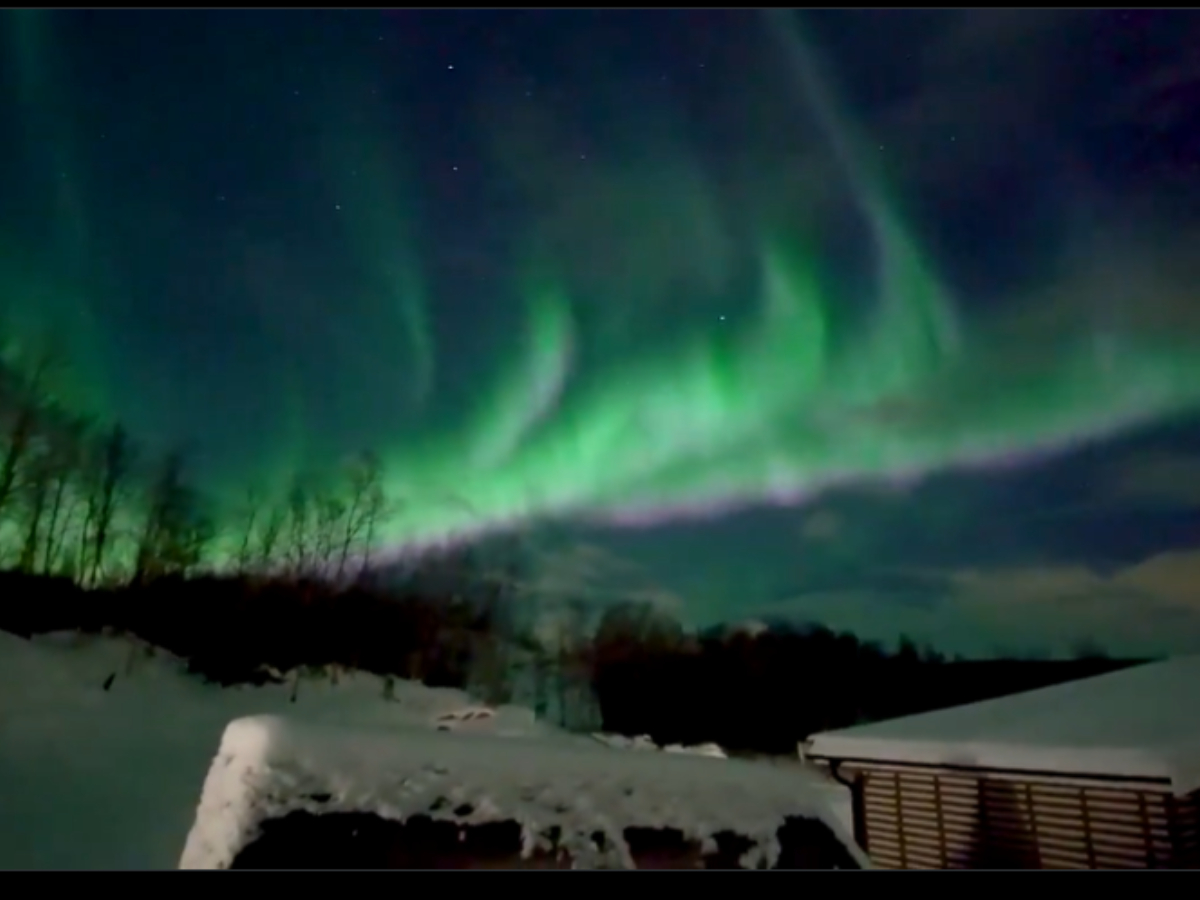
Auroras are the most visually captivating outcome of a geomagnetic storm. When energetic charged particles from the solar wind and magnetosphere collide with atmospheric gases, they excite atoms of oxygen and nitrogen. As these atoms de-excite, they release photons of light, creating the iconic shimmering curtains in the night sky.
The color of the aurora depends on the type of gas molecule being excited and the altitude at which the collision occurs:
)
- Green: Most common, produced by oxygen atoms at altitudes of about 100-300 km.
- Red: Produced by high-altitude oxygen (above 300 km) or low-altitude nitrogen, often appearing at the top edges of green auroras.
- Blue/Purple: Produced by nitrogen molecules at lower altitudes (below 100 km), usually near the bottom edge of auroral displays.
The intensity and reach of these displays are directly correlated with the strength of the geomagnetic storm. During a G3 or G4 storm, the auroral oval—the region around the magnetic poles where auroras are typically seen—expands significantly, allowing these ethereal lights to be observed from much lower latitudes than usual.
Forecasting Challenges and Official Vigilance
Despite sophisticated tools and decades of research, predicting the exact impact of a solar storm remains a complex endeavor. One crucial detail, in particular, continues to pose a significant challenge: the orientation of the magnetic field embedded within the incoming solar cloud.
)
The Critical Role of Magnetic Field Orientation
Scientists cannot accurately determine the precise orientation of the CME’s magnetic field until it passes monitoring satellites strategically positioned roughly 1.5 million kilometres (about 930,000 miles) from Earth, at the Lagrange 1 (L1) point. This critical piece of information is vital because if the magnetic field of the CME points southward when it reaches Earth, it can directly connect with Earth’s northward-pointing magnetic field. This process, known as magnetic reconnection, acts like a cosmic short circuit, allowing vast amounts of solar energy to efficiently enter Earth’s magnetosphere. This direct coupling significantly intensifies geomagnetic storms and dramatically increases the likelihood of vivid, widespread auroral displays.
Conversely, if the CME’s magnetic field is aligned northward, it will largely be deflected by Earth’s magnetosphere, resulting in a much weaker storm and less spectacular auroras. The challenge lies in the fact that forecasters typically have only 15 to 60 minutes of notice after the CME passes the L1 satellites before knowing the exact magnetic field orientation and, consequently, the true potential of the storm. This narrow window highlights the critical nature of real-time data from these sentinel spacecraft.
)
Global Sentinels: Satellites and Space Weather Agencies
A network of advanced satellites and dedicated space weather agencies continuously monitors the Sun and the space environment. Key players include:
- NASA (National Aeronautics and Space Administration): Operates missions like the Solar Dynamics Observatory (SDO), Parker Solar Probe, and STEREO (Solar TErrestrial Relations Observatory), providing crucial data on solar activity, flares, and CMEs.
- NOAA (National Oceanic and Atmospheric Administration) Space Weather Prediction Center (SWPC): The official U.S. government source for space weather alerts and warnings. NOAA uses data from various sources, including its own satellites like DSCOVR (Deep Space Climate Observatory) at the L1 point, to issue real-time forecasts and storm watches.
- ESA (European Space Agency): Contributes to space weather monitoring through missions like Solar Orbiter and collaborates on forecasting efforts.
- Other National Agencies: Countries like India (ISRO’s Aditya-L1 mission, which also sits at L1), Japan (JAXA), and China also have their own solar observation and space weather monitoring programs, contributing to a global network of vigilance.
These agencies work collaboratively, sharing data and expertise to provide the most accurate and timely space weather predictions possible, aiding industries and governments in preparing for potential impacts.
)
The Art and Science of Space Weather Prediction
Space weather forecasting is a blend of scientific models, observational data, and expert interpretation. Scientists use sophisticated computer models to simulate the propagation of CMEs through interplanetary space, predicting their arrival time and potential strength. However, the inherent variability of solar activity, the complex nature of magnetic fields, and the challenge of precise measurement from millions of kilometres away mean that forecasts always carry a degree of uncertainty. The current G3 storm watch, with the possibility of brief G4 conditions, reflects this scientific diligence and the need to prepare for a range of outcomes.
Potential Impacts and Preparations
While the prospect of widespread auroral displays is exciting, a strong geomagnetic storm carries tangible risks for our increasingly technology-dependent world.
)
Disruptions to Technology: Power Grids, Satellites, Aviation
A G3-class geomagnetic storm can have several real-world implications:
- Power Grids: Geomagnetically induced currents (GICs) can flow through long power transmission lines, potentially causing voltage fluctuations, tripping protective relays, and in extreme cases, damaging transformers or leading to widespread blackouts. Utility companies often implement operational procedures to mitigate these risks during storm watches.
- Satellites: Satellites in Earth orbit, particularly those in low-Earth orbit (LEO), can experience increased atmospheric drag due to the heating and expansion of the upper atmosphere during a storm, affecting their trajectories. More critically, enhanced radiation levels can interfere with satellite electronics, causing temporary malfunctions or even permanent damage. GPS signals can be degraded, impacting navigation, timing, and communication systems.
- Aviation: High-frequency (HF) radio communications, essential for transatlantic and transpolar flights, can be disrupted or blacked out. Airlines may need to re-route flights away from polar regions to avoid communication loss and increased radiation exposure for passengers and crew, leading to longer flight times and higher fuel consumption.
- Radio Communications: Amateur radio operators, shortwave broadcasters, and military communication systems can experience significant interference or outages, particularly at higher latitudes.
- Pipelines: Similar to power grids, long pipelines can experience geomagnetically induced currents, leading to corrosion issues.
While the current G3 storm is not expected to cause catastrophic damage, vigilance is key, and operators of critical infrastructure are on alert.
)
Beyond the Poles: Aurora Visibility and Rare Sightings
The most widely anticipated effect of this powerful storm is the potential for aurora sightings at much lower latitudes than usual. During a G3 storm, auroras can become visible at mid-latitudes, extending far beyond their typical polar regions. If the storm briefly reaches G4 levels, the auroral oval could expand even further, bringing the spectacle to exceptionally rare vantage points.
- Global Hotspots: Countries more likely to witness spectacular and vibrant displays include Canada, the northern United States (potentially as far south as states like Oregon, Iowa, or Pennsylvania), parts of Northern Europe (Scandinavia, UK, Germany), New Zealand, and southern Australia.
- The India Question: The original article highlights the intriguing possibility of auroras being seen from India. While historically rare, such sightings are no longer considered impossible during major solar storms, especially if the storm briefly reaches G4 levels and local weather conditions (clear, dark skies away from light pollution) cooperate. Observers in parts of northern India might potentially witness faint auroral activity near the horizon. Such an event would be exceptionally rare and a testament to the storm’s intensity. For any sighting, dark skies away from city lights are paramount.
Mitigation and Resilience
In the face of these space weather threats, industries and governments have developed strategies for mitigation and resilience:
)
- Power Grids: Utilities employ measures like reactive power compensation, transformer monitoring, and operational procedures to manage GICs.
- Satellites: Satellite operators can place spacecraft in "safe mode" during severe storms, reducing power consumption and protecting sensitive electronics.
- Aviation: Airlines use alternative communication methods and re-route flights based on real-time space weather advisories.
- Forecasting Improvement: Ongoing research and investment in space weather prediction models and observation missions aim to provide earlier and more accurate warnings.
Conclusion: A Cosmic Watch Continues
As the powerful solar eruption races towards our planet, a sense of excited anticipation mixed with cautious vigilance pervades the global scientific community and the public alike. Today, June 8, 2026, marks the expected arrival of this significant space weather event.
Whether it culminates in a modest auroral display or a truly spectacular, widespread sky show depends on the final, unknown piece of the puzzle: the orientation of the CME’s magnetic field. For now, space weather agencies worldwide remain on high alert, meticulously tracking the incoming solar cloud, waiting for that crucial real-time data from the L1 satellites. The next few hours will determine how dramatic tonight’s interaction between the Sun and Earth truly becomes, offering a rare glimpse into the dynamic forces shaping our solar system and reminding us of our planet’s constant dance with its powerful star.
