

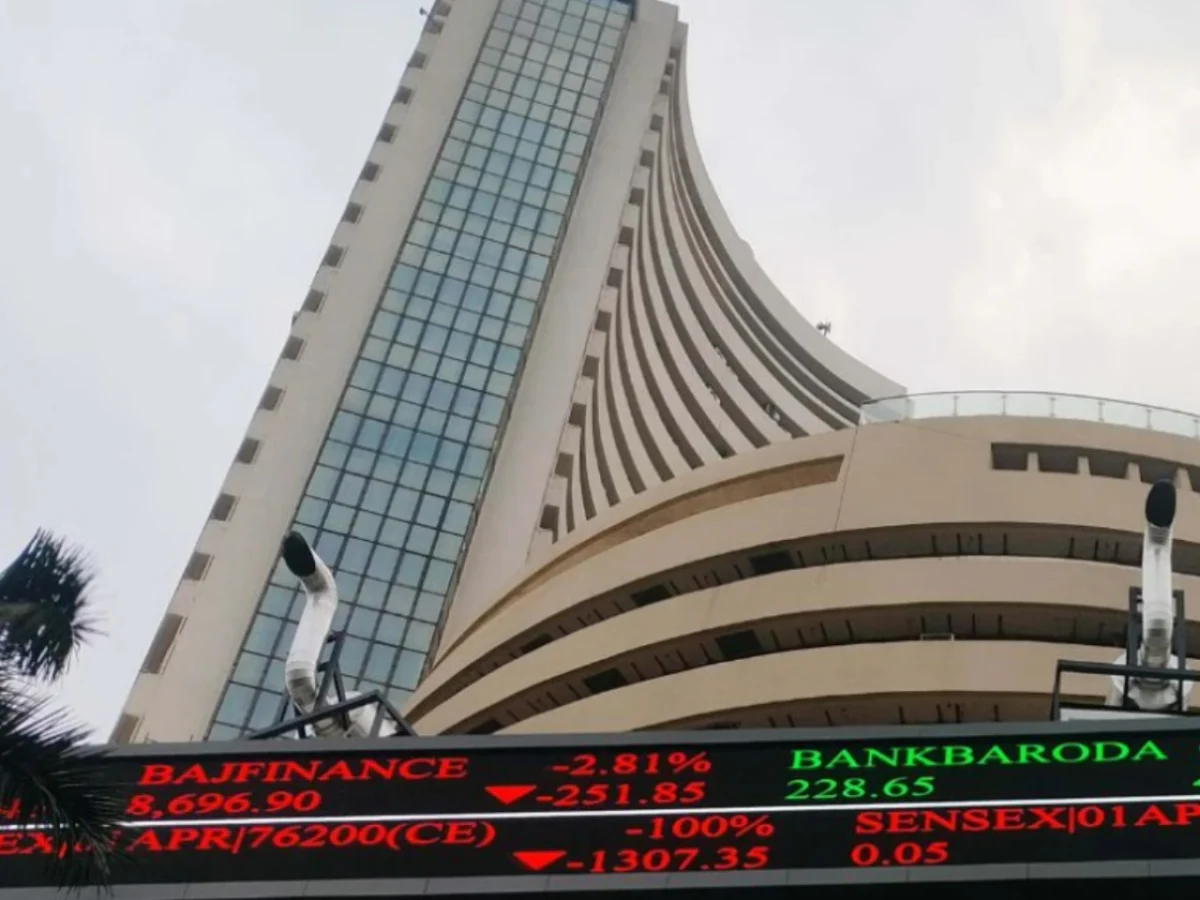
Mumbai, India – Indian benchmark equity indices experienced a significant gap-down opening on Monday, with both the Sensex and Nifty plummeting sharply as a confluence of global headwinds and domestic policy uncertainty converged to cast a pall over investor sentiment. The downturn coincided with the commencement of the Parliament’s monsoon session, adding a layer of domestic political scrutiny to an already fragile global economic landscape.
The Immediate Market Reaction: A Day of Significant Declines
The trading day began on a decidedly weak note, with the BSE Sensex registering a fall of over 500 points and the NSE Nifty 50 trading comfortably below the 24,200 mark. This initial sell-off set the tone for a cautious and volatile session, underscoring the market’s sensitivity to both international developments and impending domestic policy dialogues.
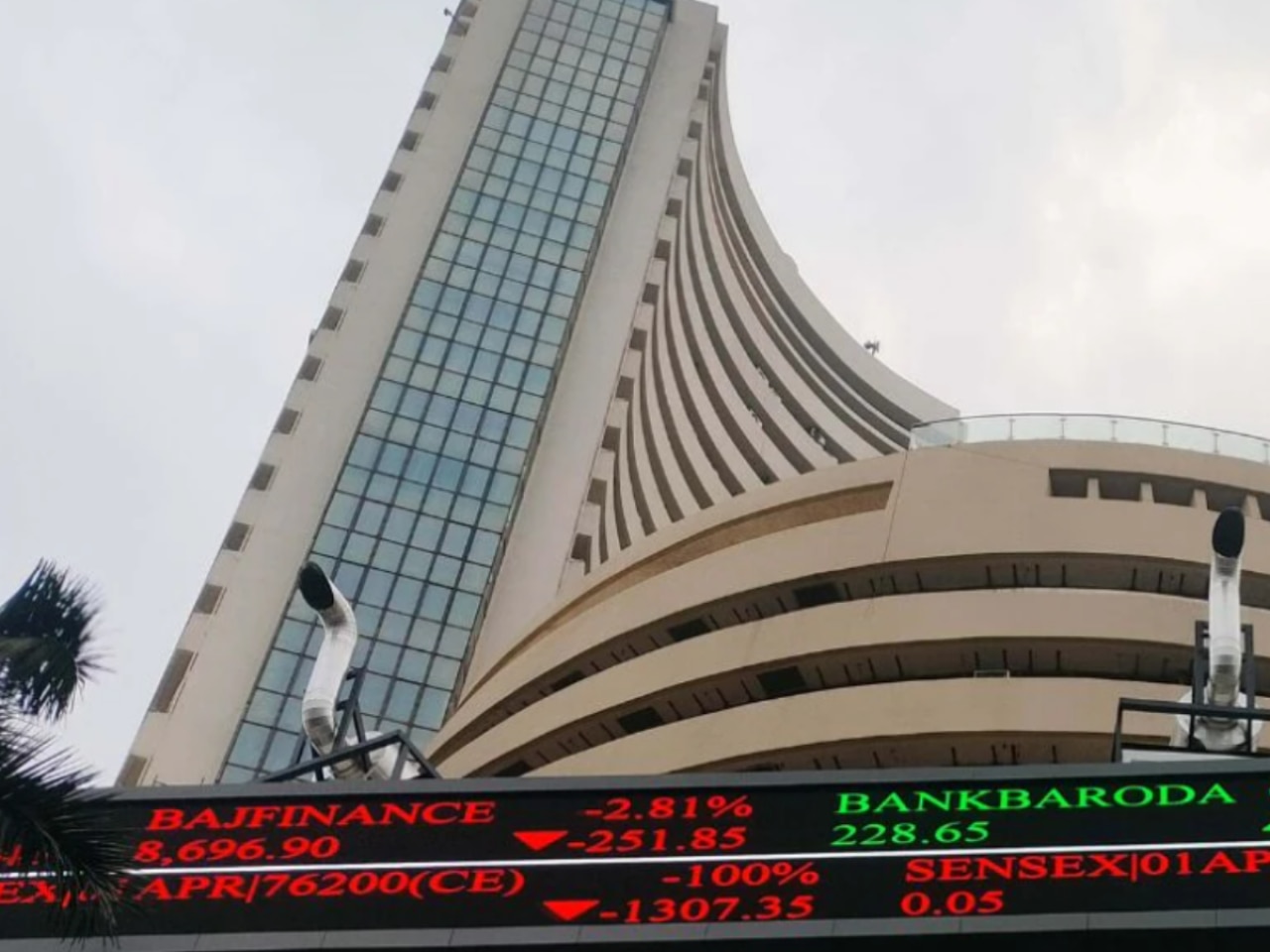
As of 12:22 IST, the BSE Sensex was trading at 77,581.74, down 569.71 points, or 0.73%. The index touched an intraday low of 77,444.79, having opened at 78,151.45. Its 52-week range reflects a broad spectrum of performance, from a low of 69,505.87 to a high of 88,566.47, indicating the current downturn is a noticeable correction within its recent trajectory.
Similarly, the NSE Nifty 50 was quoted at 24,180.55, a decline of 153.75 points, or 0.63%. The broader index recorded an intraday low of 24,149.90 and a high of 24,262.35. Its 52-week performance ranges from a low of 22,186.00 to a high of 26,566.20, further illustrating the extent of the day’s market correction.
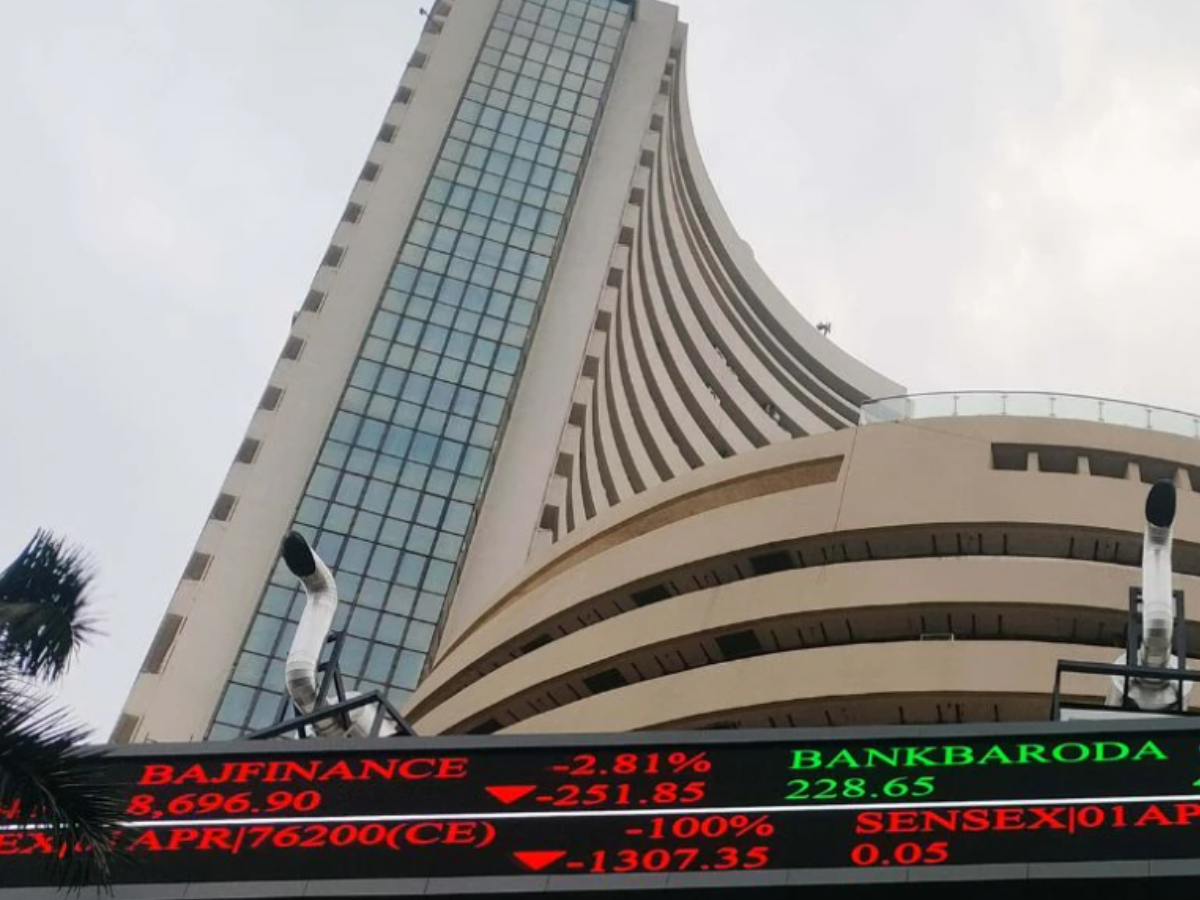)
Sectoral Performance: A Defensive Stance
In a clear reflection of investor apprehension, the market adopted a defensive posture. The Information Technology (IT) sector, often considered a defensive play during times of uncertainty due to its revenue streams being less tied to domestic economic cycles, emerged as a leading gainer. Conversely, the financial sector, particularly banking stocks, bore the brunt of the selling pressure, signaling concerns over credit growth, interest rate sensitivity, and broader economic stability.
Among the top gainers by 12:46 pm, TRENT led the charge, surging 2.25% to Rs 2905.75. Other notable performers included BHARTIARTL (+1.31%), POWERGRID (+1.00%), NTPC, SUNPHARMA, ITC, TECHM, HCLTECH, ULTRACEMCO, and ICICIBANK. These stocks, spanning various sectors from consumer goods to utilities and select financials, provided some pockets of resilience against the broader market decline.

However, the downside saw heavyweights taking a significant hit. HDFCBANK plummeted 5.23% to Rs 776.80, while AXISBANK dropped 5% to Rs 1252.60. KOTAKBANK (-2.55%) and MARUTI (-3.03%) also contributed significantly to the market’s negative momentum. Other major laggards included INDIGO, M&M, INFY, BAJFINANCE, and TCS, highlighting widespread selling across key sectors, including auto, aviation, and technology.
Unpacking the Triggers: Global Headwinds and Domestic Shadows
The sharp market correction on Monday was not an isolated event but rather the culmination of several intertwined global and domestic factors. While global cues set a challenging backdrop, the domestic political narrative added an additional layer of complexity.
)
The Geopolitical Undercurrents: Oil Shock and Inflation Fears
A primary driver of the global uncertainty stems from escalating geopolitical tensions, particularly in West Asia. This renewed instability has had an immediate and pronounced impact on global energy markets. Brent crude, the international benchmark for oil prices, surged past the critical psychological barrier of $100 per barrel, reaching as high as $114. Such a rapid and substantial increase in crude oil prices fuels fears of persistent global inflation, as energy costs permeate every aspect of the economy, from manufacturing to transportation.
This inflationary pressure, in turn, influences central bank policies worldwide. Robust economic data in major economies, particularly the United States, coupled with stubborn inflation, has compelled central banks like the U.S. Federal Reserve to maintain high interest rates and tighter monetary policies for longer than initially anticipated. This stance leads to higher bond yields in developed markets, making them more attractive to institutional investors seeking safer, higher-yield assets. Consequently, this dynamic often triggers massive Foreign Institutional Investor (FII) outflows from emerging equity markets like India, as capital migrates towards perceived safer havens offering better risk-adjusted returns.
)
Domestic Policy Shadows: Parliament’s Influence
Adding to the global pressures is the commencement of the Parliament’s monsoon session. While the gap-down opening is partly attributable to international factors, the inherent policy uncertainty associated with a new parliamentary session significantly contributes to the prevailing market mood. Investors often adopt a wait-and-watch approach during such periods, anticipating potential legislative announcements, policy shifts, or reforms that could impact various sectors.
The market’s sensitivity stems from the potential for both positive and negative surprises. Should there be no major negative announcements or policy shocks, the impact of this domestic uncertainty might dissipate within a few days. However, the prospect of significant reform surprises, whether beneficial or detrimental, has the potential to drive a more prolonged and substantial market movement, either upwards or downwards. The financial sector, for instance, could be particularly sensitive to any discussions or proposals related to banking regulations, credit policies, or fiscal measures.
)
Expert Insights: Navigating the Volatility
Leading market analysts and financial experts have weighed in on the current market dynamics, offering perspectives on the key triggers and potential pathways forward.
Abhishek Bhilwaria on Global Pressures and FII Exodus
Abhishek Bhilwaria, Partner at BhilwariaFinserv, precisely articulates the external factors driving the current market decline. "The recent 2026 stock market decline is primarily driven by escalating geopolitical tensions in West Asia, which triggered an oil price shock with Brent crude surging past $100-$114 per barrel, ultimately feeding fears of persistent global inflation," explains Bhilwaria. He further elaborates on the domino effect: "These inflationary pressures, coupled with robust economic data, have forced central banks like the U.S. Federal Reserve to maintain high interest rates and tighter monetary policies, pushing bond yields up and driving massive Foreign Institutional Investor (FII) outflows from emerging equity markets." His analysis highlights the interconnectedness of global finance, where instability in one region can send ripples across continents, impacting capital flows and investor confidence.
)
Piyush Jhunjhunwala on Multi-faceted Challenges
Piyush Jhunjhunwala, Founder & CEO of Stockify, asserts that the present market pullback is not attributable to any single factor but rather a complex interplay of global and domestic elements. "The present pullback in the equity markets reflects a combination of many global and domestic factors and not any single reason," he states. Jhunjhunwala concurs with Bhilwaria on geopolitical tensions and global interest rate uncertainty. He also emphasizes the role of FII outflows and domestic profit booking as significant contributors. Furthermore, he points to "sectoral instability… brought about by mixed corporate earnings and caution prevailing among the investors," indicating that specific company results and a general risk-averse mood are also at play. This holistic view underscores the intricate web of influences shaping market sentiment.
Sachin Gupta on Technical Resilience and "Buy-on-Dips"
Earlier, Sachin Gupta, VP – Technical Research at Choice Equity Broking, had accurately predicted a cautious start for the markets. He noted that the GIFT Nifty, trading around 24,295 and down nearly 55 points, signaled a weak opening for domestic equities. Gupta pointed to "negative global cues after a sharp sell-off on Wall Street, while a strong surge in crude oil prices amid escalating geopolitical tensions in the Middle East is likely to keep investors on edge during the opening session." Despite this bleak global backdrop, Gupta maintains a degree of optimism regarding the domestic market’s inherent strength. "Despite the weak global backdrop, the domestic market continues to exhibit a resilient technical structure, suggesting that any decline may attract buying at lower levels," he affirms. This technical resilience hints at underlying strength that could absorb short-term shocks, positioning the market for potential rebounds.
)
Strategic Implications for Investors
In light of the current market volatility and the complex interplay of factors, experts have offered crucial takeaways and strategic advice for investors seeking to navigate these turbulent times.
Long-Term Vision Amid Short-Term Turbulence
Despite the immediate headwinds from global and domestic factors, there is a strong consensus among experts regarding India’s robust long-term growth narrative. The foundational pillars of India’s economic expansion – rising domestic consumption, aggressive infrastructure development, widespread digital adoption, and increasing retail participation in financial markets – remain firmly intact. These structural factors are expected to continue driving economic growth, making India an attractive investment destination over the longer horizon.
)
Experts advise that investors who maintain discipline, avoid knee-jerk reactions, and steer clear of rushed decisions are best positioned to capitalize when the market eventually stages a recovery. The current downturn, while unsettling, could present opportunities for those with a long-term perspective.
Prioritizing Resilience and Diversification
Abhishek Bhilwaria emphasizes the importance of financial resilience and portfolio liquidity. "For investors, the crucial takeaways are to prioritise financial resilience and portfolio liquidity over chasing hyper-growth hype, avoid emotional panic-selling during sharp corrections, and focus on diversifying into fundamentally sound, broad market indexes to effectively weather macro volatility," he advises. This strategy advocates for a cautious approach, focusing on stability and spread rather than speculative gains, particularly during uncertain periods. Maintaining liquidity ensures investors have the flexibility to respond to market changes or seize opportunities without being forced to sell assets at unfavorable prices.
)
A "Buy-on-Dips" Approach with Caution
Sachin Gupta’s technical analysis supports a "buy-on-dips" strategy, albeit with close monitoring of key market levels. "While weak global cues and rising crude oil prices may trigger a cautious opening, the domestic market’s strong technical setup and supportive derivatives positioning continue to favour a buy-on-dips strategy," he reiterates. For traders, Gupta recommends closely monitoring the 24,100 support level and the 24,500 resistance level on the Nifty for clues regarding the next directional move. He also suggests that "stock-specific action is likely to remain the preferred trading approach," implying that individual company fundamentals and news might drive specific stock movements more than broad market trends in the near term.
Avoiding Emotional Decisions and Regular Portfolio Review
Piyush Jhunjhunwala strongly advises against panic selling during periods of high volatility. "Investors should avoid panic selling during volatility, since emotional decisions can hurt long-term wealth creation," he warns. Instead, he advocates for a diversified investment strategy that spans across various asset classes and sectors. Regular review of portfolios is also crucial to ensure alignment with one’s financial goals and risk tolerance. This proactive approach helps investors make informed decisions and adjust their strategies as market conditions evolve, rather than reacting impulsively to daily fluctuations.
)
India’s Unwavering Growth Story
Jhunjhunwala further reinforces the positive long-term outlook for India’s economy, despite the anticipated persistence of volatility in the near future. "As volatility might persist in the near future, despite the rapidly changing national and international conditions, the overall outlook of India’s economy remains positive in the long term," he states. He reiterates that the structural factors underpinning India’s growth story—such as increasing domestic consumption, continued infrastructure development, widespread adoption of digital technologies, and the burgeoning retail investment landscape—are largely unaffected by short-term market movements. He concludes by emphasizing that "Investors who do not rush into decisions and continue to invest in fundamentally sound companies are likely to take full advantage of the steady recovery of the markets once the upswing truly begins."
Conclusion: A Test of Investor Discipline
Monday’s market plunge serves as a potent reminder of the intricate interplay between global geopolitical dynamics, international economic policies, and domestic political landscapes. While immediate pressures from West Asian tensions, soaring oil prices, and hawkish central banks have undoubtedly unsettled markets, the added layer of policy uncertainty from the Parliament session has amplified investor caution.
)
For investors, the current environment is a test of discipline and long-term vision. The consensus among experts points towards navigating the immediate volatility through strategic diversification, maintaining liquidity, and resisting emotional decisions. Despite the current turbulence, the fundamental growth story of India remains robust, promising potential for those who maintain a disciplined approach and focus on fundamentally strong assets. The coming days will likely see continued scrutiny of parliamentary proceedings for policy signals and a close watch on global developments, particularly in energy markets and major economies’ central bank pronouncements.
Find your daily dose of All Latest News including Sports News, Entertainment News, Lifestyle News, explainers & more. Stay updated, Stay informed- Follow DNA on WhatsApp.
