

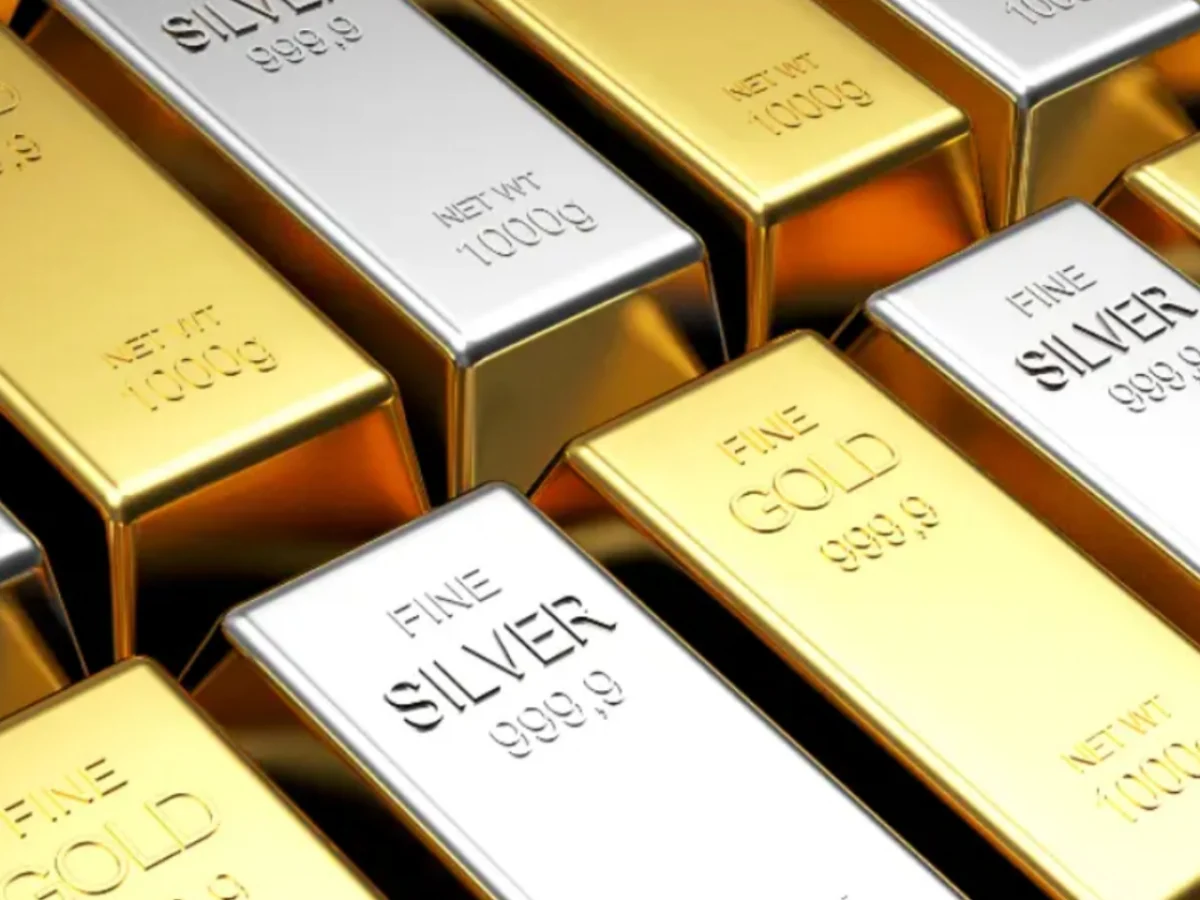
Mumbai, India – July 20, 2026 – India’s vibrant precious metals market continues its intricate dance with global economic forces, local consumer sentiment, and the relentless ebb and flow of currency exchange rates. As of Monday, July 20, 2026, gold prices have registered a slight upward tick, largely propelled by persistent global demand and underlying inflationary pressures that continue to ripple through international markets. Silver, often seen as gold’s more industrial counterpart, maintains a robust valuation, underpinned by its dual role as both an investment vehicle and a critical industrial commodity.
This steady yet watchful environment reflects a complex interplay of factors, from central bank monetary policies and geopolitical developments to India’s unique cultural affinity for gold during its vibrant festive calendar. For millions of Indian households, gold and silver are not merely commodities but deeply ingrained assets, serving as a traditional hedge against economic uncertainties and a symbol of prosperity.
Today, the price of 24-carat gold (999 pure) stands at Rs 14,328 per gram, while 22-carat gold, the preferred choice for intricate jewellery, is priced at Rs 13,134 per gram. Silver, meanwhile, is valued at approximately Rs 2,29,900 per kilogram for 999 purity, with sterling silver (925 purity) trading at Rs 2,34,000 per kilogram. These figures, while stable, are a testament to the dynamic nature of a market perpetually recalibrating itself against both domestic nuances and powerful international headwinds.
Tracing the Path to Current Valuations: A Look Back at 2025-2026
The current precious metals landscape on July 20, 2026, is not an isolated event but rather the culmination of a series of global and domestic economic shifts that have unfolded over the past year. Understanding this chronology is crucial to appreciating the resilience and volatility inherent in the gold and silver markets.
Global Economic Landscape and Geopolitical Shadows
The latter half of 2025 was characterized by a period of cautious optimism tempered by lingering inflationary concerns across major economies. Central banks, after an aggressive tightening cycle in previous years, had begun to signal a potential pivot towards more accommodative monetary policies, albeit slowly and data-dependently. This anticipation of interest rate cuts initially created headwinds for gold, as higher interest rates typically make non-yielding assets like gold less attractive.
However, as 2025 drew to a close and moved into early 2026, several factors began to shift the narrative. Geopolitical tensions, particularly escalating conflicts in Eastern Europe and sporadic unrest in the Middle East, reignited safe-haven demand for gold. Investors, seeking refuge from market uncertainties and potential economic fallout, flocked to the yellow metal. Simultaneously, persistent inflation, which proved more stubborn than many central banks had initially predicted, further bolstered gold’s appeal as a traditional hedge against the erosion of purchasing power. The US Dollar, which had been relatively strong, began to show signs of weakening in Q1 2026 as other major economies displayed signs of recovery, making dollar-denominated gold more affordable for international buyers and thus increasing demand.
By mid-2026, discussions around a potential "commodity supercycle" gained traction, driven by increased global infrastructure spending, energy transition initiatives, and supply chain reconfigurations. This broader bullish sentiment towards commodities inadvertently lent support to gold and, more significantly, to silver, given its extensive industrial applications. Central banks globally, particularly those in emerging markets, continued their trend of diversifying reserves away from traditional fiat currencies, adding substantial quantities of gold to their portfolios, providing a solid floor for prices.
India’s Domestic Market Dynamics
Within India, the domestic market for precious metals has navigated its own unique set of influences. The second half of 2025 saw robust demand leading up to the festive season, including Akshaya Tritiya and Diwali, where gold purchases are considered auspicious. This inherent cultural demand provides a consistent baseline for prices, often insulating the Indian market from some of the sharper global downturns.
However, the strength of the Indian Rupee against the US Dollar has played a critical role. A weaker rupee makes gold imports more expensive, directly translating to higher domestic prices. Conversely, a stronger rupee can provide some relief. Throughout late 2025 and early 2026, the rupee experienced moderate volatility, oscillating between periods of strength driven by foreign direct investment inflows and periods of weakness influenced by global capital outflows and trade deficits.
Government policies, such as import duties on gold and silver, have also significantly shaped domestic pricing. Any adjustments to these duties are keenly watched by the industry and consumers alike, as they can immediately impact the final price. Furthermore, the performance of the monsoon season in 2025 and anticipated for 2026 has a profound, albeit indirect, effect. A good monsoon often translates to higher agricultural income, boosting rural demand for gold, which constitutes a significant portion of India’s overall consumption.
Silver’s Dual Role: Investment and Industrial Demand
Silver’s journey through 2025-2026 has been marked by its dual identity. As a precious metal, it benefits from the same safe-haven and inflation-hedging qualities as gold, often moving in tandem with its yellow counterpart. However, its industrial demand has emerged as an increasingly dominant price driver. The accelerating global push towards green technologies – solar panels, electric vehicles (EVs), and 5G technology – relies heavily on silver for its superior conductivity and light sensitivity.
Throughout the past year, sustained growth in these sectors has created a consistent demand floor for silver. Reports from industry associations in early 2026 highlighted record industrial fabrication demand, absorbing significant portions of new supply. This industrial pull has often led to silver outperforming gold during periods of economic expansion and technological advancement, influencing the crucial gold-silver ratio, which tracks how many ounces of silver it takes to buy one ounce of gold. When this ratio falls, it typically indicates stronger relative performance for silver.
In essence, the current prices on July 20, 2026, reflect a market that has absorbed geopolitical shocks, adapted to shifting monetary policy expectations, navigated domestic currency fluctuations, and capitalized on both traditional cultural demand and burgeoning industrial requirements.
Unpacking the Numbers: Gold and Silver Rates Across Major Indian Cities
The current prices of gold and silver in India, while reflecting national trends, exhibit slight variations across major metropolitan areas. These nuances are typically due to local taxes, transportation costs, and specific regional demand-supply dynamics.
Gold’s Enduring Allure: Detailed Breakdown for July 20, 2026
As of today, July 20, 2026, the national average for gold prices indicates a slight firming up.
- 24-Karat Gold (999 Pure): This is the purest form of gold, primarily sought after for investment purposes, such as in gold bars, coins, and digital gold. Its national price today is Rs 14,328 per gram.
- 22-Karat Gold (91.67% Pure): This purity level is widely preferred for crafting jewellery due to its durability, as it is alloyed with other metals like copper or silver. Its national price today is Rs 13,134 per gram.
Here’s a city-wise breakdown for gold prices, as reported by industry aggregators like Good Returns:
- Gold Prices in Delhi:
- The current price of 24K gold in Delhi is Rs 14,343 per gram.
- The current price of 22K gold in Delhi is Rs 13,144 per gram.
- Delhi, being a major commercial hub and capital, often sees slightly higher rates due to extensive retail networks and higher operational costs.
- Gold Prices in Mumbai:
- The current price of 24K gold in Mumbai is Rs 14,328 per gram.
- The current price of 22K gold in Mumbai is Rs 13,134 per gram.
- Mumbai, home to India’s largest bullion market, often sets the benchmark for national prices due to its significant trading volume and direct import channels.
- Gold Prices in Kolkata:
- The current price of 24K gold in Kolkata is Rs 14,328 per gram.
- The current price of 22K gold in Kolkata is Rs 13,134 per gram.
- Kolkata, a city with deep cultural ties to gold and a significant jewellery manufacturing base, generally mirrors the national average, reflecting broad market sentiment.
- Gold Prices in Chennai:
- The current price of 24K gold in Chennai is Rs 14,328 per gram.
- The current price of 22K gold in Chennai is Rs 13,134 per gram.
- Chennai and the wider South Indian market are significant consumers of gold, particularly for traditional jewellery, and their prices tend to align closely with Mumbai, reflecting an integrated market.
The "inflationary pressures" mentioned as a key driver refer to the sustained increase in the general price level of goods and services, which erodes the purchasing power of fiat currencies. In such an environment, investors turn to gold as a store of value, pushing its price upwards. "Global demand" encompasses not just individual investors but also institutional players, central banks accumulating gold reserves, and exchange-traded funds (ETFs) that track gold prices. The "exchange rate of the US Dollar" is critical because gold is globally priced in dollars. A weaker dollar makes gold cheaper for holders of other currencies, thereby increasing demand and potentially its price. Conversely, a stronger dollar can make gold more expensive.
Silver’s Industrial Might and Investment Appeal: July 20, 2026 Rates
Silver, while less expensive than gold, is a powerhouse in its own right, driven by both investment interest and crucial industrial applications.
- 999 Pure Silver: The price for pure silver (999 fineness) is approximately Rs 2,29,900 per kilogram. This translates to Rs 2,299 per 10 grams.
- Silver 925 (Sterling Silver): This alloy, comprising 92.5% silver and 7.5% other metals (usually copper), is popular for jewellery and tableware due to its strength and malleability. Its price is currently Rs 2,34,000 per kilogram. The higher per-kilogram price for sterling silver compared to 999 pure silver reflects the added cost of alloying and manufacturing into specific forms.
Here’s a city-wise breakdown for 999 pure silver prices:
- Silver Price in Delhi Today: The current price of Silver 999 in Delhi is Rs 2,299 per 10 grams.
- Silver Price in Mumbai Today: The current price of Silver 999 in Mumbai is Rs 2,299 per 10 grams.
- Silver Price in Kolkata Today: The current price of Silver 999 in Kolkata is Rs 2,299 per 10 grams.
- Silver Price in Chennai Today: The current price of Silver 999 in Chennai is Rs 2,349 per 10 grams.
- The slight premium in Chennai often reflects strong regional demand for silver ornaments, which are particularly prevalent in South Indian traditions, alongside higher logistical costs for distribution in some southern markets.
The emphasis on "industrial demand" for silver is paramount. Industries such as solar energy (photovoltaic cells), electronics (conductors, switches), electric vehicles (batteries, connections), and medical applications rely heavily on silver’s unique properties. Growth in these sectors directly translates to increased demand for silver, often overriding traditional investment patterns. While sometimes referred to as "the poor man’s gold," silver has carved out its own distinct market niche, appealing to a broader spectrum of investors and consumers due to its affordability and diverse utility.
Analyst Insights and Industry Voices Shape the Narrative
To gain a deeper understanding of the current market dynamics and future projections, DNA India sought perspectives from leading economists, industry experts, and financial advisors. Their insights collectively paint a comprehensive picture of the forces at play.
Economists Weigh In on Macroeconomic Influences
Dr. Anjali Sharma, Chief Economist at Zenith Financial Corp., emphasized the global macroeconomic context. "The slight uptick in gold prices reflects a delicate balance. On one hand, central banks, particularly the US Federal Reserve, are still navigating a path to sustained disinflation without stifling economic growth. This uncertainty, coupled with higher-for-longer interest rate expectations in some regions, creates a bullish undercurrent for gold as a safe haven. On the other hand, robust equity market performance in certain sectors might divert some investment capital away from precious metals. We are observing a ‘new normal’ where inflation, while perhaps not at peak levels, remains a persistent concern, making gold an attractive component for portfolio diversification."
Dr. Sharma further elaborated on the Indian context: "The rupee’s stability against the dollar is crucial. While global factors drive the international price, the INR-USD exchange rate determines the landed cost of gold in India. Any significant depreciation of the rupee could push domestic prices higher, even if international prices remain flat or fall slightly. India’s economic growth trajectory and inflation management policies will continue to be critical domestic determinants."
Jewellers’ Associations on Demand and Consumer Sentiment
Mr. Rajesh Khanna, President of the All India Jewellers’ Federation (AIJF), provided an industry perspective on consumer behaviour. "Despite the current elevated prices, the underlying demand for gold and silver in India remains fundamentally strong. Gold is deeply embedded in our culture – for weddings, festivals, and as family heirlooms. While consumers might delay non-essential purchases during price peaks, significant events like the upcoming festive season ensure a steady flow of demand."
Khanna highlighted shifts in consumer preferences: "We are seeing a trend towards lighter, more contemporary jewellery designs that offer aesthetic appeal at a lower overall price point. There’s also a growing interest in silver jewellery, especially in regions where it holds strong cultural significance, as a more affordable alternative. The industry is adapting by offering flexible purchase schemes and promoting certified gold to maintain consumer trust." He expressed optimism for the latter half of 2026, anticipating a significant uptick in demand leading up to Diwali and the winter wedding season.
Commodity Analysts on Future Trajectories
Mr. Vikram Singh, Head of Commodities Research at Global Market Insights, offered a more technical outlook. "Gold is currently holding strong support levels, indicating resilient investor confidence. We’re observing consistent institutional accumulation, which suggests a belief in gold’s long-term value proposition, particularly as a hedge against systemic risk. For silver, the story is equally compelling. Industrial demand, especially from the burgeoning green energy sector, is providing a powerful floor. Any significant breakthroughs in solar cell efficiency or EV battery technology could create further demand spikes."
)
Singh added, "The gold-silver ratio is also worth watching. It has been fluctuating, but if global industrial output continues to accelerate, we could see silver outperform gold, leading to a tightening of this ratio. Geopolitical events, as always, remain the wildcard. Any escalation in current conflicts or emergence of new flashpoints would likely trigger immediate safe-haven flows into both metals." He predicted that gold could test higher resistance levels if global inflation remains persistent and central banks eventually signal definitive rate cuts.
Investment Advisors on Portfolio Strategy
Ms. Priya Rao, Senior Investment Strategist at WealthBridge Advisors, offered practical advice for investors. "In the current environment, precious metals continue to play a vital role in a diversified investment portfolio. Gold, in particular, acts as an excellent hedge against inflation and currency depreciation. For conservative investors, a 5-10% allocation to gold, whether through physical holdings, gold bonds, or ETFs, can provide stability."
Rao also championed silver’s potential. "Silver offers a unique blend of inflation hedge and growth potential due to its industrial applications. Given the global transition towards sustainable energy and advanced electronics, silver’s demand drivers are robust. Investors with a higher risk appetite might consider a larger allocation to silver, understanding its greater volatility. It’s crucial for investors to understand their risk tolerance and investment horizon before making allocation decisions." She stressed the importance of regular portfolio review and staying informed about global economic shifts.
Broader Impact and Future Projections for India’s Precious Metals Sector
The current price levels and market dynamics for gold and silver have far-reaching implications across various segments of Indian society and economy.
Impact on Consumers and Savers
For the average Indian consumer, the elevated prices of gold and silver present a mixed bag. On one hand, those who invested in these metals years ago are seeing substantial appreciation in their assets, bolstering household wealth. Gold remains a preferred form of traditional savings, particularly in rural areas where access to formal financial instruments might be limited. It acts as a liquid asset that can be pledged or sold during times of need, providing a critical safety net.
On the other hand, high prices can deter new purchases, especially for discretionary jewellery items. Many families may choose to buy lighter jewellery pieces or postpone purchases for weddings and other ceremonies, hoping for a price correction. The rise of silver as a popular alternative in certain regions also highlights this price sensitivity. However, the cultural significance of gold is so profound that demand, even if occasionally dampened, is rarely extinguished.
Effects on the Jewellery Industry
The Indian jewellery industry, a significant contributor to the country’s economy and employment, faces both challenges and opportunities. High gold prices can squeeze profit margins for retailers and manufacturers, especially those dealing in volume. They must manage inventory carefully and innovate to remain competitive. This has led to a greater focus on design innovation, promoting lightweight jewellery, and emphasizing craftsmanship over sheer metal weight.
The industry also keeps a close watch on government import policies. Any changes in duties directly impact their raw material costs and competitiveness. Furthermore, the increasing transparency and regulation within the sector, including mandatory hallmarking for gold jewellery, are building greater consumer trust, which is vital in a high-value market.
Investment Landscape and Economic Considerations
From an investment perspective, gold and silver continue to be viewed as essential components for portfolio diversification. They serve as reliable hedges against inflation and currency depreciation, offering stability when other asset classes, like equities, face volatility. The Indian government’s initiatives, such as Sovereign Gold Bonds (SGBs) and Gold Monetization Schemes, aim to channel physical gold into the financial system, reducing reliance on imports and strengthening the rupee. While these schemes have seen varied success, they represent a conscious effort to integrate India’s vast gold holdings into its formal economy.
The consistent demand for precious metals in India also has implications for the country’s balance of payments. High imports of gold and silver can widen the trade deficit, impacting the rupee’s stability. Therefore, the government’s policies often attempt to balance consumer demand with macroeconomic stability.
Outlook for Q3 and Q4 2026
Looking ahead to the latter half of 2026, the precious metals market in India is expected to remain dynamic. The upcoming festive season (August to December), including Raksha Bandhan, Ganesh Chaturthi, Navratri, Diwali, and the peak wedding season, is anticipated to provide a significant boost to domestic demand for both gold and silver. This seasonal demand often acts as a strong upward driver for prices.
Globally, the trajectory of inflation and central bank monetary policies will be paramount. If global inflation proves more persistent than anticipated, or if geopolitical tensions remain elevated, gold and silver could see further upward momentum as investors seek safe havens. Conversely, a definitive shift towards lower interest rates globally, coupled with sustained economic growth, could temper gold’s appeal slightly, while silver’s industrial demand would likely remain strong.
The long-term outlook for precious metals in India remains robust, underpinned by deeply ingrained cultural traditions, a growing middle class, and the metals’ enduring role as a store of value. While short-term fluctuations are inevitable, the intrinsic value and multifaceted utility of gold and silver ensure their continued prominence in India’s economic and cultural fabric.
