

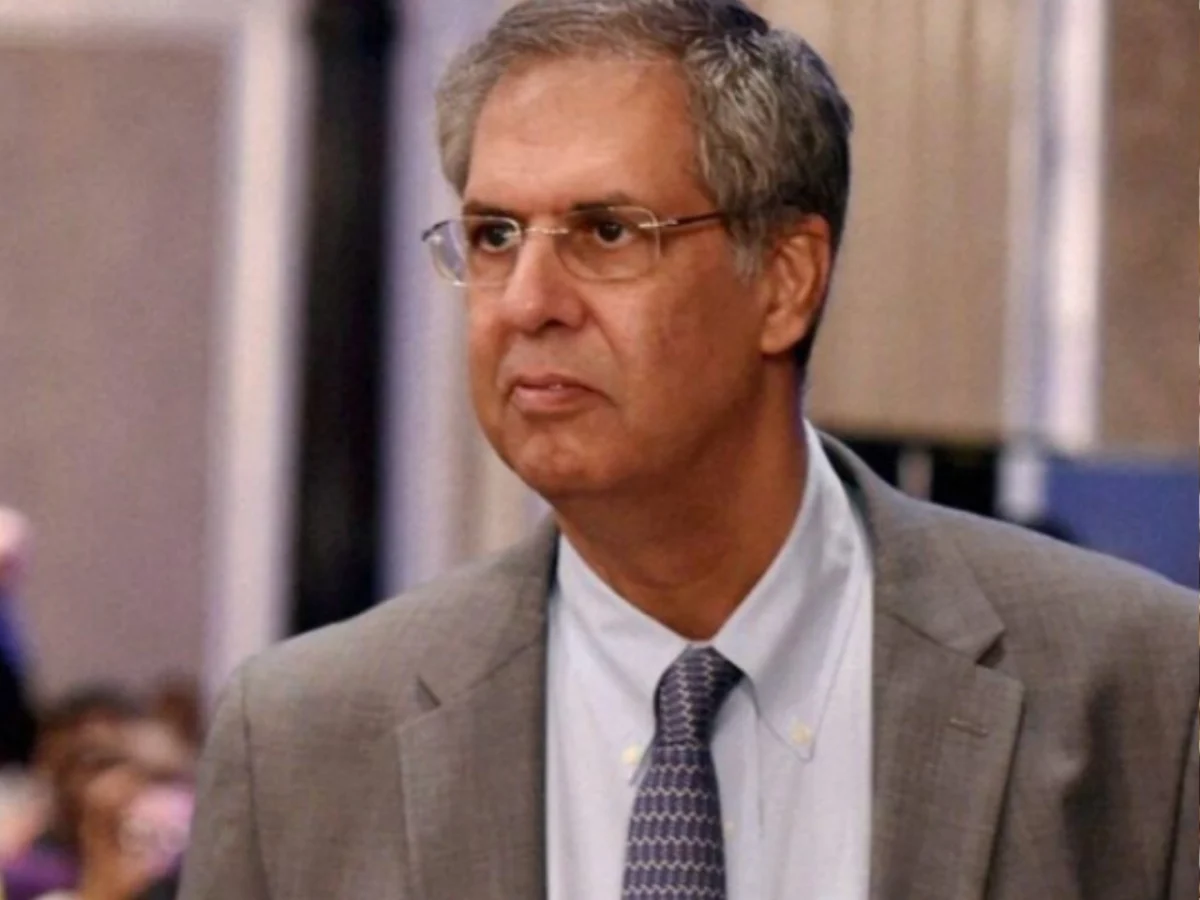
Mumbai, India – A decades-old transaction involving 833 shares of Tata Sons, the unlisted holding company of the vast Tata Group, has resurfaced, placing Noel Tata, Chairman of Tata Trusts, under intense scrutiny. The Maharashtra Charity Commissioner’s office has formally requested an explanation from Mr. Tata regarding the transfer of these shares from the Navajbai Ratan Tata Trust (NRTT) to the late Naval H Tata on January 18, 1989. This development follows a legal notice alleging the transfer constituted an "unlawful alienation of assets belonging to a public charitable trust into private hands," sparking a potentially significant inquiry into the governance and historical practices of one of India’s most revered philanthropic institutions.
The directive from the charity regulator, addressed to Noel Tata in his capacity as a trustee of NRTT, demands a comprehensive reply along with supporting documents within a stringent two-week timeframe. The communication underscores the regulator’s commitment to upholding principles of natural justice and suggests that an independent inquiry will be initiated if the submitted response fails to adequately address the serious allegations. This episode marks a critical juncture for Tata Trusts, which collectively hold a controlling 66% stake in Tata Sons, making their operational integrity and adherence to trust laws paramount to the stability and ethical standing of the entire Tata conglomerate.
Main Facts of the Allegation
At the heart of the controversy is a specific transaction that occurred over three decades ago: the transfer of 833 shares of Tata Sons from the Navajbai Ratan Tata Trust (NRTT) to Naval H Tata, father of Noel Tata and a prominent figure within the Tata Group, on January 18, 1989. This transfer is now being challenged as a potential breach of the fundamental principles governing public charitable trusts in India, specifically the prohibition against the unlawful alienation of trust assets for private benefit.
The Navajbai Ratan Tata Trust, like other Tata Trusts, is designated as a public charitable trust. This legal classification imposes stringent rules on how its assets, accumulated through donations and investments for philanthropic purposes, can be managed and disbursed. Crucially, the assets of such trusts are meant to serve public good, and their diversion for private gain, without proper legal sanction, valuation, or compensatory payment, is considered a serious violation.
The current allegations stem from a complaint asserting that this 1989 transfer lacked legal necessity, was not supported by proper documentation, and was executed without any payment to the trust based on an independent valuation. Furthermore, the complaint highlights a potential conflict of interest, particularly noting Noel Tata’s familial connection to Naval Tata, suggesting that his involvement in decisions related to this transfer, or his failure to address the matter previously, warrants closer examination. Given that Tata Trusts collectively control approximately 66% of Tata Sons, any question mark over the integrity of asset management within these trusts carries immense weight, not just for the trusts themselves but for the entire Tata ecosystem.
The Maharashtra Charity Commissioner’s office, acting as the principal regulatory body for public trusts in the state, has taken cognizance of these allegations. Its letter to Noel Tata is a formal step to gather information and assess the veracity of the claims. The office has explicitly stated that its primary objective is to determine whether an inquiry is warranted, emphasizing the need for a thorough response to the allegations to ensure due process and uphold the sanctity of trust governance.
)
A Detailed Chronology of Events
The unfolding saga surrounding the 1989 share transfer is a complex narrative spanning decades, with recent developments bringing the issue to the forefront. Understanding the sequence of events is crucial to grasp the gravity and implications of the current inquiry.
The Genesis: January 1989
The core of the dispute dates back to January 18, 1989. This was the day when 833 shares of Tata Sons were transferred from the Navajbai Ratan Tata Trust (NRTT) to Naval H Tata. Significantly, this transfer occurred just a week after Naval H Tata had stepped down as a trustee of NRTT. This proximity in timing, along with the nature of the transaction, forms a critical point of contention for the complainants, suggesting a potential pre-meditated move or an action taken shortly after a change in direct oversight.
The Decades of Silence: 1989 – Mid-2020s
For over three decades, this specific transaction remained largely out of the public and regulatory spotlight. While internal records and audits would have presumably existed, no formal complaint challenging the legality or propriety of the transfer appears to have reached the Charity Commissioner’s office until recently. This period of dormancy is a key aspect, as the legal and ethical landscape surrounding corporate governance and trust management has evolved significantly since 1989.

The Catalyst: June 4, 2024 (Approximate)
The immediate trigger for the current investigation was a formal complaint filed by Suresh Tulsiram Patilkhede through his lawyer, Katyayani Agrawal. While the exact date is reported as "June 4," the year contextually refers to the current year (2024, or a very recent past year, given the "2026/07/21" date in the original article’s metadata implies a future-dated publication or placeholder, but the content refers to current events). This complaint directly challenged the 1989 share transfer, labeling it as illegal under the rules governing public charitable trusts. The complaint laid out specific grounds for its illegality, including the alleged lack of legal necessity, proper documentation, and payment.
Escalation through Internal Channels: Vijay Singh’s Communication
Following Patilkhede’s complaint, Vijay Singh, who serves as a trustee of NRTT and Vice Chairman of Tata Trusts, communicated the concerns to the Maharashtra Charity Commissioner’s office. His communication specifically referred to the legal notice alleging the unlawful alienation of assets. While the original article doesn’t specify the exact date of Singh’s communication, it clearly indicates that it served as an official channel through which the regulator became formally apprised of the serious allegations. This suggests an internal acknowledgment of the seriousness of the complaint, leading to its escalation to the regulatory body.
The Regulator Steps In: Recent Weeks
In response to Vijay Singh’s communication and the underlying legal notice, the Maharashtra Charity Commissioner’s office issued a formal letter addressed to Noel Tata. This letter, which is the immediate focus of current news, explicitly demands an explanation and supporting documents regarding the 1989 share transfer. The regulator has given Noel Tata a two-week period to submit his response, clearly stating that the purpose is to determine whether a full-fledged independent inquiry is warranted. This marks the first direct regulatory intervention and formal demand for answers concerning this specific historical transaction.
)
Broader Context: Concurrent Trust Scrutiny
It is important to note that this inquiry into the NRTT share transfer does not occur in isolation. The original article mentions a related development: the Sir Ratan Tata Trust (SRTT) has reportedly been restrained from holding meetings or taking decisions pending an inquiry into alleged board violations. Furthermore, a fresh complaint was filed just before a key meeting of the Sir Dorabji Tata Trust, specifically seeking an investigation into the 1989 transfer and the protection of trust interests. These parallel developments suggest a broader environment of increased scrutiny over the governance and operational integrity of the various Tata Trusts, amplifying the significance of the current inquiry into NRTT. The timing of these complaints, particularly the one regarding Sir Dorabji Tata Trust, indicates a concerted effort by certain parties to bring historical trust management practices under judicial and regulatory review.
Supporting Data and Context
To fully appreciate the gravity of the allegations against Tata Trusts and Noel Tata, it is essential to delve into the foundational aspects of the Tata Group’s structure, the legal framework governing charitable trusts in India, and the historical significance of the individuals and assets involved.
The Unique Structure of Tata Sons and Tata Trusts
The Tata Group stands as a unique conglomerate globally, largely due to its ownership structure. The majority shareholder of Tata Sons – the principal holding company for the diverse Tata enterprises, ranging from automobiles and steel to IT and consumer goods – is not a private family or a corporate entity, but a collection of philanthropic trusts. Specifically, Tata Trusts collectively own approximately 66% of Tata Sons. This ownership model dictates that a significant portion of the dividends generated by Tata Sons flows back into these trusts, which then deploy these funds for a wide array of charitable activities across education, healthcare, rural development, and art and culture. This symbiotic relationship between commerce and philanthropy is a defining characteristic of the Tata ethos, making any question about the integrity of the trusts’ assets particularly sensitive.
)
The shares of Tata Sons are unlisted, meaning they are not publicly traded on stock exchanges. This lack of public valuation often leads to complexities in determining fair market value during private transactions. The value of even a small block of Tata Sons shares is substantial, given the underlying assets and profitability of the vast Tata Group. The 833 shares in question, while a fraction of the total, represent a significant financial asset, and their alleged transfer without proper valuation or payment raises serious concerns about potential financial loss to a charitable endowment.
The Legal Framework: Maharashtra Public Trusts Act, 1950
Public charitable trusts in India, particularly in Maharashtra, operate under stringent legal provisions designed to prevent mismanagement and ensure assets are used solely for their stated charitable objectives. The Maharashtra Public Trusts Act, 1950, is the primary legislation governing such trusts. This Act outlines the duties and responsibilities of trustees, the process for managing trust properties, and, critically, strict rules regarding the alienation (transfer, sale, or disposal) of trust assets.
Under this Act, the alienation of immovable property belonging to a public trust typically requires prior sanction from the Charity Commissioner. While the rules for movable assets like shares might have nuances, the overarching principle remains: any transfer of significant trust assets must be demonstrably in the best interest of the trust, transparent, and often requires independent valuation and fair compensation. The Act empowers the Charity Commissioner to inquire into the administration of trusts, investigate alleged breaches, and take corrective action, including ordering the return of alienated property or initiating legal proceedings against trustees found to be in dereliction of their duties. The current allegations touch upon the very core of these protective provisions, claiming that the 1989 transfer circumvented these legal and ethical requirements.
)
Key Individuals and Their Roles
- Noel Tata: As Chairman of Tata Trusts and a trustee of NRTT, Noel Tata holds a pivotal position. He is the son of Naval H Tata, the recipient of the shares, and half-brother of Ratan Tata, the former long-serving Chairman of Tata Sons. His current leadership role places him directly responsible for addressing the historical conduct of the trusts and upholding their governance standards. The demand for an explanation from him specifically highlights his accountability within the trust structure.
- Naval H Tata: The late Naval H Tata was a highly respected figure within the Tata Group, known for his contributions to the group’s diversification and philanthropic endeavors. He was a trustee of NRTT before stepping down just a week prior to the share transfer. The allegations, though historical, pertain to an action involving him as the beneficiary, and the inquiry seeks to ascertain if his family ultimately benefited from the transaction.
- Nani A. Palkhivala: The defense put forth by Tata Trusts references the involvement of the late Nani A. Palkhivala. Palkhivala was an eminent Indian jurist, constitutional expert, and economist, widely regarded as one of the finest legal minds the country has produced. His approval of any transaction would typically lend significant credibility. However, the complainant’s challenge implies that even with such high-profile legal counsel, the specifics of the transaction might still fall short of current, or even past, stringent interpretations of trust law regarding asset alienation and transparency. His involvement, while cited as a defense, also raises questions about the scope of his review and the specific legal advice rendered at the time.
The Strategic Importance of Tata Sons Shares
Shares of Tata Sons are not merely financial instruments; they represent control over one of India’s largest and most influential business empires. The ability of Tata Trusts to maintain a majority stake ensures that the group’s strategic direction aligns with its philanthropic mandate, often prioritizing long-term value creation and societal impact over short-term profit maximization. Any transfer of these shares, particularly out of the trust’s direct ownership and into private hands, even within the Tata family, has profound implications for corporate governance, ownership structure, and the very identity of the Tata Group. The potential for such transfers to dilute the trusts’ control or to enrich private individuals at the expense of public charitable endowments is precisely what the Maharashtra Charity Commissioner’s office is now mandated to investigate.
Official Responses and Counter-Arguments
The allegations surrounding the 1989 share transfer have elicited strong reactions from both the complainant and Tata Trusts, while the Maharashtra Charity Commissioner’s office maintains a neutral, investigatory stance.
The Complainant’s Stance: A Litany of Allegations
Suresh Tulsiram Patilkhede, through his legal counsel, has articulated a series of precise and serious allegations against the 1989 share transfer. The core of his complaint rests on the assertion that the transaction amounted to an "unlawful alienation of assets belonging to a public charitable trust into private hands." This overarching claim is supported by several specific points:
)
- No Legal Necessity: The complainant argues that there was no legal requirement or compelling reason for the Navajbai Ratan Tata Trust (NRTT) to transfer these shares to Naval H Tata. Trust assets are typically transferred only under specific circumstances, such as fulfilling a trust deed objective or complying with a legal mandate, none of which, it is alleged, applied in this case.
- Lack of Proper Documentation: A critical aspect of transparent trust management is meticulous record-keeping. The complaint suggests that the transfer was not adequately documented, or that the existing documents do not sufficiently justify the transaction’s legality and propriety.
- Absence of Payment and Independent Valuation: Perhaps the most damaging allegation is that the transfer occurred "without any payment." For a public charitable trust to divest an asset, especially one of significant value like Tata Sons shares, it is expected to receive fair market value, typically determined through an independent valuation process. The absence of such payment would imply a direct financial loss to the trust and an uncompensated benefit to the recipient.
- Conflict of Interest: The complaint also points to a potential conflict of interest involving Noel Tata. As a successor to Naval Tata and a current trustee, his position could be seen as compromised, particularly if the transfer ultimately benefited his family members. The demand that he "should not take part in decisions about this transfer" underscores the perceived conflict.
These allegations collectively paint a picture of a transaction that, if proven true, would represent a significant breach of fiduciary duty and trust law, undermining the very purpose of a public charitable institution.
Tata Trusts’ Vigorous Defense: Baseless and Legitimate
In stark contrast to the complainant’s assertions, Tata Trusts have issued a robust and categorical denial of the allegations. Their official statement dismisses the claims as "baseless, unsubstantiated and done with bad intent," indicating a firm belief in the legitimacy of the 1989 transaction. This strong rebuttal suggests that Tata Trusts are prepared to defend their historical actions vigorously.
The defense put forth by Tata Trusts hinges on several key arguments:
)
- Legality and Compliance: Tata Trusts maintain that the share transfer was "legal and followed all rules at that time." This implies adherence to the prevailing laws and regulations governing charitable trusts and corporate transactions in 1989.
- Approval by Eminent Legal Counsel: A significant pillar of their defense is the assertion that the transfer "was cleared at the right levels, including by the late Mr Nani A. Palkhivala, one of India’s top lawyers." Palkhivala’s involvement, if confirmed and documented, would lend considerable weight to the legality of the transaction, given his unparalleled reputation and expertise in constitutional and corporate law. His clearance would suggest that the transfer underwent rigorous legal vetting at the time.
- Tata Sons Board Approval: The Trusts also state that the transfer was "approved by the Tata Sons board at the time." This indicates that the company’s highest governing body was aware of and sanctioned the transaction, further suggesting a formal and recognized process.
- Valid and Stamped Form: Finally, Tata Trusts affirm that "The shares were transferred using a valid form that was properly stamped by the Registrar of Companies." This speaks to the procedural correctness of the transaction, implying that the necessary administrative and legal formalities for share transfers were observed.
These counter-arguments collectively assert that the 1989 transfer was not a surreptitious or unlawful act but a fully legitimate transaction conducted with due diligence, legal counsel, and corporate approvals of the era.
The Charity Commissioner’s Position: Impartial Inquiry
The Maharashtra Charity Commissioner’s office has adopted a meticulously neutral and procedural stance. Its primary objective is not to accuse but to investigate and ascertain facts. The communique to Noel Tata explicitly states that the request for a response is "in keeping with the principles of natural justice," ensuring that all parties have an opportunity to present their side before any decision is made.
The regulator’s demands to Noel Tata are specific and designed to gather comprehensive information:
)
- Necessity of Transfer: "Why the transfer was needed."
- Supporting Documentation: "Documents supporting the transfer."
- Payment and Valuation: "Whether the trust got payment based on an independent valuation."
- Beneficiary Identification: "Whether the shares ultimately benefited Naval Tata’s family members."
- Authenticity and Legality: "An explanation for the authenticity of legalities involving the transfer and whether the transfer followed the law in force at that time."
Crucially, the regulator has indicated that "an independent inquiry will be set up, if required, into the matter after it receives the response." This commitment underscores the seriousness with which the Charity Commissioner’s office views its role in safeguarding public trusts and signals that it is prepared to escalate the investigation if Noel Tata’s reply and supporting documents do not adequately address the allegations. The regulator’s actions reflect its mandate to ensure transparency, accountability, and adherence to the Maharashtra Public Trusts Act, 1950.
Broader Implications and Future Outlook
The inquiry into the 1989 share transfer has far-reaching implications, extending beyond the immediate parties to affect the reputation of the Tata Group, the governance of charitable trusts, and potentially setting precedents for future regulatory oversight.
For Tata Trusts: Reputation, Governance, and Legal Scrutiny
For the collection of Tata Trusts, particularly the Navajbai Ratan Tata Trust (NRTT), the ongoing inquiry poses a significant challenge to their long-standing reputation for integrity and philanthropic commitment. As the ultimate owners of the Tata Group, the trusts are seen as the custodians of the group’s ethical foundation. Any finding of impropriety, even historical, could tarnish this carefully built image and erode public and stakeholder trust.
)
The investigation will inevitably lead to an internal re-evaluation of governance mechanisms, historical record-keeping, and compliance procedures within the trusts. It might necessitate a comprehensive audit of past asset transfers and transactions to preempt further allegations. Legally, depending on the outcome of the Charity Commissioner’s inquiry, the trusts could face directives to reverse the transaction, pay compensatory damages, or even face penalties. The concurrent scrutiny of other trusts, such as the Sir Ratan Tata Trust (SRTT) and the Sir Dorabji Tata Trust, suggests a broader wave of examination that could impact the entire philanthropic arm of the Tata Group. This might necessitate a more centralized and transparent governance framework across all Tata Trusts to ensure consistent adherence to regulatory standards.
For Noel Tata: Personal Scrutiny and Leadership Implications
Noel Tata, as the current Chairman of Tata Trusts and a trustee of NRTT, finds himself directly in the crosshairs of this inquiry. While the transaction predates his full ascendancy to these roles, his familial connection to the recipient (Naval H Tata, his father) and his current leadership position make him the focal point of the Charity Commissioner’s demands. His response, and the transparency with which he handles this situation, will be crucial in defining his leadership and credibility within the Tata ecosystem and beyond.
A negative finding or an unsatisfactory explanation could have significant personal repercussions, potentially impacting his standing within the Tata family and the broader business community. It could also fuel internal power dynamics or succession debates within the Trusts. Conversely, a clear and convincing rebuttal, backed by irrefutable documentation, could solidify his position and reinforce the trusts’ commitment to good governance.
)
For the Tata Group: Corporate Governance Standards and Investor Confidence
While Tata Sons is an unlisted company, its public perception and the governance standards of the Tata Group as a whole are inextricably linked to the integrity of Tata Trusts. Any governance lapse within the trusts could raise questions about the overarching ethical environment of the conglomerate. Although directly impacting the trusts, the controversy could indirectly affect investor confidence in listed Tata companies, as the trusts’ reputation underpins the group’s long-term stability and ethical leadership.
The inquiry could serve as a stress test for the Tata Group’s commitment to transparency and adherence to the highest standards of corporate governance, even in historical matters. It might prompt a group-wide review of how philanthropic entities interact with commercial enterprises, particularly concerning asset transfers and potential conflicts of interest.
For Charitable Trust Oversight: Reinforcement of Regulatory Powers
This inquiry serves as a powerful reminder of the regulatory authority vested in bodies like the Maharashtra Charity Commissioner’s office. It reinforces the idea that charitable trusts, despite their philanthropic objectives, are not exempt from rigorous oversight, especially when managing substantial public assets. The proactive stance of the regulator, demanding explanations and threatening independent inquiries, underscores its commitment to enforcing the Maharashtra Public Trusts Act, 1950.
)
The outcome of this case could set a significant precedent for how historical transactions within other large charitable trusts are reviewed and challenged. It might embolden other complainants and regulatory bodies to delve into past dealings, fostering greater accountability across the non-profit sector. This increased scrutiny could lead to stronger legislative frameworks or more robust enforcement mechanisms for trust governance in India.
Potential Scenarios and Future Trajectory
The future trajectory of this case could unfold in several ways:
- Satisfactory Explanation: Noel Tata’s response, supported by comprehensive documentation, might fully satisfy the Charity Commissioner, leading to the closure of the inquiry without further action. This would be the most favorable outcome for Tata Trusts.
- Independent Inquiry: If the Charity Commissioner deems the response insufficient or finds grounds for further investigation, an independent inquiry will be launched. This would entail a more in-depth, potentially prolonged, investigation with a wider scope.
- Legal Action: Depending on the findings of an inquiry, the Charity Commissioner could initiate legal proceedings against the trustees, demand the reversal of the transaction, or impose penalties. This could escalate into a protracted legal battle.
- Broader Reforms: Regardless of the specific outcome of this case, the scrutiny it generates might compel Tata Trusts to implement broader reforms in their governance structures, transparency mechanisms, and trustee appointment processes to prevent similar controversies in the future.
The development also occurs amidst broader discussions about the philanthropic model and corporate governance in India, adding another layer of complexity and public interest to the proceedings.
)
Conclusion
The re-emergence of the 1989 share transfer allegations against the Navajbai Ratan Tata Trust and Noel Tata marks a critical moment for the Tata Group and the broader landscape of charitable trust governance in India. At its core, the inquiry challenges the very principles of transparency, accountability, and the proper stewardship of assets meant for public good. The Maharashtra Charity Commissioner’s demand for a comprehensive explanation from Noel Tata within a stringent two-week deadline underscores the seriousness with which regulatory bodies view potential breaches of trust law.
As one of India’s most respected conglomerates, the Tata Group’s ethical standing is inextricably linked to the integrity of its philanthropic trusts. The outcome of this investigation will not only determine the legitimacy of a decades-old transaction but will also have profound implications for the reputation of Tata Trusts, the leadership of Noel Tata, and potentially set new precedents for regulatory oversight of charitable endowments across the nation. The coming weeks will be crucial as all eyes turn to Noel Tata’s response and the Charity Commissioner’s subsequent decision on whether to launch a full-fledged independent inquiry into this complex and historically significant matter. The pursuit of truth and adherence to due process will ultimately reinforce public trust in institutions that serve both commercial and philanthropic ends.
