

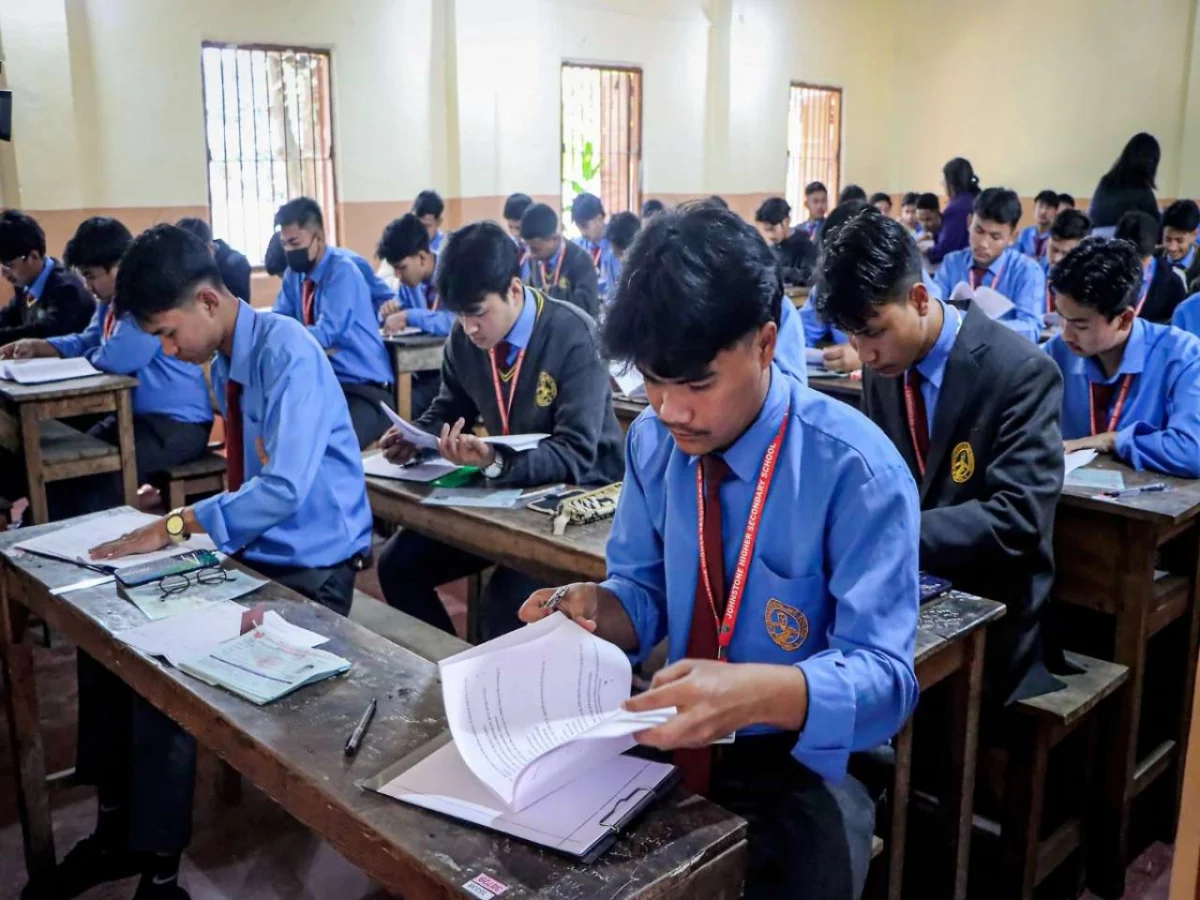
New Delhi, India – The Central Board of Secondary Education (CBSE) has announced a pivotal shift in its curriculum for Classes 9 and 10, introducing a mandatory internal assessment for the third language, a move designed to align with the National Education Policy (NEP) 2020. This significant policy change, set to be implemented from the 2027-28 academic session, redefines the role of third language acquisition from a potentially elective subject to a qualifying requirement for the Secondary School Examination certificate. While the subject will be removed from the Class 10 board examinations, students will now be required to successfully clear an internal school-based assessment to receive their certification.
This directive represents a substantial departure from previous practices, where the third language often ceased to be a focus after Class 8. The new policy emphasizes the importance of multilingualism and the preservation of Indian languages, key tenets of the NEP 2020. The phased rollout begins with students entering Class 9 in the 2026-27 academic year, who will be the first cohort to experience these revised norms. Consequently, the batch entering Class 10 in the 2027-28 academic year will be directly impacted by the new assessment criteria.
The Evolving Landscape of Third Language Learning
The revamped policy mandates that students in Classes 9 and 10 must demonstrate proficiency in a third language through an internal assessment conducted by their respective schools. This subject, often designated as R3, will no longer contribute to the final board exam scores but will serve as a crucial gateway to obtaining the Class 10 pass certificate.
Key Changes for Class 10 Students:
)
- Qualifying Subject: From the 2027-28 academic session, successful completion of the internal assessment in the third language will be a prerequisite for receiving the Secondary School Examination certificate.
- Reassessment Provision: In cases where a student fails the internal assessment in Class 10, schools are obligated to conduct a reassessment before the declaration of board results. This provides a crucial second chance to meet the language requirement.
- Exclusion from Board Exams: The third language will not be a part of the Class 10 board examinations, alleviating pressure on students regarding its examination at the national level.
Implications for Class 9 Students:
The policy also addresses the progression of students from Class 9 to Class 10.

- Conditional Promotion: Students in Class 9 who do not clear the third language assessment will still be promoted to Class 10. However, they will be required to successfully complete the outstanding Class 9 third language assessment during their Class 10 year. This ensures that students are not held back academically while still mandating the fulfillment of the language requirement before the completion of their secondary education.
This forward-thinking approach aims to cultivate a sustained engagement with language learning throughout the secondary school years, moving beyond the previous model where third language study often concluded prematurely.
Chronology of Policy Implementation and Rationale
The recent CBSE circular, released on July 10, builds upon a previous announcement on June 29, which detailed the broader rollout of the three-language formula from Class 6, commencing in the 2026-27 academic session. This phased implementation strategy aims to allow schools and students adequate time to adapt to the new educational framework.
)
Timeline of Key Developments:
- June 29, 2024: CBSE announces the rollout of the three-language formula from Class 6, starting in the 2026-27 academic session.
- July 10, 2024: CBSE notifies the revised norms for third language assessment in Classes 9 and 10, making it a qualifying subject from the 2027-28 academic session.
- 2026-27 Academic Session: Students entering Class 9 will be the first cohort to be affected by the new policy regarding the third language.
- 2027-28 Academic Session: Students entering Class 10 will be subject to the new internal assessment requirements for the third language to receive their Secondary School Examination certificate.
The underlying rationale for these changes is deeply rooted in the National Education Policy (NEP) 2020, which strongly advocates for promoting multilingualism and a deeper understanding of India’s diverse linguistic heritage. The NEP 2020 emphasizes that students should be exposed to at least three languages during their schooling, with a minimum of two being indigenous Indian languages.
)
Under the revised structure:
- Students will be expected to learn three languages.
- A minimum of two of these languages must be Indian languages.
- Students who were already studying a foreign language in addition to English in Classes 7-9 are permitted to continue, but they must also concurrently study a third Indian language.
This policy aims to address a long-standing issue where the study of the third language often waned after Class 8, leading to a potential loss of linguistic exposure and cultural understanding. The compulsory inclusion of the third language in Class 9 from 2026-27 and in Class 10 from 2027-28 ensures a continuous learning process. Notably, students currently in Class 10 who will be appearing for the 2026-27 Board examinations will not be affected by these changes.
)
Supporting Data and the NEP 2020 Framework
The CBSE’s decision to elevate the third language to a qualifying subject is a direct consequence of the NEP 2020’s comprehensive vision for a more holistic and culturally enriching education system. The policy document extensively discusses the benefits of multilingualism, including enhanced cognitive abilities, improved critical thinking skills, and a deeper appreciation for India’s vast cultural tapestry.
The NEP 2020 states, "The three-language formula will continue to be implemented with flexibility in states, in the spirit of promoting multilingualism across the country. However, states will be encouraged to promote the learning of Indian languages." This emphasis on "flexibility" and "encouragement" has been interpreted by CBSE in its move to make the third language a mandatory component of secondary education.
)
The policy aims to:
- Foster Multilingualism: By ensuring exposure to at least three languages, students will develop greater linguistic competence and adaptability.
- Safeguard Indian Languages: The emphasis on Indian languages within the three-language formula is crucial for their preservation and promotion in an increasingly globalized world.
- Enhance Cognitive Development: Research consistently shows that multilingual individuals often exhibit superior problem-solving skills, creativity, and multitasking abilities.
- Strengthen National Integration and Cultural Pluralism: Understanding and appreciating different languages is intrinsically linked to understanding and respecting different cultures, thereby fostering a stronger sense of national unity and embracing diversity.
The shift from an optional or lightly emphasized subject to a mandatory qualifying component underscores the board’s commitment to these NEP 2020 principles.
)
Official Responses Amidst Legal Challenges
While the CBSE’s revised language policy is designed to bolster linguistic education and cultural understanding, it has not been without its share of legal scrutiny. A writ petition challenging the CBSE’s circulars pertaining to the three-language formula is currently pending in court.
The petitioners are seeking the reinstatement of an earlier CBSE stance from April 9, which had proposed deferring the mandatory implementation of the third language for Class 9 to the 2029-30 academic session. This indicates a desire for a more gradual transition and perhaps concerns about the preparedness of the system to implement the policy as currently stipulated.
)
In response to these legal challenges, the Ministry of Education submitted a detailed nine-page counter-affidavit on July 13, strongly supporting the policy. The affidavit, filed by Subhash Chand, Under Secretary in the Department of School Education and Literacy, was presented in response to a Supreme Court notice dated May 27, 2026.
The government’s defense of the policy is grounded in several key arguments:
)
- Concurrent List Jurisdiction: The affidavit highlights that education falls under the Concurrent List of the Constitution, granting both the Central government and state governments the authority to implement policies like the NEP. This counters any potential arguments against the Central government’s authority to mandate such educational reforms.
- Public Interest: The Ministry argues that the three-language formula serves major public interests, aligning with the core objectives of fostering multilingualism, safeguarding Indian languages, enhancing cognitive development, and strengthening national integration and cultural pluralism. These are presented as paramount societal benefits that outweigh the concerns raised by the petitioners.
The government’s robust defense underscores its firm commitment to the NEP 2020’s vision and its belief in the positive impact of the three-language formula on students and the nation. The legal battle, however, indicates potential friction points and the need for careful consideration of implementation strategies.
Broader Implications and Future Outlook
The CBSE’s latest directive represents a significant paradigm shift in secondary education, moving beyond purely academic metrics to incorporate a more holistic development of students. The emphasis on the third language as a qualifying subject is a clear signal of the board’s intent to imbue students with a deeper appreciation for India’s linguistic and cultural diversity.
)
Key Implications:
- Curriculum Development: Schools will need to ensure robust third language programs are in place, potentially requiring additional resources for teaching staff and learning materials.
- Teacher Training: Educators will need to be adequately trained to deliver effective instruction in various third languages, ensuring engaging and meaningful learning experiences.
- Student Engagement: The success of the policy hinges on students perceiving the value of learning a third language, moving beyond a mere compliance requirement.
- Assessment Design: The internal assessment mechanism will need to be standardized and fair, accurately reflecting students’ language proficiency.
- Parental Awareness: Clear communication with parents regarding the policy’s objectives and implications will be crucial for their support and encouragement.
With the rollout planned from the 2027-28 academic session, the period leading up to it will likely be characterized by intense preparation, adaptation, and ongoing dialogue. The legal challenges, while currently ongoing, highlight the importance of addressing any practical concerns and ensuring a smooth transition.
)
The CBSE’s move to make the third language a cornerstone of secondary education is a bold step towards realizing the comprehensive vision of the NEP 2020. Its ultimate success will depend on the collective efforts of educational institutions, policymakers, and, most importantly, the students themselves, in embracing the richness and value of linguistic diversity. The coming years will undoubtedly be a period of close scrutiny and careful observation as this transformative policy unfolds.
