

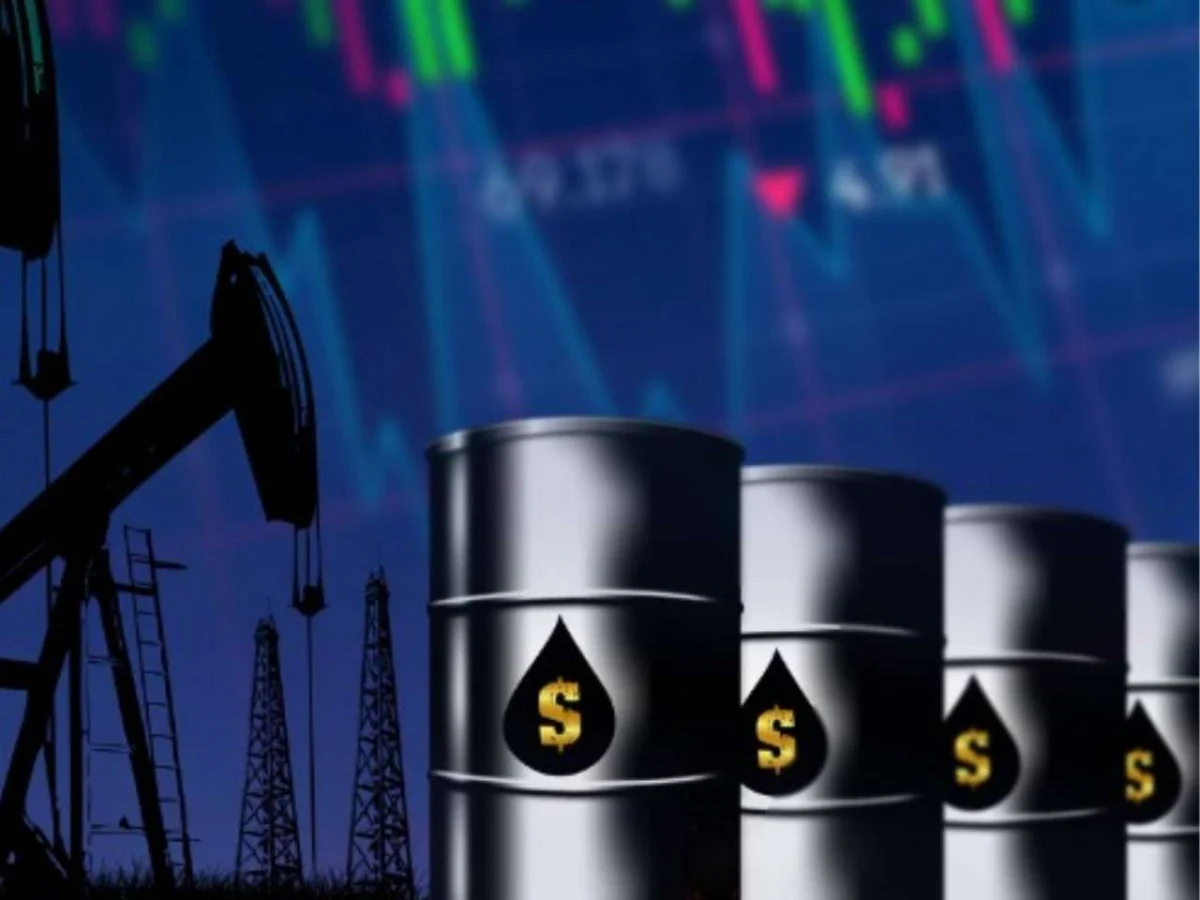
DUBAI, UAE – July 13, 2026 – Global crude oil markets experienced a significant surge on Monday following a dramatic escalation of tensions in the Middle East, as Iran launched retaliatory strikes against several Gulf states. These attacks came in response to recent US military actions targeting Tehran, igniting fears of a broader regional conflict and disrupting vital energy supply routes. The volatile geopolitical landscape immediately translated into a sharp rise in energy prices, underscoring the delicate balance of global stability.
Brent Crude, the international benchmark, soared to USD 79.17 per barrel, marking an increase of USD 3.16, or 4.16 percent, at the time of reporting. Concurrently, West Texas Intermediate (WTI) crude oil, the US benchmark, also saw substantial gains, trading at USD 74.47, up USD 3.06 or 4.29 percent. This rapid price movement reflects deep-seated investor anxiety over potential disruptions to oil production and transit, particularly through the strategically critical Strait of Hormuz.
The recent military actions have not only rattled commodity markets but have also drawn sharp condemnation from international bodies, highlighting the profound instability now gripping the region. The Organization of Islamic Cooperation (OIC) was quick to denounce Iran’s strikes, calling them a severe violation of international law and a threat to regional peace.
The Immediate Spark: A Cascade of Military Actions
The latest round of hostilities represents a dangerous new chapter in the long-standing animosity between the United States and Iran. The sequence of events unfolded rapidly over the weekend, setting off alarm bells across global capitals and financial centers.
)
US Strikes on Tehran
On Sunday (local time), the United States initiated a fresh series of military strikes against Iran. The US Central Command (CENTCOM) confirmed these operations, stating their objective was to further degrade Tehran’s capacity to target civilian mariners and commercial vessels navigating the Strait of Hormuz. In a post on X (formerly Twitter), CENTCOM explicitly stated that the strikes were carried out "on the direction of the Commander in Chief to hold Iranian forces accountable." This action signaled Washington’s firm resolve to protect international shipping lanes and deter what it perceives as Iranian aggression in the Gulf. The specific targets and full extent of the damage inflicted by these US strikes remain under assessment, but their strategic intent was clear: to curb Iran’s maritime interdiction capabilities.
Iran’s Retaliatory Assaults on Gulf States
In a swift and unequivocal response to the US actions, Iran launched a wave of attacks targeting several Gulf nations. While the precise nature and extent of these strikes were not immediately detailed, the targeted countries included Qatar, Oman, Kuwait, the United Arab Emirates, Bahrain, and Jordan. Iran’s Foreign Ministry quickly framed these actions as legitimate defensive measures, a direct response to what it termed "US aggression." This retaliatory move marks a significant escalation, broadening the scope of the conflict beyond direct US-Iran confrontations and drawing regional allies into the crosshairs. The attacks underscored Iran’s willingness to project power and demonstrate its capacity to inflict costs on nations perceived as supporting or facilitating US military operations in the region.

Chronology of Escalation: A Tense History Unfolds
The current crisis is not an isolated incident but rather the latest manifestation of decades of complex and often hostile relations between the United States and Iran, exacerbated by regional proxy conflicts and the pivotal role of the Strait of Hormuz.
A Legacy of Mistrust: US-Iran Relations
The roots of the current animosity stretch back to the 1979 Islamic Revolution in Iran, which overthrew the US-backed Shah and established an anti-Western Islamic Republic. This event dramatically reshaped geopolitical alliances in the Middle East and laid the foundation for enduring mistrust. Key flashpoints over the years have included the Iran-Iraq War (1980-1988), accusations of Iranian sponsorship of terrorism, and, most prominently, Iran’s nuclear program.
)
The 2015 Joint Comprehensive Plan of Action (JCPOA), or Iran nuclear deal, offered a brief period of détente, placing strict limits on Iran’s nuclear activities in exchange for sanctions relief. However, the US withdrawal from the JCPOA in 2018 under the previous administration, followed by the re-imposition of crippling sanctions under a "maximum pressure" campaign, reignited tensions. Since then, the region has witnessed a series of provocative acts, including attacks on oil tankers, drone incidents, and missile strikes attributed to both sides and their proxies. The current US administration has largely maintained the previous administration’s tough stance, while also expressing a willingness for diplomacy, though recent events severely undermine such prospects.
The Strait of Hormuz: A Global Chokepoint
Central to the ongoing crisis is the Strait of Hormuz, a narrow waterway connecting the Persian Gulf with the Arabian Sea and beyond. It is one of the world’s most critical maritime chokepoints, through which approximately one-fifth of the world’s total petroleum consumption passes daily. Its strategic significance cannot be overstated; any disruption to navigation in the Strait has immediate and profound implications for global energy markets.
)
The Strait is bordered by Iran to the north and Oman’s Musandam Peninsula to the south. Its narrowest point is just 21 nautical miles wide, making it highly vulnerable to blockades or attacks. Both Iran and the US, along with their respective allies, maintain a significant military presence in the area, constantly monitoring each other’s activities. Iran has repeatedly threatened to close the Strait in response to sanctions or military threats, a move that would have catastrophic consequences for the global economy. The current military actions, particularly those targeting vessels and degrading capabilities related to maritime security, directly threaten the freedom of navigation through this indispensable corridor, thereby elevating global energy supply concerns to critical levels.
Supporting Data: Economic Ripple Effects
The spike in oil prices is not merely a number on a screen; it represents a significant economic shockwave with far-reaching consequences for consumers, businesses, and governments worldwide.
)
Oil Market Dynamics
The 4-percent jump in both Brent and WTI crude futures immediately added a risk premium to global oil prices. This premium reflects the market’s assessment of future supply disruptions, even if no actual supply has been immediately cut. Traders and analysts are now factoring in a higher probability of further escalation, potential damage to oil infrastructure in the Gulf, or a prolonged period of insecurity that could raise shipping insurance costs and deter investment.
Historical data consistently shows a direct correlation between geopolitical instability in the Middle East and oil price volatility. Major conflicts, such as the 1973 oil crisis, the Iran-Iraq War, and the Gulf Wars, have all led to dramatic price surges, demonstrating the region’s outsized influence on global energy supplies. The current situation rekindles memories of these past crises, albeit in a new geopolitical context.
)
Broader Economic Implications
Beyond crude oil, the ripple effects are expected to extend across various sectors:
- Fuel Prices: Higher crude oil prices translate directly into increased prices at the pump for gasoline and diesel, impacting transportation costs for individuals and businesses alike. This can fuel inflationary pressures across economies already grappling with post-pandemic economic challenges.
- Shipping and Logistics: Increased risks in the Gulf region will inevitably lead to higher shipping insurance premiums for vessels transiting the Strait of Hormuz. This, in turn, will increase the cost of transporting goods, contributing to supply chain disruptions and potentially raising the prices of imported products globally.
- Inflationary Pressures: Elevated energy costs are a significant driver of inflation. Central banks worldwide, many of whom are already battling persistent inflation, may face renewed pressure to tighten monetary policy, potentially slowing economic growth.
- Airlines and Transportation: Industries heavily reliant on fuel, such as aviation and logistics, will see their operating costs rise substantially, potentially impacting profitability and leading to higher ticket prices or freight charges.
- Global Growth Forecasts: Sustained high oil prices act as a tax on the global economy. International financial institutions may revise down their global growth forecasts if the situation in the Middle East remains tense or escalates further. Oil-importing nations, particularly those with fragile economies, will be hit hardest.
Official Responses: A Chorus of Condemnation and Defiance
The rapid escalation has prompted a flurry of official statements, revealing a stark division in regional and international perspectives, alongside concerted diplomatic efforts to manage the crisis.
)
OIC Condemns Iranian Strikes: A United Front
The Organization of Islamic Cooperation (OIC), representing 57 member states, issued a powerful statement on Sunday, unequivocally condemning the Iranian attacks. The OIC General Secretariat denounced the strikes targeting Qatar, Oman, Kuwait, the United Arab Emirates, Bahrain, and Jordan as a "flagrant and ongoing violation" of national sovereignty.
The statement went further, labeling the attacks a direct breach of the "principles of good neighbourliness based on mutual respect." This is a significant diplomatic blow to Iran, as the OIC’s condemnation signifies a broad consensus among a diverse group of Islamic nations, many of whom have historically maintained complex relations with both Iran and the US. The OIC also criticized Iran’s "ongoing disruption of international trade and attacks on commercial vessels," asserting that these actions violate international law and the charters of both the United Nations and the OIC itself.
)
By reaffirming its "full solidarity with the targeted nations" and supporting their right to take measures to safeguard their security and territorial integrity, the OIC is signaling a united front against what it perceives as Iranian adventurism. This collective stance from a major international body amplifies diplomatic pressure on Iran and underscores the regional apprehension regarding its actions.
United States: Holding Iran Accountable
The US Central Command (CENTCOM) reiterated its rationale for the strikes against Iran, emphasizing the objective of "degrading their ability to attack civilian mariners and commercial ships freely transiting the Strait of Hormuz." This narrative positions the US actions as defensive and aimed at maintaining international norms of maritime freedom. The US has consistently asserted its commitment to protecting its interests and allies in the region, and the latest strikes serve as a demonstration of this resolve.
)
US officials are likely to continue to frame Iran as the primary aggressor, citing a history of provocative actions in the Gulf. Washington’s strategy appears to be one of deterrence through force, aiming to impose costs on Iran for its perceived destabilizing activities. The US is also expected to engage in intensive diplomatic efforts with its Gulf allies to coordinate responses and bolster regional security.
Iran’s Defiant Stance and Warnings
Iran’s Ministry of Foreign Affairs strongly condemned the recent US military strikes, characterizing them as a "flagrant violation" of the UN Charter and accusing Washington of undermining regional stability. Tehran views the US actions as an unprovoked act of aggression and a breach of international law, rejecting the American justification for its military presence and operations in the Gulf.
)
In a significant escalation of rhetoric, Iran’s Foreign Ministry issued a stark warning: any country allowing its territory or facilities to be used for attacks against Iran "could become a legitimate target of Iranian defensive strikes." This declaration significantly raises the stakes for Gulf nations hosting US military bases and signals Iran’s readiness to expand the conflict if it perceives its sovereignty or security to be threatened. Iran further urged the United Nations to hold the United States accountable for what it described as acts of aggression, attempting to shift the narrative and portray itself as the victim of international bullying. This defiant stance underscores Iran’s determination to resist external pressure and assert its regional influence.
International Community’s Calls for De-escalation
Beyond the direct parties, the broader international community has reacted with alarm. The United Nations Secretary-General’s office typically issues calls for restraint and de-escalation in such situations, urging all parties to abide by international law and seek peaceful resolutions. Major global powers, including the European Union, China, and Russia, are likely to express concerns about the rising tensions. While their interests in the region vary, all share an interest in maintaining global energy stability and preventing a wider conflict that could have devastating economic and humanitarian consequences. Diplomatic channels will undoubtedly be activated, with various nations potentially offering mediation or urging a return to dialogue, though the current climate of mistrust makes such efforts challenging.
)
Implications: A Precarious Path Forward
The latest escalation carries profound implications, not only for the Middle East but for global stability, economic prosperity, and the future of international relations.
Geopolitical Ramifications
The immediate risk is a further spiral of tit-for-tat attacks, potentially leading to a direct military confrontation between the US and Iran. Such a conflict would be catastrophic, drawing in regional and possibly international actors, triggering widespread humanitarian crises, and irrevocably altering the geopolitical map of the Middle East.
)
The attacks on Gulf states also threaten to unravel delicate regional security architectures. While the OIC’s condemnation signals a unified front among many Islamic nations, the prospect of nations hosting US facilities becoming "legitimate targets" could create fissures or force difficult choices among allies. The security of international navigation in critical waterways like the Strait of Hormuz will remain paramount, with increased naval presence and heightened alert levels expected.
Furthermore, the crisis could exacerbate existing proxy conflicts across the region, from Yemen to Syria and Lebanon, where Iran and its adversaries support opposing factions. A direct confrontation could empower extremist groups, further destabilize fragile states, and lead to new waves of displacement and suffering.
)
Economic Outlook
The most immediate and tangible implication is the sustained volatility in energy markets. Even if a full-scale war is averted, prolonged tensions and uncertainty will likely keep oil prices elevated, maintaining a risk premium that weighs on global economic recovery. Businesses reliant on global supply chains will face increased costs and potential disruptions, while consumers will bear the brunt of higher fuel prices and inflationary pressures.
The long-term economic outlook for the region itself is also grim. Increased military spending, decreased foreign investment, and disruptions to trade and tourism could severely hamper economic development in the Gulf states and Iran. The global economy, already grappling with post-pandemic challenges, can ill afford another major shock from the world’s most critical energy-producing region.
)
Diplomatic Challenges
The current crisis severely complicates any prospects for a return to diplomacy regarding Iran’s nuclear program or broader regional security issues. The trust deficit between Washington and Tehran, already immense, has deepened further. Iran’s warning to nations hosting US bases also creates a diplomatic dilemma for those countries, forcing them to re-evaluate their strategic partnerships.
International efforts will likely focus on de-escalation, preventing miscalculation, and establishing clear lines of communication to avoid unintended consequences. However, without a fundamental shift in approach from both the US and Iran, the region appears poised for a prolonged period of high tension and sporadic military engagements. The role of international mediators, if any emerge, will be crucial but exceedingly difficult given the entrenched positions of the principal actors.
)
In conclusion, the recent military escalation in the Middle East has plunged the global community into a state of heightened alert. The surge in oil prices is a stark reminder of the region’s indispensable role in global energy security, while the diplomatic condemnations and defiant warnings underscore the dangerous trajectory of US-Iran relations. As the standoff on the Strait of Hormuz continues, the world watches anxiously, hoping for a de-escalation that seems increasingly elusive amidst the rising tide of military action and rhetorical escalation.
(With ANI inputs)
