

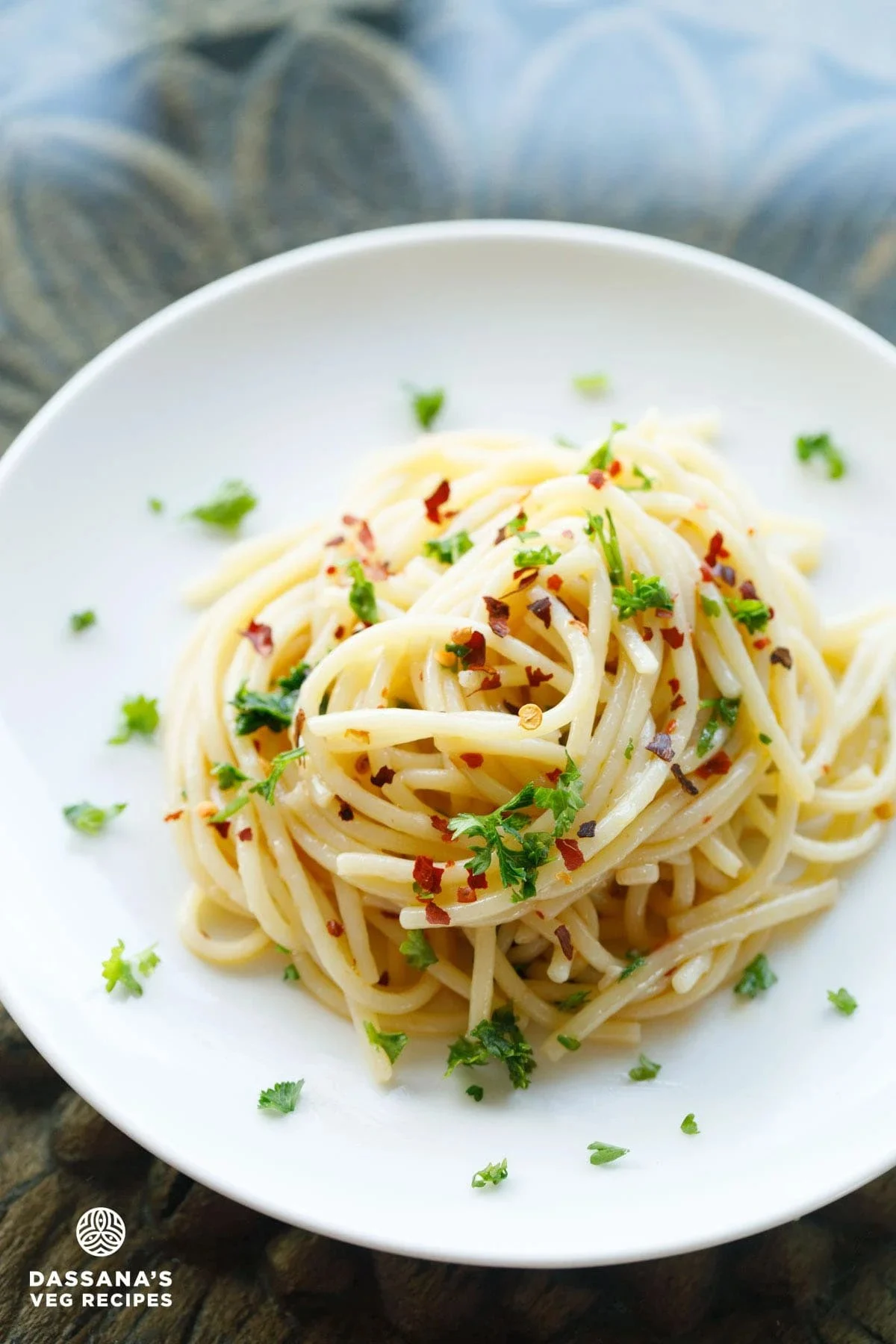
Main Facts: The Pillar of Southern Italian Gastronomy
In the pantheon of global cuisine, few dishes embody the philosophy of "less is more" as effectively as Spaghetti Aglio e Olio. Originating from the sun-drenched kitchens of Naples in Southern Italy, this dish is a cornerstone of Cucina Povera—the "kitchen of the poor"—where culinary genius was born out of necessity and a limited pantry. Literally translating to "spaghetti with garlic and oil," the dish relies on a handful of humble ingredients: dried pasta, extra virgin olive oil, fresh garlic, and red chili flakes.

While its ingredient list is brief, the dish is a rigorous test of a cook’s technical precision. According to culinary experts and long-time practitioners like Dassana, the creator of the popular Veg Recipes of India platform, the success of Aglio e Olio depends entirely on the quality of the components and the timing of the execution. In a fast-paced modern world, the dish has seen a resurgence in popularity, not only for its 20-minute preparation time but for its alignment with plant-forward, clean-label eating habits.

The dish serves as a masterclass in emulsification and heat management. It is a meal that provides roughly 844 calories per serving, offering a dense source of energy primarily through complex carbohydrates and monounsaturated fats. Beyond its nutritional profile, it represents a cultural heritage that prioritizes the integrity of raw ingredients over the complexity of heavy sauces.

Chronology: From Boiling Water to the Perfect Emulsion
The creation of a perfect Spaghetti Aglio e Olio follows a strict chronological sequence where each minute dictates the final texture and flavor profile. To understand the dish, one must follow the journey from the raw pantry to the plated masterpiece.

Phase 1: The Foundation of Starch (0–10 Minutes)
The process begins with the preparation of the pasta. Unlike many modern interpretations that overlook the importance of the cooking liquid, traditionalists insist on using a large volume of water—approximately six cups for 250 grams of spaghetti—heavily seasoned with salt. The salt acts as the primary seasoning for the pasta itself, as the final "sauce" contains no added salt other than a finishing pinch.

The spaghetti must remain whole. Breaking the strands is considered a culinary faux pas in Italian tradition, as the long strands are essential for capturing the oil-and-water emulsion. The pasta is cooked until just before the al dente stage. This is a critical chronological marker; the spaghetti is removed from the water 2 to 3 minutes early because it is destined for a "second cooking" in the pan.

Phase 2: Infusing the Liquid Gold (5–12 Minutes)
Parallel to the boiling pasta, the "Aglio" (garlic) and "Olio" (oil) are prepared. This phase requires extreme thermal control. Extra virgin olive oil is warmed over low heat. The garlic, finely minced, is added to the cool or warm oil to allow its essential oils to seep out gradually. The goal is a light golden hue. If the garlic turns dark brown or black, the sulfurous compounds become bitter, ruining the delicate balance of the dish.

Phase 3: The Emulsification (12–18 Minutes)
The most modern and technically sound approach to this classic involves the "pasta water technique." Before draining the spaghetti, a cup of the starchy cooking water is reserved. This liquid is added to the garlic-infused oil, creating a bubbling, spluttering mixture that, when whisked or tossed, forms a creamy, light sauce. The drained spaghetti is then added to this pan, where it finishes cooking, absorbing the flavored liquid into its core rather than just being coated by it.

Phase 4: The Finishing Touches (18–20 Minutes)
In the final seconds, fresh parsley and red chili flakes are introduced. The residual heat is sufficient to wake up the oils in the dried chili without scorching them. The result is a silky, aromatic pasta that is neither dry nor excessively greasy.

Supporting Data: Ingredients, Nutrition, and Chemical Synergy
The deceptive simplicity of Spaghetti Aglio e Olio is supported by a complex nutritional and chemical framework. Because there are no heavy creams or meats to mask imperfections, the data behind the ingredients becomes paramount.

Ingredient Quality and Selection
- Extra Virgin Olive Oil (EVOO): As the primary fat source, EVOO provides the "backbone" of the flavor. High-quality EVOO contains polyphenols and antioxidants that are preserved when kept under low heat.
- Garlic: Rich in allicin, garlic provides the aromatic punch. The recipe calls for approximately 2 teaspoons of minced garlic per 250g of pasta, a ratio that ensures a bold but mellow sweetness when sautéed correctly.
- Parsley: Specifically the flat-leaf Italian variety, parsley provides a necessary hit of Vitamin K and Vitamin C, acting as a bitter counterpoint to the rich oil.
Nutritional Breakdown (Per Serving)
A standard two-serving preparation yields the following data:

- Calories: 844 kcal
- Total Fat: 44g (with 31g being heart-healthy monounsaturated fats)
- Carbohydrates: 95g (providing sustained glucose release)
- Protein: 17g (derived primarily from the durum wheat semolina)
- Sodium: 2390mg (largely dependent on the pasta boiling water)
- Micronutrients: Significant levels of Vitamin A (802 IU), Vitamin E (7mg), and Calcium (66mg).
The high fat content is often a point of discussion for health-conscious consumers; however, the predominance of monounsaturated fats from the olive oil aligns the dish with the Mediterranean Diet, which is clinically associated with reduced cardiovascular risk.

Official Responses: Expert Perspectives on Technique
Culinary experts emphasize that the "official" way to cook this dish has evolved from a simple toss to a more sophisticated pan-finishing method. Dassana, reflecting on years of kitchen experience, notes that "the little details matter." Her professional recommendation to use reserved pasta water marks a shift from the dry, oily versions often served in mid-century restaurants to the silky, integrated versions found in modern Italian gastronomy.

"With just a handful of ingredients, there is nothing to hide behind," Dassana explains. This sentiment is echoed by chefs worldwide who use Aglio e Olio as a "litmus test" for new cooks. The official response to the common problem of "greasy pasta" is the science of starch. By not rinsing the pasta, the surface starch remains, acting as a natural thickening agent that binds the oil and water together.

Furthermore, culinary experts warn against the "burnt garlic trap." The official consensus is to turn off the heat the moment the garlic reaches a "straw-gold" color. The carry-over cooking in the pan will bring it to the perfect state of doneness without the risk of carbonization.

Implications: Cultural Relevance and Modern Trends
The enduring legacy of Spaghetti Aglio e Olio carries significant implications for the modern food industry and domestic cooking habits.

The Rise of "Clean Label" Cooking
In an era where consumers are increasingly wary of ultra-processed foods, Aglio e Olio stands as a beacon of transparency. It is a "clean label" meal by default—no preservatives, no hidden sugars, and no complex additives. Its popularity on social media platforms like TikTok and Instagram highlights a shift back toward "authentic" and "ancestral" cooking styles.

Economic and Sustainability Factors
Amidst global inflation and rising food costs, this dish remains one of the most cost-effective ways to feed a family. The ingredients are shelf-stable and inexpensive, yet the result is a restaurant-quality meal. Furthermore, from a sustainability standpoint, the dish has a low carbon footprint compared to meat-heavy pasta dishes, making it an unintentional hero of the eco-friendly food movement.

The Vegan and Plant-Based Movement
As the world shifts toward plant-based diets, Aglio e Olio has transitioned from a side dish to a primary contender for vegan main courses. Unlike many "veganized" versions of classic dishes that require expensive meat or dairy substitutes, Aglio e Olio is naturally vegan. This makes it an inclusive staple for modern dinner parties and restaurant menus.

Conclusion
Spaghetti Aglio e Olio is more than just a quick 20-minute meal; it is a testament to the power of Italian culinary logic. By understanding the chronology of its preparation, the data of its ingredients, and the expert techniques required to master it, one gains a deeper appreciation for the art of simplicity. As we look toward the future of food, the lessons of Naples—quality, timing, and the clever use of "waste" products like pasta water—remain as relevant today as they were centuries ago.
