

On a sweltering July afternoon in South Kolkata’s bustling Lake Market, two of India’s most decorated mixologists were not behind a polished mahogany bar, but knee-deep in the sensory chaos of a traditional Bengali bazaar. Manoj Kumar and Krishna Kumar, the creative forces behind Bengaluru’s acclaimed cocktail bar, Soka, were engaged in a peculiar form of research. One was meticulously examining the serrated edges of local herbs; the other was hefting a massive, knobbled jackfruit, gauging its ripeness with the practiced precision of a veteran chef.
This was not a casual shopping trip, nor was it a pre-planned culinary tour. It was the centerpiece of "The Joker Shift," a radical new guest shift format pioneered by Nutcase Etc., a boutique cocktail parlor in Kolkata. In an industry where guest shifts often involve flying in pre-batched syrups and standardized recipes, The Joker Shift demands something entirely different: total immersion, spontaneous creation, and a willingness to let the local pantry dictate the menu.
Main Facts: A Convergence of Mixological Powerhouses
The collaboration brought together two entities at the vanguard of India’s modern cocktail revolution. Soka, founded by Chef Sombir Choudhary and Avinash Kapoli, currently holds the prestigious #2 spot on the "30 Best Bars India 2025" list and ranks #28 on "Asia’s 50 Best Bars 2025." Known for its minimalist aesthetic and ingredient-forward philosophy, Soka represents the sophisticated, technique-driven spirit of Bengaluru’s drinking scene.
Nutcase Etc., located on Manohar Pukur Road in South Kolkata, is the "rising star" counterpart. Within just a year of its inception, it secured the #15 spot on the "30 Best Bars India 2026" rankings and was named one of Condé Nast Traveller India’s Hottest New Openings of 2025. Founded by Chef Rituparna Banerjee and co-founded by head bartender Rahul Banerjee, Nutcase Etc. has built its reputation on "ingredient-driven" drinks that celebrate the nuances of regional flavors.

The Joker Shift, intended to be a biannual event, challenges visiting bartenders to arrive "empty-handed." They are stripped of their signature ingredients and forced to build a four-drink menu from scratch using a "mystery box" provided by the host bar and a subsequent foraging trip through local markets.
Chronology of a Collaboration: From Mystery Box to Finished Glass
Phase I: The "Googly" and the Mystery Box
The journey began 36 hours before the first drink was poured. Upon arriving in Kolkata, Manoj and Krishna were presented with a plain cardboard box—a "mystery box" designed to test their intuition and palate.
"When they landed in Kolkata, we asked them what they thought would be inside," recalls Priyadarshini Chitrangada, Manager of Brand and Community at Nutcase Etc. "They guessed the usual suspects like gondhoraj (the fragrant Bengal lime) and kasundi (fermented mustard). But we wanted to throw them a googly."
Inside the box lay a curated map of Bengal’s culinary geography:

- Smoked Bandel Cheese: A salty, pungent remnant of Portuguese influence in Bengal.
- Patali Gur: Solidified date palm jaggery with deep, earthy caramel notes.
- Sundarban Honey: Wild-harvested honey with a complex, floral profile.
- Badshah Bhog Rice: An aromatic, short-grain rice often reserved for festive offerings.
- Panch Phoron: The "five-spice" signature of Bengal (cumin, mustard, fenugreek, nigella, and fennel).
- Seasonal Fruits: Jamun (black plum), hog plum (amra), and the glossy pink karamcha (Bengal currants).
Phase II: The Lake Market Foraging
The following afternoon, the team moved to Lake Market. For the Bengaluru-based bartenders, this was a lesson in the "language of the pantry." The market visit served as a bridge between two distinct regional identities.
As they navigated the stalls of spice merchants and vegetable vendors, a realization emerged. "There were these lovely moments when we realized the same ingredient exists across states. Only the names change," says Rahul Banerjee. While the names were different—Bengaluru’s jaggery compared to Bengal’s patali gur—the underlying "dialect" of the Indian pantry remained consistent.
The highlight of the walk was the discovery of karamcha. Neither Manoj nor Krishna had encountered the wild Bengal berry before. They studied its taut, pink skin before biting into it, experiencing a sharp burst of acidity followed by a lingering sweetness—a flavor profile that would soon become the backbone of the evening’s most talked-about cocktail.
Phase III: The Laboratory
With less than 24 hours until the event, the "Joker Shift" moved into the development phase. The Nutcase Etc. bar was transformed into a laboratory. The jackfruit KK had hefted in the market was broken down; the Bandel cheese was assessed for its salinity; the karamcha was macerated. The goal was not to replicate Bengaluru or Kolkata, but to find the "overlap"—the sweet spot where Soka’s techniques met Nutcase’s local ingredients.

Supporting Data: The Anatomy of the Menu
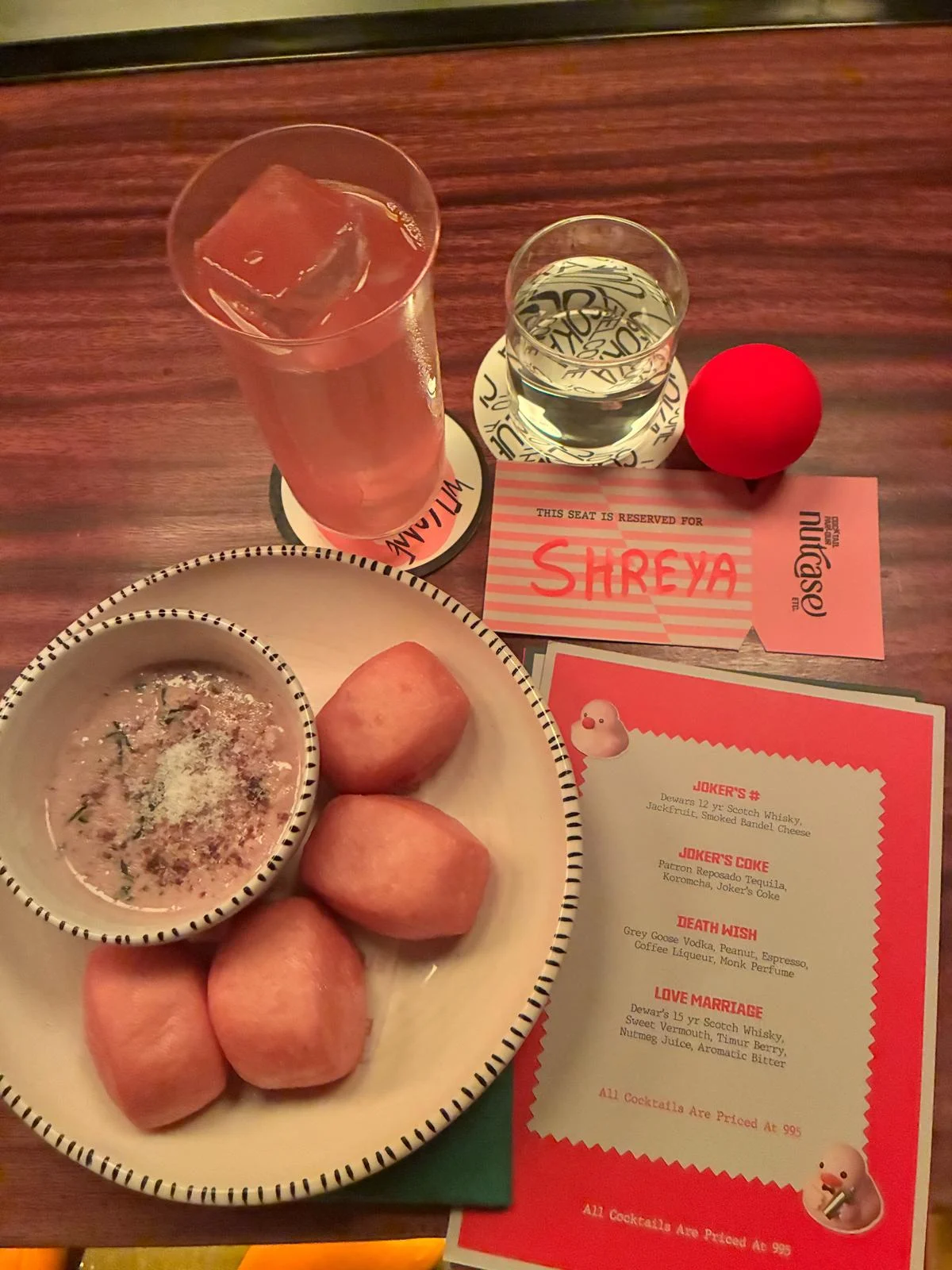
The resulting menu consisted of four distinct cocktails, each a testament to the 36-hour immersion process.
- Joker’s #: This drink was a study in savory-sweet balance. It featured Dewar’s 12-Year Scotch, which provided a smoky base that complemented the pungency of the smoked Bandel cheese. The addition of jackfruit added a tropical, custardy texture and sweetness that rounded out the sharp edges of the cheese.
- Joker’s Coke: Despite the name, this was a sophisticated agave-based drink. Using Patrón Reposado tequila, the bartenders utilized the newly discovered karamcha berries to provide the requisite acidity and a vibrant pink hue, creating a "Coke" style drink that was entirely natural and hyper-local.
- Love Marriage: A poetic blend of Dewar’s 15-Year Scotch and sweet vermouth. The complexity came from the addition of Timur berry (a Himalayan relative of Sichuan pepper), fresh nutmeg juice, and aromatic bitters. It represented a marriage of the hills and the plains.
- Death Wish: The "heaviest" offering on the menu, leaning into rich, dessert-like flavors. It combined Grey Goose vodka with peanuts, espresso, coffee liqueur, and a "monk perfume," resulting in a drink that was both a stimulant and a digestif.
Official Responses: A New Philosophy of Guest Shifts
The organizers and participants view The Joker Shift as a necessary evolution in the global "guest shift" trend.
Rituparna Banerjee, Chef and Founder of Nutcase Etc., emphasized the importance of perspective. "Usually, bars collaborate by making the drinks they’re already known for. We wanted MK and KK to discover Kolkata through their own eyes—through the eyes of Bengaluru."
Rahul Banerjee noted that the extraordinary quality of the local produce was the real star of the show. By removing the "crutch" of familiar ingredients, the bartenders were forced to rely on their fundamental skills: balance, extraction, and storytelling.

From the perspective of Soka, the experience reinforced the idea that the Indian bar scene is maturing beyond international imitation. By focusing on indigenous ingredients like karamcha and Bandel cheese, Indian bars are creating a unique global identity that cannot be replicated in London, New York, or Singapore.
Implications: The Future of Regional Mixology
The success of The Joker Shift at Nutcase Etc. signals several significant shifts in the Indian beverage landscape:
1. The Rise of "Hyper-Localism"
This collaboration proves that "local" is no longer a buzzword but a rigorous methodology. The use of ingredients like Badshah Bhog rice or Panch Phoron in cocktails suggests a future where the boundary between the kitchen and the bar is permanently dissolved. Mixologists are increasingly adopting the "farm-to-table" (or "market-to-glass") ethos of modern chefs.
2. De-standardization of Guest Shifts
The "Joker" format challenges the status quo of brand-sponsored guest shifts. By prioritizing spontaneity over consistency, Nutcase Etc. has created a high-stakes environment that appeals to "cocktail nerds" and casual drinkers alike. It turns a night at the bar into a live performance of culinary problem-solving.

3. Strengthening the Domestic Bar Network
By facilitating a deep-dive exchange between Bengaluru and Kolkata, events like this strengthen the internal ecosystem of the Indian bar industry. It encourages a cross-pollination of techniques and flavors that enriches the national scene, rather than relying solely on Western trends.
4. Preservation of Culinary Heritage
Ingredients like Bandel cheese and karamcha are often overlooked in modern urban diets. By featuring them in high-end cocktails at award-winning bars, mixologists are playing a role in the preservation and revitalization of regional food heritage.
Conclusion
The Joker Shift was more than a guest shift; it was a 36-hour ethnographic study of a city through its flavors. When Manoj and Krishna Kumar finally stood behind the bar at Nutcase Etc. on the evening of July 2, they weren’t just serving drinks; they were serving a narrative of discovery.
As the Indian bar scene continues to garner international acclaim, the path forward seems to lie in these moments of "mystery"—where the familiar is stripped away, and the bartender is forced to listen to the language of the local market. In the humid air of a Kolkata afternoon, amidst sacks of lentils and mountains of jackfruit, the next generation of great Indian cocktails was born.
