

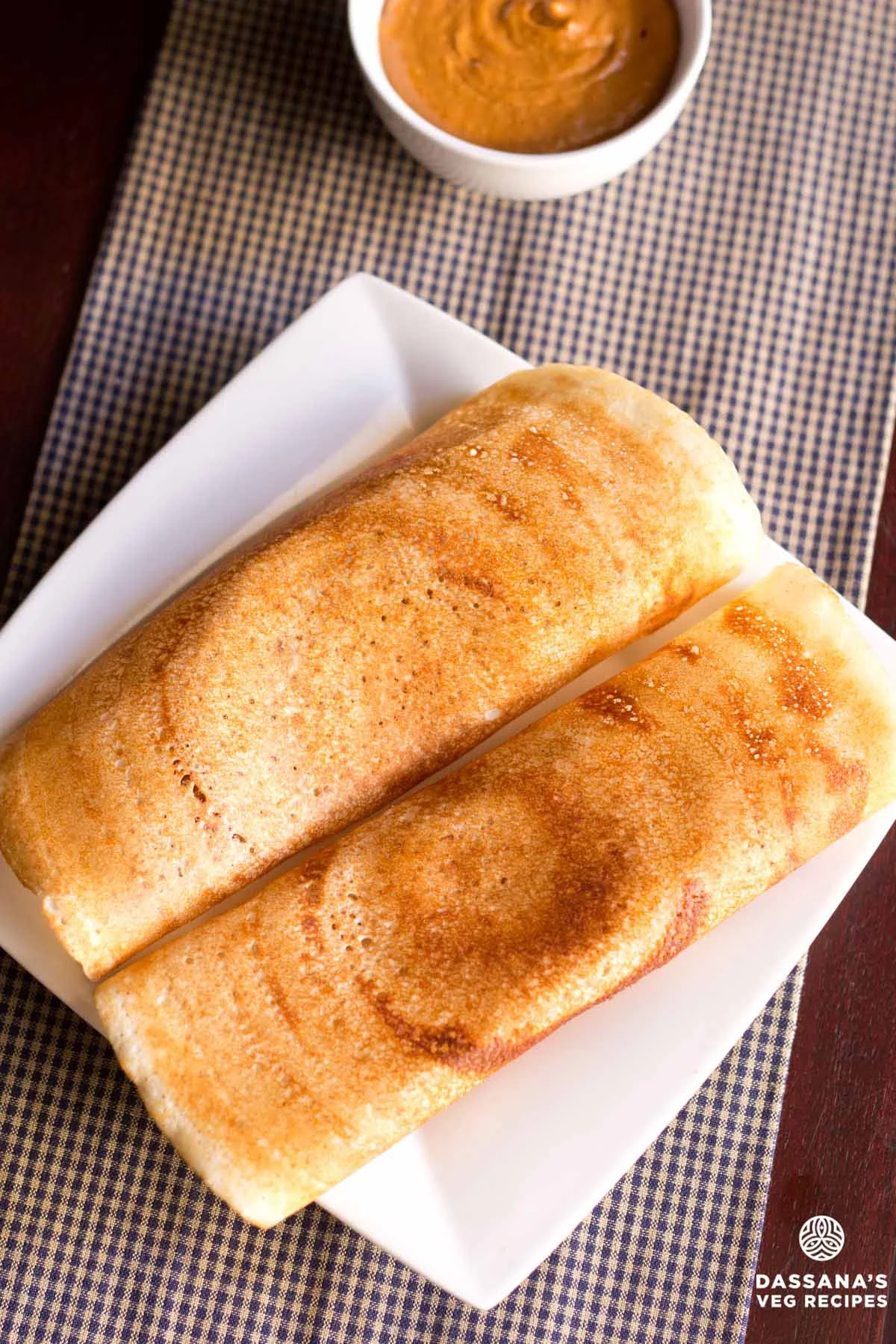
Main Facts: The Evolution of a Breakfast Staple
In the pantheon of South Indian cuisine, few dishes command as much reverence as the dosa. Traditionally, this fermented crepe is the result of a labor-intensive, multi-day process involving the soaking of raw rice and black gram (urad dal), precision grinding in stone wet-grinders, and a temperamental fermentation period that can be influenced by everything from ambient humidity to the age of the grain. However, a new culinary movement is gaining traction among urban professionals and global food enthusiasts: the flour-based, "no-grind" rice dosa.
The recipe, recently popularized by renowned vegetarian chef and Le Cordon Bleu-trained pastry expert Dassana Amit, represents a significant shift in how traditional ethnic foods are prepared in the modern era. By utilizing pre-milled rice flour and urad dal flour, the preparation time is slashed by hours, eliminating the need for expensive heavy-duty grinding equipment. This innovation maintains the essential fermented soul of the dish while making it accessible to a demographic that lacks the time or the traditional tools required for the classic version.

This "Rice Dosa" is inherently gluten-free, vegan-friendly, and nutritionally dense, offering a crisp, golden texture that rivals the traditional iteration. While purists may debate the nuances of flavor, the rise of the flour-based dosa highlights a broader trend in global gastronomy: the democratization of complex traditional recipes through modern ingredient processing.
Chronology: From Ancient Grains to Instant Batters
To understand the significance of the flour-based rice dosa, one must look at the timeline of the dish’s evolution:

The Ancient Foundations (1st Century AD – 10th Century AD)
Historical records and Sangam literature suggest that the dosa, or dosai, has been a part of the Tamil diet for nearly two millennia. Originally, it was likely a thicker, softer pancake made primarily from fermented rice. The introduction of urad dal (black gram) came later, providing the protein structure necessary to create the thin, crispy crepes we recognize today.
The Industrial Shift (1950s – 1990s)
The mid-20th century saw the introduction of the electric wet grinder. This revolutionized the South Indian household, moving the labor from manual stone mortars to motorized blades. However, the requirement for soaking grains (typically 4–6 hours) and fermenting the batter (8–12 hours) remained an unskippable chronological hurdle.

The Modern "No-Grind" Era (2010s – Present)
With the rise of the gig economy and shrinking domestic time windows, the demand for "instant" or "semi-instant" versions of traditional foods spiked. The development of high-quality, finely milled pulse and grain flours allowed chefs like Dassana Amit to experiment with bypass methods. The chronology of the modern Rice Dosa is streamlined into three distinct phases:
- The Mixing Phase (10 minutes): Dry flours are hydrated and whisked into a lump-free slurry.
- The Fermentation Phase (9–10 hours): The batter rests overnight to develop the characteristic tangy aroma and airy texture.
- The Execution Phase (5 minutes): The batter is spread on a hot griddle (tawa) and cooked to a crisp.
Supporting Data: A Nutritional and Technical Analysis
The flour-based rice dosa is not merely a convenience food; it is a scientifically balanced meal. According to nutritional data provided by Veg Recipes of India, a single serving of this dosa (approximately four servings per recipe batch) yields a complex profile of macronutrients and micronutrients.

Macronutrient Breakdown
- Energy: 174 kcal per serving.
- Carbohydrates: 21g, primarily sourced from the rice flour, providing sustained energy release.
- Protein: 7g, a significant amount for a plant-based breakfast, derived from the urad dal flour.
- Dietary Fiber: 5g, contributing to 20% of the daily recommended intake for adults, aiding in digestive health.
- Fat: 7g (with only 1g of saturated fat), largely depending on the oil used for griddling.
Micronutrient Profile
The fermentation process, even in a flour-based batter, enhances the bioavailability of nutrients. The dish contains:
- Iron: 2mg (essential for oxygen transport in the blood).
- Calcium: 21mg (supporting bone health).
- Potassium: 8mg.
- Vitamin C: 1mg (acting as an antioxidant).
Technically, the success of this recipe relies on the ratio of rice flour to urad dal flour. The standard ratio used in this modern iteration—roughly 1.5 cups of rice flour to 0.75 cups of urad dal flour—ensures that there is enough starch for crispness and enough protein for the batter to "stretch" across the pan without tearing.

Official Responses: Expert Commentary and Culinary Guidance
Dassana Amit, the architect of this specific formulation, emphasizes that while the method is "instant" in terms of labor, it should not be "instant" in terms of chemistry. Her professional stance is that fermentation remains a non-negotiable step for flavor and digestibility.
"Unlike the traditional dosa batter, this version does not double or triple in volume," Amit notes in her technical guidance. "Instead, look for a light fermented aroma and a slightly airy texture. This indicates that the wild yeasts have successfully interacted with the flours."

Pro-Tips for Culinary Success
Amit provides several "official" recommendations to ensure the flour-based dosa achieves the professional standard of a high-end South Indian restaurant:
- The Yogurt Catalyst: In cooler climates where fermentation is sluggish, Amit suggests adding a tablespoon of yogurt to the initial mix to introduce active cultures.
- Surface Tension Management: When using a cast-iron tawa, the surface must be lightly seasoned with oil. However, she warns that for non-stick pans, greasing should be avoided as it prevents the batter from adhering and spreading thinly.
- Temperature Control: The griddle must be hot enough to sizzle but not so hot that the batter "seizes" before it can be spread into a circle.
Amit’s background as a Le Cordon Bleu-trained chef brings a level of precision to this traditional recipe, treating the batter more like a French galette or crepe in its requirement for smoothness and consistency.

Implications: The Future of Traditional Cuisine in a Globalized World
The move toward flour-based, no-grind recipes carries several significant implications for the food industry and cultural preservation.
1. Accessibility and Inclusivity
The traditional dosa was often "gatekept" by the need for specific equipment. A wet grinder is a heavy, expensive appliance rarely found outside of Indian households or specialty commercial kitchens. By shifting the recipe to a flour-based model, the dosa becomes a viable meal for anyone with a mixing bowl and a frying pan. This has massive implications for the "Global South Indian" food trend, allowing the dish to find a home in kitchens from London to New York.

2. Dietary Shifts
As the global prevalence of celiac disease and gluten sensitivity rises, the rice dosa is positioned as a premier alternative to wheat-based breakfast items. Unlike many gluten-free breads that rely on gums and stabilizers, the rice dosa uses natural fermentation to achieve its texture. The high fiber and protein content make it a superior choice to many processed gluten-free cereals.
3. The Preservation vs. Adaptation Debate
There is an ongoing tension between culinary preservationists and modernizers. Purists argue that the stone-ground texture of raw grains provides a "nutty" depth that flour cannot replicate. However, the implication of Amit’s recipe is that for a tradition to survive, it must adapt to the lifestyle of the current generation. If the choice is between a 24-hour process that people no longer have time for, or a 10-minute flour-based mix that preserves the habit of eating dosa, the latter ensures the dish remains a living part of the culture rather than a museum piece.

4. Economic Impact on the Spice and Flour Industry
The popularity of "no-grind" recipes is driving a market for specialty flours. We are seeing an increase in the commercial availability of "idli-dosa" flour blends, which are pre-mixed and sometimes pre-treated to ferment faster. This creates a new vertical in the FMCG (Fast-Moving Consumer Goods) sector, catering to the "semi-homemade" cooking segment.
Conclusion
The flour-based Rice Dosa is more than just a quick breakfast; it is a case study in the evolution of food. By leveraging the expertise of chefs like Dassana Amit and the convenience of modern milling, this ancient South Indian staple has been successfully re-engineered for the 21st century. It retains its nutritional integrity, its gluten-free appeal, and most importantly, its place at the center of the breakfast table, proving that in the world of gastronomy, simplicity is often the ultimate sophistication.
