

New Delhi, India – Yamaha Motor India has emerged as one of the most resilient and fast-growing players in the Indian two-wheeler market for the first half of 2026. According to the latest sales data released for June 2026 and the cumulative second quarter (Q2) of the calendar year, the Japanese manufacturer has recorded a staggering year-on-year (YoY) growth of approximately 50%. This surge is driven by a strategic pivot toward premiumization, the introduction of lifestyle-oriented models like the XSR, and the continued dominance of its sporty scooter portfolio.
While the broader industry faces various macroeconomic headwinds, Yamaha’s "The Call of the Blue" brand strategy appears to be resonating deeply with India’s aspirational youth. This report provides an in-depth look at the numbers, the models driving the momentum, and the strategic implications for Yamaha’s future in the subcontinent.
The Macro Picture: Breaking Down the June 2026 Performance
In June 2026, Yamaha India’s domestic sales reached 66,573 units. To put this into perspective, the company sold 44,417 units in June 2025, marking a YoY increase of 49.88%. This nearly 50% jump represents an additional 22,156 units moving out of showrooms compared to the same month last year.
However, the monthly data also revealed a slight cooling of the rapid momentum seen in the preceding month. Compared to May 2026, when Yamaha dispatched 72,821 units, the June figures represent an 8.58% month-on-month (MoM) decline. Analysts suggest this is a standard cyclical adjustment, often seen as dealerships stabilize inventory after a high-demand month or as the market prepares for the monsoon season, which traditionally sees a slight dip in retail footfalls.
The Quarterly Triumph (Q2 CY2026)
The broader quarterly view offers a more stable and impressive picture of Yamaha’s trajectory. During the April-June 2026 period (Q2), Yamaha India sold a total of 2,07,382 units. Compared to the 1,37,329 units sold during the same period in 2025, the company achieved a YoY growth of 51.01%.
This quarterly gain of over 70,000 units indicates that Yamaha is not just growing; it is scaling at a rate that outpaces many of its traditional competitors in the 150cc+ and premium scooter segments.

Model-Wise Deep Dive: The Engines of Growth
1. RayZR: The Undisputed Volume King
The RayZR series continues to be the backbone of Yamaha’s Indian operations. In June 2026, the RayZR clocked 22,782 units, up from 14,274 units in June 2025—a robust growth of 59.60%. Unlike many other models, the RayZR also maintained positive MoM growth, rising 6.44% from May’s 21,403 units.
For the entire Q2 2026, the RayZR contributed 61,483 units, accounting for nearly 30% of Yamaha’s total domestic volume. The scooter’s success is largely attributed to its sharp, "tough-sport" styling and the efficiency of its hybrid powertrain, which appeals to young urban commuters looking for a blend of performance and economy.
2. The MT-15 and FZ: The Street-Fighter Duel
Yamaha’s street-naked segment showed mixed but generally positive results:
- MT-15: This model has solidified its position as a cult favorite. With 10,094 units sold in June (a 41.71% YoY increase), it remains a high-margin winner for the brand. Its quarterly performance was equally strong, with 26,414 units sold.
- FZ Series: Once the primary volume driver, the FZ is now facing internal competition from the more premium MT-15 and the new XSR. June sales stood at 9,824 units, an 8.76% YoY decline. More notably, it saw a sharp 33.90% MoM drop from May. Despite this, it remains the second-highest volume contributor for the quarter with 40,415 units, proving that the "FZ" brand still holds significant weight in the commuter-plus segment.
3. R15: The Supersport Phenomenon
Perhaps the most startling figure in the June report is the performance of the R15. Sales more than doubled YoY, skyrocketing from 4,380 units in June 2025 to 9,261 units in June 2026—a growth of 111.44%. The R15’s ability to maintain such high demand despite its premium pricing highlights the growing "track-culture" and aspirational value among Indian riders. For Q2, the R15 recorded 28,130 units, an 84.04% improvement over the previous year.
4. Fascino and the Lifestyle Entrants
The Fascino 125, Yamaha’s "classic" styled scooter, also performed admirably with 8,790 units in June (up 43.51% YoY). However, the real story of 2026 is the New XSR.
The XSR, a neo-retro offering, has quickly carved out a niche. In Q2 2026 alone, it contributed 17,700 units. While its June sales of 4,199 units were down from May, its quarterly contribution (8.53% of total sales) proves that there is a significant market for stylish, heritage-inspired motorcycles in the 150cc-200cc space.

The Premium and Electric Frontier
While the core portfolio is thriving, the "super-premium" and electric segments tell a story of transition and challenge.
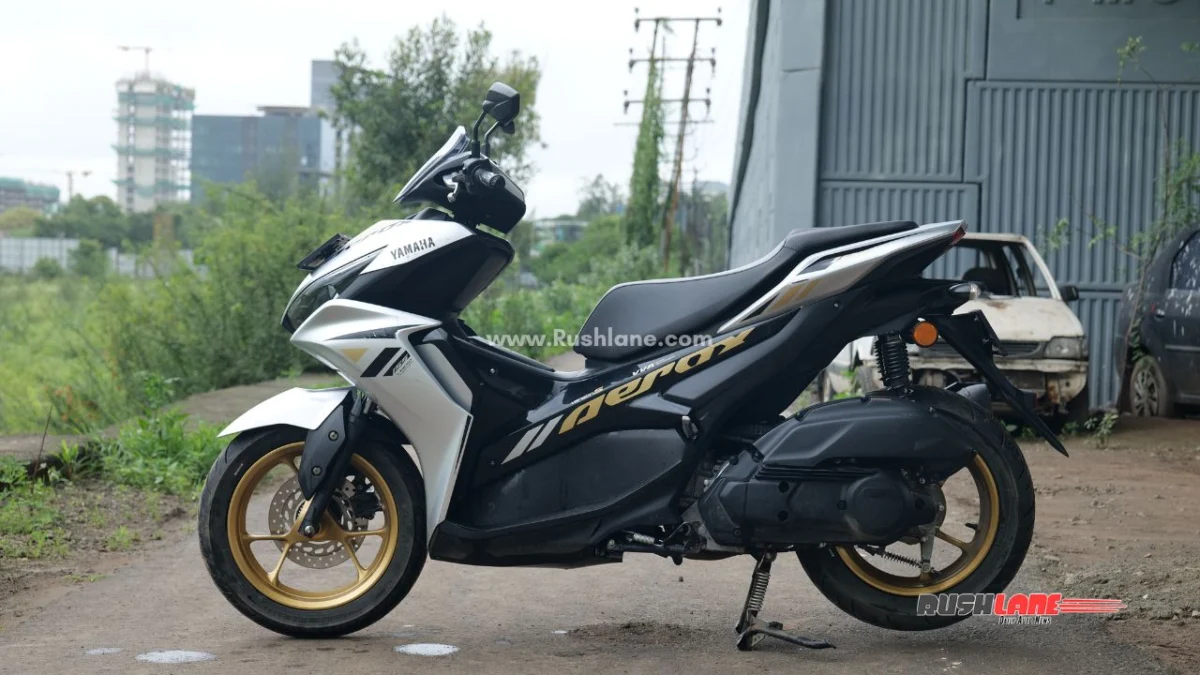
The Aerox 155
The Aerox 155, India’s first genuine maxi-scooter, saw a decline in June, with 1,455 units sold (down 16.52% YoY). However, its quarterly performance remained slightly positive, growing 5.35% to 5,254 units. This suggests that while the Aerox is a niche product, it has a stable, dedicated following among enthusiasts who prioritize performance over traditional scooter utility.
Electric Mobility: The EC06
Yamaha’s foray into the Indian electric vehicle (EV) space via the EC06 remains in its nascent stages. In June, 168 units were sold. While the number is small, it represents a 100% MoM increase from the 84 units sold in May. The quarterly total of 354 units indicates that Yamaha is likely using this period for market testing and infrastructure seeding before a more aggressive EV push.
The Disappearance of R3 and MT-03
Interestingly, the flagship R3 and MT-03 registered zero domestic sales in June 2026 and across the entire second quarter. This is a stark contrast to the 113 units sold in Q2 2025. This "zero-sale" status usually points to one of two things: a temporary halt in imports (CBU/CKD) due to regulatory updates or an impending refresh/re-launch of these models in the Indian market.
Official Responses and Strategic Context
While Yamaha India’s leadership has not released a specific statement regarding the June dip, the company’s recent strategic moves provide context. The brand has been aggressively expanding its "Blue Square" premium dealership network, which is designed to provide a more upscale buying experience.
Industry experts believe that Yamaha’s 51% quarterly growth is a direct result of this retail transformation. By distancing itself from the "mass-market" commuter segment (100-110cc) and focusing on the "premium-commuter" and "lifestyle" segments, Yamaha has insulated itself from the price-sensitive fluctuations of the rural economy, instead tapping into the more resilient urban middle class.

A Yamaha spokesperson recently noted (in general strategy briefings) that the company is committed to strengthening its 155cc platform, which shares the VVA (Variable Valve Actuation) technology across the R15, MT-15, and Aerox. This platform-sharing strategy has allowed Yamaha to maintain high margins while offering diverse body styles to the consumer.
Implications for the Indian Two-Wheeler Market
Yamaha’s performance in Q2 2026 carries several significant implications for the industry:
- The Death of the "Basic" Commuter for Yamaha: Yamaha has successfully transitioned away from being a "bike for everyone" to a "bike for the enthusiast." The growth in R15 and MT-15 sales suggests that young buyers are willing to pay a premium for technology and brand prestige.
- The Rise of the Neo-Retro: The success of the XSR indicates that the Indian market is moving beyond just "sporty" or "commuter" looks. There is a burgeoning demand for motorcycles that serve as fashion statements.
- Scooterization with a Twist: While the market is flooded with 110cc scooters, Yamaha’s growth in the 125cc (RayZR/Fascino) and 155cc (Aerox) segments shows that the "performance scooter" category is finally maturing in India.
- EV Caution: Unlike competitors like Ola Electric or TVS, Yamaha is taking a measured, almost cautious approach to EVs. The low volumes of the EC06 suggest that Yamaha is waiting for the right moment—or the right localized product—to challenge the leaders in the electric space.
Conclusion and Future Outlook
Yamaha India enters the second half of 2026 on a high note. A 51% YoY growth for the quarter is a milestone that reflects a well-executed product strategy. While the MoM decline in June serves as a reminder of market volatility, the overall trend is undeniably upward.
Looking ahead, the industry will be watching for the return of the R3 and MT-03, which are essential for Yamaha’s "top-down" brand image. Furthermore, as the EC06 begins to find more takers, the potential for a localized, high-performance electric scooter from Yamaha remains a "when," not an "if."
For now, the "Blue Streak" continues. With the festive season approaching in the coming months, Yamaha is well-positioned to capitalize on the momentum generated in the first half of the year, potentially setting new annual sales records for its Indian operations.
